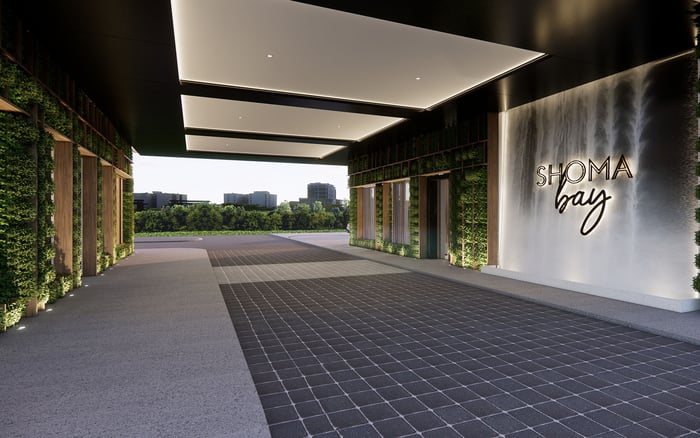
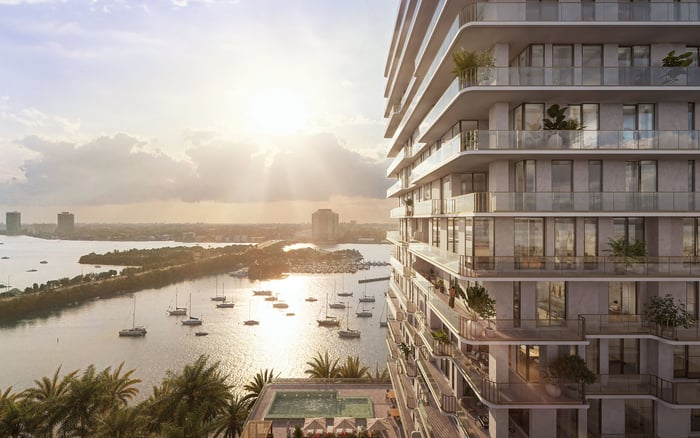
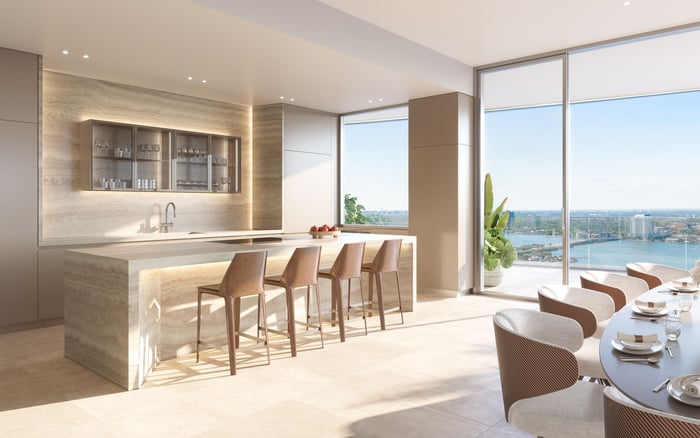
Tula Residences speaks to a very specific South Florida buyer: someone who wants waterfront proximity, marine culture, and closeness to Miami’s core without stepping into a neighborhood that already feels fully priced and fully revealed. In North Bay Village, that proposition is less about spectacle and more about timing.
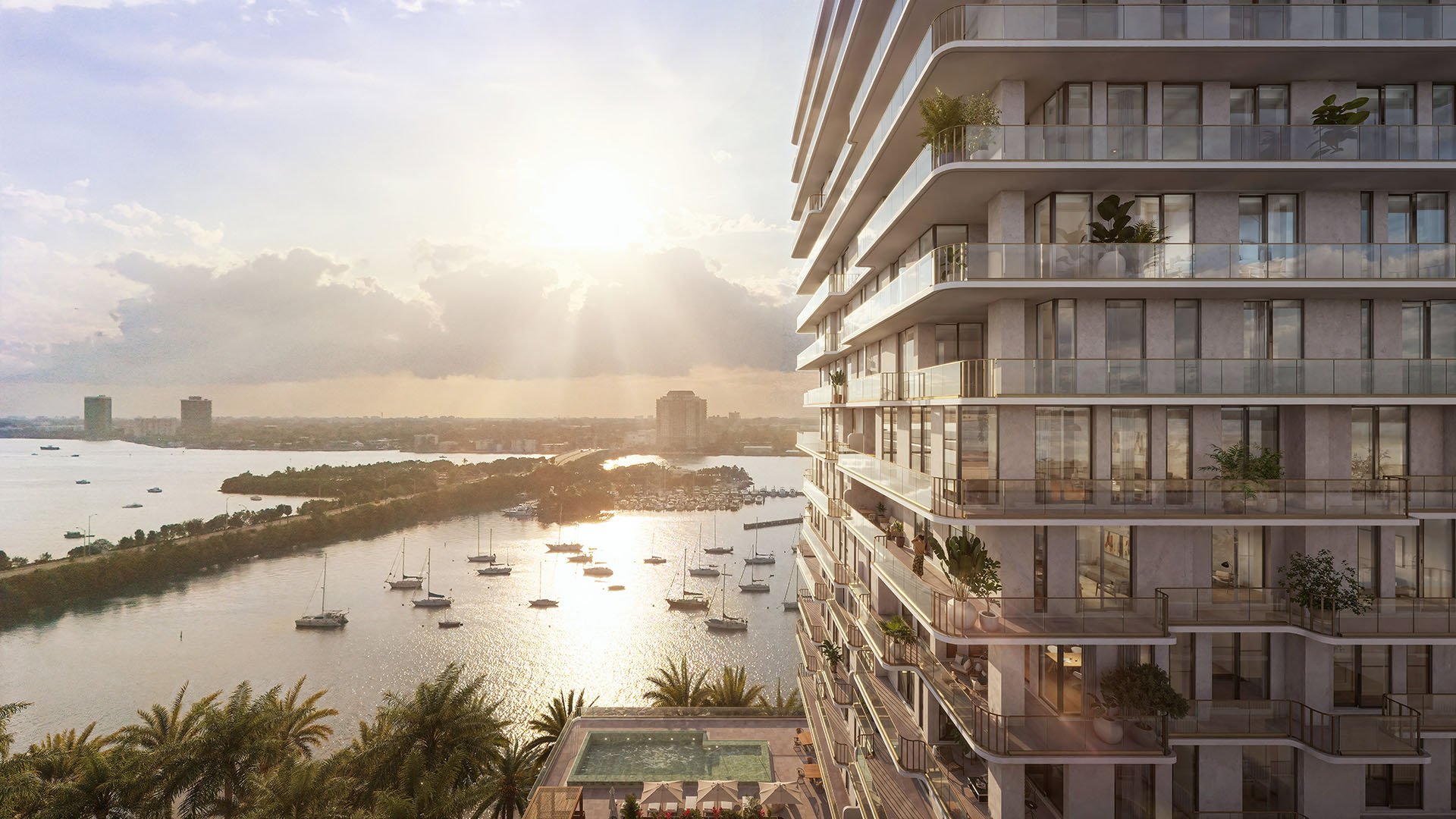
Some luxury buyers want certainty. Others want positioning. Tula Residences in North Bay Village is more compelling for the latter: buyers who prefer to arrive before a neighborhood becomes obvious to everyone else.
That distinction matters in South Florida. The most established luxury districts offer prestige, familiarity, and a deep resale narrative. They also come with a level of maturity that can leave less room for discovery. North Bay Village offers a different proposition. Set in Biscayne Bay on a man-made island community of roughly 234 acres, it sits between mainland Miami and Miami Beach, close enough to both to feel connected yet separate enough to preserve its own rhythm.
Tula enters that setting as a Terra-developed residential project with a bay-facing, water-oriented identity. For buyers who believe the best real estate decisions are often made just before a location becomes part of the broader conversation, that is the core of the case.
In practice, living ahead of the neighborhood curve is not about taking an outsized risk. In the luxury market, it usually means choosing a place with established geographic advantages before its brand perception becomes fully fixed. North Bay Village already has the essential ingredients: waterfront context, municipal identity, marine culture, and immediate access to broader Miami-Dade lifestyle and employment corridors.
What it has historically lacked, compared with more widely recognized enclaves, is saturation. That relative openness is exactly what attracts buyers who do not want to be in the middle of the most built-out neighborhoods. They want bay views and boating adjacency, but they do not necessarily want every surrounding block to feel overdetermined.
This is where Tula’s positioning stands out. It is not framed as entry-level product, and it is not attempting to replicate the density-first atmosphere of more urbanized Miami addresses. Instead, it leans into a quieter luxury language of waterfront living, residential discretion, and a setting that still feels as though it is being defined in real time.
For comparison, buyers who want North Bay Village with a more branded hospitality lens may also look at The Ritz-Carlton Residences® North Bay Village, while those tracking the municipality’s broader evolution may follow Pagani North Bay Village and Continuum Club & Residences North Bay Village as part of the same emerging narrative.
The strongest argument for North Bay Village is its in-between quality. In luxury real estate, being between two established worlds can be a disadvantage if a place feels undefined. Here, it feels strategic.
Residents are not isolated from Miami Beach, yet they are not required to live inside its most crowded rhythms. They remain connected to mainland Miami, yet they are not choosing a purely inland or purely urban-density experience. That balance is increasingly appealing to second-home buyers and downsizers who want convenience without constant intensity.
There is also a practical lifestyle benefit to the municipality’s public waterfront character. Parks, marinas, and bayfront infrastructure reinforce the sense that the water is not simply a backdrop attached to a single building. It is part of everyday life. That broadens the appeal beyond architecture and into habit: morning walks by the bay, boating culture, open sky, and a quieter relationship with the city.
This is a different value proposition from classic oceanfront prestige. Buyers choosing between North Bay Village and more established coastal addresses such as 57 Ocean Miami Beach are often deciding less between quality levels and more between atmospheres. One is already globally legible. The other may offer the satisfaction of entering a waterfront pocket before its reputation is fully priced in.
Tula is best understood not as a universal answer but as a precise fit for a few buyer profiles.
The first is the second-home buyer who wants Miami adjacency without maximum exposure to the city’s busiest residential patterns. For this buyer, the appeal is clear: a bay setting, a luxury sensibility, and enough separation to make arrival feel restorative rather than performative.
The second is the downsizer moving from a larger home into a more edited waterfront life. That buyer often wants ease, access, and views, but not necessarily the social density or traffic patterns associated with the most saturated luxury enclaves. North Bay Village offers breathing room while still feeling part of the broader metropolitan fabric.
The third is the investor who prefers earlier-stage neighborhood momentum to fully mature pricing. That does not mean speculation detached from fundamentals. It means recognizing when a municipality’s geography, livability, and development attention begin to align. Tula’s profile speaks to buyers who see that alignment and prefer to act before a location feels entirely discovered.
One of the most important distinctions around Tula is that its appeal is framed around bay-facing residences and a water-oriented lifestyle. That may sound subtle, but in South Florida it creates a distinctly different daily experience.
A residence centered on the bay and boating culture attracts people who prioritize horizon, movement, and a sense of openness. The possibility of marina or boating-oriented access aligns with North Bay Village’s marine identity, making the proposition more coherent than a generic luxury tower placed in a waterfront ZIP code.
This places Tula in useful contrast with neighborhoods driven more by walkable urbanity, nightlife adjacency, or tower concentration. Buyers who lean toward those priorities may feel more at home in areas shaped by projects such as 2200 Brickell. Buyers drawn to Tula are usually making a more atmospheric choice. They want water first, city second, while still keeping both within reach.
The strongest luxury purchases are often made with both conviction and restraint. In Tula’s case, the broader positioning is clear: luxury-leaning residences in a quieter waterfront municipality with earlier-stage growth appeal. What remains important is to verify the granular points that matter in any acquisition decision.
Publicly disclosed information has pointed to multiple unit configurations, but exact unit counts, bedroom mix, pricing, inventory, and delivery specifics should be confirmed directly before any commitment. For sophisticated buyers, that is not a red flag. It is simply the discipline of buying well in a project being evaluated for both lifestyle and timing.
The larger question is whether the buyer values established consensus or emerging conviction. If the answer is established consensus, there are many polished options across Miami’s best-known submarkets. If the answer is emerging conviction, Tula becomes far more interesting.
Luxury buyers today are not all pursuing the same kind of visibility. Many are becoming more selective about tempo, privacy, and how a neighborhood feels on an ordinary Tuesday, not just during peak season. That shift has made places like North Bay Village more relevant.
Tula aligns with that mood because it offers something increasingly rare: the possibility of buying into a waterfront setting that still retains a sense of evolution. Not raw, not unformed, but unfinished in the best sense. The municipality already has a recognizable identity. What it may not yet have is the full weight of mainstream luxury consensus. For a certain kind of buyer, that is precisely the attraction.
What is the core appeal of Tula Residences? It offers a luxury, bay-oriented lifestyle in North Bay Village for buyers who want to be early rather than late to an emerging waterfront pocket.
Is Tula more about urban living or waterfront living? Its positioning is much more about waterfront living, with bay-facing residences and a water-oriented lifestyle at the center.
Who is most likely to buy at Tula? The profile fits second-home purchasers, downsizers, and investment-minded buyers looking for earlier-stage neighborhood momentum.
Why does North Bay Village feel ahead of the curve? It offers a lower-density, bayfront setting between Miami and Miami Beach without feeling as saturated as more established luxury districts.
Is Tula aimed at entry-level buyers? No. It is positioned as luxury or upper-mid-to-luxury product rather than entry-level housing.
Does the area support a boating lifestyle? Yes. The municipality’s broader marina, waterfront, and public bayfront character reinforce the local marine lifestyle.
Are detailed unit and pricing specifics fully established? Buyers should verify pricing, inventory, unit mix, and delivery details directly before making decisions.
How does Tula compare with Miami Beach options? It is generally a quieter alternative for buyers who want access to Miami Beach without living inside its most built-out rhythms.
Is North Bay Village suitable for full-time living? Yes. The setting can appeal to both primary residents and part-time owners who value convenience with more breathing room.
What is the best way to shortlist comparable options for touring? Start with location fit, delivery status, and daily lifestyle priorities, then compare stacks and elevations to validate views and privacy.
For a confidential assessment and a building-by-building shortlist, connect with MILLION.
If branded residences are on your mind — as a home or as an allocation — we would be glad to share what we are seeing, privately.
Begin a quiet conversation