For California entrepreneurs moving to South Florida, delivery-room capacity is a lifestyle and risk-management consideration that belongs alongside schools, airports, and waterfront views.

California entrepreneurs often arrive in South Florida with a disciplined eye. They evaluate airport access, private-school proximity, tax counsel, security, club culture, waterfront exposure, and the social architecture of a building long before they sign. Yet for founders building families while building companies, one question can enter the conversation too late: how resilient is the delivery-room plan?
This is not a medical recommendation, nor a substitute for a physician’s guidance. It is residential due diligence. A family may love a penthouse terrace, a branded lobby, or a private marina, but childbirth follows its own calendar. The more compressed the timeline, the more important it becomes to understand where a preferred maternity hospital is, whether an obstetrician has privileges there, how traffic behaves between home and care, and what backup plan exists if the first choice is unavailable.
For the California founder accustomed to optimizing every operational variable, delivery-room capacity belongs in the same file as financing, insurance, school admissions, and aviation logistics. It is one of the rare lifestyle questions that can become urgent without notice.
Luxury real estate is often framed through permanence: the view, the architecture, the developer pedigree, the privacy of the arrival sequence. Parenthood introduces a more dynamic set of requirements. The right home must perform at 3 p.m. on a calm weekday and at 3 a.m. when the household is moving quickly, quietly, and with a very different hierarchy of priorities.
Delivery-room capacity is not simply a count of rooms. For a buyer, it is a broader question of practical access to maternity care. Which hospital is the planned destination? Which alternate is acceptable? Is the route predictable from the residence during peak congestion, event traffic, seasonal demand, or bridge openings where applicable? Can household staff, a driver, or a family member execute the plan without improvisation?
That is why a home search in Brickell carries a different logistical profile than a search in Miami Beach, Coconut Grove, Boca Raton, or West Palm Beach. The distinction is not prestige. It is how a family’s most important private schedule intersects with roads, building access, clinical availability, and personal support networks.
In Brickell, for example, a buyer drawn to walkability and skyline energy may consider a residence such as 2200 Brickell while also mapping hospital routes at different times of day. The same urban advantages that make a neighborhood compelling for work and dining should be evaluated through the lens of a due-date window.
The most sophisticated buyers rarely ask, “Which neighborhood is best?” They ask, “Best for what phase of life?” For a founder with a growing family, the answer may change over a five-year horizon. A couple may want a high-design pied-à-terre near capital, clients, restaurants, and the airport before children arrive, then prioritize school networks, outdoor space, and calmer daily rhythms after the first year.
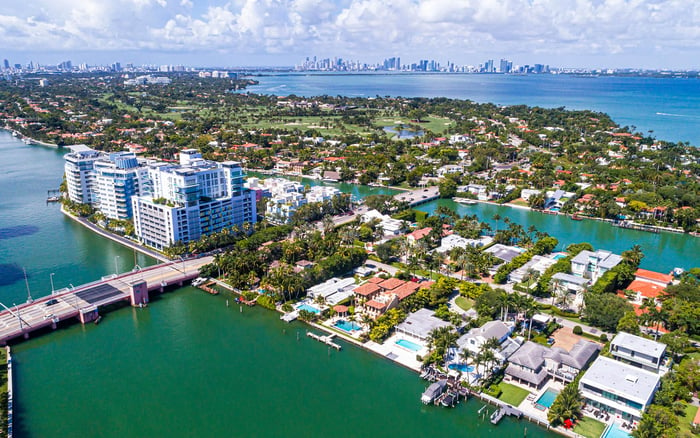
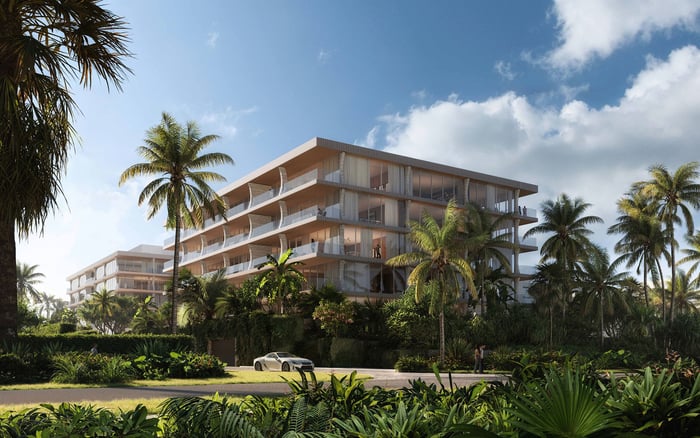
Miami Beach offers an unmistakable lifestyle, with ocean proximity, cultural energy, and a resort sensibility that appeals to many West Coast buyers. A property such as The Perigon Miami Beach may suit a buyer who values architectural distinction and coastal living, but the purchase conversation should still include how the household will move to planned care from the beach, especially during high-demand periods.
Coconut Grove often enters the discussion when privacy, tree canopy, family rhythm, and neighborhood intimacy matter. For buyers considering Four Seasons Residences Coconut Grove, the due diligence may feel less about glamour and more about continuity: daily wellness, family support, schools, parks, and a calmer pattern of movement. Even then, the delivery plan should be tested rather than assumed.
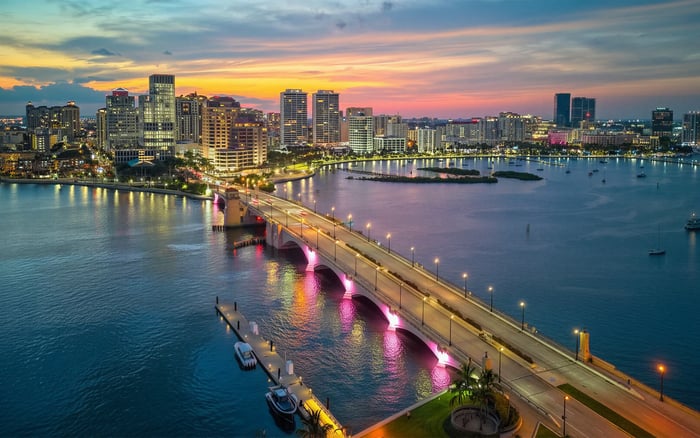
Boca Raton and West Palm Beach can appeal to families seeking a more residential pace, a strong sense of order, and proximity to grandparents or extended family already living north of Miami. In Boca Raton, Alina Residences Boca Raton may speak to buyers who want a polished environment with a quieter daily cadence. In West Palm Beach, Alba West Palm Beach places the conversation in a different context: waterfront living, city growth, and a Palm Beach-adjacent lifestyle without the same urban profile as central Miami.
Delivery planning is not only about the neighborhood. It is also about the building. A discreet buyer should ask how residents enter and exit, whether valet operations are efficient, how guest access works after hours, and whether private elevators, service elevators, loading areas, or security protocols could complicate a rushed departure.
For most luxury purchasers, these details are usually framed around privacy and convenience. During pregnancy, they become operational. A long walk from elevator to car, a congested porte cochère, a confusing visitor process, or a rigid access procedure can feel minor during a showing and consequential on a medical timeline.
The same applies after the birth. The household may need space for night nurses, visiting relatives, pediatric appointments, meal support, and quiet recovery. Floor plan matters. Acoustic separation matters. Parking matters. A second bedroom that once seemed adequate as a flexible office may be insufficient if the family expects live-in support. A beautiful terrace may be less important than a calm primary suite, dependable elevator service, and a layout that allows one parent to take calls while the newborn sleeps.
This is where South Florida’s ultra-luxury inventory becomes more than a design conversation. The best residence is not always the most dramatic one. It is the one that supports a family’s private life under pressure.
Before signing, California entrepreneurs should treat maternity logistics as a board-level risk review. The first step is to confirm the intended hospital and a realistic alternate with the family’s medical team. The second is to understand physician privileges, prenatal appointment patterns, and the likely travel burden from each shortlisted address.
The third is to test routes, not simply imagine them. Drive the path during rush hour, during an evening event window, on a rainy day, and at a time when the household would least welcome surprises. The fourth is to ask the building team practical questions about after-hours access, valet response, security procedures, and whether staff are accustomed to high-profile residents who require discretion without delay.
Finally, align the contract timeline with the pregnancy timeline. Closing dates, furniture delivery, renovations, punch-list work, school applications, and a due date can collide. A founder who would never launch a company without contingency planning should not move a household without the same discipline.
In this kind of search, the question separates a beautiful acquisition from a truly intelligent one.
Understanding delivery-room capacity does not mean choosing fear over desire. It means refining desire through a more complete picture of life. A residence can still be glamorous, branded, oceanfront, or architecturally rare. It can also be practical, calm, and ready for the realities of a young family.
For California entrepreneurs, South Florida offers many versions of success: vertical city living, beach privacy, bayfront ease, village atmosphere, and Palm Beach polish. The right choice depends on how the household expects to live when everything is going well and when everything is moving faster than planned.
The most elegant relocation is not the one that looks best on a closing announcement. It is the one that anticipates the family’s future before that future arrives.
Why should delivery-room capacity matter in a luxury home search? Because childbirth is time-sensitive, and a residence should support the family’s medical plan as well as its lifestyle preferences.
Is this only relevant for buyers who are already expecting? No. It also matters for couples planning a family, pursuing fertility care, or expecting frequent family support around future children.
Should buyers choose a condo based only on the nearest hospital? No. Proximity is important, but physician privileges, backup options, traffic patterns, and building logistics also matter.
How early should this diligence happen? It should happen before contract, alongside financing, insurance, school, and renovation planning.
Does Brickell work for founder families with newborn plans? It can, but buyers should test routes, after-hours access, parking flow, and the fit between urban energy and recovery needs.
Is Miami Beach more complicated for delivery planning? It can require careful route planning, especially when events, bridges, or seasonal traffic affect travel times.
Why do Coconut Grove buyers often think differently about this issue? Many are prioritizing neighborhood rhythm, privacy, schools, and family routines, which naturally aligns with longer-term planning.
Should Boca Raton and West Palm Beach be considered by California families? Yes, especially when a quieter daily cadence, extended family, or a north-of-Miami lifestyle is part of the plan.
What building questions should expecting parents ask? Ask about valet timing, elevator reliability, after-hours access, security procedures, and space for newborn support.
Can a buyer balance design ambition with maternity logistics? Yes. The strongest purchase is one where architecture, privacy, access, and family planning reinforce one another.
If you'd like a private walkthrough and a curated shortlist, connect with MILLION.
If branded residences are on your mind — as a home or as an allocation — we would be glad to share what we are seeing, privately.
Begin a quiet conversation