A practical MILLION guide to reading security in Brickell residences through design, staffing, privacy, guest flow, and daily experience rather than visible theatrics.
In Brickell, security should not announce itself like a stage set. The most persuasive residences do not rely on aggressive barriers, excessive signage, or a lobby that feels like a checkpoint. They create ease through choreography: how a car approaches, how a guest is received, how an elevator is accessed, and how residents move from street to home without friction.
For a luxury buyer, the question is not whether a building appears guarded. The sharper question is whether it can manage privacy, flow, and accountability while preserving the feeling of a private residence. In a dense, energetic neighborhood, that balance is essential. Brickell’s appeal is urban, social, and connected; the transition into a home should feel composed.
This is one of MILLION’s Buyer's Guides for buyers who view security as part of Lifestyle, not simply a line item. The best systems are designed to fade into the background until they are needed.
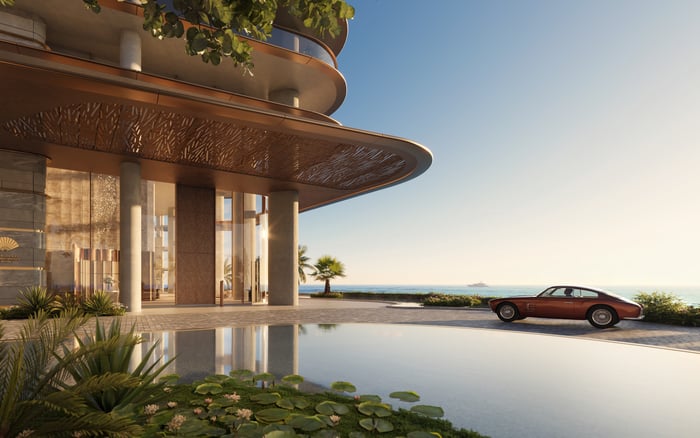
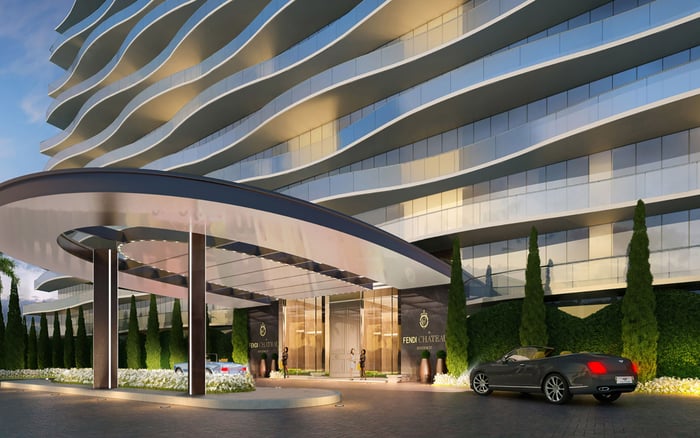
A buyer should evaluate security before entering the lobby. The arrival sequence reveals how much thought has been given to control without spectacle. Notice whether the curb, porte cochere, valet area, rideshare point, and pedestrian entry are clearly separated or quietly coordinated. Confusion at the threshold is more than inconvenient. It can create moments where guests, vendors, residents, and unknown visitors overlap without clear responsibility.
Discretion begins when staff know how to receive people without making the resident feel watched. A well-run arrival feels gracious, not guarded. It should be easy for residents to enter, but never casual for strangers to drift in. That distinction is subtle, and it is often visible within the first five minutes of a tour.
At a Brickell address such as The Residences at 1428 Brickell, buyers should look beyond the beauty of the approach and ask how the sequence performs at different times of day. Morning departures, evening returns, weekend guests, and late deliveries each test the system differently.
Technology matters, but in a luxury building, people set the tone. A camera cannot exercise judgment. A fob cannot read context. The front desk, valet team, concierge, and residential management create the difference between security that feels polished and security that feels performative.
During a visit, observe whether staff greet residents by name, ask appropriate questions without overexplaining, and manage guests with calm confidence. The goal is not theatrical vigilance. It is practiced discretion. Staff should never make private information audible in public areas, and familiarity should not become looseness.
Ask how guest authorization is handled, how recurring visitors are recorded, and how vendors are separated from social guests. The most refined answer is usually procedural rather than dramatic. It should sound like a daily operating culture, not an improvised promise.
A secure residence does not need to feel severe. The strongest buildings tend to rely on layers: controlled entry, attended reception, credentialed elevator access, private residential corridors, secure parking flow, and clear back-of-house procedures. Each layer should reduce exposure without making the resident feel processed.
Buyers comparing Brickell towers should pay close attention to elevator behavior. Can guests access residential floors only after approval? Are amenity floors handled differently from private floors? Is there a sensible path for service providers that does not run through the same experience as a dinner guest? These questions reveal whether the building has been designed as a private residential environment, not simply a beautiful high-rise.
In a building like St. Regis® Residences Brickell, the expectation for buyers is not only elegance, but elegant control. The more premium the setting, the less visible the security should feel.
For many high-net-worth buyers, privacy is the real asset. Security should protect not just physical access, but information. A buyer should ask how the building handles resident names, guest lists, package labels, deliveries, vehicle details, service appointments, and amenity reservations. A polished building treats this information with the same care as a key.
Listen for whether staff discuss residents in open areas. Watch where packages are staged. Ask whether vendors wait in public view or are routed through a controlled process. A residence can have attractive cameras and still feel loose if personal information is handled casually.
This matters especially in new-construction environments, where buyers may be focused on finishes, views, and amenities. Security deserves the same scrutiny as floor plan efficiency or acoustic privacy. The question is simple: does the building protect the resident’s identity and routine as carefully as it protects the front door?
Discreet security should not embarrass guests. It should make them feel expected, guided, and properly received. The best buildings create a social experience that feels effortless to the visitor while remaining controlled behind the scenes.
Before purchasing, imagine three scenarios: a dinner guest arriving for the first time, a family member staying for several days, and a service provider arriving while the owner is away. Each should have a clear protocol. If the process depends on one friendly staff member remembering what to do, it is not a system. If it works because the building has a culture of coordination, it is more durable.
Residences such as Cipriani Residences Brickell and Baccarat Residences Brickell invite buyers to consider hospitality and privacy together. A branded or service-rich environment should never trade warmth for looseness. The art is in making control feel gracious.
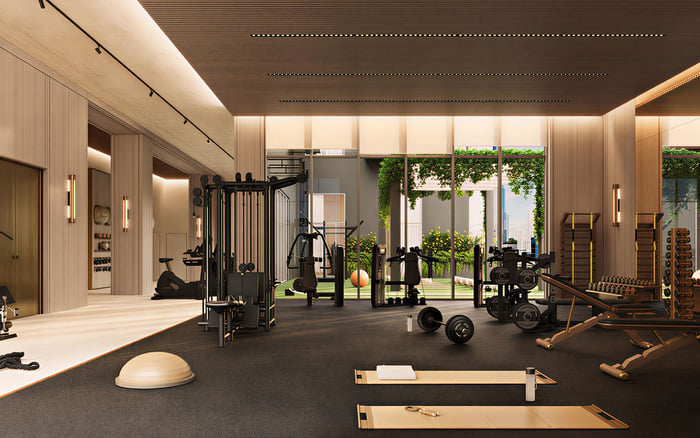
Lobbies, lounges, pools, fitness areas, spas, and dining spaces can reveal how secure a building will feel over time. The more amenitized a residence is, the more important it becomes to manage circulation. Buyers should ask who can access each space, how guests are accompanied or registered, and whether residential amenities risk becoming too porous.
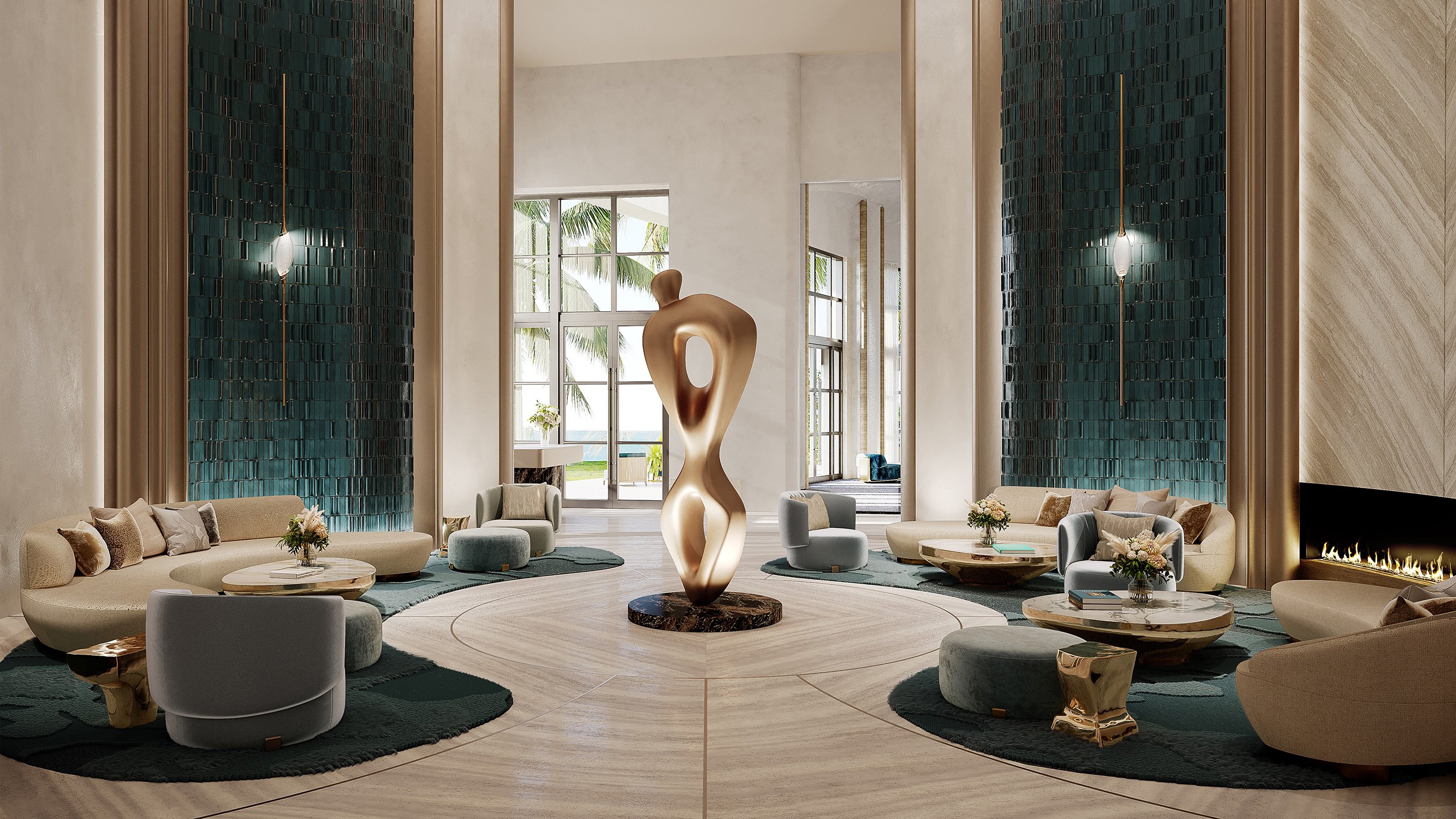
Pay attention to sightlines. A dramatic lobby may photograph beautifully, but does it expose residents to unnecessary observation from the street or from public-facing areas? A discreet lobby offers elegance while preserving separation. It lets residents arrive without becoming part of the scenery.
At 2200 Brickell, as with any urban residential purchase, the buyer’s task is to evaluate not only the plan of the home, but the daily choreography around it. Security is lived in small transitions.
A serious buyer should ask direct questions without expecting dramatic answers. Who has authority at the front desk during overnight hours? How are lost credentials handled? What happens when a guest arrives unannounced? How are deliveries screened, stored, and released? How are amenity guests managed during busy periods? How does management communicate protocol changes to residents?
Also ask what residents are expected to do. Even the best building depends on resident behavior. Tailgating, casual guest sharing, unattended deliveries, and informal vendor access can weaken an otherwise strong system. A refined building should make good behavior easy and careless behavior difficult.
The most reassuring answers are specific but not alarmist. If every response sounds like a sales phrase, keep probing. If the team can describe practical scenarios calmly, that is a stronger sign.
The goal is not to live behind a fortress. Brickell buyers usually want proximity, skyline energy, dining, offices, water views, and a sophisticated urban rhythm. Security should support that life rather than contradict it.
The right building feels open to the resident and closed to uncertainty. It allows a guest to be welcomed without allowing access to become casual. It gives staff enough authority to act and enough training to remain discreet. It uses technology without turning the homecoming experience into a display of devices.
For the most selective buyers, the ultimate test is emotional. After spending time in the lobby, elevators, parking areas, and amenity spaces, ask whether the building feels calm. Not silent. Not severe. Calm. In Brickell, that may be the purest expression of residential luxury.
What is discreet security in a Brickell condo? It is security that controls access, protects privacy, and manages movement without making the building feel defensive or theatrical.
Should buyers prioritize staff or technology? Both matter, but trained staff often determine whether systems feel polished, private, and consistently applied.
What should I observe during a property tour? Watch the arrival sequence, guest handling, elevator access, package flow, and how staff communicate in public areas.
Are visible guards a sign of better security? Not necessarily. In luxury residences, the best security often feels calm, layered, and integrated rather than conspicuous.
Why does elevator control matter? Elevator protocols help separate public areas, amenity spaces, service movement, and private residential floors.
How can privacy be evaluated before purchase? Ask how resident names, guest lists, vehicles, deliveries, and service appointments are handled and protected.
What is a red flag in a luxury lobby? Casual access, audible resident information, unclear guest procedures, or staff who rely on improvisation can all be concerns.
Do amenities create security challenges? They can, especially when guest access, event use, and service circulation are not clearly managed.
Should security affect resale thinking? Yes. Buyers often value buildings that feel private, well-run, and easy to live in over time.
What is the best final test? Ask whether the building makes daily life feel calm, protected, and effortless without making security the main event.
If you'd like a private walkthrough and a curated shortlist, connect with MILLION.
If branded residences are on your mind — as a home or as an allocation — we would be glad to share what we are seeing, privately.
Begin a quiet conversation