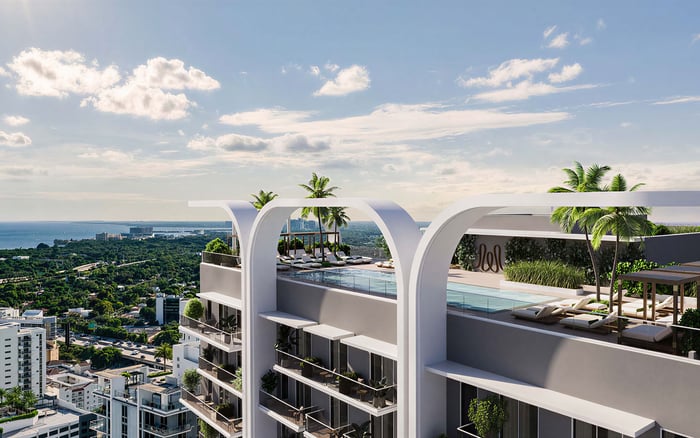
In Miami’s luxury condo market, view remains emotional, but elevation is becoming a more practical measure of risk, carrying costs, financing comfort, and resale confidence.

For years, the Miami condominium search has followed a familiar hierarchy: water first, floor height second, finishes third, and amenities close behind. The uninterrupted Biscayne Bay panorama, the Atlantic horizon, the glittering city grid after dusk-these remain powerful emotional drivers. Yet sophisticated buyers are increasingly asking a quieter question before they fall for the view: how does the building sit in relation to flood exposure?
That question brings the elevation certificate into sharper focus. In a luxury condo search, it may not carry the allure of a rendering package, amenity plan, or private elevator foyer. It is, however, highly practical. It can help frame risk, carrying costs, lender comfort, association planning, and eventual resale liquidity. For a buyer comparing Brickell, Miami Beach, Sunny Isles, and other coastal or bayfront settings, the certificate may now sit in the same conversation as floor plan, exposure, and service level.
The shift is not about rejecting beauty. It is about recognizing that in South Florida, beauty and resilience are increasingly connected.
An elevation certificate generally records key elevation information for a structure in relation to flood risk benchmarks. For a condominium buyer, the document is less about the height of the living room view and more about the building’s relationship to water, grade, access, mechanical areas, and insurable exposure.
That distinction matters. A residence on a high floor may feel removed from flood concerns, but the building itself still has shared systems, parking areas, lobbies, service corridors, storage, and entry points. If those elements are vulnerable, the owner may still share in the financial consequences through insurance premiums, reserves, special assessments, or operating budgets.
In the ultra-premium segment, buyers are accustomed to reviewing architectural pedigree and material quality. Elevation documentation adds another layer of due diligence. It does not replace the emotional appeal of water-view living, but it helps define the cost and durability of owning it.
A spectacular view can command a premium, but it cannot answer every ownership question. A buyer may love a glass-corner residence overlooking the bay and still need to understand how the building’s lower levels, critical systems, and flood-related documentation have been handled.
This is especially relevant in markets where oceanfront positioning is part of the dream. The same proximity that creates the sunrise, breeze, and beach access also places the asset in a more complex insurance and maintenance environment. In that context, the elevation certificate becomes a tool for interpreting the long-term economics behind the view.
A buyer who once compared only the 28th floor against the 36th floor may now compare the building platform, entrance conditions, garage exposure, and association preparedness. High floors still matter for privacy, light, and horizon lines. They simply do not eliminate the need to understand the building below.
Luxury buyers often focus on purchase price, design, and lifestyle, but ownership confidence is also shaped by predictability. Insurance is part of that equation. Elevation information can influence how risk is assessed, how coverage is discussed, and how a building’s operating expenses are understood.
Financing can also be affected by the broader risk profile of a property. A lender evaluating a condominium is not looking only at the borrower. The building, association, insurance structure, and financial health may all be relevant to the transaction. When flood-related documentation is incomplete or unclear, the underwriting conversation can become more complicated.
For cash buyers, the issue does not disappear. Paying without a mortgage may remove one layer of approval, but it does not erase ongoing ownership costs or future resale considerations. The next buyer may finance. The next buyer may ask harder questions. A clear file today can support marketability tomorrow.
In a condominium, the individual residence is only one part of the asset. The association’s responsibilities, maintenance culture, reserve planning, and building-wide documentation can influence the real cost of ownership. Elevation-related risk is therefore not only a technical issue. It is a governance issue.
A buyer should understand whether the association has organized relevant flood documentation, how building systems are protected, and whether prior or anticipated capital needs are being addressed with discipline. The most beautiful lobby in Miami does not answer whether critical components are elevated, hardened, relocated, or otherwise managed.
This is where luxury advisory becomes valuable. A polished sales presentation may show the lifestyle. A thoughtful review of association materials can reveal whether that lifestyle is supported by durable stewardship.
The better question is not whether elevation certificates matter more than views in every case. The better question is how much risk a buyer is willing to absorb for a particular view, address, or lifestyle.
A trophy residence with extraordinary exposure may still be the right acquisition if the building has strong documentation, thoughtful infrastructure, and a well-capitalized association. Conversely, a beautiful view in a building with vague answers may deserve a more cautious valuation. The goal is not to eliminate desire. The goal is to price desire intelligently.
Buyers can think in three layers. First, the residence itself: floor height, layout, exposure, and finish level. Second, the building: elevation documentation, systems, access, insurance posture, and reserves. Third, the market: future buyer perception, liquidity, and the likelihood that documentation will become more important over time.
Miami’s luxury submarkets have different relationships with water. Brickell offers an urban waterfront and financial-district rhythm. Miami Beach carries a resort and architectural identity. Sunny Isles is defined by vertical beachfront living. Each appeals to a different buyer, but all require a more nuanced understanding of the land and building conditions beneath the lifestyle.
The same is true for boutique bayfront addresses, island settings, and established waterfront enclaves. A buyer may prioritize boating, walkability, beach access, privacy, or skyline drama. Elevation documentation should travel alongside those preferences, not appear only after contract negotiations have begun.
For an international or second-home buyer, this is particularly important. The property may be used seasonally, but the building operates year-round. Carrying costs, insurance changes, and association decisions continue whether the owner is in residence or abroad.
In luxury real estate, liquidity is often protected by scarcity, design, brand, and location. In coastal markets, it may also be protected by clarity. A future buyer will likely want the same comfort today’s prudent buyer wants: a compelling residence in a building whose risk profile is understood.
This is why elevation certificates can influence value beyond the immediate purchase. They may help reduce uncertainty during resale discussions, particularly when competing buildings offer clearer documentation. In a market where buyers are increasingly sophisticated, unanswered questions can become negotiation points.
A view may win attention. Documentation can help preserve confidence once attention turns into due diligence.
Before becoming emotionally committed, ask for the relevant elevation documentation and association materials early. Review them with the same seriousness given to floor plans, budgets, house rules, and closing costs. If the residence is in a waterfront or low-lying setting, do not assume that being on a high floor resolves every exposure.
Ask how flood-related information intersects with insurance, reserves, mechanical systems, parking, lobby access, and capital planning. Clarify whether the association has a proactive approach or a reactive one. If answers are vague, slow down.
The most refined Miami condo purchase is not merely the one with the most cinematic view. It is the one where the view, the building, and the documentation align.
What is an elevation certificate in a condo search? It is a document that helps describe a building’s elevation characteristics in relation to flood exposure. For condo buyers, it can clarify building-level considerations beyond the individual unit.
Does a high-floor condo eliminate flood concerns? No. A high-floor residence may be physically above flood exposure, but shared areas, systems, parking, and access points can still affect ownership costs.
Should elevation matter more than the view? It depends on the building and the buyer’s tolerance for uncertainty. In many cases, the strongest purchase combines a desirable view with clear documentation.
Can elevation information affect insurance costs? It can be relevant to how flood-related risk is evaluated. Buyers should review insurance implications as part of total carrying costs.
Why does this matter to cash buyers? Cash buyers still face operating costs, assessments, and future resale questions. The next buyer may require financing and may scrutinize documentation closely.
Is this only an oceanfront issue? No. Bayfront, riverfront, island, and low-lying urban settings can all raise similar questions. The specific building conditions matter most.
How early should I request the certificate? Ideally, before the buyer becomes fully committed emotionally or financially. Early review can prevent surprises during contract or closing stages.
Can an association’s planning matter as much as the certificate? Yes. Documentation is important, but reserve planning, system protection, and governance can be equally meaningful to ownership confidence.
Do new buildings automatically have better elevation profiles? Not automatically. Newer construction may offer modern planning, but buyers should still review the actual documentation and building details.
What is the best way to compare two similar Miami condos? Compare the view, floor plan, building documentation, insurance posture, reserves, and resale narrative together. The best choice should feel both beautiful and defensible.
For a tailored shortlist and next-step guidance, connect with MILLION.
If branded residences are on your mind — as a home or as an allocation — we would be glad to share what we are seeing, privately.
Begin a quiet conversation