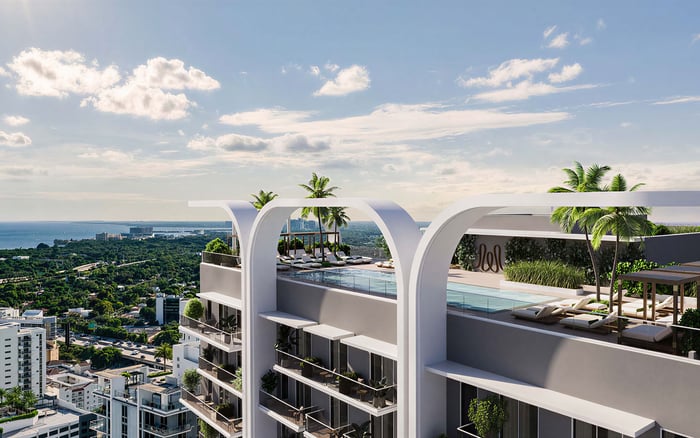
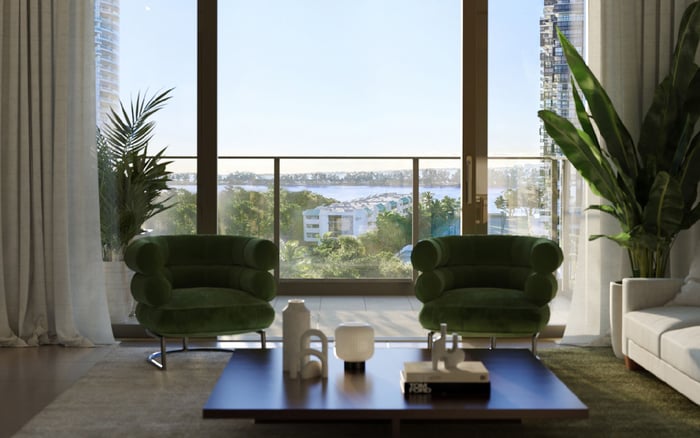
A practical South Florida guide for cash buyers who want speed without overlooking the legal, physical, and resale risks that can affect a prized view corridor.
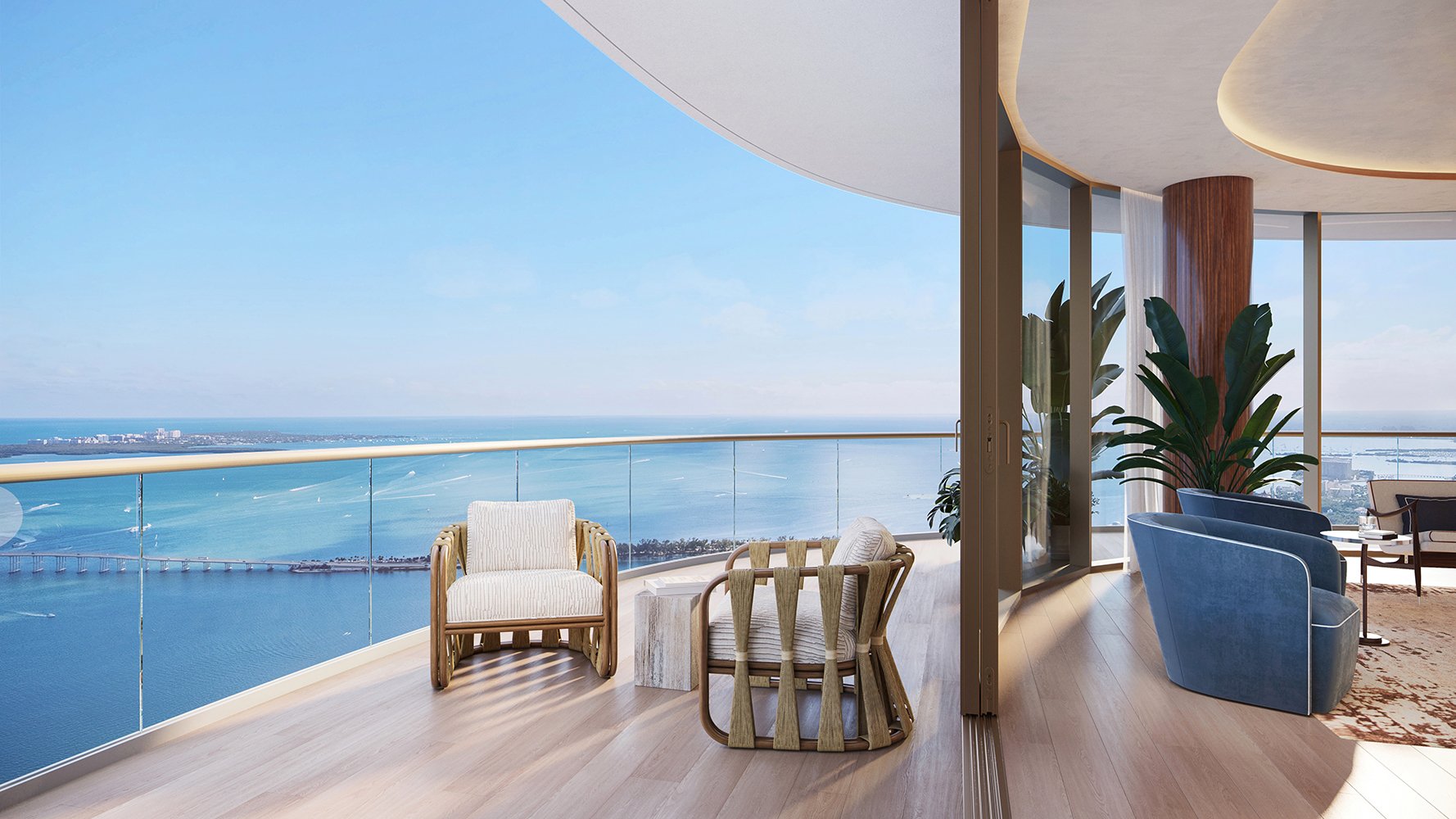
Cash gives a buyer unusual control. It can simplify negotiation, remove lender timing, and create a quieter path to contract. Yet a cash position does not protect the view. The line of sight that makes a residence feel rare, whether it frames water, skyline, gardens, or a preserved horizon, can be affected by issues that are not visible during a showing.
View-corridor risk is not limited to a future tower rising next door. It can involve adjacent parcel ownership, air rights, easements, association rules, setbacks, balcony enclosures, landscaping, roof equipment, marina structures, or the way a redevelopment site may be configured. A buyer who moves quickly still needs to understand which part of the view is protected, which part is merely enjoyed, and which part depends on neighboring land remaining as it is.
That distinction is especially important in South Florida, where lifestyle value is often inseparable from outlook. A file marked Brickell, Miami Beach, Sunny Isles, oceanfront, high-floor, or waterview should never be treated as self-explanatory. Those labels express a desire; they do not create a legal guarantee.
The first verification is conceptual: what exactly is being purchased? A residence may include private interior space, balcony or terrace rights, parking, storage, and shared access to amenities. It does not automatically include an enforceable right to preserve the same visual corridor forever.
Cash buyers should ask for the documents that define boundaries and rights with precision. In a condominium, that means the declaration, amendments, rules, limited common element descriptions, and any exhibits that address terraces, balconies, windows, setbacks, and common areas. In a single-family setting, it may mean surveys, title materials, recorded easements, covenants, and any association documents that govern height, landscaping, docks, walls, or additions.
The essential question is simple: is the view protected by recorded rights, by public regulation, by private agreement, or by nothing more than the current condition of surrounding property? Each answer carries a different level of confidence. A beautiful outlook may still be worth acquiring even if it is not fully protected, but the purchase price and negotiation strategy should reflect that reality.
A polished residence can distract from the land around it. Before removing protections, a cash buyer should study the parcels that sit within the relevant sightline. The goal is not to predict the future with certainty. It is to identify where change could originate.
Look at the ownership pattern, parcel size, existing structures, and development potential of neighboring sites. A low structure next door is not the same as permanent open space. A parking area, service lot, club facility, retail parcel, or older building may carry different future implications than a fully improved site with limited practical flexibility. Even when no immediate change is apparent, the buyer should understand whether the view depends on another owner having no incentive to alter the property.
For waterfront and skyline views, the angle matters. A slight shift in orientation can mean the difference between losing a sliver of outlook and losing the central visual axis from the primary living room. A site walk is useful, but it should be paired with a plan review. Mark the sightline from the principal rooms, not merely from the balcony edge. The view that supports value is often the one seen from daily living spaces.
Public rules and private restrictions work differently. Public zoning may influence height, massing, setbacks, uses, and site planning. Private documents may control matters inside a building, within an association, or among neighboring owners. Neither should be assumed to resolve the entire question.
A buyer should have counsel or a qualified consultant review the relevant rules that affect adjacent properties and the subject property itself. The review should focus on practical outcomes: what can be built, where it can be placed, how tall it could be, whether variances or approvals may alter the baseline, and whether any recorded restrictions limit the result.
Private restrictions deserve equal attention. In luxury buildings, exterior uniformity can matter. Window treatments, balcony use, terrace structures, planters, screening, and renovations may all affect how a residence looks and lives. Even if an outside project never appears, an internal rule can shape the enjoyment of a terrace or the ability to preserve openness.
For buyers seeking discretion, the best review is calm and document driven. Avoid relying on casual assurances. A confident statement during a showing should be converted into a document request, a written clarification, or a legal review point.
Cash buyers sometimes weaken their own position by treating speed as a virtue in every clause. The strongest cash offer is not necessarily the least protected one. It is the offer that gives the seller confidence while preserving enough time for targeted diligence.
Instead of relying on a broad and unfocused review period, consider a concise diligence plan tied to view-corridor issues. The buyer can request condominium documents, association records, surveys, title materials, plans, disclosures, and any information related to pending exterior work or adjacent-property matters. The contract can also allow specialists to review what cannot be evaluated during a brief visit.
Sequencing is critical. Before deposit risk becomes meaningful, the buyer should know whether any view claim is supported. If the premium is being paid for a specific corridor, that corridor should be described internally by the buyer’s team with the same seriousness as finishes, floor height, or parking. If the answer is uncertain, the buyer can still proceed, but should do so with open eyes.
A view is personal, but its market effect is not only emotional. Future buyers may ask the same questions a disciplined buyer asks today. If the view is vulnerable, unclear, or dependent on neighboring property remaining unchanged, that uncertainty may affect future negotiation.
The strongest acquisitions are those where the buyer can explain the outlook cleanly. For example: the view is materially protected by recorded rights; the view is partly protected but has exposure on one flank; the view is not protected but the buyer accepts the risk because the residence has other strengths. Each position can be rational. What matters is that the buyer understands the category before closing.
This is where a cash purchaser should resist vanity. The best view at cocktail hour may not be the best risk-adjusted acquisition. A slightly different line, floor, stack, or orientation may offer a more durable ownership story. Conversely, an extraordinary but less protected view may still be compelling if priced, negotiated, and held with that risk in mind.
A practical checklist keeps emotion from overwhelming judgment. Define the primary view from the exact rooms that matter. Identify the parcels, rooftops, structures, docks, lots, or open areas inside that corridor. Review public rules and private documents. Confirm whether any recorded easement, covenant, declaration, or agreement supports the view. Ask whether there are pending exterior projects, known association discussions, or material changes that may affect enjoyment.
Then stress-test the answer. If the view narrowed, would the residence still satisfy the lifestyle objective? If the central axis changed, would the price still feel appropriate? If a future buyer challenged the premium, what documentation could be shown? This exercise does not remove risk, but it transforms risk from vague anxiety into a defined underwriting point.
For South Florida’s most discerning buyers, that distinction is everything. Cash should buy certainty where certainty is available, and clarity where it is not.
Does paying cash reduce view-corridor risk? No. Cash may reduce financing friction, but it does not create legal protection for a view.
What is a view corridor? It is the line of sight from a residence toward a valued outlook, such as water, skyline, gardens, or open space.
Can a condominium document protect a view? Sometimes documents may define rights or restrictions, but they must be reviewed carefully before a buyer relies on them.
Should I review adjacent parcels before closing? Yes. Neighboring land is often where future changes that affect a view may originate.
Is a high floor always safer? Not always. High floors can improve outlook, but orientation and surrounding development potential still matter.
Can landscaping create view-corridor risk? Yes. Trees, hedges, walls, and exterior improvements can affect sightlines, particularly in low-rise or waterfront settings.
Should the contract mention view diligence? It can be useful to preserve time for targeted document review, specialist input, and counsel before protections are waived.
Is an unprotected view always a reason to walk away? No. It may still be a desirable purchase if the risk is understood, priced, and accepted.
What should I ask the seller or association? Ask about pending exterior work, rule changes, neighboring projects, disputes, and any documents that affect sightlines.
What is the best way to shortlist comparable options for touring? Start with location fit, delivery status, and daily lifestyle priorities, then compare stacks and elevations to validate views and privacy.
To compare the best-fit options with clarity, connect with MILLION.
If branded residences are on your mind — as a home or as an allocation — we would be glad to share what we are seeing, privately.
Begin a quiet conversation