In Miami’s luxury condo market, acoustic glass is becoming a serious lifestyle filter. For buyers weighing views, height, traffic, nightlife, privacy, and long-term comfort, a quieter interior can be as valuable as the postcard panorama outside.
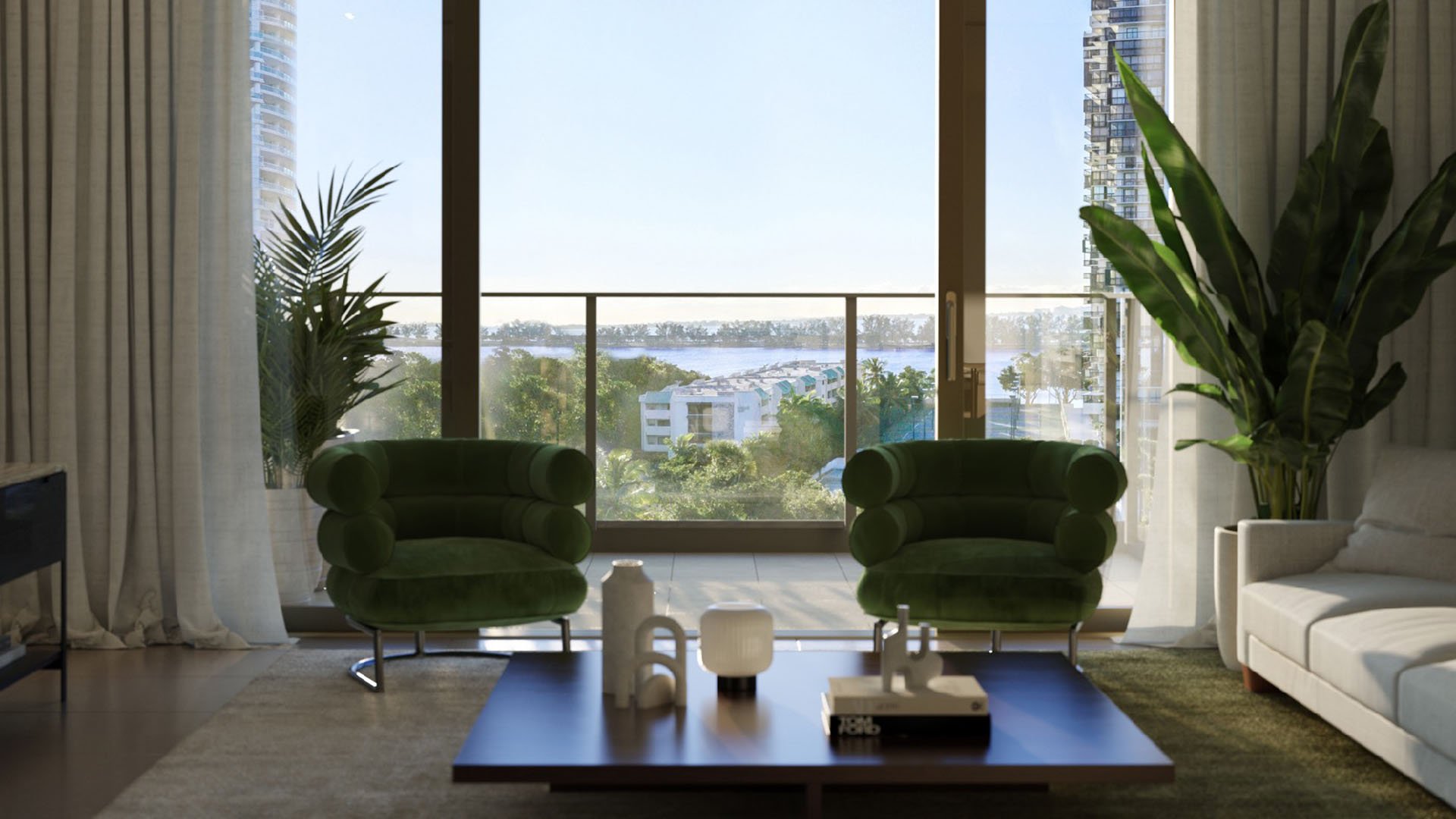
For years, the Miami condo search has been framed by the window. Buyers asked about the bay view, the ocean line, the city lights, the sunset exposure, and the height of the residence. Those questions still matter. Yet for sophisticated buyers, another question is moving higher on the list: how quiet does the home feel when the glass is closed?
Acoustic glass is not a decorative upgrade in this conversation. It is a daily-use feature that can shape sleep, conversation, concentration, entertaining, and the emotional quality of a residence. In a city where water, density, nightlife, bridges, causeways, marinas, aviation paths, construction, and weekend traffic can all influence the soundscape, serenity is no longer assumed simply because a home is expensive.
The view may sell the first impression. The silence, or lack of it, often defines the second showing.
The most desirable exposures in Miami are frequently the most active. A residence facing a glittering skyline may also face traffic movement, restaurant energy, valet circulation, or late-night street life. A waterfront home may bring boat activity, wind pressure, pool decks, or marina noise. A high-floor residence may rise above some street sounds, yet it can also be exposed to wind and mechanical resonance in ways a buyer might not expect.
That is why a buyer should treat a view as a sensory package, not a visual feature alone. A dramatic panorama can still be an excellent purchase, but only if the interior experience aligns with the buyer’s actual routine. Someone who works from home, sleeps lightly, hosts formal dinners, or uses the residence as a retreat may value quiet more than a few degrees of extra exposure.
In lifestyle terms, acoustic glass can turn a view from something admired occasionally into something lived with comfortably every day.
At its simplest, acoustic performance is about reducing unwanted sound transmission through the building envelope. In luxury condominiums, that envelope is often defined by expansive glass. Floor-to-ceiling windows, sliding doors, corner walls, and terraces create openness, but they also make glazing quality central to comfort.
Buyers do not need to become engineers, but they should ask sharper questions. What type of glazing is used? Are the balcony doors substantial and well-sealed? Does the frame feel rigid? Is the interior quiet during rush hour, at night, and on weekends? Does sound enter through the glass, the door track, the ventilation system, or an adjacent wall?
The point is that acoustic comfort is not only about the pane itself. It is about the complete assembly: glass, frame, seals, installation, wall condition, door operation, and the way the residence is oriented toward its surroundings.
Brickell remains one of the clearest examples of this tradeoff. Buyers are drawn to its vertical energy, restaurant access, financial district convenience, and luminous city views. The same ingredients that make Brickell compelling can also create a more active acoustic profile.
For a buyer comparing residences in Brickell, the question is not whether the neighborhood is quiet in the abstract. It is whether a specific home creates enough separation from the street, the pool deck, nearby terraces, bridges, and traffic corridors. A higher floor can help in some cases, but it is not a universal solution. Orientation, glazing, terrace depth, and the surrounding building geometry all matter.
A well-selected Brickell residence can feel cosmopolitan without feeling restless. That balance is where acoustic glass becomes a luxury feature, not a technical afterthought.
Along the coast, the view conversation becomes even more emotional. Oceanfront buyers often prioritize sunrise, horizon lines, sand, and the feeling of living directly against the Atlantic. Yet beachfront living has its own acoustic character. Wind, terrace exposure, hospitality activity, pool areas, nearby roads, and seasonal energy can all influence how a residence feels after sunset.
In Miami Beach, the most valuable question may be whether the residence feels composed when the city is fully awake. In Sunny Isles, the inquiry may focus on how the tower handles wind, balcony doors, and the relationship between ocean exposure and interior stillness. The best residences allow the owner to enjoy the theatrical edge of the coast while preserving a private, controlled interior.
This is why buyers should avoid judging beachfront homes only on a clear, quiet weekday afternoon. A luxury residence should be experienced when the area is active, when wind is present, and when the buyer can understand the home’s true acoustic personality.
A quieter neighborhood image does not eliminate the need for acoustic review. Coconut Grove offers a different rhythm than the central urban core, often associated with canopy, waterfront pockets, and a more residential sense of arrival. Still, sound can come from roads, service areas, generators, neighboring amenities, marina activity, or nearby construction.
For buyers seeking calm, the temptation is to assume that a softer neighborhood will automatically produce a quieter residence. That assumption can be costly. A boutique building on a charming street may still have a residence facing a loading area. A serene view may still be affected by pool activity. A lush exposure may still require strong glass and precise door seals.
The refined buyer treats every residence as its own acoustic environment.
High floors remain desirable for privacy, light, and broad perspective. They can reduce certain street-level interruptions, but height alone does not guarantee quiet. Sound behaves in complex ways around towers, water, open corridors, and neighboring structures. Wind can also become more noticeable as elevation increases.
A buyer should therefore compare not only floor number, but also the type of sound present. Is it a low urban hum, intermittent impact noise, wind movement, mechanical vibration, or voices from an amenity deck? Some sounds disappear into the background. Others become irritating precisely because they are irregular.
The best test is experiential. Stand in the primary bedroom. Close every door. Turn off music and television. Wait. Then repeat the exercise in the living room and near the terrace threshold. Luxury is often revealed in what does not intrude.
Waterview is one of the most powerful search terms in South Florida real estate, but it should not be treated as a substitute for livability. A buyer may find two residences with equally compelling water exposure, only to discover that one feels dramatically calmer inside.
This difference can influence how the home is used. A quiet waterfront residence encourages reading, sleeping, working, and entertaining with ease. A noisier one may still photograph beautifully, but it may push the owner away from certain rooms at certain hours.
That is why acoustic glass can feel more valuable than a marginally better angle of water. The most successful purchase is not always the view with the widest composition. It is the residence where the view and the interior mood reinforce each other.
The first rule is to visit more than once when possible. A morning showing and an evening showing can reveal different conditions. Weekdays and weekends may also feel different, especially near restaurants, roads, marinas, beach clubs, or event corridors.
Second, test the operable elements. Open and close terrace doors. Listen for the change. A strong acoustic envelope should create a noticeable transition between outside and inside. If the difference is modest, the buyer should ask more questions.
Third, move through the plan. Bedrooms matter more than foyers. Primary suites matter more than secondary hallways. If one room is especially quiet, identify why. If another is noticeably louder, determine whether the issue is exposure, glazing, adjacency, or building systems.
Finally, consider lifestyle. A pied-à-terre used for long weekends may tolerate more ambient energy than a primary residence. A buyer who loves nightlife may accept a livelier soundscape. A buyer seeking recovery, discretion, and deep rest may not.
Acoustic comfort is also a resale consideration. A remarkable view attracts attention, but a quiet interior broadens the pool of serious buyers. Families, executives, remote professionals, seasonal residents, and international owners often value the ability to close the door and feel removed from the city.
This does not mean every buyer should choose acoustic glass over the view. It means the hierarchy is changing. The best Miami condo search now weighs view quality, floor height, exposure, building design, terrace usability, privacy, and acoustic performance as one integrated decision.
In the ultra-premium segment, the most persuasive residence is not merely beautiful from the window. It is composed behind it.
Should acoustic glass matter more than the view? It depends on lifestyle, but quiet can affect daily comfort more than a slightly better angle of water or skyline.
Can a high floor still be noisy? Yes. Height may reduce some street sound, but wind, mechanical noise, and reflected sound can still matter.
Is acoustic glass only important in Brickell? No. It can matter in coastal, waterfront, marina, urban, and even quieter residential settings.
How should I test sound during a showing? Close all doors and windows, turn off media, stand in the bedrooms, and listen for several minutes.
Should I visit the condo at night? If possible, yes. Evening conditions may reveal traffic, nightlife, wind, or amenity noise not present earlier.
Does oceanfront living require special sound attention? It can. Wind, terraces, pool decks, and nearby activity may influence the interior experience.
Is the glass the only factor in acoustic comfort? No. Frames, seals, doors, installation, ventilation, walls, and orientation all contribute.
Can a quieter unit support resale appeal? Often, yes. A calm interior can appeal to buyers who prioritize sleep, work, privacy, and retreat.
Should I sacrifice all view quality for quiet? Not necessarily. The goal is to find the strongest balance between view, exposure, and livability.
What is the main lesson for luxury buyers? Do not buy the photograph alone. Buy the way the residence feels when the glass is closed.
When you're ready to tour or underwrite the options, connect with MILLION.
If branded residences are on your mind — as a home or as an allocation — we would be glad to share what we are seeing, privately.
Begin a quiet conversation