A discreet look at why pool seating is moving from lifestyle detail to practical buyer filter across South Florida’s luxury residential market.
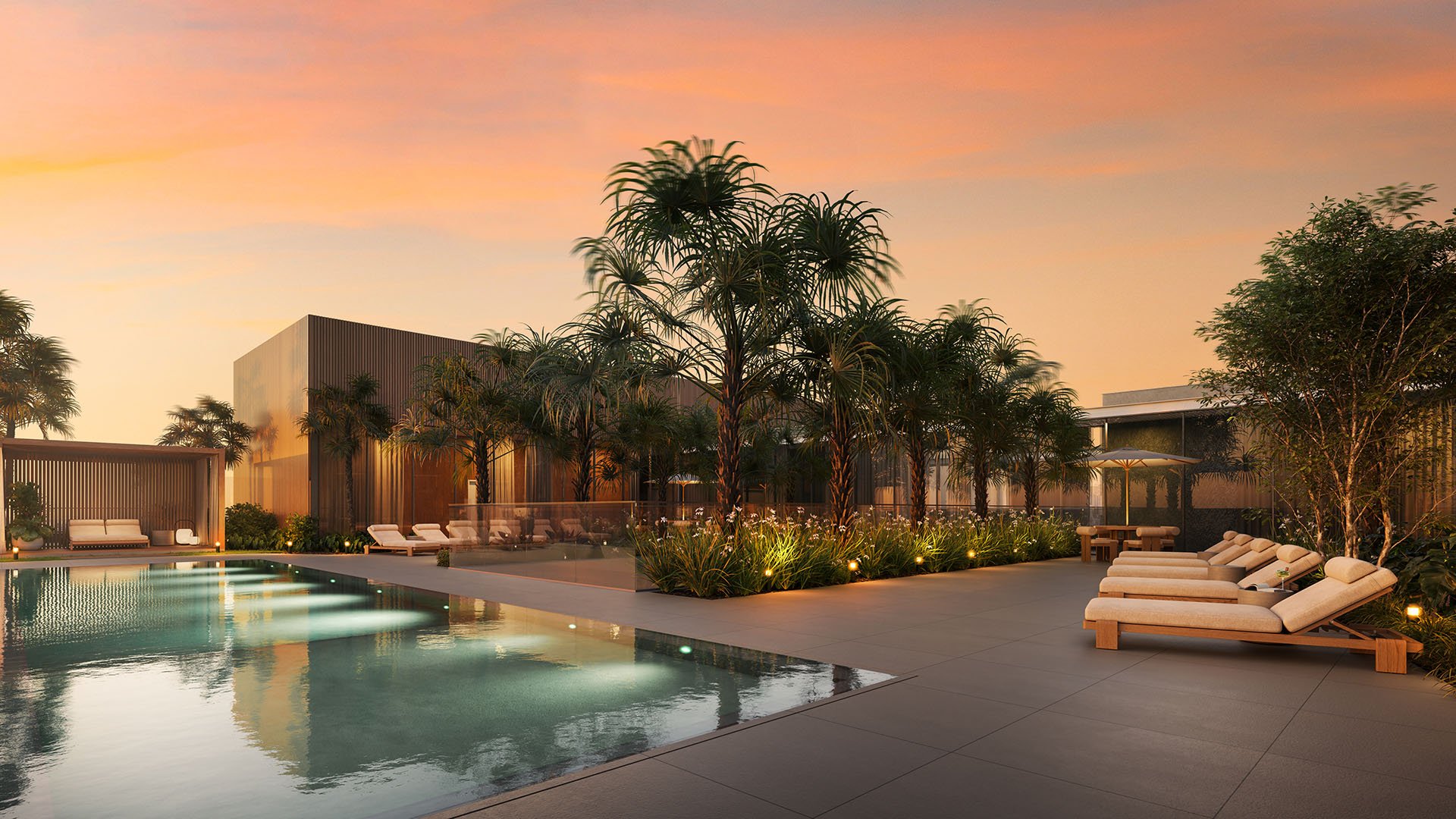
For many South Florida buyers, the pool is no longer judged as a blue rectangle attached to a residence. It is being read as a social plan, a climate strategy, a privacy device and a measure of how the home will actually live. By 2026, pool seating is emerging as one of the quiet filters that separates a merely attractive property from one that feels fully resolved.
The shift is subtle but important. A buyer may still arrive focused on exposure, finishes, ceiling heights and water views. Yet on a second pass, attention often moves outdoors: where guests gather, where children remain visible, where shade falls, where morning coffee belongs and whether the seating feels generous without becoming performative.
This is not about adding more furniture. It is about whether the pool environment has been designed with the same seriousness as the kitchen, primary suite or main salon. In a region where outdoor living is central to the residential experience, the pool deck has become a second living room, and sophisticated buyers are judging it accordingly.
Luxury buyers tend to notice anything that interrupts ease. A beautiful pool with awkward seating can make a residence feel unresolved. If the chaise area is too exposed, the dining table too distant, the conversation zone too narrow or the shaded areas too scarce, the outdoor space begins to read as decorative rather than livable.
The most compelling pool settings answer several questions at once. Can two people sit privately without occupying the entire deck? Can a larger group gather without blocking circulation? Is there a place for wet towels and sandals that does not disturb the architecture? Can someone swim laps while others lounge, read or host? These are practical questions, but in the luxury segment they carry emotional weight.
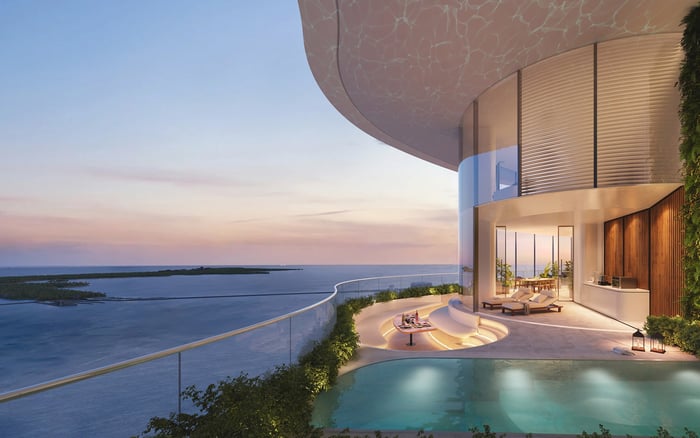
The vocabulary is becoming more precise: Pool, Balcony, Terrace and Lap-pool are no longer generic search terms. They are shorthand for how buyers imagine daily rhythm, entertaining style and personal retreat. A residence that handles these elements gracefully can feel calmer from the first showing.
South Florida rewards outdoor space, but it also exposes weak outdoor planning. Sun, humidity, breeze, glare and sudden rain quickly reveal whether pool seating is ornamental or genuinely useful. A single row of uncovered loungers may photograph well, yet fail to support how owners live across a full day.
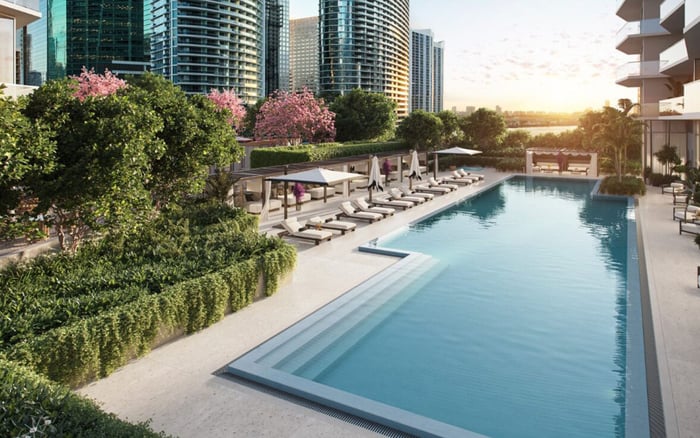
The best pool environments create choices. There is typically a sun position, a shaded position, a conversational position and a quiet position. None of those zones needs to be exaggerated, but each should feel intentional. In a condominium, that may mean a resort-level deck with varied seating and visual separation. In a single-family residence, it may mean covered terraces, integrated benches, softened edges and sightlines that preserve privacy.
For buyers comparing homes from Brickell to Miami Beach, this distinction matters. Dense urban settings may place greater value on privacy and acoustic comfort. Waterfront and beach-oriented settings may emphasize wind, glare control and the relationship between seating and view. In each case, pool seating becomes a way to test whether the property has solved the realities of its location.
An amenity can be listed. Atmosphere must be felt. Pool seating sits precisely between the two. It is a tangible feature, yet its value depends on proportion, placement and mood. A well-composed pool deck can make a residence feel more generous than its square footage suggests. A poorly composed one can make even a grand property feel strangely unusable.
This is why buyers are looking beyond the presence of cabanas or lounges and studying the hierarchy of space. They want to understand whether the pool area supports both solitude and hosting. They are also attentive to whether seating captures views without sacrificing discretion. Luxury, in this context, is not simply abundance. It is the absence of friction.
Seating also affects how a property transitions from day to evening. A pool setting that works only at noon is incomplete. Evening conversation, low lighting, dinner near the water and quiet post-swim rituals all require their own spatial cues. When those cues are already embedded, the home feels more finished.
The first test is circulation. Walk the pool deck as if people are already using it. If loungers, dining chairs and service paths compete for the same narrow band of space, the design may become difficult in practice. Strong pool seating allows movement to feel intuitive.
The second test is shade. Not every seat needs to be covered, but a luxury pool environment should offer meaningful refuge from direct sun. Shade can come from architecture, landscape, umbrellas or covered outdoor rooms. What matters is whether it feels integrated rather than improvised.
The third test is privacy. Seating should not place owners on display unless that is the intended experience. In condominiums, this may involve vertical separation, planting, screens or careful orientation. In houses, it may depend on garden walls, setbacks, mature landscaping or the relationship between the pool and interior rooms.
The fourth test is flexibility. A rigid deck can feel limiting, while a layered plan can adapt to guests, family routines and quieter days. Buyers should ask whether the space supports breakfast, reading, swimming, cocktails and dinner without requiring constant rearrangement.
Resale is often shaped by what a future buyer remembers after leaving the property. Pool seating can be one of those memory points. A terrace that feels graceful, shaded and socially intelligent may linger more strongly than a specification sheet. It signals that the residence has been considered as a complete lifestyle environment.
This does not mean every property needs an expansive pool deck. Smaller spaces can be compelling when they are edited carefully. A compact plunge pool with a beautifully scaled seating niche can feel more luxurious than a larger pool surrounded by leftover paving. Buyers are not simply rewarding size. They are rewarding clarity.
For sellers and developers, the lesson is equally practical. Outdoor furniture should not be treated as staging alone. The underlying plan matters: electrical placement, lighting, drainage, materials, planting, access to service areas and the relationship between interior and exterior rooms. When these are aligned, seating feels natural. When they are not, even excellent furnishings can appear temporary.
The most persuasive pool seating for 2026 is likely to feel composed rather than theatrical. Buyers are gravitating toward homes that allow a private resort experience without losing residential warmth. That balance is delicate. Too little seating feels underdeveloped. Too much can make a private home feel like a hospitality venue.
The ideal is controlled generosity. There is space to host, but not at the expense of serenity. There are multiple seating moments, but they do not crowd the architecture. Materials feel durable and tactile. Views are honored, yet comfort is not sacrificed to spectacle.
This is why pool seating has become a filter. It reveals whether a residence has been designed for images or for life. In South Florida, where the boundary between indoors and outdoors is central to the promise of luxury living, that distinction is increasingly difficult to ignore.
Why are buyers paying closer attention to pool seating? Because seating determines whether the pool area works as a true outdoor living room, not just a visual amenity.
Is pool size more important than seating quality? Not always. A smaller pool with thoughtful seating can feel more luxurious than a larger pool with awkward circulation.
What is the most important seating feature to evaluate? Shade is often critical, because it affects how comfortably the pool area can be used throughout the day.
Should pool seating be formal or relaxed? The strongest spaces usually combine both, with structured dining or conversation areas balanced by casual lounging.
Does pool seating matter in condominiums? Yes. Shared pool decks are judged by comfort, privacy, circulation and the ability to support different resident routines.
How can buyers assess privacy around a pool? They should sit or stand in the main seating zones and study sightlines from neighboring homes, towers or common areas.
Is a Lap-pool enough for luxury buyers? It can be, if the surrounding seating supports rest, shade and visual calm rather than feeling like an afterthought.
Do Balcony and Terrace spaces influence pool perception? Yes. Elevated outdoor areas can extend the pool experience when they connect visually and functionally to the setting.
Can better pool seating improve resale appeal? It can strengthen buyer perception by making the outdoor lifestyle feel complete, memorable and easy to inhabit.
What should buyers prioritize for 2026? They should look for layered seating, shade, privacy and circulation that support daily comfort as well as entertaining.
To compare the best-fit options with clarity, connect with MILLION.
If branded residences are on your mind — as a home or as an allocation — we would be glad to share what we are seeing, privately.
Begin a quiet conversation