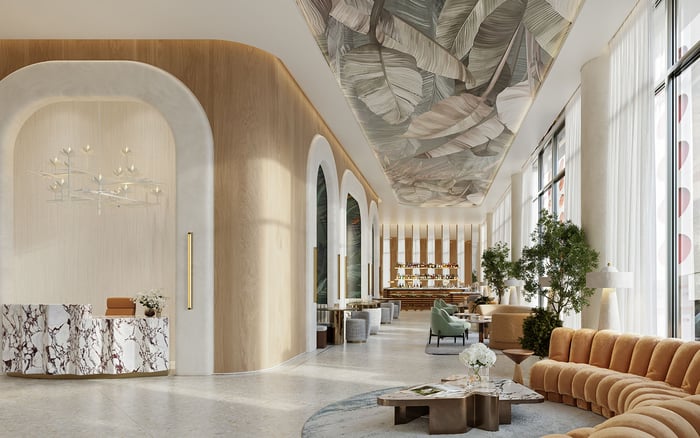
A discreet guide to why service culture, not another amenity deck, increasingly defines the most satisfying condominium ownership in South Florida.

In South Florida luxury real estate, amenity floors have become a language of their own. Buyers now compare wellness lounges, private dining rooms, screening rooms, golf simulators, spas, coworking suites, and dramatic pool decks with the precision once reserved for views and ceiling heights. Yet the most sophisticated condominium residents often reach a different conclusion once ownership begins. The defining luxury is not always another room on a brochure. It is the confidence that the building works beautifully when no one is performing for a sales tour.
High-service condominium culture is the invisible architecture of daily life. It is the doorman who knows when to be warm and when to be discreet. It is the valet team that understands the rhythm of school runs, dinner reservations, airport transfers, and visiting family. It is the management office that resolves issues before they become conversations. In Brickell, on the beach, or in quieter residential enclaves, this culture can matter more than the most photogenic amenity floor because it shapes every arrival, every departure, and every private moment in between.
The modern luxury buyer is not wrong to care about amenities. A beautiful pool, a generous terrace, a serene spa, and well-planned fitness spaces all contribute to a sense of ease. The question is not whether amenities matter. The question is whether the building’s service culture is strong enough to make those amenities feel effortless rather than ornamental.
A private dining room loses its appeal if reservations are chaotic. A wellness suite feels less exclusive if maintenance is inconsistent. A residents’ lounge can become a liability if guest policies are vague or enforcement is uneven. The most compelling condominium buildings understand that amenities require choreography. Furniture, lighting, scent, sound, staffing, cleanliness, and resident behavior all have to work in concert.
For high-net-worth owners, time is often the rarest possession. A building that gives time back through intuitive service has a durable advantage over one that merely offers more rooms to manage. The best condominium culture reduces friction. It does not ask residents to supervise the experience they already paid to enjoy.
High-service culture is less about formality than fluency. It begins with a staff that understands the building, the residents, and the standards expected at the top of the market. That does not mean theatrical hospitality. In a private residential setting, service should be polished, calm, and unobtrusive.
The signs are easy to observe during a careful visit. Are arrivals handled smoothly, or does the porte cochere feel congested and improvised? Does the lobby feel protected without feeling cold? Are packages, guests, deliveries, and service providers managed with precision? Is the maintenance team visible in the right way: present enough to inspire confidence, but never intrusive?
A strong culture also appears in the way staff members communicate with one another. Luxury buyers should notice tone, eye contact, handoffs, and pacing. A building may have spectacular finishes, but if the operational rhythm feels strained, ownership may feel strained as well.
Oceanfront living brings a special expectation of beauty, and an equally heightened need for discipline. Salt air, sun, wind, sand, and heavy seasonal use all place pressure on common areas and exterior experiences. The issue is not merely whether a building looks pristine on a given afternoon. The better question is whether the building has the habits required to stay pristine.
Service-forward condominiums treat upkeep as a daily ritual. Elevators are watched. Corridors remain composed. Pool areas are reset with care. Beach access, where present, is handled with order. Residents notice when a team is empowered to act quickly, and they notice when small items linger.
This matters because the luxury buyer is not purchasing a static object. A condominium is a living environment. Its value is carried not only by architecture and location, but also by the continuous stewardship of shared space.
A high-service building is also a high-trust building. Residents need to feel that privacy is understood at every level, from guest arrivals to elevator etiquette to the handling of household staff and deliveries. In South Florida, where many owners travel frequently or use residences seasonally, that trust becomes even more important.
Pets are a revealing test. Pet-friendly living can be elegant when rules are clear, amenities are maintained, and staff understand how to balance warmth with order. Without that culture, even a small inconvenience can become a recurring irritation. The same principle applies to guests, short visits by family, private chefs, trainers, drivers, and vendors. The building’s social contract must be legible.
Rules alone do not create civility. Culture does. The best buildings make expectations feel natural rather than punitive. Residents should sense that the property is protected by shared standards, not constant correction.
Investment conversations in luxury condominiums often begin with location, view, floor height, floor plan, and comparable sales. Those elements remain essential. But operational quality can influence desirability in ways that are less obvious and often more enduring.
A building known for excellent service can become easier to recommend privately. Owners speak about it with confidence. Guests remember it. Prospective buyers feel it during showings. Conversely, a building with weak service culture may require more explanation even when the physical product is impressive.
For resale, this can be meaningful. Buyers at the upper end are not only assessing what they can see. They are also assessing what ownership will feel like after closing. If the lobby experience feels refined, the elevators run smoothly, the staff is composed, and common areas are consistently cared for, the residence benefits from a broader aura of quality.
The most useful due diligence is often experiential. Visit at different times of day. Observe morning departures, late-afternoon arrivals, weekend activity, and the tone of the lobby during peak periods. A building that performs only during quiet hours may not be the building you want during season.
Ask practical questions about staffing, management communication, package handling, valet flow, guest access, maintenance protocols, and reservation systems for shared spaces. Review house rules with the same seriousness as the floor plan. For many owners, the difference between a good purchase and a great one is found in these operational details.
It is also wise to consider personal temperament. Some buyers want a highly social building with visible programming. Others want discretion, minimal interaction, and a hotel-level sense of order without hotel-level bustle. The right choice is not universal. It depends on how you actually live.
South Florida’s most discerning condominium buyers are increasingly fluent in the difference between spectacle and service. Spectacle photographs well. Service lives well. A building can offer magnificent amenities and still fail to deliver ease if the culture is weak. Another may have a more restrained amenity program yet feel deeply luxurious because every interaction is handled with intelligence.
The future of condominium prestige is not simply more square footage devoted to shared spaces. It is a more considered relationship between residents, staff, management, and the building itself. In that relationship, the finest amenity is not always visible. It is the feeling that the residence understands your life and protects it with grace.
Why can service culture matter more than amenities? Amenities are occasional, but service affects daily life. A well-run building makes every shared space easier to enjoy.
What should buyers observe during a condominium tour? Watch the lobby rhythm, valet flow, staff communication, elevator experience, and condition of common areas.
Is a larger amenity floor always better? Not necessarily. A smaller, impeccably managed amenity program can feel more luxurious than a larger one without discipline.
How does service culture affect privacy? Strong service teams manage guests, vendors, deliveries, and resident movement with discretion and consistency.
Should seasonal owners care more about service? Yes. Owners who travel frequently often rely on building staff and management to maintain confidence while they are away.
Can house rules reveal the culture of a building? Yes. Clear, balanced rules often indicate a community that values order, privacy, and predictable enjoyment.
What role does management play? Management sets the tone for staffing, maintenance, communication, and how quickly small issues are resolved.
Do luxury buyers still value amenities? Absolutely. Amenities need strong operations to feel genuinely luxurious over time.
How can a buyer compare two similar buildings? Spend time in both at different hours and compare how each building handles activity, service, and resident flow.
What is the simplest test of high-service culture? Ask whether the building reduces friction in daily life. The best residences make complicated living feel simple.
To compare the best-fit options with clarity, connect with MILLION.
If branded residences are on your mind — as a home or as an allocation — we would be glad to share what we are seeing, privately.
Begin a quiet conversation