Beach-chair service is becoming a sharper luxury real estate filter as buyers evaluate how easily an oceanfront residence turns private ownership into a seamless day at the shore.
For South Florida’s most selective buyers, proximity to the sand is no longer the full measure of coastal living. The sharper question is what happens after the elevator doors open, the family arrives, and the day is expected to unfold without negotiation. In that moment, beach-chair service becomes a proxy for something larger: how well a property translates ownership on the water into daily ease.
As 2026 buyer conversations become more granular, beach service is being treated less as a hospitality flourish and more as a practical filter. It signals staffing culture, amenity governance, privacy, guest control, and whether a building understands the rhythm of a second-home lifestyle. A chair, an umbrella, towels, chilled water, and a clean handoff may sound simple. In the luxury market, simplicity is often the product of excellent operations.
That is why beach access is no longer enough on its own. Buyers want to understand what access feels like at noon on a holiday weekend, during a family visit, or after a morning workout. They are looking for a residence that removes small frictions before those frictions become part of the ownership experience.
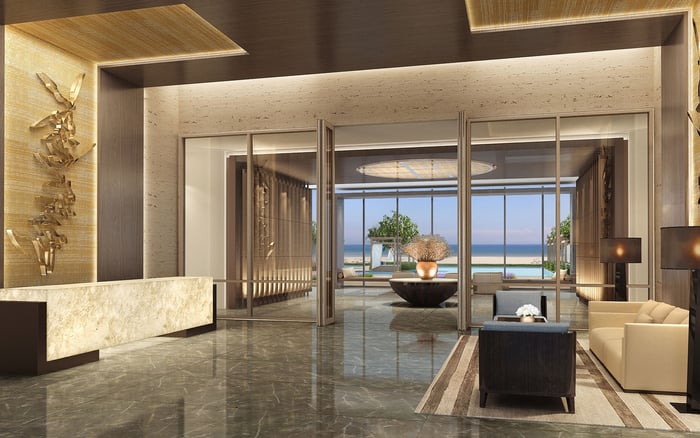
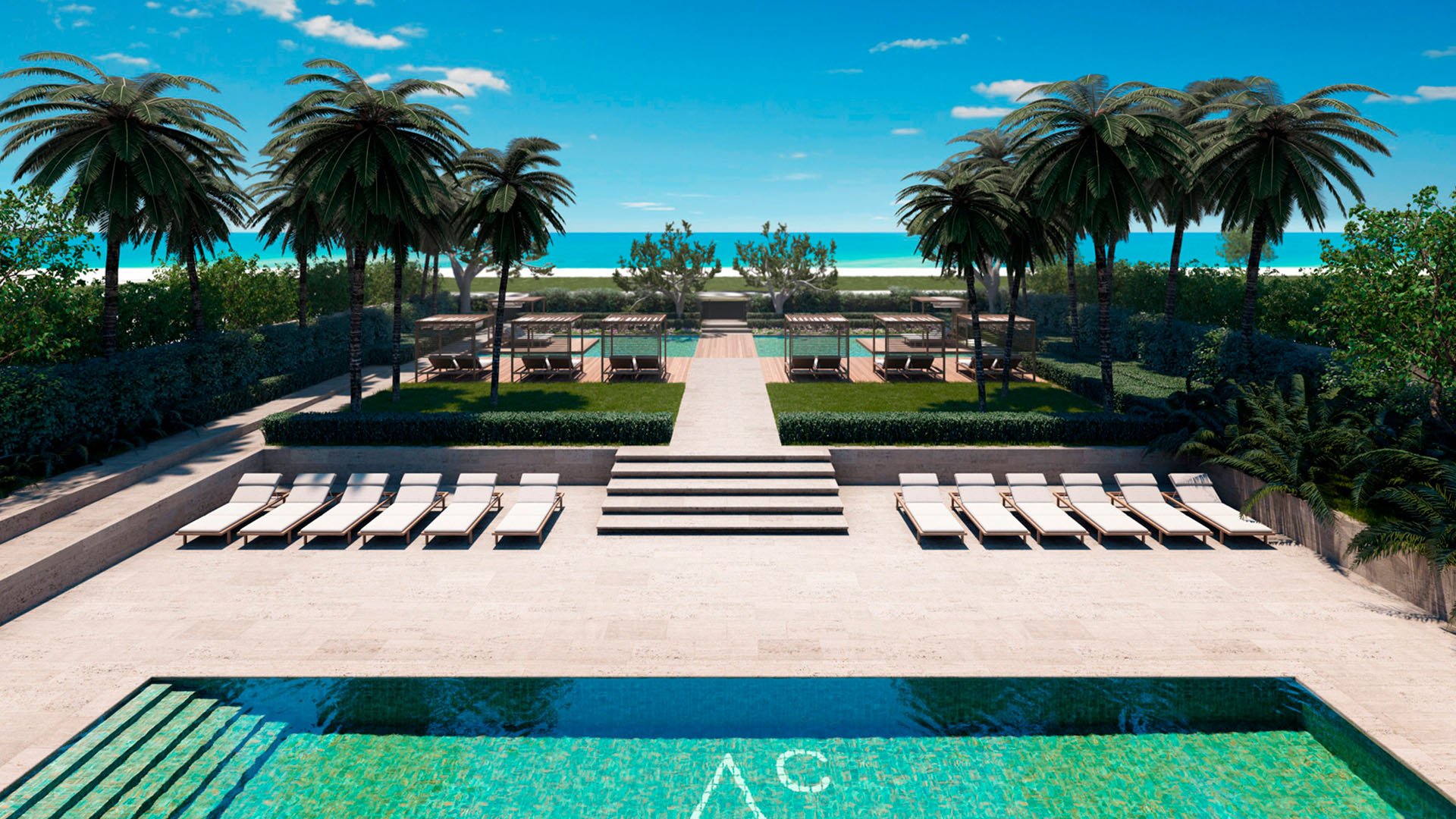
Beach-chair service sits at the intersection of design and behavior. A tower may have a cinematic lobby, a serene pool deck, and a well-composed spa, but the beach is where residents test the property’s promises in real time. Is the route intuitive? Is staff present? Are chairs already arranged? Are guests accommodated gracefully? Is there an unspoken sense of order?
For an oceanfront buyer, the beach is not an occasional amenity. It is part of the home’s emotional square footage. A well-run service program extends the residence outward, making the shoreline feel like a natural continuation of the private domain. When that handoff feels effortless, the residence gains a quieter form of value.
The inverse is equally important. If residents must manage logistics, reserve informally, carry equipment, or interpret unclear rules, the property can feel less complete. The issue is not the chair itself. It is whether ownership still requires management at the exact moment it should deliver release.
Today’s ultra-premium buyer is increasingly fluent in operational detail. The conversation moves quickly from finishes and views to staffing, service hours, replacement protocols, storage, weather policies, and amenity governance. These questions are not excessive. They reflect how luxury is actually lived.
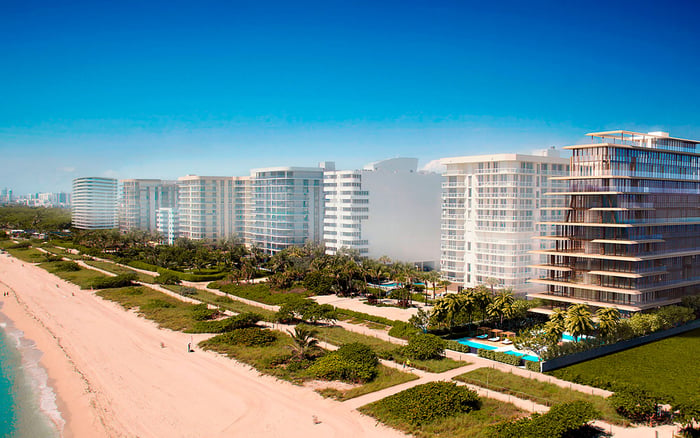
A family considering Miami Beach may ask how beach service works for children, visiting relatives, and long weekends. A buyer comparing Sunny Isles options may focus on privacy and the distance between lobby, pool, and sand. In Surfside, the conversation may turn toward discretion, scale, and whether the beach experience feels calm rather than crowded.
The most sophisticated clients also understand that service consistency depends on governance. Who manages the program? How are standards maintained? Are policies written clearly enough to avoid resident-by-resident improvisation? If the answer feels vague, the buyer may view the offering as decorative rather than dependable.
For the second-home owner, beach-chair service carries particular weight. Many buyers are not arriving with time to troubleshoot. They may fly in for a long weekend, host family, or use the residence between business commitments. Their expectation is not extravagance for its own sake. It is immediacy.
This is where the best coastal buildings separate themselves. They understand that a second home should reduce decisions, not add them. A resident should not need to remember where equipment is stored, whether umbrellas are available, or whom to call when guests arrive. The property should already have a clear choreography.
That choreography shapes repeat use. Owners return more often when the home is easy to inhabit. Families build rituals around places that feel prepared for them. Over time, beach service becomes less about amenity comparison and more about emotional reliability.
The strongest due diligence begins with plain questions. Buyers should ask whether beach service is included, how it is staffed, when it operates, and how resident demand is handled during peak periods. They should ask how guests are treated, whether reservations are required, and whether there are limits on the number of setups per residence.
Storage is another meaningful detail. If chairs, umbrellas, towels, and recreational items are managed centrally, the experience may feel more polished. If residents are responsible for too much equipment, the service promise can weaken. Buyers should also clarify what happens during inclement weather and how quickly the beach area is reset afterward.
Financial structure matters as well. A service may be included within association costs, billed separately, or handled through a third-party arrangement. The exact model is less important than transparency. Luxury buyers can accept cost. What they resist is ambiguity.
Beach service also raises a subtle privacy issue. South Florida’s shoreline is beautiful, but it is not always quiet. For certain buyers, the appeal lies in knowing that the building has a defined presence, a consistent setup area, and staff who understand resident preferences without turning the experience into theater.
This is particularly relevant for buyers who value discretion. They may not need elaborate performance. They may simply want a calm arrival, a clean chair, shade positioned correctly, and an environment that feels protected without feeling rigid. The ideal service culture is attentive but not intrusive.
In that sense, beach-chair service can reveal the personality of a building. Some properties feel resort-like and social. Others feel residential and restrained. Neither is universally better. The right answer depends on how the buyer intends to live.
Treating beach-chair service as a filter changes the search from map-based to experience-based. A residence may be close to the water, but closeness alone does not define convenience. Buyers should walk the path from unit to beach, observe transitions, and imagine the experience with children, guests, pets, or elderly family members.
They should also consider seasonality. A service that feels effortless on a quiet weekday should still make sense when the building is active. The most compelling properties do not rely on empty conditions to feel luxurious. They have systems that absorb demand without visible stress.
For advisors and sellers, the message is clear: operational literacy now matters. A listing that can explain beach service with confidence may stand apart from one that relies only on view language. The buyer is not merely purchasing exposure to the ocean. The buyer is purchasing the right to enjoy it without friction.
Why is beach-chair service becoming a 2026 buyer filter? It helps buyers judge how seamlessly a coastal residence supports daily life, guests, privacy, and relaxation.
Is beach-chair service only important for oceanfront condos? It is most relevant for oceanfront properties, but any residence marketed around beach living benefits from clear service expectations.
What should buyers ask about beach service? Ask about staffing, hours, guest rules, reservations, peak-period demand, storage, weather protocols, and costs.
Does included beach service add value? It can strengthen perceived value when it is reliable, well governed, and consistent with the property’s positioning.
Is a private beach required for strong service? Not necessarily. What matters is whether the building can deliver an orderly, comfortable, and predictable beach experience.
How does this affect second-home buyers? Second-home owners often prioritize ease, so ready-to-use beach service can make short stays feel more complete.
Should buyers test the beach experience before purchasing? Yes. Walking the route and understanding the service flow can reveal whether the amenity matches the marketing.
Can beach-chair service create hidden costs? It can, depending on whether the service is included, separately billed, or supported through association expenses.
What is the biggest red flag? Vague policies are a concern because they may lead to inconsistent service during busy periods or guest-heavy weekends.
How should sellers present beach service? Sellers should describe the service clearly, including how it works in real life, not just that it exists.
For a discreet conversation and a curated building-by-building shortlist, connect with MILLION.
If branded residences are on your mind — as a home or as an allocation — we would be glad to share what we are seeing, privately.
Begin a quiet conversation