A buyer-oriented guide to choosing South Florida luxury real estate by building culture, daily rhythm, and long-term livability rather than by views or amenities alone.
For a buyer moving from Greenwich to South Florida, the most revealing question is not simply which home has the best view, largest terrace, or most polished lobby. It is whether the building’s daily culture can support full-time life with grace. A residence may be architecturally beautiful and still feel wrong if its rhythms, staff style, social expectations, access patterns, and privacy norms do not align with the way an owner actually lives.
South Florida rewards that level of discernment. Its luxury market is not one lifestyle repeated along the coast. Coconut Grove, Brickell, Coral Gables, Boca Raton, and Palm Beach each carry a distinct residential temperament. Some buildings feel like private clubs. Others behave like vertical neighborhoods. Some are quietly domestic, while others are designed for owners who want restaurants, offices, wellness, and social life close at hand.
For full-time residents, building culture is a lifestyle decision first and a real estate decision second. The right home should make ordinary days feel composed.
Many Greenwich buyers arrive with a refined sense of domestic order: privacy, scale, calm arrival, reliable service, and a clear separation between public life and home life. In South Florida, those values can be preserved, though they may express themselves differently. Instead of long drives and traditional estates, the equivalent may be a well-run waterfront condominium, a boutique building with controlled access, or a residence in a neighborhood where morning routines, schools, clubs, dining, and boating all sit within a compact radius.
The most successful transitions begin by defining non-negotiables. Does the household need a building that feels hushed after dinner? Is staff discretion more important than social programming? Will visiting family arrive frequently? Are pets central to the day? Does the owner want a formal doorman culture or a warmer, more residential tone? These questions matter because two buildings with similar price points can feel entirely different by the second week of ownership.
Coconut Grove is often compelling for buyers who want Miami without the sensation of living inside a commercial corridor. Its appeal is emotional as much as practical: shade, water, neighborhood scale, and a slower residential cadence. For those coming from Greenwich, the Grove can feel less like reinvention and more like a translation into tropical terms.
A buyer considering Four Seasons Residences Coconut Grove is often evaluating more than a branded address. The deeper question is whether the building’s service tone, resident profile, and sense of arrival support a life that is present year-round rather than seasonal. Similarly, The Well Coconut Grove may enter the conversation for buyers who want their home environment to feel restorative and closely tied to daily wellbeing.
In the Grove, full-time suitability often comes down to softness: how it feels to leave for coffee, receive guests, step outside after dinner, or spend a quiet weekday at home. A building that is too transient, too event-driven, or too visibly social may not satisfy a household seeking continuity.
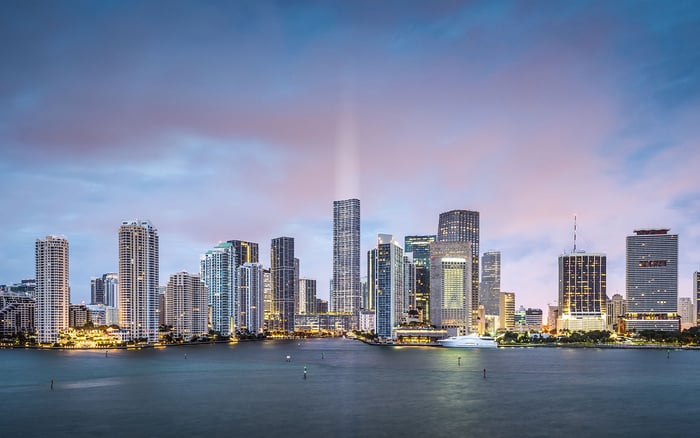
Brickell asks a different question: do you want South Florida to function as a highly connected urban base? For some former Greenwich residents, the answer is yes. They are not trying to reproduce suburban privacy. They want proximity, convenience, business access, dining, and the efficiency of a vertical city.
The best Brickell choice depends on tolerance for energy. A residence such as St. Regis® Residences Brickell belongs in the conversation when a buyer is deliberately seeking a more formal, service-forward urban environment. But even in a polished tower, the buyer should study daily choreography: valet flow, elevator experience, guest handling, delivery routines, noise control, and how the building separates residents from non-residential activity.
Brickell can be exceptionally convenient for full-time life when the owner wants immediacy. It can feel less ideal if the household expects the residential quiet of a lane or enclave. The test is simple: would you enjoy the building on a Tuesday morning, not only during a weekend visit?
Coral Gables, Boca Raton, and Palm Beach tend to appeal to buyers who want a more measured sense of place. The attraction is not only architectural or geographic. It is cultural: a preference for order, established routines, and residential identity. These markets can suit buyers who want South Florida’s climate and access without adopting the pace of downtown living.
In Coral Gables, a project such as The Village at Coral Gables may appeal to households that prioritize neighborhood character and a more grounded daily experience. In Boca Raton, buyers often evaluate whether a building or residence supports a quieter, long-horizon lifestyle, with Alina Residences Boca Raton serving as one reference point for that conversation. Palm Beach, meanwhile, remains distinct for buyers who want discretion and formality to be part of the address itself.
The essential comparison is not which area is superior. It is which culture will still feel natural after the novelty of the move has faded.
Full-time buyers should tour differently from second-home buyers. A weekend showing can flatter almost any residence. A weekday visit reveals more. Watch how residents use the lobby. Notice whether staff members recognize owners without theatricality. Ask how packages, private chefs, drivers, trainers, pets, and visiting family are handled. Observe whether the building feels calm or performative.
Operational details matter. Elevator cadence, parking logistics, service access, acoustic privacy, terrace usability, and renovation rules can all shape the lived experience. A residence may photograph beautifully, yet become frustrating if the daily systems are not aligned with the household’s routines.
Board culture and resident mix also deserve close attention. Some buildings prize quiet continuity. Others are more social. Some residents expect programming and a visible amenity life. Others prefer a light-touch environment where privacy is the amenity. Neither is inherently better, but the mismatch can be expensive.
Begin with the week, not the closing. Map a normal Monday, Friday evening, and Sunday afternoon. Where do you wake, work, walk, host, exercise, dine, and retreat? Then assign each candidate building a role. Is it a sanctuary, an urban base, a club-like social address, or a private family platform?
Next, compare the culture of the building with the culture of the neighborhood. A serene residence in an energetic district may work if the building creates a strong buffer. A quiet neighborhood may still feel wrong if the building is too transient. The strongest choices align both layers.
Finally, resist the temptation to buy the most impressive version of someone else’s life. South Florida offers spectacle when desired, but the best full-time homes are often chosen for what they edit out: friction, noise, uncertainty, and unnecessary display.
What does building culture mean in South Florida luxury real estate? It refers to the daily tone of a building: privacy, service style, resident behavior, social energy, and operational discipline.
Is Coconut Grove a good fit for former Greenwich buyers? Coconut Grove can suit buyers who want greenery, neighborhood scale, and a softer residential rhythm within Miami.
Is Brickell better for full-time or part-time living? Brickell can work well full-time for buyers who value convenience, access, and an urban daily routine.
Should I choose the neighborhood before the building? Choose both together. A strong neighborhood cannot fully compensate for a building culture that feels wrong day to day.
What should I watch during a property tour? Notice lobby behavior, staff tone, elevator flow, parking experience, noise, and how residents actually use the building.
Are branded residences always more formal? Not always. The brand may influence expectations, but each building’s resident culture and operations should be evaluated separately.
How important is privacy for full-time buyers? Privacy is often central because the home must perform every day, not only during brief seasonal stays.
Can a highly social building still suit a full-time resident? Yes, if the owner wants that energy and the building still protects quiet private space.
Why compare Boca Raton and Palm Beach with Miami neighborhoods? They offer different versions of South Florida permanence, often appealing to buyers seeking a calmer residential tempo.
What is the biggest mistake relocating buyers make? They focus on finishes and views before testing whether the building’s daily rhythm matches their actual life.
For a confidential assessment and a building-by-building shortlist, connect with MILLION.
If branded residences are on your mind — as a home or as an allocation — we would be glad to share what we are seeing, privately.
Begin a quiet conversation