A buyer-focused guide to evaluating acoustic zoning before selecting a smart residence, with attention to privacy, wellness, entertaining, resale confidence, and daily comfort.
In South Florida luxury real estate, the conversation around a smart residence often begins with touchless entries, app-based climate control, integrated lighting, private elevators, wellness amenities, and cinematic views. Yet one of the most consequential qualities of daily life is less visible: how sound moves through the home.
Acoustic zoning is the intentional separation of quiet, social, mechanical, and transitional areas so a residence can support privacy, rest, entertainment, and work without conflict. It is not simply about blocking noise. It is about understanding how a home behaves at 7 a.m., during a dinner party, through a storm, while children are sleeping, or when one person is on a video call and another is watching a film.
For buyers considering Brickell, waterfront enclaves, boutique low-rise addresses, or high-floor tower living, acoustic performance should be reviewed before emotion takes over. Views can be assessed in seconds. Sound reveals itself more slowly, and often after closing.
A smart residence is a coordinated environment. Lighting scenes, climate settings, automated shades, audio systems, security, elevators, appliances, and wellness features are expected to operate with ease. Acoustic zoning asks whether that intelligence also protects the senses.
The most refined homes separate the acoustic profile of each use. Bedrooms should feel insulated from kitchens, elevators, corridors, mechanical rooms, media rooms, and primary entertaining spaces. Offices should remain calm even when the rest of the home is active. Service areas should be efficient without broadcasting every movement. Outdoor terraces should feel connected to the residence without turning interior rooms into echo chambers.
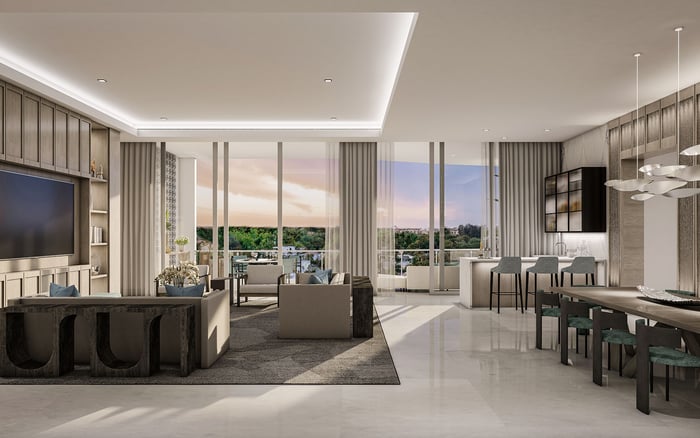
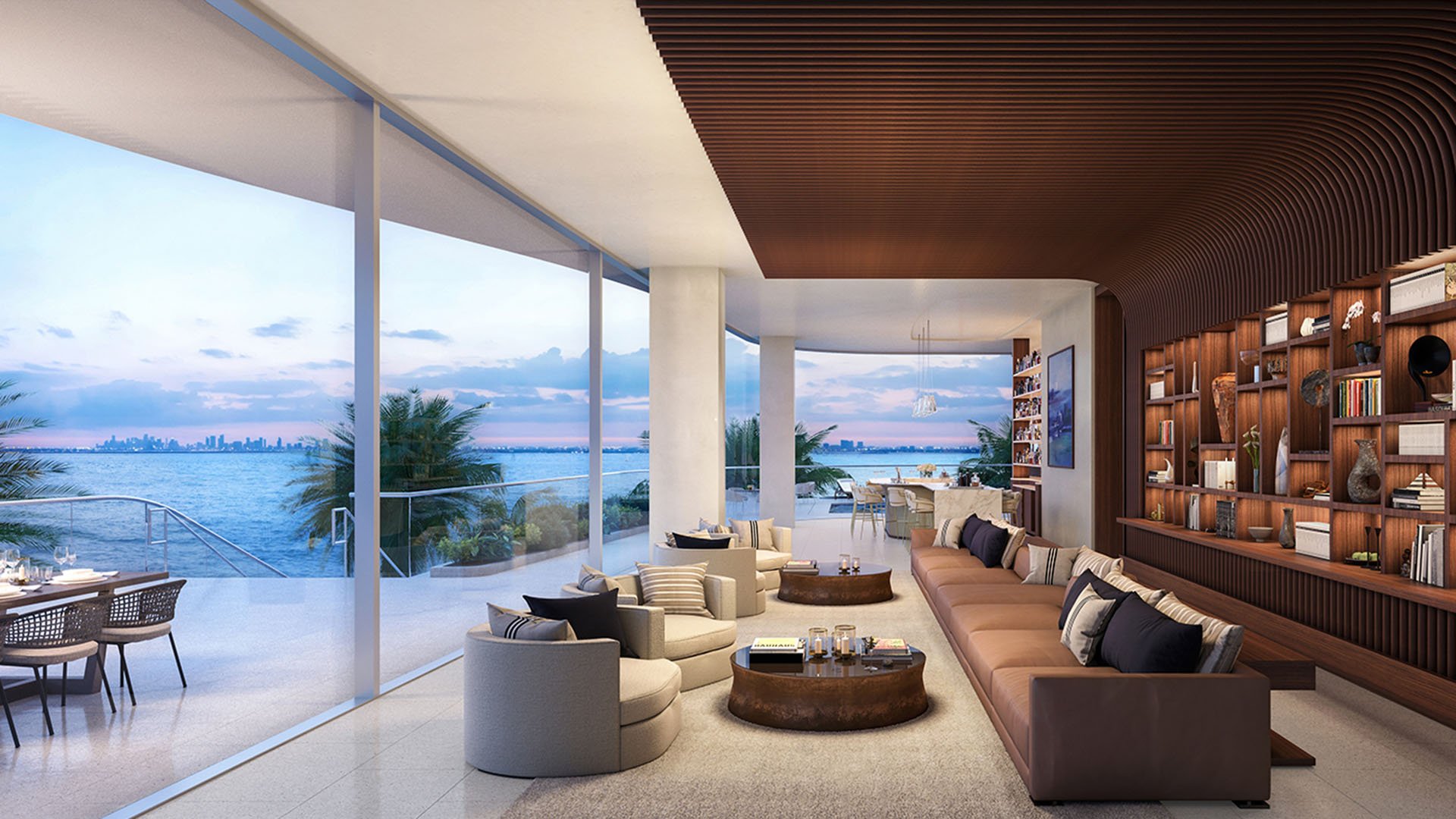
This is especially important in open-plan layouts. Expansive living rooms, stone floors, glass walls, double-height volumes, and sculptural staircases can be visually magnificent, but they can also amplify sound if not balanced with absorptive materials, thoughtful door systems, rugs, millwork, wall treatments, and ceiling details.
South Florida living has its own acoustic conditions. Urban residences may be exposed to traffic, nightlife, construction rhythms, service vehicles, valet areas, and dense amenity programming. Oceanfront homes may balance wind, pool decks, beach activity, mechanical systems, and the acoustic character of large glass openings. In boating communities, sound can travel across water in ways buyers do not anticipate.
New-construction residences often promise advanced systems and contemporary envelopes, but a buyer should still ask how bedrooms are buffered from social zones, where mechanical equipment is located, and whether the building’s amenities create sound exposure for specific lines or floors. A newer building is not automatically a quieter building. Design discipline matters.
Resale homes deserve equal attention. Older residences may offer generous proportions, thicker walls, or mature landscaping, yet they may also include outdated glazing, louder mechanical systems, or renovated rooms that were never acoustically recalibrated. The point is not to favor new over established inventory. It is to understand the sound environment as clearly as the floor plan.
The primary suite is the first priority. It should be tested against adjacent rooms, elevators, corridors, terraces, and mechanical locations. A bedroom that photographs beautifully but receives vibration from a service area or sound from an entertainment space can compromise the purpose of a luxury residence.
The home office is now nearly as important. Buyers should listen for impact noise from above, hallway activity, air-conditioning cycles, and sound bleed from family areas. A discreet office should support concentration without requiring headphones throughout the day.
Media rooms and entertainment lounges need a different lens. The question is not only whether the room sounds good inside, but whether it disturbs nearby bedrooms or neighboring residences. A home theater with strong equipment and weak isolation can become a long-term frustration.
Kitchen and family areas also matter. In many South Florida residences, these are the true daily centers of the home. Hard surfaces, high ceilings, and open circulation can make casual activity feel louder than expected. Acoustic comfort here often depends on finish selections as much as construction.
Balcony and terrace connections should also be reviewed. Sliding doors, pocket systems, and operable walls create a beautiful indoor-outdoor lifestyle, but buyers should evaluate how exterior sound changes when openings are closed, partly open, and fully open.
A serious buyer should ask direct, practical questions. What separates the bedrooms from the social areas? Are there upgraded windows or door systems? Where are air handlers, pumps, elevator shafts, trash rooms, service corridors, and amenity areas located in relation to the residence? Are floors and ceilings designed to reduce impact noise? How does the residence perform at different times of day?
The showing should include moments of silence. Stand in the primary bedroom with the air conditioning running. Close interior doors. Pause near the entry. Listen in the office. Step onto the terrace, then return inside and close the openings. If possible, revisit at another hour. Morning, late afternoon, and evening can each reveal a different acoustic personality.
For condominium buyers, the stack matters. A line near amenity decks, loading zones, elevator banks, mechanical rooms, or highly trafficked corridors may require closer inspection. A high floor may reduce some street noise but introduce wind exposure or mechanical sound from rooftop systems. A lower floor may offer lush views and convenience but require more attention to exterior activity.
Investment decisions in luxury real estate are often framed around location, view, brand, architecture, finish level, and scarcity. Acoustic quality belongs in the same conversation because it affects the way a residence is actually used. A home that allows sleep, privacy, work, and entertaining to coexist has a deeper form of utility.
Quiet is not merely the absence of noise. It is a luxury signal. It suggests that the architecture has been resolved beyond surface beauty. It allows materials to be appreciated, conversation to feel intimate, and wellness routines to be protected. It also reduces the likelihood that an owner will need costly corrective work after moving in.
For buyers comparing multiple residences, acoustic zoning can become a decisive differentiator. Two homes may offer similar views and finishes, but the quieter, better-zoned residence will often feel more complete in daily life.
Begin at the entry and listen before speaking. Note whether corridor noise enters the residence. Move toward the living area and observe whether voices carry into bedrooms. Test doors gently rather than assuming they perform. Look for softening elements such as rugs, drapery, upholstered panels, wood details, and layered furnishings, while remembering that decor can improve but rarely replace structural separation.
In Brickell, buyers may want to focus on urban sound exposure, elevator proximity, and the balance between high-energy surroundings and private interior calm. In oceanfront settings, review glass performance, wind conditions, pool decks, and terrace transitions. In residences designed for frequent hosting, confirm that entertainment spaces do not undermine sleeping areas.
Smart systems should also be evaluated for sound. Motorized shades, ventilation, integrated speakers, appliances, and private elevators can all contribute to the acoustic experience. A sophisticated home should feel seamless, not constantly audible.
What is acoustic zoning in a residence? Acoustic zoning is the planning of quiet, active, mechanical, and social areas so sound does not undermine privacy or comfort.
Why does it matter in a smart home? Smart systems add convenience, but they also introduce equipment, automation, and audio layers that should be acoustically controlled.
Should buyers test sound during a showing? Yes. Buyers should stand quietly in key rooms, close doors, listen to mechanical systems, and observe sound from corridors or terraces.
Are new residences always quieter than older ones? Not necessarily. A residence can be new and still require careful review of layout, glazing, mechanical placement, and neighboring uses.
Which room should be reviewed first? The primary bedroom should be the first priority because sleep and privacy are central to long-term livability.
Can furniture solve poor acoustics? Furniture and textiles can soften sound, but they may not correct structural transfer, weak glazing, or poorly placed mechanical systems.
Does a high floor guarantee less noise? No. High floors may reduce some street exposure, but wind, mechanical systems, and building design can still affect the sound environment.
Why is acoustic zoning important for investment? It supports daily comfort and may help a residence feel more complete, functional, and desirable over time.
How does sound affect entertaining? Good zoning allows guests to gather comfortably without disturbing bedrooms, offices, or neighboring residences.
When should an acoustic consultant be considered? A consultant can be useful before closing when a buyer is sensitive to sound or evaluating a complex residence with multiple exposures.
When you're ready to tour or underwrite the options, connect with MILLION.
If branded residences are on your mind — as a home or as an allocation — we would be glad to share what we are seeing, privately.
Begin a quiet conversation