A buyer-focused comparison of The Cove Residences Edgewater and ORA by Casa Tua Brickell, centered on lifestyle, boating access, bridge-clearance diligence, and hurricane planning for Miami luxury condominium buyers.
The comparison between The Cove Residences Edgewater and ORA by Casa Tua Brickell is not simply a matter of skyline preference. It is a question of how a buyer expects Miami to function day to day: by water, by foot, by service, by club culture, or by a carefully choreographed combination of all four.
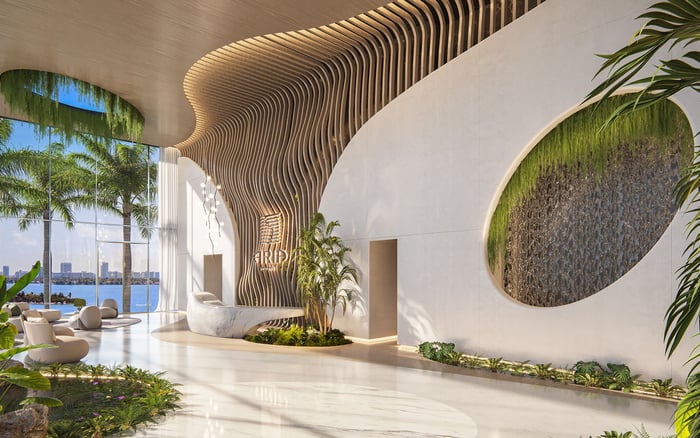
ORA by Casa Tua Brickell is best understood as the more urban, hospitality-driven side of the decision. Its proposition is rooted in Brickell’s vertical lifestyle, branded-residence convenience, dining energy, and the Casa Tua association with social programming and club-culture appeal. For buyers who want a polished residential base in Miami’s financial core, ORA speaks to walkability, service, and effortless access to restaurants, offices, lounges, and private social circuits.
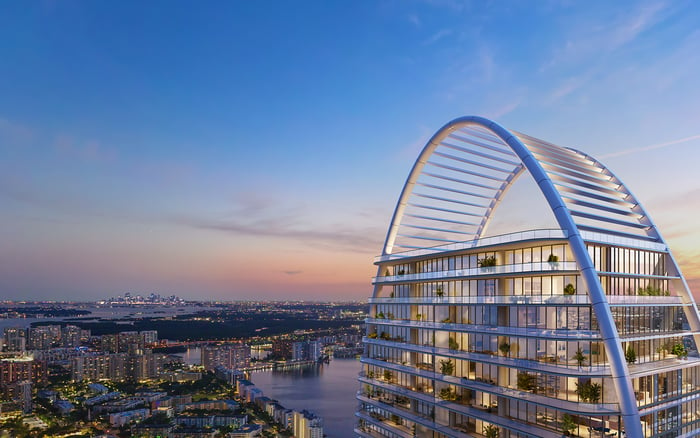
The Cove Residences Edgewater, by contrast, belongs in the buyer’s mind as the waterfront-oriented counterpoint. The title itself frames the decision around Edgewater and boating convenience, which means the conversation should move beyond finishes and views into practical marine due diligence. A waterfront address can feel emotionally obvious in Miami, but serious buyers understand that water-view atmosphere and boat-slip utility are not the same thing.
ORA by Casa Tua Brickell is positioned as a luxury branded residential tower in Brickell, with lifestyle value tied to hospitality rather than direct private waterfront ownership. That distinction matters. The buyer choosing ORA is often not giving up boating entirely. More likely, they are choosing to keep boating occasional, delegated, or accessed through third-party infrastructure rather than making marine logistics the operating system of home life.
This is where Brickell exerts its pull. For the resident whose calendar is shaped by finance, dining, fitness, meetings, private events, and last-minute travel, the urban high-rise model can be more valuable than immediate water access. ORA’s appeal is not that it replicates a boating-first address. It is that it offers a branded, serviced environment where the residential experience is supported by hospitality cues, social energy, and proximity to Brickell’s dense daily conveniences.
That creates a different kind of luxury. Instead of asking whether the vessel is minutes away, the ORA buyer may ask whether the building simplifies entertaining, whether the neighborhood supports car-light living, and whether the residence feels connected to Miami’s social and business circuitry. In that calculus, ORA by Casa Tua Brickell is not trying to be the quieter marine choice. It is the polished city choice.
The Cove Residences Edgewater enters the comparison through a different emotional doorway. Edgewater carries an immediate association with Biscayne Bay, light, skyline drama, and the possibility of a more water-facing routine. For buyers drawn to that atmosphere, the important step is to separate visual proximity to water from functional boating convenience.
A buyer should ask direct questions before treating any waterfront-oriented residence as boating-first. Is there on-site dockage? If so, what vessel sizes, ownership structures, use rights, waitlists, guest policies, insurance requirements, and association rules apply? If dockage is not part of the residence, which marina facilities, yacht clubs, or private arrangements would actually support the buyer’s boat, tender, captain, and storage needs?
The answer can change the lifestyle profile completely. A buyer who uses a boat twice a month with a captain may be satisfied by nearby third-party access. A buyer who wants spontaneous evening cruises, easy provisioning, and frequent family use will care far more about distance, parking, loading areas, dock rules, fueling, and weather windows. The Cove Residences Edgewater should therefore be evaluated not only as an address, but as the starting point for a full marine-use plan.
Bridge clearance is one of the least glamorous subjects in luxury real estate, yet for boaters it can be decisive. A residence may appear close to open water on a map while still requiring navigation through fixed bridges, drawbridge openings, tide-sensitive conditions, or routes that become inconvenient for larger vessels. No buyer should assume that a beautiful bay-facing location automatically translates into frictionless boating.
The proper question is not simply, “Can I keep a boat nearby?” It is, “Can my specific boat move predictably from storage or dockage to open water, at the times I actually use it?” Mast height, air draft, beam, captain preference, tender logistics, and seasonal traffic can all influence the answer. Even for powerboats, routing can affect how relaxed or cumbersome a boating day feels.
For ORA, the boating discussion is more indirect. The resident is likely to rely on Miami-area marinas, clubs, captained charters, or private arrangements rather than a dock at the building. That may be ideal for the buyer who wants the experience without the obligations. For The Cove Residences Edgewater, the bridge and access conversation is more central because the waterfront lifestyle expectation is stronger. In both cases, a careful buyer verifies the route rather than relying on the romance of the view.
Hurricane planning is another place where the two lifestyles diverge. ORA’s context is dense urban high-rise living in Brickell. The practical planning questions involve vertical living, building protocols, parking, elevator availability, backup systems, window and façade performance, pets, household staff coordination, and how quickly normal daily life can resume after a storm event.
The waterfront side of the comparison adds a different layer. For an Edgewater buyer, storm preparation may also involve marine arrangements, outdoor furniture, balcony contents, water-adjacent exposure, insurance review, and decisions about where vessels are moved or secured. A buyer who owns a boat should think of hurricane planning as both a residential and marine operations matter.
Neither model is inherently simpler. Brickell can offer extraordinary convenience in normal conditions, but dense urban living requires comfort with building-wide procedures. A waterfront-oriented routine can be emotionally compelling, but it asks for greater attention to storm timing, marine vendors, and post-storm access. The most sophisticated buyers do not wait until closing to ask these questions. They make them part of the selection criteria.
ORA by Casa Tua Brickell fits the buyer who wants Miami to feel curated. This resident values dining, services, social atmosphere, branded amenities, and the ability to move through Brickell with minimal friction. Boating may remain part of the lifestyle, but it is not the anchor of the residence choice.
The Cove Residences Edgewater fits the buyer who wants the water to shape the daily mood of the home. That buyer may be more likely to scrutinize marine access, bridge conditions, view corridors, dockage possibilities, and hurricane logistics. The appeal is not merely being near the bay. It is the possibility of living with the bay as part of the rhythm.
For investors and second-home buyers, the distinction is equally important. A serviced Brickell tower may appeal to those prioritizing urban convenience and branded recognition. A waterfront-oriented Edgewater residence may appeal to those seeking a more atmospheric Miami experience. The better choice depends less on which is objectively superior and more on whether the buyer’s real routine aligns with the building’s lifestyle promise.
MILLION buyers often arrive at this comparison with a simple question: Which building is better? The sharper question is: Which inconvenience would you rather never think about? If you choose ORA, you are accepting that boating will likely be arranged outside the building ecosystem. If you choose the waterfront side of the equation, you must be willing to examine bridge clearance, marina access, storm planning, and the operational details that make boating either easy or ornamental.
In Miami luxury real estate, lifestyle claims become meaningful only when they survive daily use. ORA by Casa Tua Brickell offers the gravitational pull of Brickell service and social life. The Cove Residences Edgewater invites a more water-aware analysis. Both can be compelling. The winner is the one that best matches how you actually intend to live.
Is ORA by Casa Tua Brickell a boating-first residence? ORA is better understood as an urban, hospitality-driven Brickell residence. Boating access should be viewed through nearby third-party marinas, clubs, or private arrangements.
Does The Cove Residences Edgewater offer private dockage? Buyers should verify any dockage, vessel-size limits, use rights, and association rules directly before relying on a boating plan.
Why does bridge clearance matter for Miami condo buyers? Bridge clearance can determine whether a specific boat can move efficiently from dockage to open water. It is especially important for larger vessels or boats with greater air draft.
Is Brickell better for buyers who do not boat often? Brickell can suit buyers whose boating is occasional, delegated, or arranged through external marine infrastructure. ORA’s strength is urban service and convenience.
Is Edgewater more appealing for water views? Edgewater is strongly associated with bay-facing residential appeal. Buyers should still distinguish a view-driven purchase from a true marine-access purchase.
What should boat owners ask before buying? Ask about dockage, marina proximity, loading access, bridge routes, insurance requirements, storm procedures, and vessel relocation plans.
How should hurricane planning differ between the two choices? Brickell planning centers on dense high-rise procedures, while waterfront planning may add marine logistics and water-adjacent preparation.
Is ORA by Casa Tua Brickell mainly about hospitality lifestyle? Yes, its appeal is tied to branded-residence convenience, services, dining energy, and Casa Tua’s hospitality identity.
Can a buyer enjoy boating while living at ORA? Yes, but the boating experience is more likely to be arranged through external access rather than treated as a private waterfront amenity.
Which residence is better for a second-home buyer? ORA may suit a buyer seeking serviced Brickell ease, while The Cove Residences Edgewater may suit one prioritizing a water-oriented Miami mood.
To compare the best-fit options with clarity, connect with MILLION.
If branded residences are on your mind — as a home or as an allocation — we would be glad to share what we are seeing, privately.
Begin a quiet conversation