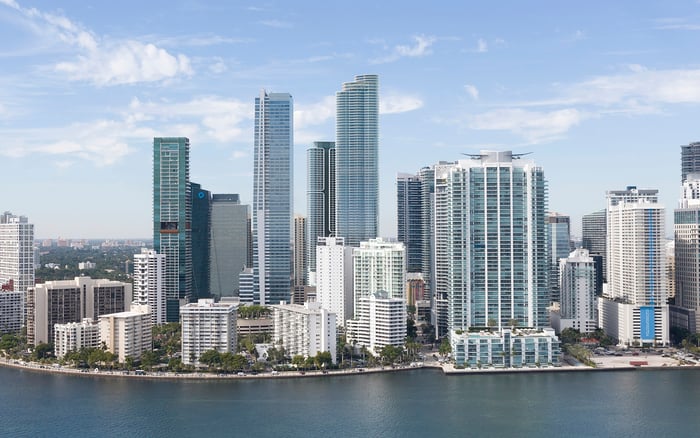
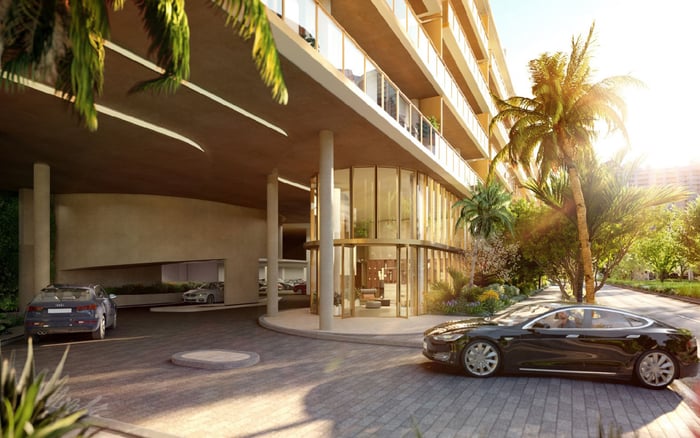
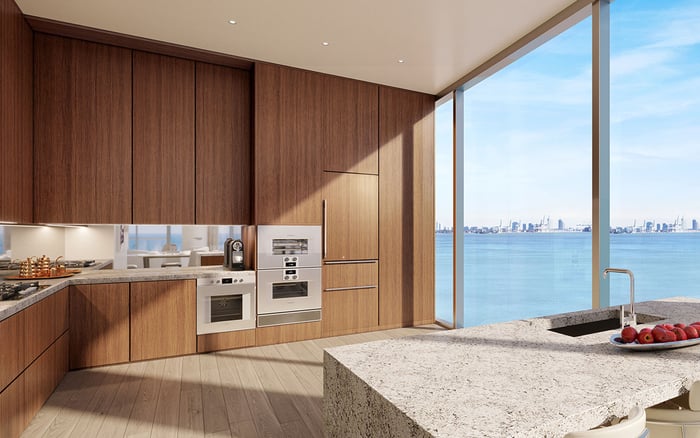
A buyer-focused look at how 2200 Brickell uses South Brickell micro-location, Brickell Avenue frontage, boutique scale, and daily access to frame long-term ownership comfort.
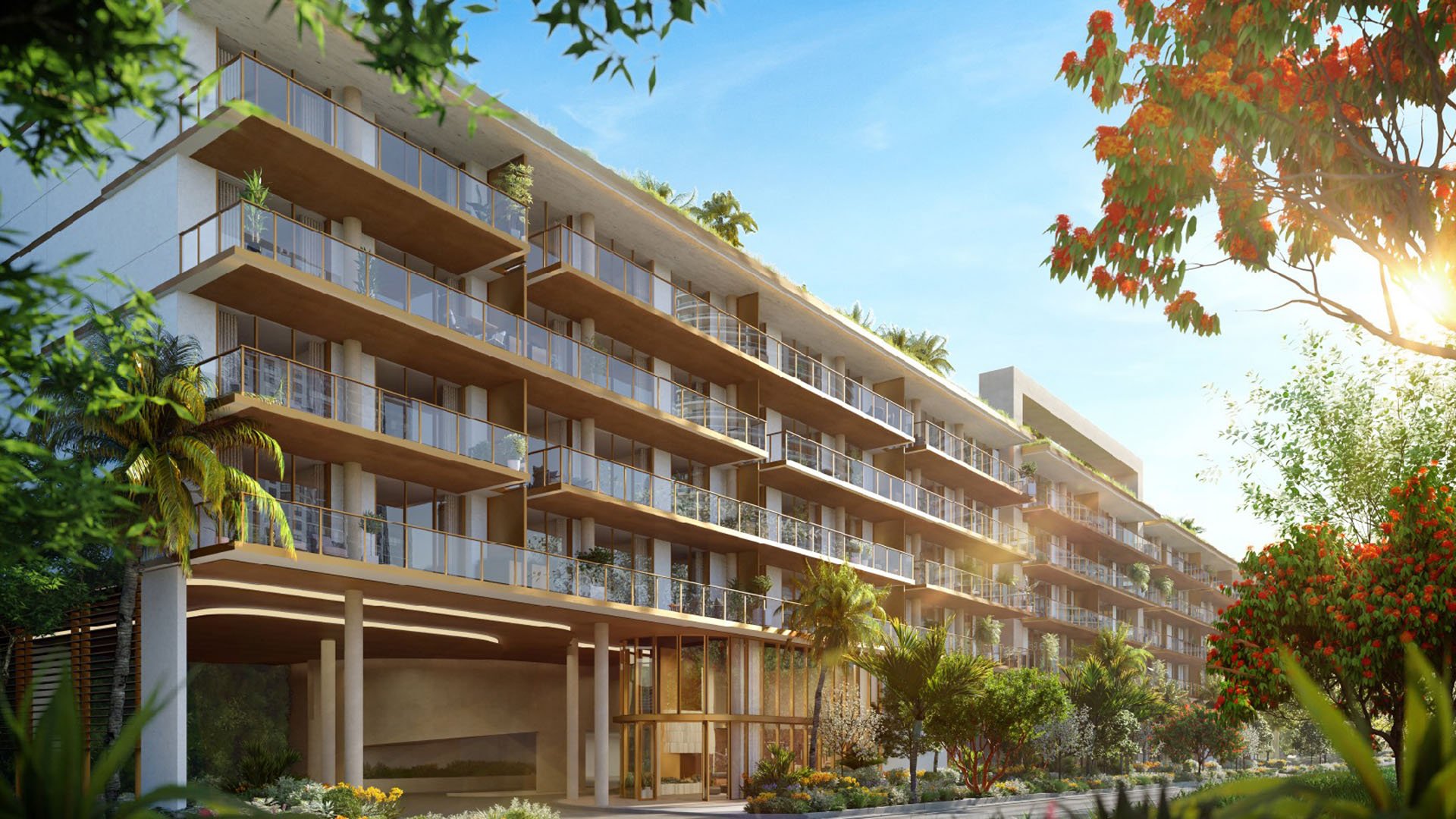
In Brickell, luxury is often framed through visible signals: interiors, amenity decks, concierge programming, and skyline height. Yet for long-term owners, comfort is usually determined by something quieter and more durable: the exact address, the rhythm of the surrounding blocks, and whether daily life still feels easy after the novelty of new construction has faded.
That is the central thesis behind 2200 Brickell, a luxury condominium development at 2200 Brickell Avenue in Miami’s Brickell neighborhood. Its ownership-comfort argument is not limited to finishes or branding. It rests on micro-location: a South Brickell position set away from the densest central Brickell office and mixed-use core, while remaining connected to the conveniences that make the neighborhood desirable.
For buyers who know Brickell well, that distinction matters. A building can offer beautiful residences and still feel intense if its immediate context is shaped by peak traffic, nightlife movement, transit-adjacent activity, and constant urban friction. 2200 Brickell is presented as an alternative for those who want proximity without placing themselves directly inside the neighborhood’s busiest blocks.
South Brickell offers a different residential proposition from the hyper-dense blocks farther north. This stretch of Brickell Avenue is characterized as quieter and more tree-lined, giving the address a softer daily frame while retaining the recognition of Brickell Avenue itself. The point is not that urban life disappears. Rather, the project is positioned to balance access with a more residential immediate setting.
That balance is why micro-location should be read as an amenity in its own right. Buyers comparing Una Residences Brickell, Cipriani Residences Brickell, and other Brickell offerings are not simply choosing between floor plans. They are choosing a daily pattern: how a morning begins, how arrivals feel, how often the building’s surroundings require patience, and whether the address can support ease over multiple years of ownership.
For 2200 Brickell, the claim is clear. It is close enough to central Brickell for daily access, yet removed enough to reduce exposure to the district’s highest activity levels. In buyer-guide terms, that is a practical filter for anyone who wants the Brickell lifestyle without living directly in the most energetic nightlife, office, and transit-adjacent zones.
A Brickell Avenue address has obvious advantages. It provides a recognizable location on one of the neighborhood’s main north-south corridors, making wayfinding simple and connectivity direct. For owners, guests, drivers, and service providers, that clarity can support the operational ease that matters in a luxury building.
But frontage on a major corridor is never purely decorative. It also brings traffic patterns, traffic noise, and visual exposure into the ownership equation. A sophisticated buyer will not treat those as drawbacks in the abstract. Instead, they will evaluate how residence orientation, elevation, glazing, setbacks, landscaping, and daily schedules interact with the street.
The same logic applies across Brickell. A buyer studying The Residences at 1428 Brickell or St. Regis® Residences Brickell should be asking similar questions: Where is the energy coming from? How does the building meet the street? What does the address feel like at weekday rush hour, on weekend evenings, and during quieter periods? In a district as successful as Brickell, prestige and intensity often occupy the same map.
2200 Brickell is framed as a boutique-scale alternative to the large high-rise and mega-tower format common in central Brickell. That restrained scale is part of its comfort proposition, helping reduce the intensity associated with denser urban towers. For some buyers, the appeal of boutique living is not smallness for its own sake. It is the daily experience of entry, circulation, neighbor volume, amenity usage, and the overall tempo of the property.
Scale shapes mood. A mega-tower may deliver spectacle, breadth, and vertical drama. A more restrained building may offer a different luxury: fewer layers between the owner and the residence, a less anonymous arrival sequence, and a rhythm that feels more residential than resort-like. The right answer depends on the buyer, but the distinction should be made before purchase, not after move-in.
This is especially relevant in a new-construction market where renderings can make many buildings appear equally serene. Long-term comfort is tested in ordinary moments: waiting for an elevator, receiving guests, navigating the driveway, walking out for an errand, or returning home after a long day. Location and scale are inseparable in those moments.
The natural buyer for 2200 Brickell is not necessarily rejecting Brickell’s energy. More likely, this buyer values it selectively. They want the restaurants, offices, services, and urban conveniences within reach, but they do not want their home environment defined by the most concentrated activity nodes.
That profile may include primary residents who prioritize daily convenience, second-home owners who want a legible Miami base, or long-horizon buyers who believe a calmer immediate setting can support better lifestyle durability. The address speaks to those who see comfort as cumulative. A residence does not need to feel dramatic every day. It needs to work well every day.
That is why the evaluation should extend beyond the sales gallery. Buyers should study traffic patterns, walkability, daily convenience, views, exposure, noise, air quality, flood risk, and neighborhood trajectory. Not every variable will carry equal weight for every owner, but each can influence the lived experience of the asset.
For a buyer focused on long-term ownership comfort, the most useful question is not simply, “Is this a good building?” It is, “Is this the right daily environment for the way I intend to live?” At 2200 Brickell, that means spending time with the immediate South Brickell context, not only with the building narrative.
Consider arrival routes at different times of day. Listen for the character of Brickell Avenue from the areas of the property and residence lines that matter most. Think about exposure, privacy, and how the tree-lined quality of the surrounding stretch influences the approach. Review how often central Brickell access will be used and whether a slightly more residential setting adds value to that routine.
The best Brickell purchases are not merely impressive on closing day. They remain coherent years later because the owner chose a location that supports the life behind the investment. In that respect, 2200 Brickell’s proposition is discreet but meaningful: a recognizable Brickell address with a South Brickell posture, aiming to keep access close and intensity at a more comfortable distance.
Where is 2200 Brickell located? 2200 Brickell is located at 2200 Brickell Avenue in Miami’s Brickell neighborhood.
What is the main location argument for 2200 Brickell? Its comfort argument centers on micro-location, with South Brickell access and a more residential immediate setting.
Is 2200 Brickell in central Brickell? It is positioned in South Brickell, away from the densest central office and mixed-use core.
Why does Brickell Avenue frontage matter? It supports clear wayfinding and connectivity, while also making traffic noise and exposure important to evaluate.
Is the surrounding area described as quieter than central Brickell? The surrounding stretch is characterized as quieter and more tree-lined than the hyper-dense blocks farther north.
What type of buyer may prefer 2200 Brickell? It may suit buyers who want Brickell proximity without living directly in the busiest nightlife, office, and transit-adjacent blocks.
How does boutique scale affect comfort? A more restrained scale can help reduce the intensity often associated with larger urban towers.
What should buyers study before purchasing? Buyers should consider traffic, walkability, daily convenience, views, exposure, noise, air quality, flood risk, and neighborhood trajectory.
Is 2200 Brickell only about amenities and finishes? No. Its ownership proposition places significant emphasis on address, context, and day-to-day livability.
How should buyers compare 2200 Brickell with other Brickell projects? They should compare not only design and amenities, but also the daily rhythm created by each project’s exact location.
For a discreet conversation and a curated building-by-building shortlist, connect with MILLION.
If branded residences are on your mind — as a home or as an allocation — we would be glad to share what we are seeing, privately.
Begin a quiet conversation