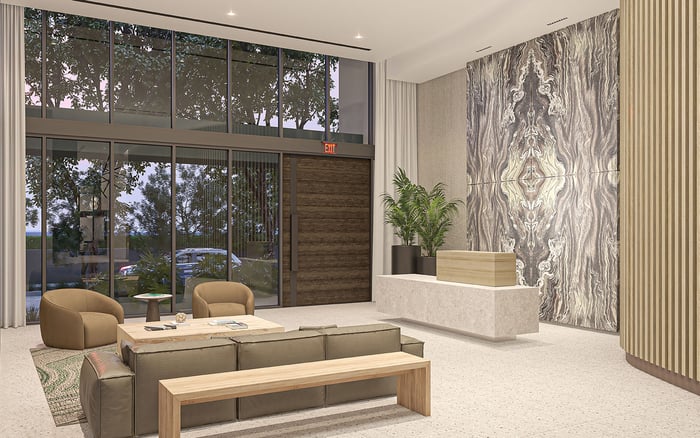
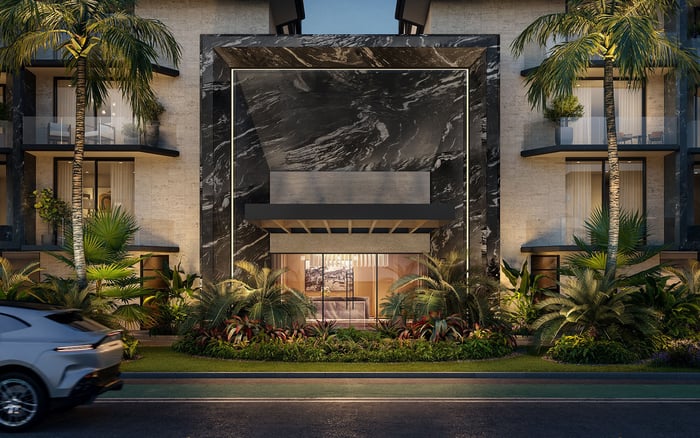
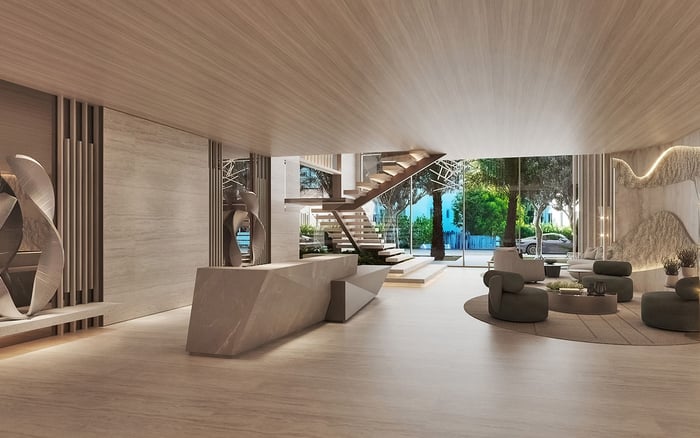
Low-rise luxury condominiums can feel more private and residential than towers, but that intimacy makes buyer diligence more demanding. The best purchase is not simply the prettiest boutique address. It is the one whose floor plate, exposure, governance, parking, service model and resale logic all work together.

A low-rise luxury condominium can seem, at first glance, like the simpler purchase. There are fewer neighbors, fewer elevators, less vertical drama and often a quieter arrival sequence. For many South Florida buyers, that is precisely the appeal. A boutique building can feel closer to a private residence than a hotel-scaled tower, particularly when the architecture is restrained and the setting is close to the water.
Yet buying well in this category is rarely simple. The very qualities that make a low-rise building desirable also make it harder to evaluate. There may be fewer comparable sales, fewer available lines to study and less market conversation around pricing. A tower often gives a buyer more data. A low-rise asks for more judgment.
That is why the strongest buyers approach these buildings with a different discipline. They are not simply buying a view, a name or a mood. They are buying scarcity, governance, proportions, exposure, privacy and long-term liquidity. In South Florida, those details can matter as much as the address.
A luxury tower usually offers more repetition. Multiple floors may share similar layouts. Comparable units can trade within the same building. The amenity program is often visible, the staff model is more legible and the market may already understand the hierarchy of lines, views and floors.
That does not make towers better. It makes them easier to measure. A buyer looking at Brickell, for example, can compare a vertical lifestyle at 2200 Brickell with other urban offerings and quickly understand how the market tends to price height, amenity depth and convenience.
In a low-rise, the opposite may be true. A second-floor residence can feel more valuable than a higher one if it has the better outlook, deeper terrace or more private relationship to landscape. Lower floors are not automatically inferior when the building is designed around intimacy rather than altitude. The underwriting shifts from height to feel.
Low-rise luxury can be genuinely scarce, but scarcity is not a complete investment thesis. A small building may have few residences, limiting choice for buyers and trading history for future valuation. That can benefit an owner when demand is strong, but it can also make pricing more subjective.
In Surfside, a buyer comparing refined coastal addresses such as Arte Surfside and Ocean House Surfside is not simply comparing buildings. The buyer is weighing privacy, architectural mood, beach proximity, service expectations and the likelihood that another similar residence will be available when needed.
This is where patience becomes an advantage. A low-rise buyer may need to wait for the correct line, not merely the correct building. The wrong residence in the right boutique property can still be a compromise if the exposure, ceiling experience, parking arrangement or outdoor space does not match the buyer’s daily rhythm.
In a large tower, the cost of services and capital needs may be spread across many owners. In a low-rise, the ownership group is smaller. That can create a more personal environment, but it also means each owner’s share of the building’s decisions may feel more consequential.
A sophisticated buyer will want to understand the association culture, service expectations, maintenance philosophy and any practical limits on renovations. None of this should be treated as an afterthought. In a low-rise, governance is part of the luxury product.
The most elegant lobby cannot compensate for unclear operations. The most beautiful pool deck cannot offset a building where future capital planning is vague. A truly well-bought residence should feel stable not only on closing day, but five, ten and fifteen years later.
In South Florida, buyers often think in terms of ocean, bay, skyline or garden. In towers, views can be easier to categorize by elevation and orientation. In low-rise buildings, the analysis is more delicate. A residence may have an exquisite relationship to trees, water or neighborhood scale, but it may also be more sensitive to adjacent parcels, street activity or privacy angles.
Outdoor space deserves particular attention. A terrace that looks generous on paper may not function well if it lacks privacy, shade or usable depth. Conversely, a more modest outdoor area can be highly valuable if it connects naturally to the main living room and receives the right light at the right time of day.
This is one reason buyers in Bay Harbor settings often think differently from buyers in high-rise waterfront corridors. A property such as Onda Bay Harbor may appeal to someone who values a calmer, more residential waterfront posture rather than the spectacle of height.
Luxury begins before the front door. In low-rise buildings, the arrival experience can be one of the greatest advantages, but also one of the most important items to inspect. How many residences share the entry sequence? How intuitive is guest arrival? Is parking convenient, protected and compatible with the buyer’s daily life?
A smaller building can feel wonderfully personal when the flow is well designed. It can also feel constrained if the service areas, valet arrangement, loading logistics or package handling are not thoughtfully resolved. These are not minor conveniences. They shape how a residence lives.
For seasonal owners, the question becomes even sharper. A building should be easy to leave, easy to return to and easy to operate when the owner is away. The best low-rise purchases feel calm in use, not only calm in photographs.
Low-rise luxury is especially dependent on neighborhood character. A tower can sometimes create its own world. A low-rise building is more exposed to the quality of its block, its street pattern and its nearby daily rituals.
That is why Coconut Grove buyers, for instance, may evaluate shade, walkability, village texture and residential calm as carefully as they evaluate interior finishes. A project such as The Well Coconut Grove sits within a broader conversation about lifestyle, privacy and the desire for a more grounded way to live in Miami.
The right low-rise purchase should feel inevitable in its setting. If the building’s personality fights the neighborhood, the buyer should be cautious. If the building enhances the neighborhood’s best qualities, the asset has a stronger foundation.
Resale in a boutique building can be powerful, but it may not be fast or formulaic. The buyer pool is often more specific. Some buyers want height, spectacle and a full resort program. Others want discretion, fewer neighbors and a more residential atmosphere. Low-rise luxury depends on matching the residence to the right future buyer.
That means a purchase should not rely only on personal taste. The floor plan should be legible. The outdoor space should be usable. The building should be easy to explain in one or two sentences. If the value proposition requires too much interpretation, resale may become more dependent on timing and persuasion.
The strongest low-rise residences tend to share a quiet clarity. They know what they are. They do not try to compete with towers on tower terms. They compete on privacy, proportion, location and the feeling of living beautifully close to the ground.
Start with the building, but do not stop there. Study the line, the exposure, the arrival, the parking, the association posture and the surrounding parcels. Visit at different times if possible. Ask how the residence will live on an ordinary Tuesday, not only during a perfect showing.
Then compare it honestly with the tower alternative. If the low-rise does not offer a meaningful improvement in privacy, design, outdoor living or neighborhood connection, the premium may not be justified. But when those elements align, a low-rise can be one of the most satisfying ways to own in South Florida.
The buyer who succeeds is rarely the one who moves the fastest. It is the one who sees the invisible architecture of value: how a small ownership group behaves, how a view may change, how service scales, how scarcity supports price and how the residence will feel after the novelty has passed.
Is a low-rise luxury condo always more private than a tower? Not always. Privacy depends on the site plan, exposure, elevator arrangement, neighboring parcels and the number of residences sharing key spaces.
Why can low-rise condos be harder to price? Smaller buildings may have fewer comparable sales and fewer repeated floor plans, so buyers must rely more on qualitative judgment.
Are lower floors less desirable in boutique buildings? Not necessarily. In a well-designed low-rise, lower levels can offer stronger landscape connection, easier living and excellent outdoor space.
Should I prioritize the building or the specific residence? Both matter, but the specific line is critical. A great boutique building can still contain residences with weaker exposure or less functional layouts.
Do boutique buildings usually have fewer amenities? They may have a more edited amenity program. The question is not quantity, but whether the services match how the owner intends to live.
How important is outdoor space in a low-rise condo? Very important. Usable outdoor space can define the entire experience, especially when it connects naturally to the main living areas.
Can a low-rise condo be a strong resale asset? Yes, if the building has a clear identity, a desirable setting, disciplined operations and a residence that is easy for future buyers to understand.
What should I review before buying in a small association? Review governance, reserves, maintenance expectations, service standards, insurance posture and any practical rules affecting renovations or leasing.
Is a tower safer for buyers who want market data? Often, yes. Towers usually provide more comparable sales, but they may not deliver the same privacy or residential intimacy.
Who is the ideal low-rise condo buyer? A buyer who values discretion, proportion, neighborhood character and long-term livability more than height for its own sake.
To compare the best-fit options with clarity, connect with MILLION.
If branded residences are on your mind — as a home or as an allocation — we would be glad to share what we are seeing, privately.
Begin a quiet conversation