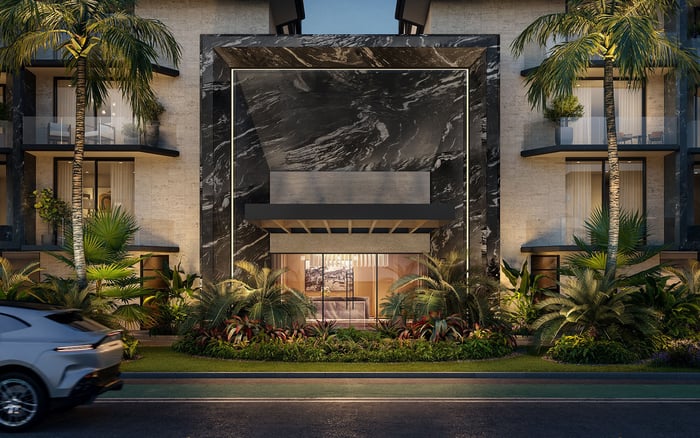
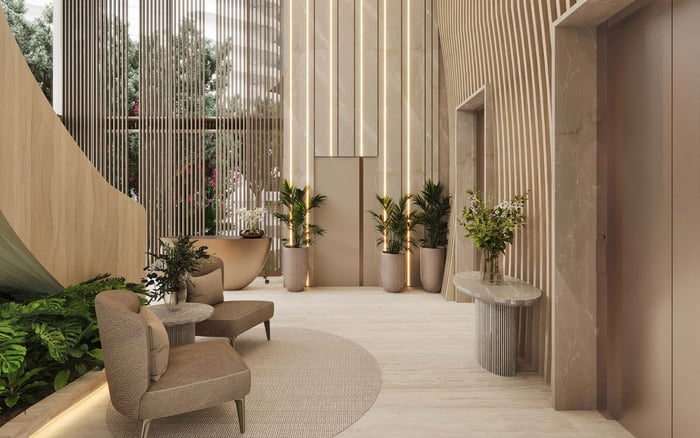
In South Florida’s luxury condominium market, the case for smaller towers has become more compelling for buyers planning to live in their residences year-round. As ownership costs, reserve obligations, insurance pressure, and maintenance scrutiny intensify, many full-time owners are discovering that a simpler building can deliver a superior daily experience. Privacy, easier access to shared spaces, more predictable budgets, and lower operational friction increasingly matter as much as the elegance of a grand lobby or the spectacle of a resort-scale amenity deck.
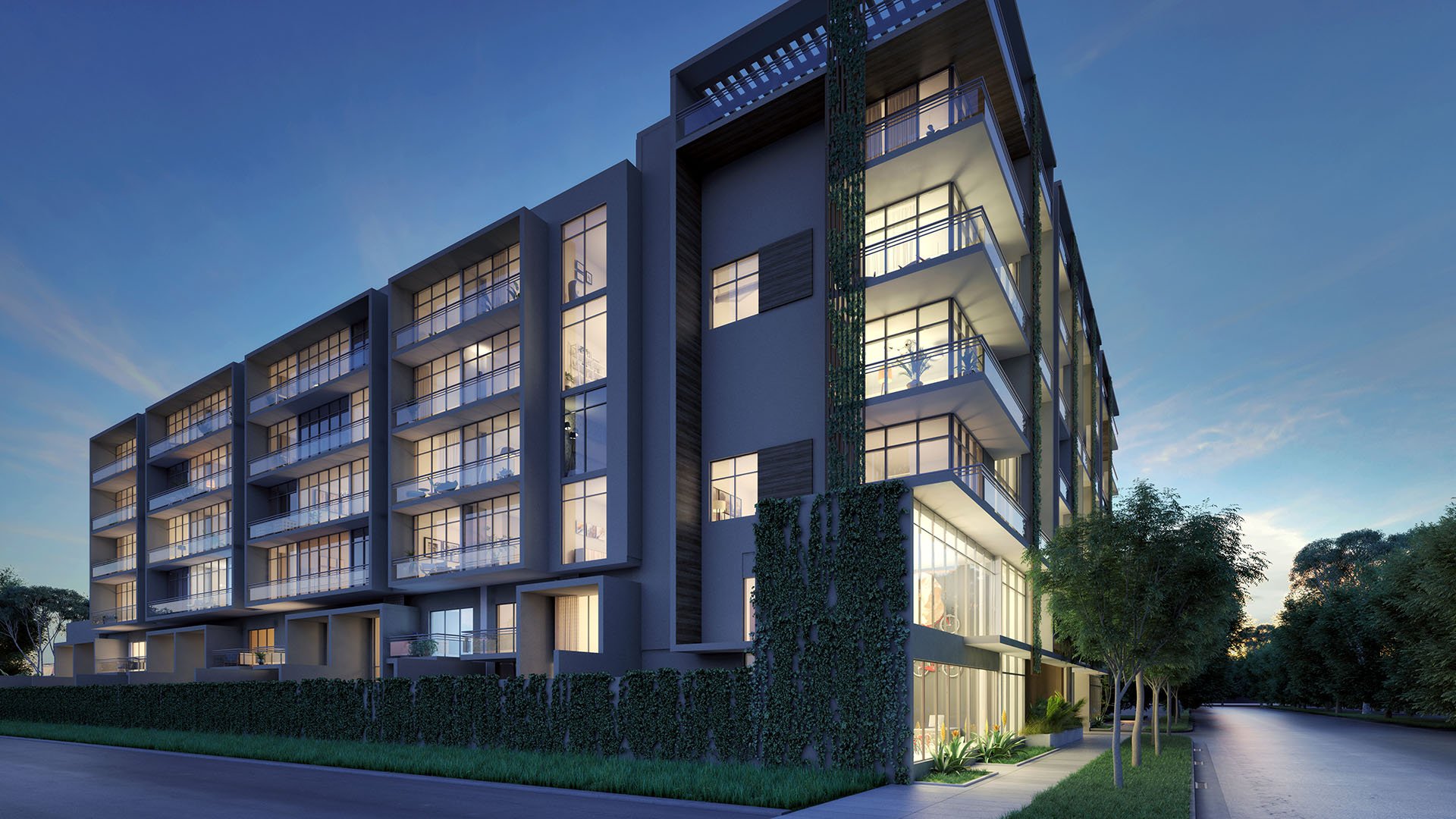
For years, South Florida’s most ambitious towers sold a familiar dream: more pools, more lounges, more food-and-beverage venues, more hospitality programming, more spectacle. That formula still holds appeal, especially for seasonal owners seeking a resort atmosphere attached to a residence. But for buyers planning to live in their condominium full time, the calculus has become more exacting.
In today’s market, purchase price is only one line item in the ownership story. Carrying costs, reserve funding, insurance exposure, maintenance demands, and the possibility of future assessments have moved much closer to the center of the underwriting conversation. That shift is not merely financial. It changes the definition of luxury itself. For a primary resident, luxury is often less about having the deepest amenity menu in the submarket and more about whether the building functions beautifully on an ordinary Tuesday.
That is why smaller towers are increasingly outperforming larger amenity stacks for full-time ownership. Not in every case, and not for every buyer, but often where it matters most: ease, predictability, privacy, and day-to-day satisfaction.
A large amenity stack sounds compelling in a sales gallery. In practice, every additional pool, spa, restaurant space, staffed facility, treatment suite, and mechanical zone adds another layer of operating complexity. Over time, that complexity must be funded, maintained, insured, and governed. For owners who live in the building year-round, those costs are not abstract. They arrive monthly.
Smaller towers frequently benefit from a simpler operating model. Fewer moving parts can mean cleaner budgets, more legible reserve planning, and less friction around what owners are actually paying for. In a market where buyers are scrutinizing HOA dues, insurance, reserves, and special-assessment exposure more closely than before, a building with a more restrained common-area program can look increasingly sophisticated rather than less ambitious.
This is especially relevant in neighborhoods where privacy and discretion already command a premium. In Ocean House Surfside and Glass House Boca Raton, the boutique premise itself speaks to a style of ownership centered on calm rather than constant activation. For many buyers in Surfside and Boca-ratón, that distinction is not subtle. It is the point.
Full-time residents use buildings differently from occasional owners. They care about elevator wait times on weekday mornings. They notice whether parking flows intuitively. They care whether staff know residents by name, whether deliveries are handled smoothly, and whether common spaces feel serene rather than overbooked.
This is where smaller towers can hold a real edge. Even when a larger building offers more amenities in absolute terms, access can still feel diluted when hundreds of households share the same spaces. The issue is not whether the building has a fitness center or pool deck. It is whether residents can enjoy those spaces without competition, scheduling friction, or crowding.
A lower-density building often creates a more effortless rhythm: fewer people in the lobby, less strain on elevators, less competition for parking, and a stronger sense that the amenities belong to residents rather than to a rotating audience. In Coconut-grove, that sensibility helps explain the appeal of projects such as Arbor Coconut Grove and Vita at Grove Isle, where buyers tend to value livability, privacy, and a more residential cadence.
For a full-time owner, that can be the difference between admiring a building and truly enjoying it.
South Florida buyers are placing much greater emphasis on recurring obligations and the long-term logic of a building’s expenses. That is particularly true in the condo market, where reserve requirements, inspection compliance, and insurance realities have sharpened attention on the true cost of ownership.
Amenity-heavy buildings are not inherently flawed, but they do have more systems to maintain and more categories of expense to fund over time. That can create more room for budget pressure, especially when common areas are expansive or highly programmed. By contrast, a smaller tower with a focused amenity offering can be easier for owners to understand and easier for an association to manage.
This matters in Brickell, where buyers may be comparing highly serviced new-construction options with very different operating profiles. A project such as 2200 Brickell reads differently to a primary resident than a tower built around sheer amenity volume. In Brickell, buyers are not simply asking what a building offers. They are asking what it will feel like to carry, govern, and live in for years.
Luxury service is not just a staffing line. It is an intimacy line. In a smaller building, management and staff interact with fewer households, which can make service feel more personal and more responsive. Requests may move faster. Building communication may feel clearer. Issues may be noticed before they become sources of frustration.
This is one of the most underrated reasons smaller towers can outperform. Large towers often promise hotel-style infrastructure, but scale can introduce layers between residents and decision-makers. In a lower-density property, owners may feel they are living in a curated residential environment rather than navigating a private vertical resort.
That distinction is increasingly meaningful in Bay-harbor and similar enclaves where boutique scale aligns with buyer expectations. At Onda Bay Harbor, for example, the appeal of a more composed waterfront lifestyle fits the broader preference many full-time residents have for privacy, ease, and manageable shared space.
The advantages of a smaller tower do not end at move-in. They can also influence resale.
As buyers compare luxury options more rigorously, recurring monthly obligations have become part of headline value. A beautiful apartment in a building with complex budgets or a reputation for ownership friction may face a more demanding audience than an equally elegant residence in a simpler, better-understood property. Transparency around reserves, maintenance, and shared-space obligations can support confidence.
That does not mean boutique always beats large. Certain buyers genuinely want extensive programming, a broad hospitality offering, and the social energy of a major tower. Some larger buildings are also exceptionally well run. The point is narrower and more useful: for the full-time owner, simplicity can be a performance advantage.
In other words, smaller can win not because it is less luxurious, but because it is more precisely luxurious. It concentrates value in the aspects of ownership felt every day.
When evaluating a residence for year-round use, the most revealing questions are often practical.
Ask how the building’s common areas are likely to be used in a normal week. Ask whether the amenity program reflects everyday residential life or hospitality theater. Ask how many owners will share the core spaces you care about most. Ask how the association communicates, budgets, and plans for future capital needs. Ask whether the property feels designed for permanence.
For many South Florida buyers, the answer increasingly favors buildings that edit rather than overproduce. In an era when discretion matters, operating clarity matters, and peace matters, a smaller tower can deliver the kind of luxury that compounds over time.
Are smaller towers always a better choice for full-time ownership? No. The better choice depends on a buyer’s priorities, but smaller towers can offer meaningful advantages in privacy, access, and operating simplicity.
Why do large amenity stacks matter less to primary residents? Full-time owners tend to value everyday functionality more consistently than rarely used splash amenities.
Can a bigger building still be a smart buy? Yes. If it is well managed, financially transparent, and aligned with your lifestyle, a larger tower can still work very well.
What is the main financial advantage of a simpler building? It may be easier to understand and budget for over time because there are fewer complex common-area obligations.
How do smaller towers affect day-to-day living? They often provide a quieter environment, easier elevator access, less crowding, and more direct service.
Do boutique buildings always have lower HOA fees? Not always. The key issue is not absolute cost alone, but whether the building’s expenses feel rational and predictable.
Why are reserves and assessments such a major concern now? Buyers are paying much closer attention to long-term building health, compliance, and future capital requirements.
Is privacy a resale advantage? It can be, especially in luxury segments where exclusivity and lower density remain highly valued.
Which neighborhoods suit this smaller-tower thesis best? Areas such as Surfside, Boca-ratón, Brickell, Bay-harbor, and Coconut-grove often attract buyers who appreciate livability and discretion.
What should buyers compare first between two luxury towers? Compare the total ownership experience: monthly carrying costs, reserve health, service quality, density, and everyday ease.
For a confidential assessment and a building-by-building shortlist, connect with MILLION.
If branded residences are on your mind — as a home or as an allocation — we would be glad to share what we are seeing, privately.
Begin a quiet conversation