A discreet look at why boutique scale, privacy, service rhythm, and architectural intention can make a smaller South Florida condominium feel more luxurious than a larger amenity tower.
In South Florida, residential luxury is often introduced through spectacle: expansive wellness floors, resort pools, private lounges, dramatic lobbies, and amenity decks designed to impress before a buyer ever reaches the residence. Yet for many seasoned buyers, especially those already fluent in full-service living, the more important question is quieter: How does the building feel on an ordinary morning, on a Friday evening, or after a long flight home?
That is where smaller buildings can become unexpectedly powerful. A boutique condominium does not need to compete with a larger amenity tower by offering more of everything. Its advantage is different. It can offer less friction, fewer encounters, a clearer sense of ownership, and a more personal relationship among resident, staff, architecture, and setting.
Luxury, at its most refined, is not always abundance. It is control, ease, privacy, and the sense that the building has been composed around the people who live there, rather than around the number of features that can be photographed.
The first difference between a smaller building and a larger amenity tower is not always visible in a rendering. It is density. A building may have a beautiful pool, a polished lobby, and a gym with strong design credentials, but the resident experience depends on how many people share those spaces and how often they must be reserved, navigated, or waited for.
Lower perceived density can make daily life feel more residential. Elevators feel less anonymous. Corridors feel calmer. Staff can recognize preferences without ceremony. A resident can come and go without feeling as if every movement passes through a social stage.
This is especially meaningful in South Florida, where many owners use residences across multiple rhythms: primary home, seasonal retreat, second home, or long-term family base. The building must perform beautifully whether it is fully occupied, lightly occupied, or receiving guests for a holiday weekend. Smaller scale can make that performance feel more consistent.
In a buyer brief, labels such as boutique, waterfront, urban, coastal, or new construction can be useful starting points. But the more important question is experiential: how many people share the same arrival, the same pool, the same valet lane, the same front desk, and the same sense of quiet?
Service is often described in grand language, but the best service is usually discreet. It is the package handled before a resident asks, the guest recognized without explanation, the car ready without a chain of phone calls, the maintenance issue solved before it becomes a day of coordination.
In a large amenity tower, service may be highly professional and well organized. The challenge is scale. More residents mean more requests, more moving parts, and more moments when systems matter as much as personal attention. In a smaller building, the service relationship can feel more intuitive because the staff is serving a more contained residential population.
That does not automatically make every small building superior. Management quality, staffing, design, and operating philosophy still matter. But when those elements are well aligned, boutique scale can translate into a more intimate rhythm. The building begins to feel less like a private club one visits and more like a private residence supported by a team.
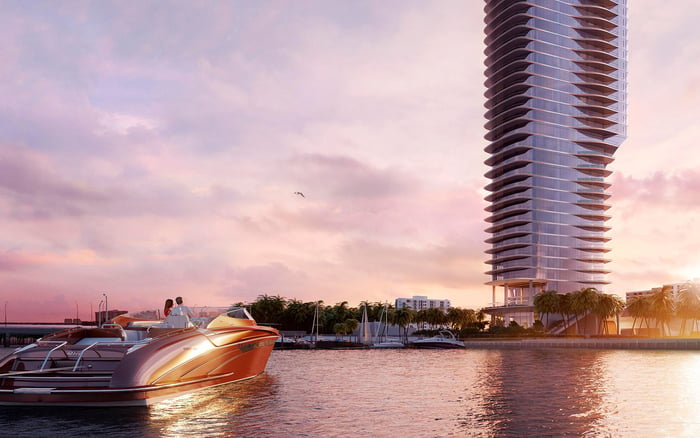
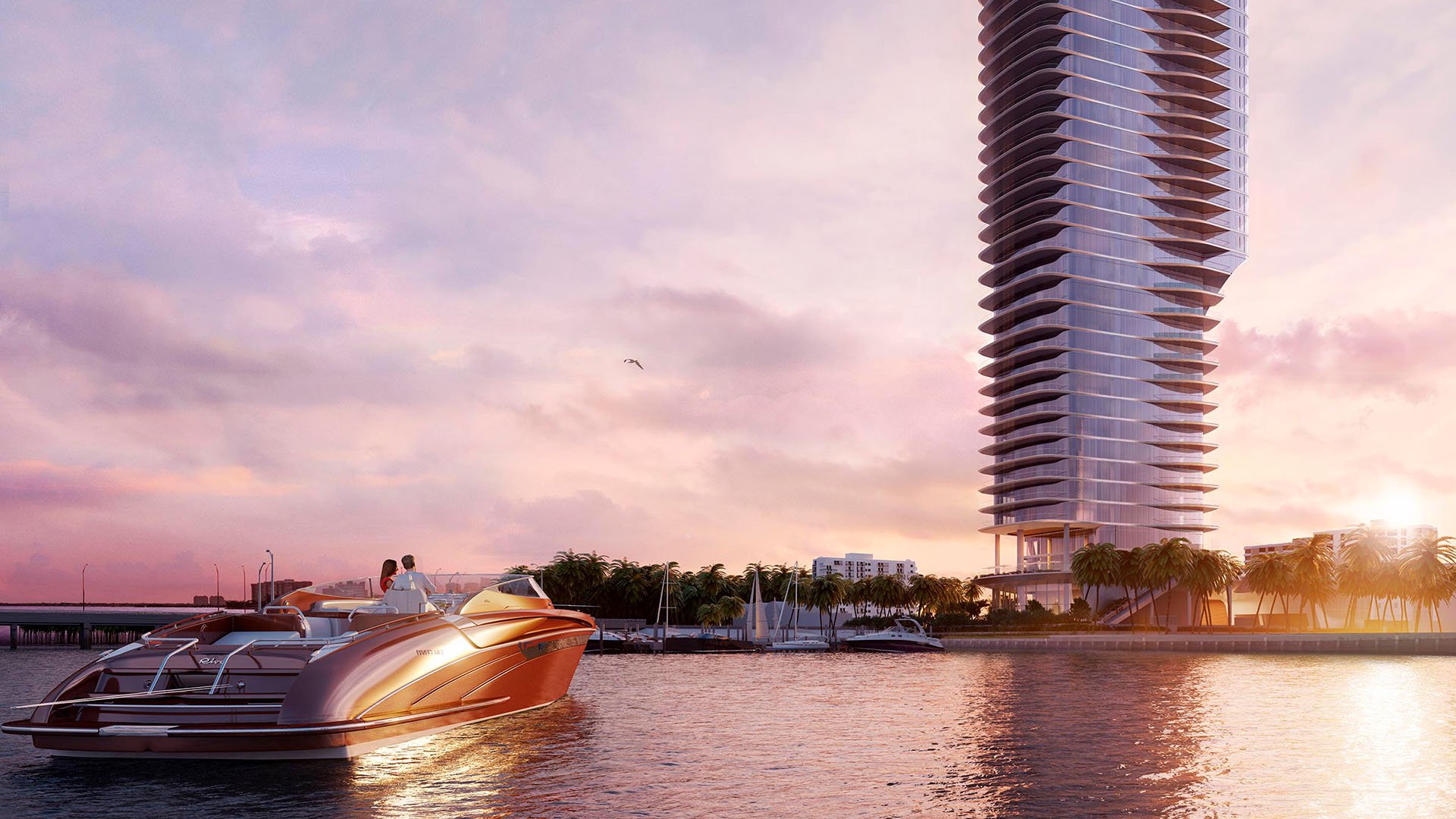
This is why projects such as The Delmore Surfside appeal to buyers who want the emotional register of a refined coastal address without requiring the constant theater of a mega-amenity environment. The point is not austerity. The point is selectivity.
Large towers often lean on skyline presence, height, and amenity breadth. Smaller buildings must persuade in another way. They need proportion, materiality, arrival sequence, landscape, privacy, and interior planning to carry more of the experience.
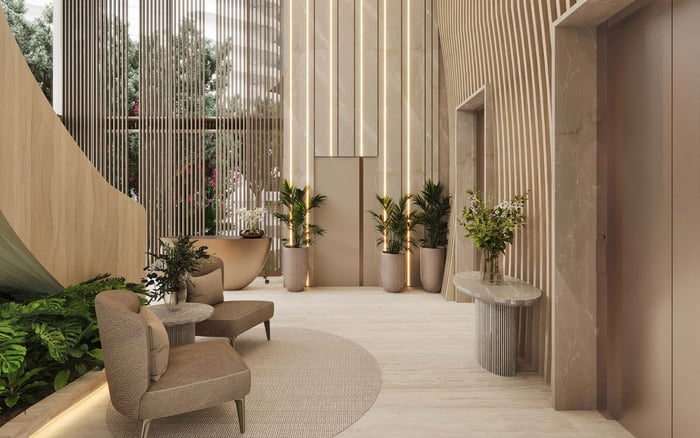
That can be a strength. In a more intimate building, the entrance is not merely a lobby. It becomes a transition from city, beach, bay, or garden into a more protected world. The elevator ride is not just vertical movement. It is part of the choreography of privacy. The corridor is not a hotel-like passage. It can become a residential threshold.
For design-minded buyers, this distinction matters. A smaller building can feel more custom because its gestures are not diluted across a vast resident population. The architecture can be quieter and still more memorable. Materials can be appreciated at closer range. Views, terraces, gardens, and common spaces can be curated around a narrower set of daily experiences.
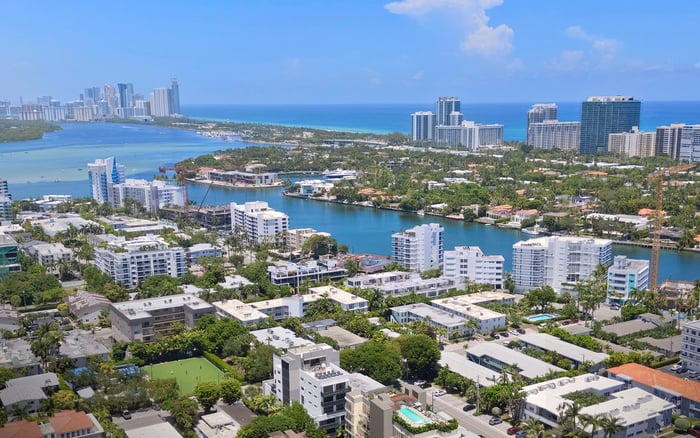
In Bay Harbor Islands, The Well Bay Harbor Islands offers a useful example of how a buyer may consider wellness, privacy, and neighborhood scale together rather than treating amenities as a simple checklist. In Coconut Grove, Arbor Coconut Grove belongs in a similar conversation about how architecture and setting can shape a calmer form of luxury.
Many buyers begin with the amenity inventory: spa, fitness studio, screening room, dining room, pool, lounge, guest suites, children’s areas, coworking spaces, and perhaps marina or beach access depending on the location. The stronger question is not whether an amenity exists. It is whether it will be used with pleasure.
A spectacular amenity that feels crowded, heavily scheduled, or socially exposed may have less everyday value than a smaller, beautifully maintained space that feels available when the resident wants it. A private fitness room used comfortably three times a week may be more luxurious than a vast wellness floor that requires strategic timing. A modest lounge with the right atmosphere may be more valuable than multiple rooms that feel impersonal.
This is where boutique buildings can surprise buyers. They may not offer the longest list, but the best ones can make each feature feel more considered. Luxury is not measured only by square footage outside the residence. It is measured by whether the building removes inconvenience and supports the life one actually intends to live.
The contrast is especially interesting in urban neighborhoods. A buyer considering 2200 Brickell may think carefully about how a residential atmosphere can coexist with city energy, while another buyer may prioritize a quieter coastal or island setting. Neither instinct is wrong. The key is matching scale to temperament.
Privacy is often discussed in terms of elevator access, residence separation, terrace orientation, or arrival control. Those factors matter, but true privacy is also emotional. It is the ability to feel unobserved. It is the comfort of not having to perform. It is the sense that one’s home remains personal even within a condominium environment.
Smaller buildings can be especially effective at creating this mood. Fewer residents can mean fewer strangers in transitional spaces and fewer occasions when common areas feel like public rooms. The building may develop a more stable social fabric, where residents recognize one another without feeling overexposed.
For some buyers, that intimacy is a virtue. For others, the anonymity of a larger tower is preferable. A large building can allow one to disappear into scale. A smaller building offers a different kind of discretion, based on familiarity, rhythm, and restraint.
Coastal properties such as Ocean House Surfside illustrate why some buyers gravitate toward a more residential atmosphere at the water’s edge, where the luxury proposition is as much about quiet continuity as it is about amenity depth.
A smaller building is not automatically the better luxury choice. Larger amenity towers can be ideal for buyers who want breadth, social energy, extensive programming, and a feeling of resort abundance. They can also suit owners who prefer a wide menu of services under one roof and do not mind a more active residential environment.
The better comparison is not small versus large. It is intimate versus expansive, composed versus abundant, private versus social, edited versus comprehensive. A sophisticated buyer should ask which form of luxury will age better in daily use.
The answer may change by neighborhood, family structure, seasonal pattern, and personality. A full-time resident may care most about elevator rhythm, service memory, and acoustic calm. A seasonal owner may care about effortless arrival and storage. A social owner may want scale, activity, and hospitality energy. A privacy-driven owner may prefer fewer shared spaces, fewer decision points, and fewer daily encounters.
Before choosing a smaller building, a buyer should look beyond the word boutique. The term is attractive, but execution matters. Consider the arrival experience, staff visibility, guest handling, parking or valet choreography, elevator count and routing, terrace privacy, acoustic separation, pool placement, fitness access, storage, delivery management, and the relationship between residences and shared spaces.
Also consider whether the building’s restraint is intentional. A limited amenity program can be elegant when it is thoughtfully edited. It can feel inadequate when it is merely undersized. The difference is design intelligence.
The most luxurious smaller buildings do not feel like reduced versions of larger towers. They feel complete in their own language. They understand that privacy is an amenity, that calm has value, and that a residence does not need constant spectacle to feel exceptional.
Does a smaller building always mean more privacy? Not always. Privacy depends on design, circulation, staffing, residence layout, and how shared spaces are managed.
Can a boutique building still have strong amenities? Yes. The most successful smaller buildings tend to focus on amenities that are highly usable rather than simply numerous.
Is a larger amenity tower better for families? It can be, especially when families want a broad range of shared spaces. Some families still prefer the calmer rhythm of a smaller building.
What should buyers compare first? Compare daily experience before comparing amenity lists. Arrival, elevators, service, privacy, and noise often matter more over time.
Does boutique scale affect resale appeal? It can support appeal when the building feels rare, well managed, and architecturally coherent. Execution remains essential.
Are smaller buildings usually quieter? They can feel quieter because fewer residents share the same spaces, but construction quality and layout are also important.
Should seasonal owners favor smaller buildings? Many seasonal owners value ease of arrival and personal service, which can align well with boutique scale.
Can a large tower feel luxurious too? Absolutely. Large towers can deliver resort-style abundance, extensive services, and a more active social environment.
What is the main risk of choosing a small building? The risk is mistaking limited amenities for intentional restraint. Buyers should study how the building actually functions.
What is the simplest way to decide? Ask whether you want your building to feel like a private residence with services or a full-scale resort in the sky.
To compare the best-fit options with clarity, connect with MILLION.
If branded residences are on your mind — as a home or as an allocation — we would be glad to share what we are seeing, privately.
Begin a quiet conversation