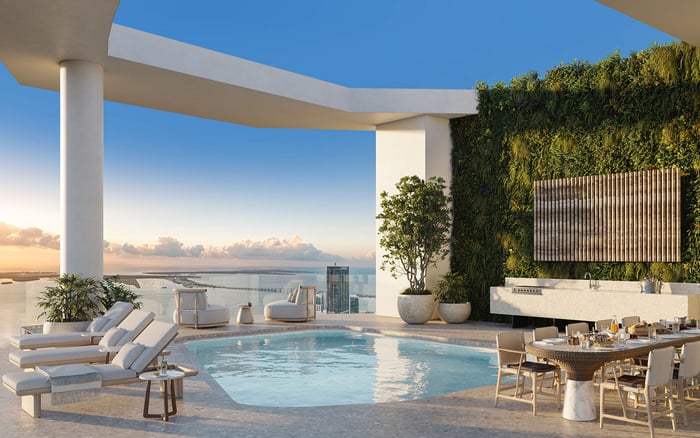
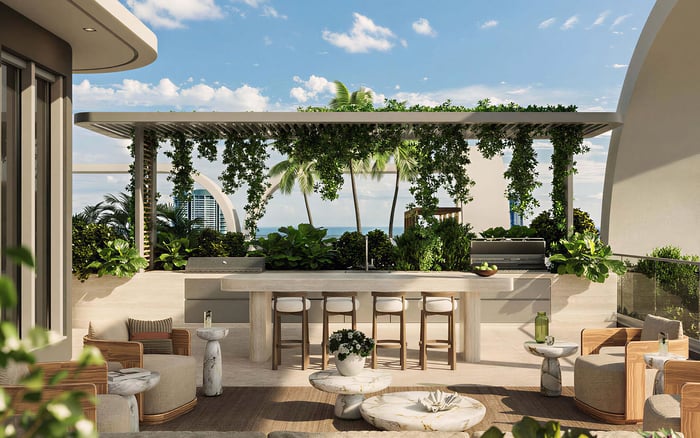
A buyer-focused guide to evaluating terrace drainage in South Florida waterfront condos, with practical questions for design review, walkthroughs, and association due diligence.
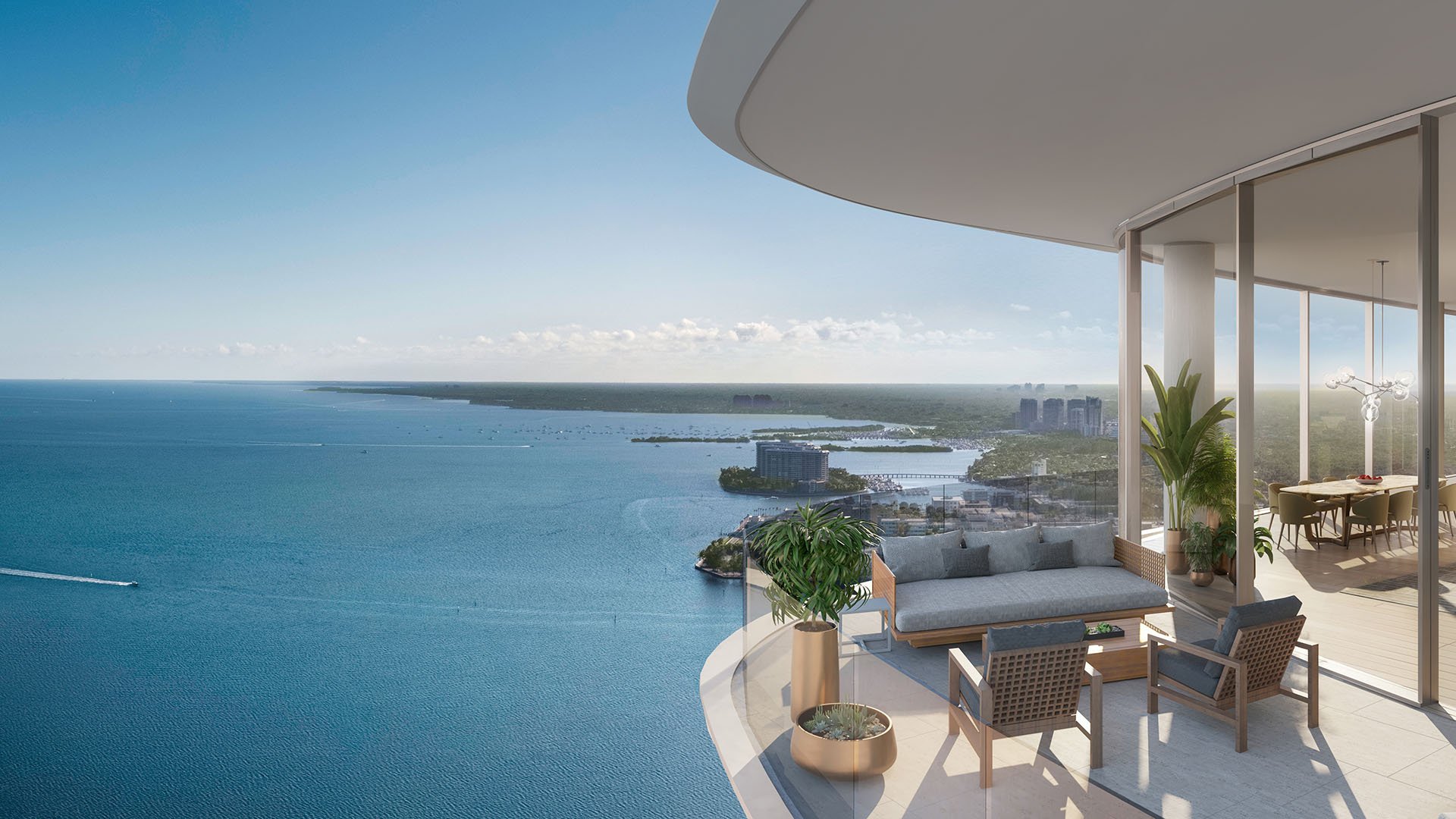
A South Florida waterfront terrace can make a residence feel complete. It frames the morning light, extends the living room into open air, and gives private rhythm to days spent above the water. Yet for a careful buyer, the most important terrace question is not the view. It is movement: where does the water go?
That single question turns a beautiful outdoor space into a serious due diligence conversation. It asks whether the Terrace was designed, maintained, and documented in a way that meets the expectations of a luxury owner. It also helps distinguish surface appeal from long-term confidence, especially in buildings where outdoor space is central to the value proposition.
The point is not to make every buyer a building consultant. It is to make the buyer better prepared. Before the furniture plan, before the sunset dinner, before the final number, the terrace drainage conversation deserves a place beside floor plan, exposure, privacy, and building services.
Begin with the simplest version of the question: when rain reaches this terrace, where is it intended to travel? The answer should be specific. A buyer should be able to understand whether water is directed to drains, scuppers, gutters, or another collection point, and whether the slope of the finished surface appears consistent with that intention.
The next question is responsibility. In some condominium settings, the visible terrace surface, drainage components, waterproofing layers, railings, and structural elements may be treated differently under governing documents. The practical takeaway is direct: do not assume that the portion you can see is the portion you control.
A refined walkthrough should include the terrace in the same way it includes the kitchen, primary suite, and parking. Look at corners, door thresholds, drain locations, wall bases, and transitions between inside and outside. Ask whether recent work has been performed, whether approvals were required, and whether records are available for review.
A terrace can be immaculate on the day of a showing and still warrant careful questions. Fresh finishes, outdoor rugs, planters, and furniture can soften the eye. They can also distract from the practical reading of slope, drainage access, and maintenance habits.
For buyers comparing new and resale residences, the conversation should be tailored. A New Project purchase should prompt questions about drawings, specifications, warranties, and turnover procedures. A resale purchase should prompt questions about history, alterations, association records, and whether any owner-installed finishes have changed how water was meant to move.
This is particularly relevant when buyers move between different waterfront lifestyles. A Brickell tower residence such as Una Residences Brickell presents a different daily experience from a coastal address, but the diligence discipline is similar. The terrace should be understood as part of the residence, not as an afterthought attached to the glass line.
Oceanfront and Waterview properties ask buyers to think in layers. The view is emotional. The architecture is visual. The service program is experiential. The terrace, however, is technical as well as romantic. It is where design, exposure, materials, maintenance, and rules meet.
For a buyer touring Miami Beach, a residence such as The Perigon Miami Beach may be considered within a broader lifestyle conversation that includes privacy, beach access, arrival sequence, and outdoor living. Within that conversation, terrace drainage is a quiet but useful checkpoint. It brings the focus back to how the residence performs after the tour is over.
In Sunny Isles, buyers considering vertical waterfront living, including buildings such as St. Regis® Residences Sunny Isles, can use the same framework. Ask about intended water paths, access for maintenance, building rules for planters and furniture, and any limits on modifying finished outdoor surfaces.
The same applies north along the coast. In Fort Lauderdale, a residence such as Four Seasons Hotel & Private Residences Fort Lauderdale may attract a buyer for service, location, and a polished waterfront lifestyle. The terrace review should still be precise, because elevated ownership is strongest when the quiet details have already been examined.
Luxury buyers often compare outdoor areas by size, depth, exposure, and furniture potential. Those are valid considerations, but the Balcony or terrace should also be read as a working exterior plane. Its details can influence how an owner uses the space and how confidently a future buyer interprets it.
Ask whether the terrace has been altered. Tile overlays, pavers, artificial turf, custom decking, large planters, and outdoor kitchens may affect access to drains or change how surfaces behave. The issue is not whether such features are desirable. The issue is whether they were properly reviewed, permitted where required, and compatible with the building’s rules.
Also ask how routine care is handled. Who clears drainage points? How often are common exterior areas reviewed? What is the process for reporting staining, slow drainage, or water near door thresholds? A disciplined buyer wants those answers before closing, not after the first strong weather event.
The terrace conversation should continue beyond the showing. Buyers and their advisers can request condominium documents, rules for exterior modifications, recent meeting minutes, maintenance policies, reserve information, and any available records that speak to terrace, balcony, waterproofing, facade, or drainage work.
The language matters. Rather than asking only whether there is a problem, ask for the documents that would reveal how the building manages exterior systems. The best review is not adversarial. It is orderly. A serious seller, association, or development team should understand why an informed purchaser wants clarity.
For pre-construction and newly completed residences, ask how terrace systems are delivered, inspected, and transferred to owners. For resale residences, ask what has changed since original delivery. If outdoor finishes have been upgraded, request documentation. If drains are hidden by decorative surfaces, ask how they remain accessible.
No single answer should carry the entire decision. Instead, the buyer is assembling a picture: design intent, visible condition, maintenance culture, governing documents, and professional review. When those elements align, the terrace becomes what it should be: an elegant extension of the residence rather than an unanswered question.
The most sophisticated waterfront buyers know that luxury is not only what is seen. It is also what has been considered. Terrace drainage belongs in that category. It is discreet, practical, and easy to overlook when the horizon is doing its work.
A well-placed question can change the pace of a showing. It can reveal whether the property has been cared for thoughtfully. It can clarify responsibility before ownership begins. Most importantly, it can help a buyer decide whether the beauty of the outdoor space is matched by the confidence behind it.
What is the first terrace drainage question a condo buyer should ask? Ask where water is intended to go when it reaches the terrace, then request a clear explanation of the drainage path and maintenance responsibility.
Should I inspect the terrace even if it looks newly finished? Yes. New finishes can be attractive, but buyers should still review slope, drains, thresholds, and access for routine maintenance.
Can planters and outdoor furniture affect terrace drainage? They can affect access and water movement, so ask whether the building has rules for placement, weight, and clearance around drainage points.
Is terrace drainage only a concern in older buildings? No. New and resale residences both deserve review, although the questions may focus on different documents, warranties, and alteration history.
What documents should I request before closing? Ask for condominium rules, maintenance policies, relevant meeting minutes, and records related to exterior surfaces, balcony work, or terrace modifications.
Who should review terrace drainage concerns? A qualified inspector, engineer, attorney, or other appropriate adviser can help interpret visible conditions and governing documents.
Should drainage questions change for Oceanfront properties? The core question remains the same: understand how the terrace was designed to shed water and how the building manages exterior care.
How does terrace drainage relate to resale confidence? Clear documentation and responsible maintenance can help future buyers understand the outdoor space with fewer unanswered questions.
Are decorative terrace upgrades a red flag? Not automatically. The key is whether upgrades were reviewed, allowed by the building, and installed without blocking access to drainage components.
When should I raise terrace questions in the buying process? Raise them early, during showings and document review, so they can be addressed before emotional commitment becomes contractual pressure.
For a tailored shortlist and next-step guidance, connect with MILLION.
If branded residences are on your mind — as a home or as an allocation — we would be glad to share what we are seeing, privately.
Begin a quiet conversation