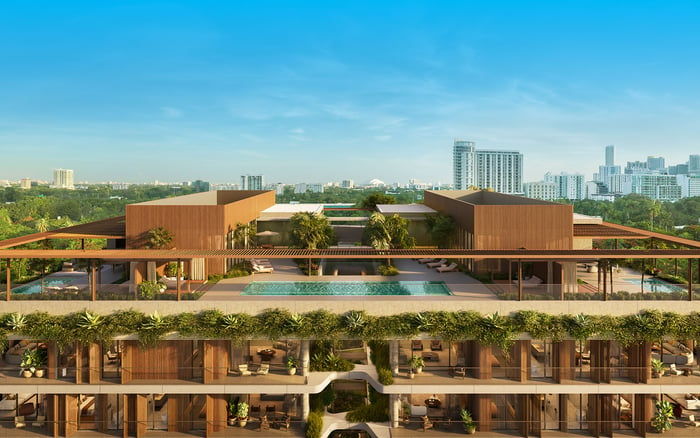
A buyer-focused guide to recognizing when neighboring tower exposure can support privacy, light, livability, and resale positioning in South Florida condominiums.
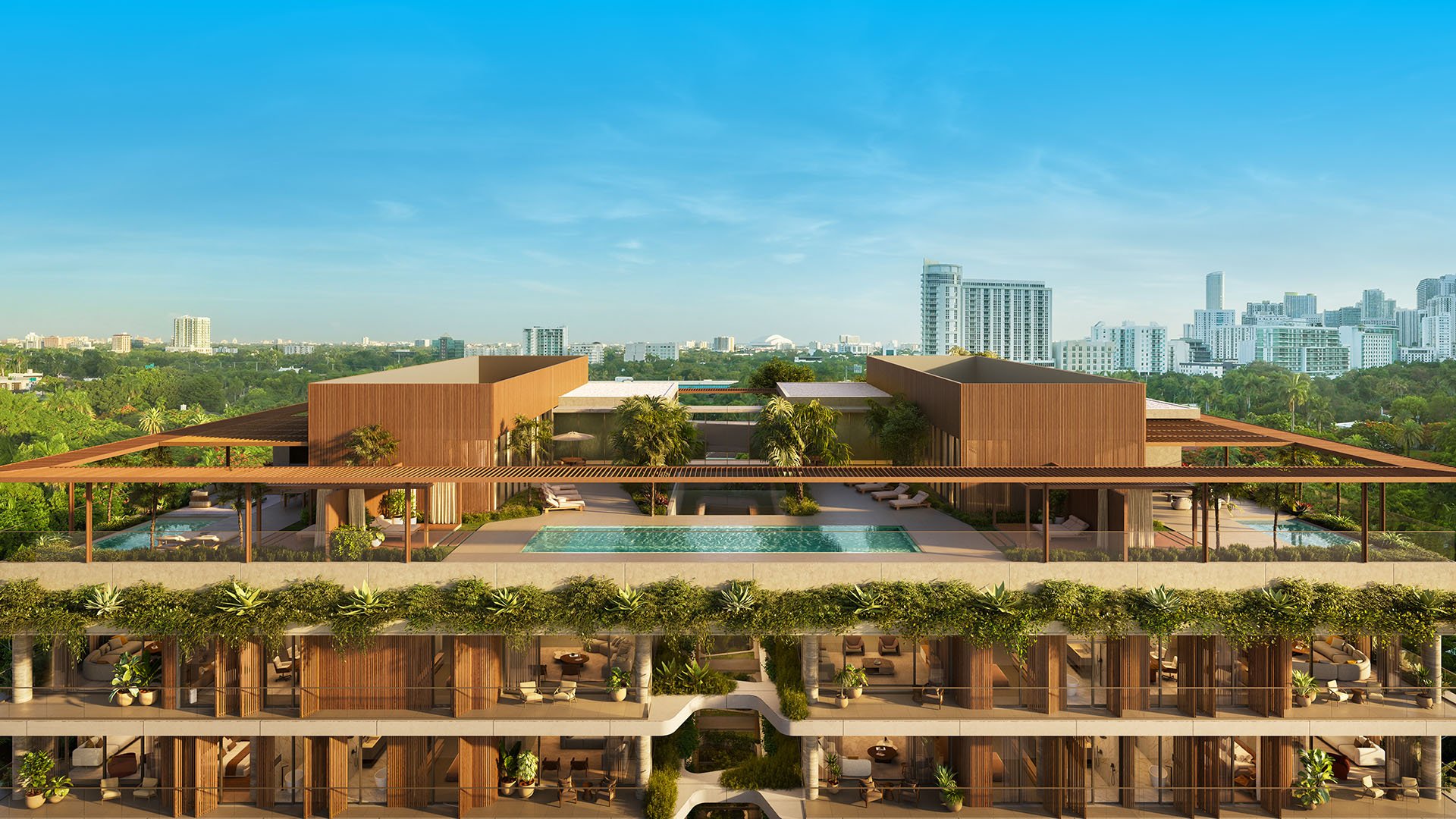
In South Florida luxury real estate, buyers often treat neighbor-tower exposure as an automatic compromise. The more sophisticated reading is more nuanced. A neighboring tower can be a liability, a neutral condition, or, in the right line and floor plate, a quiet Resale advantage.
That distinction matters. A buyer who understands exposure before purchase can negotiate with greater precision, live more comfortably, and later explain the residence with confidence. The question is not simply, "Can I see another building?" The better question is, "Does the neighboring tower protect the best parts of this residence while making the entry price more rational?"
In dense vertical markets such as Brickell and along coastal corridors, a perfectly open view is only one expression of value. Privacy, light, ceiling height, usable outdoor space, and how a room feels at breakfast or dusk may be just as important. The strongest opportunities rarely reveal themselves in a single listing photograph. They emerge from walking the residence, standing on the Balcony, studying the sightlines, and asking how the next buyer will interpret the same condition.
Neighbor-tower exposure becomes an advantage when it filters the market without weakening the core experience of the home. Some buyers will dismiss a residence too quickly because another tower appears in the frame. That creates room for a disciplined buyer to focus on actual livability: the width of the view corridor, the angle of the adjacent building, the distance between facades, and whether the main rooms still receive pleasing natural light.
A residence with partial exposure may also carry a more approachable price than a comparable open-view unit, while still delivering the building, service level, amenities, address, and interior quality that matter most. For a second-home buyer who values convenience and design over cinematic views, this can be the more elegant allocation of capital.
The advantage is strongest when the exposure is oblique rather than direct. If the neighboring tower sits off to one side, frames the view, or affects only a secondary room, it may have little impact on daily pleasure. It can even create a more urban, layered perspective that feels sophisticated rather than compromised.
The first test is light. A unit can tolerate another tower if the principal rooms still feel bright, open, and calm. Morning and late-afternoon visits are especially useful because exposure often reads differently at different hours. Flat, dim light is harder to forgive than a visible tower.
The second test is privacy. Direct window-to-window alignment is usually the most sensitive issue. If the primary suite, living room, or main outdoor space faces directly into another residence, the buyer pool narrows. If the alignment is offset, softened by depth, or limited to service areas, the concern may be manageable.
The third test is usable outdoor space. A Terrace that feels private, shaded at the right moments, and large enough for real seating can outperform a nominally open Balcony that is too windy, too shallow, or visually exposed from multiple angles. Buyers remember how outdoor space feels, not only what it overlooks.
The fourth test is narrative. Can the residence be described cleanly at resale? A strong narrative might read: protected urban outlook, pleasant side water glimpse, strong natural light, quiet bedroom exposure, and excellent value within the building. A weak narrative sounds defensive. If the explanation takes too long, the market may discount it more heavily.
Brickell buyers are often accustomed to architectural proximity. The skyline is part of the experience, and a neighbor-tower view can feel appropriate when the residence offers height, service, walkability, and an energetic city outlook. In that context, the right exposure reads as metropolitan rather than compromised.
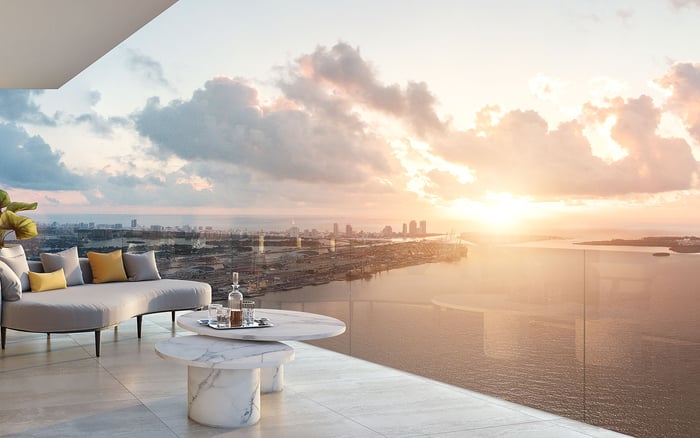
Coastal buyers may be more sensitive. If a residence is marketed around water, sky, or resort atmosphere, a neighboring tower that interrupts the primary view can feel more material. Still, the condition is not automatically negative. A Waterview that is angled, framed, or visible from the main entertaining area can remain compelling if the residence also delivers privacy and generous interior volume.
The key is buyer expectation. A purchaser seeking a trophy panorama will judge exposure harshly. A purchaser seeking a well-priced, beautifully finished home in a premier building may see value where others hesitate. Sophisticated buyers do not pay for labels alone. They pay for the lived experience, then ask whether the eventual resale story will be simple enough for the next buyer to understand.
High floors often command attention because they promise distance, light, and broader perspective. Yet higher is not automatically better when a neighboring tower sits in the wrong place. A high residence can still face a direct obstruction, while a mid-level unit may enjoy a cleaner diagonal corridor or a more pleasant relationship to gardens, water, or the city grid.
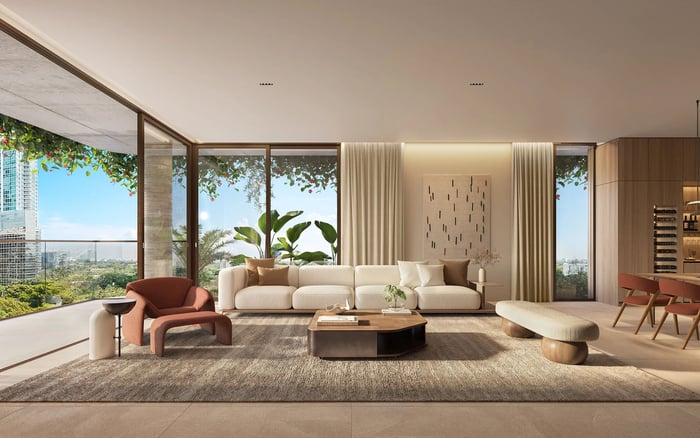
The more useful exercise is to evaluate the exact line. Stand in the living room, at the kitchen island, beside the bed, and outside on the Balcony. Ask what the eye naturally sees from the places where life actually happens. If the adjacent tower is mainly visible when standing at the glass, but not dominant from the seating area, the exposure may be less important than the floor number suggests.
This is where restraint matters. A buyer should not overpay simply because a unit is higher, nor should they reject a lower or mid-level home without understanding its angles. The best resale opportunities often sit in the gap between perception and reality.
Treat neighbor-tower exposure as a pricing conversation, not a flaw. The goal is to compare the residence with the most relevant alternatives within the same building, nearby buildings, and similar service tiers. If the discount is meaningful and the daily experience remains strong, the exposure may be working in the buyer's favor.
A well-priced exposed residence can offer a more balanced ownership case than an open-view unit stretched beyond its functional value. The purchase should still feel desirable without constant justification. If the exposure affects every room, removes privacy, and weakens the outdoor space, the discount may not be enough. If it affects only one secondary angle while preserving light, flow, and amenity value, it can be a disciplined Investment.
For resale, documentation matters. Keep clean photographs from different times of day, note the strongest view angles, and understand how to describe the exposure honestly. Luxury buyers appreciate clarity. They may accept a trade-off when it is presented with confidence, but they rarely reward ambiguity.
Neighbor-tower exposure tends to favor buyers who prioritize building quality, interior design, location, and service over absolute view purity. These buyers often use the residence seasonally, entertain selectively, or care more about an effortless arrival than a postcard outlook from every room.
It can also suit investors with a long-term hold mindset, provided the residence is genuinely livable and not dependent on hype. The most resilient homes are those that feel comfortable on an ordinary Tuesday. If the floor plan works, the light is flattering, the outdoor area is useful, and the price reflects the exposure, the next buyer can see the logic quickly.
Discipline remains essential. Not every obstruction is an opportunity. Some exposures are too close, too dark, or too difficult to explain. The advantage appears only when the market's first impression is more negative than the residence deserves.
Is neighbor-tower exposure always bad for resale? No. It can be acceptable, or even advantageous, when light, privacy, and pricing remain strong.
What is the most important exposure issue to evaluate? Direct window-to-window privacy is usually the most sensitive condition for luxury buyers.
Can a partial Waterview still support value? Yes. A partial Waterview can be compelling if it is visible from important living areas and feels natural.
Do high floors always solve tower exposure? Not always. The exact angle and line often matter more than the floor number alone.
Should I avoid units with a nearby tower from the start? No. Tour the residence first, then decide whether the exposure affects daily comfort.
When is a Balcony exposure acceptable? It is acceptable when the Balcony still feels usable, private enough, and visually calm.
How should I think about a large Terrace with exposure? A large Terrace can offset exposure if it offers real seating, shade, and a comfortable view angle.
Is Brickell more tolerant of neighbor-tower views? Often, yes. Brickell buyers may view architectural proximity as part of an urban lifestyle.
Can exposure create an Investment opportunity? It can, if the discount is rational and the residence remains easy to explain at resale.
What is the best way to shortlist comparable options for touring? Start with location fit, delivery status, and daily lifestyle priorities, then compare stacks and elevations to validate views and privacy.
For a tailored shortlist and next-step guidance, connect with MILLION.
If branded residences are on your mind — as a home or as an allocation — we would be glad to share what we are seeing, privately.
Begin a quiet conversation