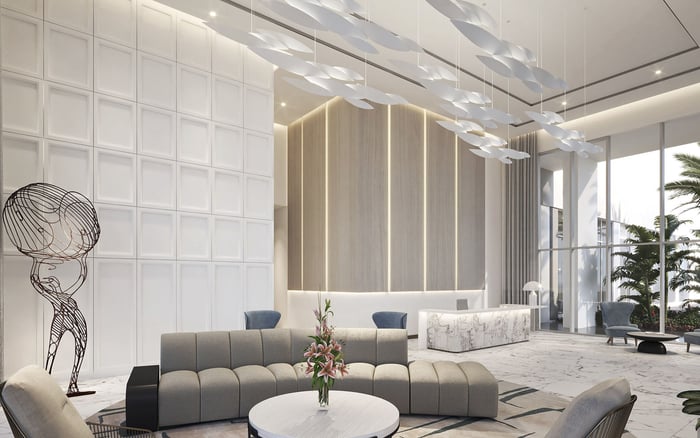
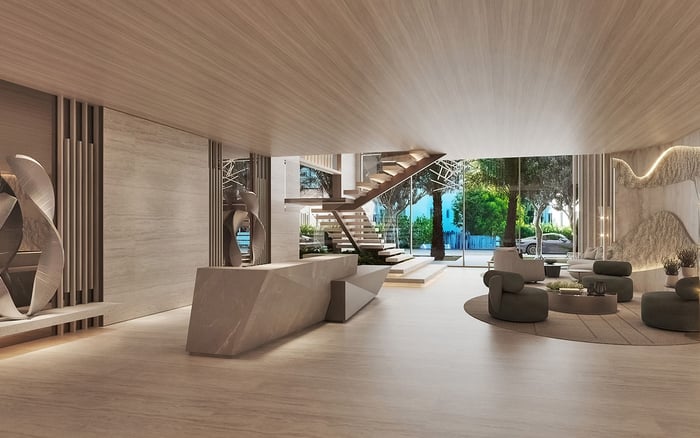
A discreet buyer-advisory framework for comparing Waldorf Astoria Residences Pompano Beach and Sixth & Rio Fort Lauderdale through privacy, security operations, digital data governance, and guest-screening risk.

For South Florida’s most discreet buyers, privacy is no longer a soft lifestyle promise. It is a working system shaped by building design, association authority, staffing discipline, guest protocols, technology choices, and the culture of daily operations. That is the proper lens for comparing Waldorf Astoria Residences Pompano Beach and Sixth & Rio Fort Lauderdale.
The two projects occupy different positions in the buyer imagination. Waldorf Astoria Residences Pompano Beach sits on the branded-residence side of the analysis, with a more hospitality-branded, service-oriented framework. Sixth & Rio Fort Lauderdale sits on the boutique waterfront-residence side, where intimacy, scale, and owner governance may play a larger role in how privacy is actually experienced.
The central question is not which address sounds more exclusive. It is how each building will handle operational risk. Who controls access? Who sees resident information? How are visitors screened? Which amenities invite non-resident circulation, if any? Which rules can the association enforce when a resident, tenant, guest, vendor, or service provider tests the boundaries?
For taxonomy-minded buyers, this remains a Pompano Beach and Fort Lauderdale comparison, but the real issue sits at the intersection of boutique expectations, new-construction assumptions, branded service, and condominium governance.
Waldorf Astoria Residences Pompano Beach should be reviewed as a luxury residential offering where privacy expectations and guest management are inseparable from the service model. A brand can bring structure, polish, and a recognizable standard of hospitality. It can also introduce additional layers of responsibility: brand/operator standards, association rules, building management procedures, and the practical decisions made by front-of-house teams.
A buyer should ask where those responsibilities begin and end. If a resident has a privacy concern involving access control, a guest interaction, a service request, or a data record, which entity is accountable? Is the matter handled by the association, the manager, the operator, or another party? The answer should not be inferred from branding language. It should be visible in governing documents, management agreements, technology policies, and house rules.
The branded-service model also warrants careful review of circulation. Buyers should ask whether any amenities, services, arrival sequences, or access points could involve non-resident users or hospitality-style traffic. This is not a criticism of the model. In many luxury buildings, service is a primary reason to buy. But service has to be reconciled with discretion, especially for owners who expect calm arrival experiences, low visibility, and tight control over who moves through the property.
Sixth & Rio Fort Lauderdale presents a different due-diligence profile. As a more boutique, design-forward waterfront residence, it may appeal to buyers who associate smaller scale with greater privacy. That instinct can be correct, but it must be tested.
A smaller building can feel more personal, more legible, and less trafficked. Staff may know residents by sight. Neighbors may have a clearer understanding of the building’s culture. Yet lower density does not automatically mean stronger security architecture. Buyers should ask whether intimacy is supported by robust reception staffing, consistent access monitoring, durable guest-screening practices, and clear enforcement mechanisms over time.
For Sixth & Rio Fort Lauderdale, the key documents are especially important. Rental restrictions, guest registration rules, move-in procedures, vendor access standards, and the association’s authority to deny or condition access can determine whether boutique privacy remains intact after turnover, leasing activity, or shifting board priorities. The smaller the building, the more governance culture matters.
Physical privacy begins with arrival. Buyers should examine how residents, guests, vendors, delivery personnel, and service providers enter and move through the property. The most elegant lobby can underperform if access routes are ambiguous or staffing protocols are inconsistent.
At Waldorf Astoria Residences Pompano Beach, the questions should focus on the relationship between service and separation. Are resident areas distinct from service areas? How are guests announced, verified, and directed? Are there policies for repeat visitors, domestic staff, drivers, pet walkers, wellness providers, and private chefs? If amenities are shared in any way, how are boundaries maintained?
At Sixth & Rio Fort Lauderdale, the buyer should focus on continuity. How will reception be staffed? How will access be monitored during quieter hours? What is the procedure when an unfamiliar guest arrives, a resident hosts a larger gathering, or a contractor needs repeated access? In a boutique building, the goal is not only fewer people. It is fewer uncertainties.
Digital privacy is often less visible than a guarded entry, but it may be more consequential. Buyers at both properties should review how resident data, visitor logs, camera footage, smart-home information, service records, and incident documentation are stored, accessed, retained, and shared.
This is where luxury buyers should be precise. Does the building maintain visitor records? Who can view them? Are camera feeds monitored in real time, stored, or exported? Are smart-home systems integrated with building management? Are service requests tied to resident profiles? Are staff members trained on discretion and confidentiality? Are vendors subject to written protocols?
The most important point is restraint. Unless current documents confirm specific technology or operating practices, buyers should not assume that license-plate recognition, facial recognition, camera retention periods, smart-home data controls, or staff confidentiality standards exist in a particular form. These are questions for diligence, not marketing assumptions.
Guest screening is where privacy becomes social, legal, and operational at once. The strongest buildings distinguish among invited guests, short-term visitors, tenants, domestic staff, vendors, and event attendees. They also define what happens when a resident’s preferences conflict with association rules.
For Waldorf Astoria Residences Pompano Beach, buyers should ask how the branded-service environment manages visitor flow without diluting residential privacy. The goal is a disciplined protocol that supports hospitality while preserving resident control.
For Sixth & Rio Fort Lauderdale, buyers should look closely at the condominium documents. Rental restrictions, guest registration, move-in scheduling, and association authority can be decisive. A boutique waterfront building can preserve its privacy only if the rules are clear enough to survive changing ownership patterns and enforceable enough to matter.
Before treating either privacy model as settled, a buyer should request and review the current condominium documents, management agreements, house rules, access-control policies, technology policies, rental provisions, and service standards. If the answers are not written, buyers should assume they may evolve.
The best questions are simple. Who controls entry? Who can approve or deny access? Who handles disputes? Who sees resident data? Who monitors staff conduct? Who can change guest rules? Who pays for security upgrades? Who audits compliance?
In this comparison, Waldorf Astoria Residences Pompano Beach presents the due-diligence challenge of a branded, service-rich environment. Sixth & Rio Fort Lauderdale presents the due-diligence challenge of boutique scale and governance durability. Neither model is inherently superior for every buyer. The better fit depends on whether the owner values branded operational depth, smaller-building intimacy, or a particular balance of both.
Is Waldorf Astoria Residences Pompano Beach the more service-oriented option? It should be viewed as the more hospitality-branded, service-oriented side of this comparison, subject to document review.
Is Sixth & Rio Fort Lauderdale more private because it is boutique? Not automatically. Smaller scale may support privacy, but buyers still need to verify staffing, access control, and governance.
What is the main due-diligence issue for Waldorf Astoria Residences Pompano Beach? Buyers should clarify how brand/operator standards, association rules, and building management divide privacy and access responsibilities.
What is the main due-diligence issue for Sixth & Rio Fort Lauderdale? Buyers should test whether intimate scale is supported by formal guest rules, reception staffing, and enforceable association authority.
Should buyers assume either building uses specific security technology? No. Camera systems, visitor logs, smart-home data practices, and retention rules should be confirmed in current documents.
Why do rental restrictions matter for privacy? Rental rules influence who circulates through a building, how often occupancy changes, and how consistently guest screening can be enforced.
What should be reviewed for digital privacy? Buyers should ask how resident data, visitor logs, camera footage, service records, and smart-home information are stored and shared.
Can amenities affect privacy expectations? Yes. Any amenity or service that permits non-resident or hospitality-style traffic should be reviewed for access boundaries.
Which model is better for a highly discreet owner? It depends on the owner’s priorities. Some will prefer branded operational structure, while others will prefer boutique residential control.
What documents matter most before contract decisions? Current condominium documents, house rules, management agreements, technology policies, and rental provisions should be reviewed.
When you're ready to tour or underwrite the options, connect with MILLION.
If branded residences are on your mind — as a home or as an allocation — we would be glad to share what we are seeing, privately.
Begin a quiet conversation