For 2026 luxury buyers, air-quality dashboards are moving from wellness theater to practical due diligence, shaping questions about sensors, maintenance, privacy, amenities, and long-term ownership confidence.

The next luxury buyer question is not simply whether a residence has a wellness narrative. It is whether that promise can be seen, understood, and managed. In 2026, air-quality dashboards are becoming a more sophisticated part of the conversation, especially for South Florida buyers who expect comfort to be both sensory and operational.
A dashboard does not make a home healthy on its own. It is a window into a system. For an owner comparing a Brickell tower residence with a waterfront estate, the meaningful issue is not the glow of the interface. It is what the system measures, how often it measures, where the sensors are placed, and whether anyone is responsible for responding when readings change.
This is where the buyer conversation becomes more precise. Air quality is no longer a vague amenity phrase placed beside spa, fitness, and meditation rooms. It is becoming a practical due-diligence category, touching mechanical design, materials, maintenance protocols, privacy expectations, and long-term confidence.
The first question is simple: what is being measured? A polished screen may show temperature and humidity, but luxury buyers increasingly want to know whether the system also tracks more nuanced comfort and air indicators, such as particulates, carbon dioxide, and volatile organic compounds. The most useful dashboards distinguish what is pleasant from what is actionable.
The second question is placement. A reading in a corridor is not the same as a reading in a primary suite, a private elevator vestibule, a family room, or a garage-adjacent entry. South Florida residences often move between sealed, air-conditioned interiors and humid exterior environments. That transition makes sensor location especially important. A dashboard that reflects only one part of a home may offer reassurance without full context.
The third question is response. If a reading changes, who sees it and what happens next? A private homeowner may prefer alerts that remain within the residence. A condominium owner may want to know whether building management monitors shared spaces, amenity levels, and service corridors. In either case, the value lies in the operating protocol, not just the device.
Luxury real estate has spent years refining the visible language of wellness. Pools became resort-caliber. Fitness rooms became training studios. Spa suites became more residential and less commercial. The air-quality dashboard belongs to a different category because it asks the buyer to trust an invisible condition.
That trust has to be earned. A beautiful lobby fragrance, a quiet mechanical system, and a cool residence can all create a sense of calm. But the dashboard introduces a new layer of accountability. It turns atmosphere into information. For a buyer accustomed to reviewing floor plans, ceiling heights, service access, views, and finishes, this is a natural extension of diligence.
Investment logic is also changing. Buyers who plan to hold a property for years may see air transparency as part of durability. The question is less about novelty than whether a residence can remain comfortable, legible, and well operated through seasonal shifts, heavy amenity use, nearby renovations, or periods when the owner is away.
The best questions differ by setting. In a private residence, the owner may focus on bedrooms, nurseries, home offices, kitchens, closets, and wellness rooms. A family that spends long periods indoors may care about quiet consistency across daily routines. A frequent traveler may care about remote visibility and alerts before arrival.
In a condominium, the conversation expands. Elevators, corridors, lobbies, gyms, spa areas, children’s rooms, package rooms, pet areas, and garages can all have distinct air conditions. A buyer should ask whether dashboards represent only the individual residence, only common areas, or both. Pool decks introduce their own comfort expectations, especially where interior amenity lounges connect directly to exterior recreation.
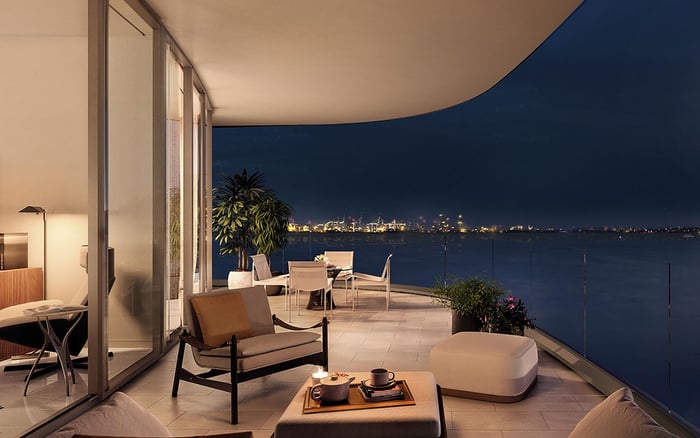
Balcony life also matters in South Florida. Owners often move between expansive outdoor space and highly conditioned interiors throughout the day. That rhythm can affect how buyers interpret comfort. A dashboard should not be read as a static score. It should be understood as part of how the residence performs while people live, entertain, cook, work, exercise, and return from outdoors.
For ultra-premium buyers, technology must feel calm. A dashboard should not turn a residence into a control room. The most refined implementations are discreet, integrated, and legible at a glance. They should support confidence without creating anxiety.
Privacy is part of that discretion. Buyers should ask who can access the readings, whether data is stored, whether it is shared beyond the owner or building team, and how alerts are handled. In a single-family setting, the answer may be straightforward. In a managed tower, it may involve separate layers for private residences and shared infrastructure.
Terrace living, staff circulation, service elevators, and private amenity rooms all add nuance. A sophisticated buyer will not assume that one sensor answers every question. Instead, the buyer will ask for a clear map of what is measured, where, by whom, and for what purpose.
The dashboard is only as valuable as the building culture behind it. Filters need maintenance. Systems need calibration. Staff need training. Owners need clear explanations. A luxury property can have exceptional hardware and still disappoint if operating standards are vague.
This is why buyers should listen carefully to how a sales team, property manager, or developer explains the system. Strong answers tend to be specific without being theatrical. They describe maintenance cadence, resident communication, alert thresholds, and how the building distinguishes routine variation from a condition requiring attention.
Resale may eventually reflect this difference in a subtle way. Buyers rarely purchase solely because of an air-quality dashboard. Yet they may use it as one of several signals that a residence was thoughtfully designed and responsibly managed. In a competitive market, small confidence markers can matter.
A dashboard should inform, not overwhelm. Buyers should resist turning a single reading into a verdict. Air conditions vary by activity, occupancy, weather, cleaning, cooking, and open doors. A better approach is to ask how the system behaves over time and how it supports decision-making.
The most useful comparison is not which property shows the most impressive interface. It is which property gives the clearest explanation of the full air pathway: intake, filtration, circulation, monitoring, maintenance, and communication. If that explanation is coherent, the dashboard becomes part of a larger assurance. If it is vague, the screen may be decorative.
For the 2026 buyer, the point is not to become an engineer. It is to ask sharper questions. Luxury has always involved control over light, sound, privacy, service, and arrival. Air is joining that list in a more visible way.
What is an air-quality dashboard? It is a digital interface that displays selected indoor air and comfort readings. Its value depends on what it measures and how the property responds to changes.
Should a buyer trust the dashboard alone? No. It should be considered alongside mechanical design, maintenance practices, sensor placement, and operating protocols.
Which rooms matter most for monitoring? Primary suites, living areas, kitchens, home offices, wellness rooms, and garage-adjacent entries are often the most relevant. Shared amenity areas may require separate attention.
Is this only important in condominiums? No. Single-family homes, estates, and condominium residences can all benefit from clearer air-quality information.
Can dashboards improve comfort? They can help owners and managers understand conditions, but improvement depends on the systems and maintenance behind the readings.
Should buyers ask who sees the data? Yes. Privacy, access, storage, and alert handling should be clarified before purchase whenever monitoring is included.
Do amenity spaces need separate readings? Often, yes. Gyms, spas, lounges, corridors, and garages may perform differently from private residences.
Is a more detailed dashboard always better? Not necessarily. The best system is clear, reliable, well placed, and supported by a thoughtful response protocol.
Can air-quality transparency affect future value? It may support buyer confidence as part of a broader package of design quality, operations, and wellness infrastructure.
What is the best question to ask first? Ask what the dashboard measures, where the sensors are located, and who is responsible when readings change.
If you'd like a private walkthrough and a curated shortlist, connect with MILLION.
If branded residences are on your mind — as a home or as an allocation — we would be glad to share what we are seeing, privately.
Begin a quiet conversation