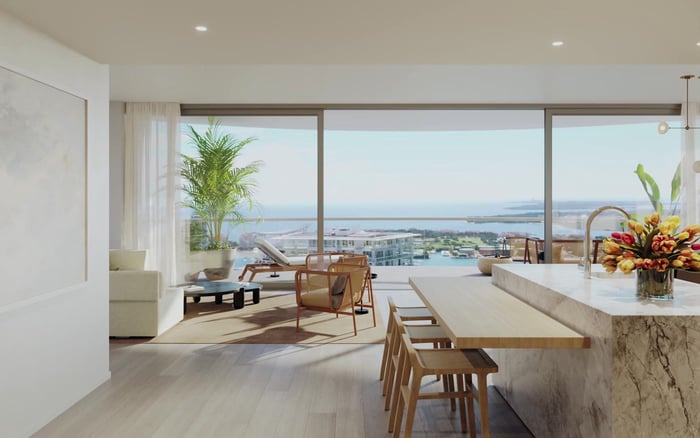
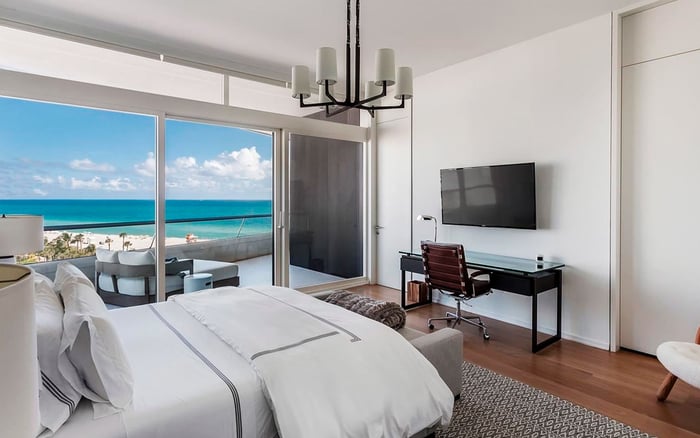
A buyer-focused guide to the moments when interior volume, livability, and plan efficiency can matter more than the most dramatic water or skyline exposure in South Florida condos.
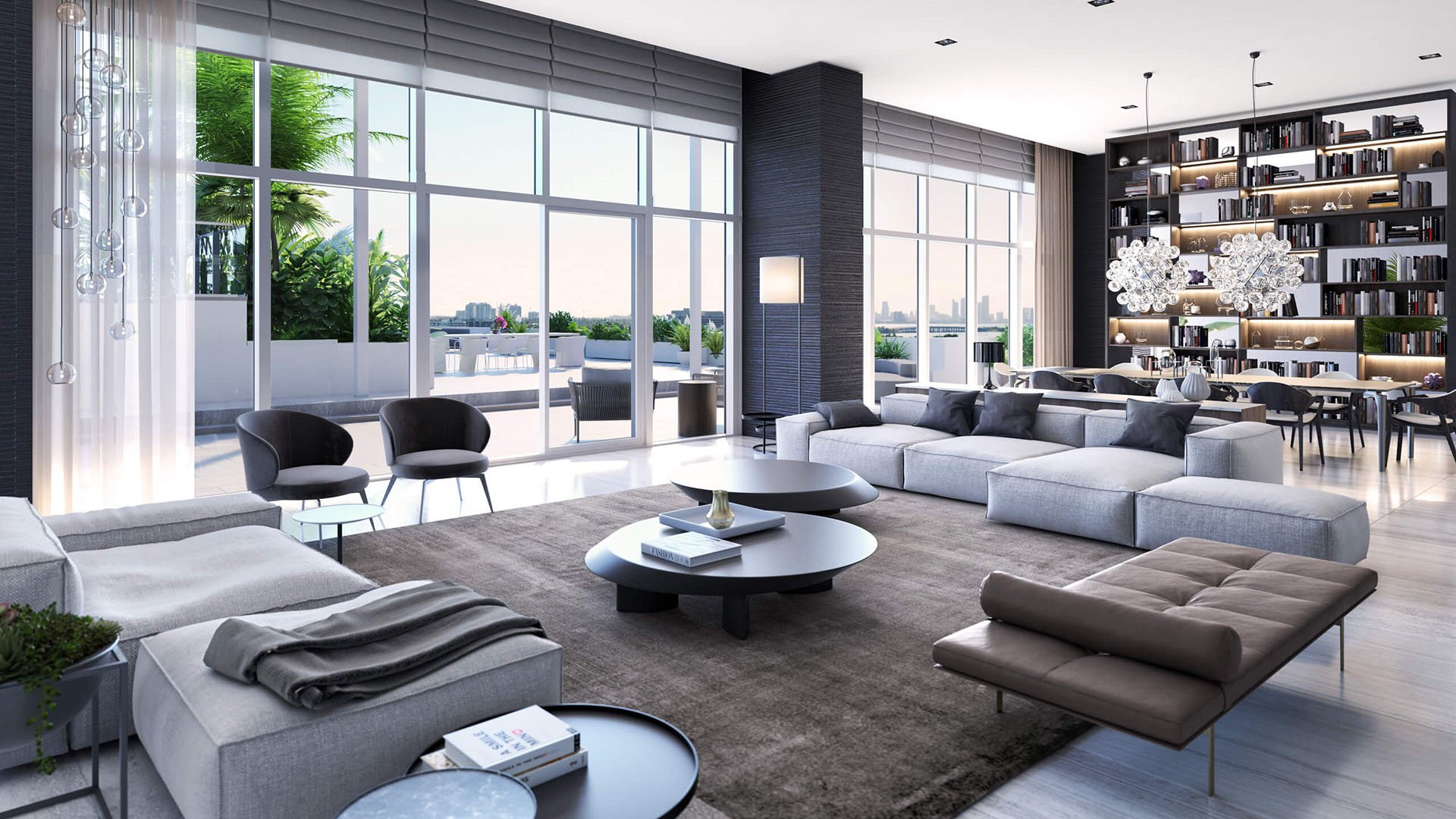
In South Florida condo buying, views have a gravitational pull. Ocean, bay, Intracoastal, city lights, sunset, skyline: each can shape an emotional first impression in seconds. Yet the best residence is not always the one with the most cinematic outlook. For many luxury buyers, a larger floor plan delivers a more enduring form of value: a home that works gracefully every day.
The distinction matters because a view is experienced in moments, while a floor plan is lived continuously. It defines how guests arrive, where children or visiting family sleep, whether a couple can work privately at the same time, and how comfortably the home moves from breakfast to dinner guests. In a market where many buyers use their residences as primary homes, seasonal retreats, or long-term legacy assets, livability can outrank spectacle.
This is not an argument against views. It is an argument for proportion. A smaller residence with an exceptional exposure may be the right answer for a lock-and-leave owner who wants simplicity. But when the decision narrows to a better view versus a larger plan, the larger plan wins when the extra square footage changes how the home functions.
Luxury is not only finish level. It is circulation, privacy, light, storage, and ease. A larger residence can offer separation between bedroom suites, a more gracious foyer, a proper dining zone, or room for a den that does not feel improvised. Those details become especially important in South Florida, where entertaining, extended stays, and multigenerational visits are common parts of ownership.
The most valuable square footage is not necessarily the most abundant. Buyers should look for space that solves a problem. Does the larger plan allow a true office rather than a desk in a bedroom? Does it create a comfortable guest suite? Does it provide a kitchen and living area that can host without congestion? Does the terrace connect naturally to the main living space rather than feeling like an afterthought?
This is where plan efficiency becomes central. A larger but poorly organized residence can feel less valuable than a smaller, more intelligent one. Hallways, awkward columns, and undersized secondary rooms can dilute the benefit of additional area. The best larger plans make the home feel composed, not merely bigger.
A superior view can support both pleasure and marketability, but it should be tested against daily use. Buyers often overestimate how much time they will spend looking outward and underestimate how often they will need another room, a better laundry area, a quieter work zone, or a more comfortable guest arrangement.
The question is not, “Which view is better?” The more useful question is, “Which residence will I still prefer on an ordinary Tuesday?” If the smaller home forces compromises every day, the view premium may lose its force. If the larger home has enough light, a pleasant outlook, and significantly better functionality, it may become the more sophisticated purchase.
This is particularly relevant in dense coastal and urban submarkets, where view corridors can vary by stack, height, orientation, and neighboring development. A buyer comparing residences in Brickell, for example, may find that a more expansive plan in a refined building such as 2200 Brickell offers a different lifestyle equation than a smaller unit selected primarily for outlook. The right answer depends on whether the residence will be admired occasionally or used intensively.
For a primary residence, the larger floor plan often has the advantage. Primary owners tend to need closets, work areas, larger kitchens, flexible rooms, and private space for household members. They may also value a proper entry sequence and the ability to entertain without turning the entire home into one open room.
For a second home, the answer is more nuanced. A seasonal owner may prioritize a postcard view because the residence functions as an escape. Yet even second-home buyers should consider length of stay. A long winter season is very different from occasional weekends. The longer the stay, the more a larger plan begins to matter.
In resort-oriented settings, the lifestyle proposition can complicate the choice. A buyer considering The Perigon Miami Beach may be drawn to the coastal experience, while still needing a residence that can host family, staff visits, remote work, and quiet evenings. In Sunny Isles, a project such as St. Regis® Residences Sunny Isles may prompt the same question at a different scale: is the most compelling home the one with the grandest view, or the one whose rooms support the way the owner will actually occupy it?
Resale is not only about what photographs well. It is also about how many future buyers can imagine living well in the residence. A larger floor plan can broaden the buyer pool when it adds bedrooms, workspace, storage, or entertaining capacity. It can appeal to downsizers who do not want to feel diminished, families who need flexibility, and international buyers who host extended guests.
A view, by contrast, can be powerful but specific. Some buyers will pay more for direct water exposure. Others may prefer more interior volume, a lower-maintenance layout, or a stronger relationship between indoor and outdoor space. The strongest residences combine both, but when budget forces a choice, broader functional appeal can be a meaningful advantage.
This is why buyers should compare not only price per square foot, but also useful square feet. A larger plan with balanced room sizes, logical circulation, and adaptable space may age better than a smaller residence whose primary strength is a single visual angle. In Coconut Grove, for instance, a buyer studying Vita at Grove Isle might reasonably consider how privacy, volume, and room utility interact with outlook and setting.
The larger plan tends to win when it creates a meaningful additional use. A den that becomes a real office matters. A third bedroom that allows guests to stay comfortably matters. A wider living room that accommodates art, seating, and dining without compromise matters. A larger primary suite with better closet capacity matters if the residence will be used for more than short visits.
It also wins when the view trade-off is moderate rather than severe. If both residences have appealing light and a respectable outlook, but one lives substantially better, the larger plan is often the more balanced choice. Buyers should be cautious about paying heavily for a marginally better view if the interior compromise is significant.
The larger plan may also win for owners who entertain. South Florida living often extends to dinners, family gatherings, and indoor-outdoor evenings. A home that receives guests elegantly can feel more valuable than one that photographs beautifully but functions tightly once people arrive.
The better view wins when the residence is primarily about retreat, emotion, and scarcity. A rare exposure can define the identity of a home. If the smaller floor plan still meets the buyer’s needs, and the view is genuinely exceptional, choosing the view can be entirely rational.
It may also win for owners who travel frequently, live minimally, or already maintain a larger primary home elsewhere. In that case, the condo may be less about accommodating every scenario and more about delivering a precise sensory experience.
The essential discipline is to avoid choosing the view as a substitute for the home. A breathtaking outlook cannot correct a bedroom that feels unusable, a lack of storage, or a living area that cannot support the owner’s routine. The most elegant purchase is the one where desire and practicality are not in conflict.
Walk both residences as if you already live there. Begin at the entry. Imagine luggage, groceries, guests, morning routines, and work calls. Stand where the dining table would go. Open closets. Consider where art, lighting, and furniture will actually fit. Then step onto the balcony or terrace and ask whether the view changes the answer enough to justify the trade-off.
Use a simple rule: if the larger plan solves daily problems and the smaller view residence creates daily compromises, choose the plan. If both plans function well and one view is meaningfully more compelling, choose the view. If neither feels complete, keep looking.
The most discerning buyers in Brickell, Miami Beach, Sunny Isles, and Coconut Grove are not simply buying a view or a floor plan. They are buying the rhythm of a future life. The right residence should feel beautiful when the doors open, but it should feel even better after the first season of living there.
When does a larger condo floor plan beat a better view? It wins when the extra space creates meaningful daily utility, such as a true office, better guest accommodations, or more comfortable entertaining areas.
Is a water view always better for resale? Not always. A strong view can help, but a more functional plan may appeal to a wider range of future buyers.
Should primary-home buyers prioritize space over view? Often, yes. Primary owners usually benefit from storage, privacy, work areas, and flexible rooms more than occasional visual drama.
Should second-home buyers prioritize the view? Sometimes. If visits are short and the residence is mainly a retreat, the emotional value of the view may carry more weight.
How should I compare two units with different layouts? Focus on usable space, room proportions, circulation, storage, and whether each area has a clear purpose.
Does a larger terrace change the analysis? Yes, if it functions as a true outdoor living area and connects naturally to the interior space.
Are high floors always worth the premium? Not if the higher-floor unit is materially less livable. Height should enhance a residence, not compensate for poor functionality.
What is the biggest mistake buyers make in this choice? They fall in love with the first view and fail to test whether the interior supports their actual lifestyle.
Can a smaller unit still be the smarter purchase? Yes. If the plan is efficient and the view is exceptional, a smaller residence can be the more satisfying choice.
What should I do before making an offer? Walk the residence slowly, imagine daily routines, and compare the view premium against the functional compromises.
If you'd like a private walkthrough and a curated shortlist, connect with MILLION.
If branded residences are on your mind — as a home or as an allocation — we would be glad to share what we are seeing, privately.
Begin a quiet conversation