A discreet framework for luxury buyers weighing the cachet of a trophy address against the practical elegance of a residence that better supports daily life.

A trophy address has value. It can signal scarcity, taste, social position, architectural importance, and proximity to the rooms where certain conversations happen. In South Florida, address carries particular emotional weight because waterfront, skyline, island, village, and beachfront living each suggest a different version of arrival.
The mistake is not wanting prestige. The mistake is allowing prestige to decide before the household has been studied honestly. A residence is not worn for an evening. It is lived in on school mornings, early flights, dinner-party nights, quiet Sundays, stormy afternoons, high-season traffic days, and the weeks when privacy matters more than applause.
The better question is not, “Which address impresses more?” It is, “Which address allows this household to operate with the least friction and the most grace?” When that becomes the standard, ego takes its proper seat: present, acknowledged, and no longer driving.
Before comparing addresses, write the week as it truly functions. Not the idealized week. The actual one. Where does the day begin? How often do you cross the causeway? Who needs proximity to school, office, marina, airport, club, beach, wellness routines, or aging parents? How often do guests stay, and do they strengthen the household rhythm or disrupt it?
A buyer drawn to Brickell may value vertical energy, dining access, and the ability to move through the city with momentum. A residence such as 2200 Brickell can enter the conversation when the daily center of gravity is urban, professional, and social. But if the same buyer spends most mornings seeking quiet, open air, and a slower transition into the day, the more impressive address may not be the more intelligent one.
This is where discipline matters. Ask each decision-maker to describe the home from Monday through Thursday before discussing the Saturday-night version. Many prestige-driven mistakes happen because buyers purchase the imagined weekend and inherit the weekday.
Admiration is the feeling a residence creates from the outside. Utility is how it performs once life begins inside it. Both matter, but they should be evaluated separately.
A celebrated Miami Beach setting, for example, may be compelling for a buyer who wants ocean air, sand, and horizon to be part of the residential rhythm. The Perigon Miami Beach may suit a household that wants Miami Beach to be part of its identity. Yet even then, the analysis should continue: how often will the beach be used, who will commute, where will cars be staged, how do guests arrive, and does the neighborhood support the buyer’s preferred privacy posture?
The same logic applies to quieter enclaves. A buyer considering Vita at Grove Isle may be responding to a different kind of luxury: separation, greenery, water, and a feeling of retreat while remaining connected to the broader city. That choice may not speak as loudly in every room, but it may protect the household’s energy more consistently.
The most useful scorecard is not complicated. Assign weight to five categories: daily access, privacy, space quality, services, and emotional fit. The key is weighting them before falling in love with a lobby, a view, or a name.
Daily access includes drive patterns, elevator routines, school runs, airport habits, and the number of transitions required to complete an ordinary day. Privacy includes not only physical discretion but social temperature. Some buyers enjoy being seen. Others want their residence to feel like a controlled environment. Space quality includes light, proportions, storage, outdoor usability, and the way rooms support actual routines. Services should be judged by relevance, not abundance. Emotional fit is the private test: does the home make you feel composed?
This prevents one dazzling attribute from overwhelming the full decision. A spectacular view can hide a difficult garage routine. A famous address can distract from a plan that does not accommodate staff, guests, pets, collections, or remote work. A quieter building can look understated on paper and feel exceptional in daily use.
Ego rarely announces itself directly. It arrives in sentences such as, “People will know,” “It is the address,” or “We should be in that building.” These are not invalid sentiments. They simply need translation.
When someone says, “People will know,” ask, “Who matters, and how often will that recognition improve our life?” When someone says, “It is the address,” ask, “Which part of our routine does the address solve?” When someone says, “We should be there,” ask, “Is that aspiration current, or is it inherited from an older version of ourselves?”
Luxury buyers often outgrow their own symbols. The address that once represented arrival may no longer represent ease. A household with children, art, dogs, staff, a boat, frequent travel, or a preference for discretion may need something more specific than fame.
South Florida’s prime residential map is not one market. It is a series of rhythms. Brickell is not Coconut Grove. Miami Beach is not Boca Raton. Bay Harbor is not Sunny Isles. Each can be right, but each asks something different of the resident.
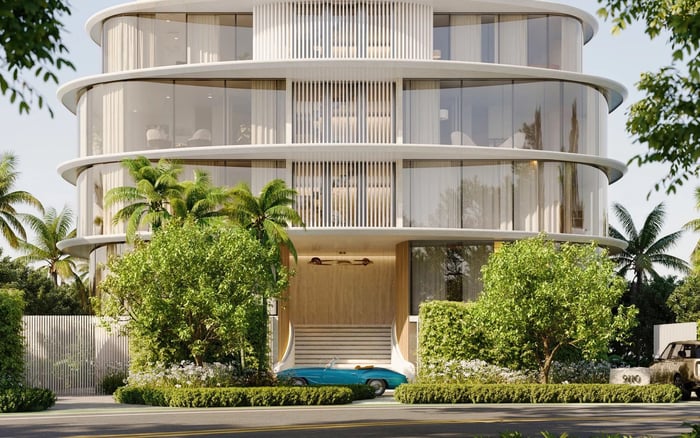
For a buyer whose life is anchored by schools, clubs, medical access, dining, and a polished but less performative cadence, Alina Residences Boca Raton may feel more aligned than a higher-voltage urban address. For a buyer seeking wellness, calm, and neighborhood scale near the water, The Well Bay Harbor Islands may deserve consideration as part of a more restorative daily framework.
The point is not to declare one area superior. The point is to define the energy your household actually needs. Prestige is useful only when it supports that energy rather than competes with it.
If possible, simulate the life before making the commitment. Drive the route at the hour you will actually drive it. Visit the neighborhood early, late, and in season. Walk to the places you imagine using. Sit in the car line. Test the marina run. Time the airport trip. Consider where household staff would enter, where deliveries occur, where guests wait, and where private moments remain private.
Then ask one final question: if nobody could see the name of the building, would this still be the one? A strong answer does not have to reject prestige. It simply proves the home can stand without it.
The best luxury decision often feels calmer than expected. It does not require constant justification. It makes the day easier, the household more fluid, and the owner less reactive. That is the address that lasts.
Should I choose the more famous address if both homes are beautiful? Only if the famous address also supports your daily access, privacy, and household rhythm. Beauty alone does not resolve friction.
How do I know if ego is influencing the purchase? Listen for language centered on being seen rather than living well. If recognition is doing most of the work, pause and reweight the decision.
Is a trophy address still important for resale? Prestige can matter, but it should not be the only thesis. A residence with practical elegance and broad lifestyle appeal may also hold long-term desirability.
What should couples do when one prefers status and the other prefers comfort? Build a shared scorecard before touring more homes. Weighted criteria make the conversation less personal and more precise.
Can a quieter address be more luxurious than a famous one? Yes, if it delivers privacy, proportion, convenience, and calm more consistently. True luxury is often felt in what daily life no longer demands.
How much should commute matter in a luxury purchase? It should matter as much as it affects energy and time. A magnificent home can become less appealing if every ordinary day begins with resistance.
Should amenities influence the decision? Amenities are valuable when they match real habits. The best amenity package is the one your household will actually use.
How do I compare a beachfront home with an urban residence? Compare the life each one creates, not only the views. One may offer sensory retreat while the other offers immediacy and momentum.
Is emotional fit a serious buying criterion? It is, provided it is tested alongside practical needs. The right home should make the owner feel both elevated and at ease.
What is the simplest final test before deciding? Ask whether you would still choose the residence if nobody else knew you owned it. If the answer is yes, the decision is likely grounded.
When you're ready to tour or underwrite the options, connect with MILLION.
If branded residences are on your mind — as a home or as an allocation — we would be glad to share what we are seeing, privately.
Begin a quiet conversation