A buyer-focused guide to assessing terrace privacy in South Florida luxury towers, especially when neighboring high-rises, future construction, and evolving sightlines may affect long-term discretion.
In South Florida’s luxury condominium market, a terrace is no longer judged only by size, depth, or view corridor. The more sophisticated question is whether the space will remain livable, discreet, and visually protected as the surrounding skyline matures. This is especially relevant in Brickell, Edgewater, Miami Beach, Sunny Isles, and other vertical neighborhoods where new towers can change the feel of a residence long after a buyer first studies the floor plan.
The best terrace is not always the highest terrace. A well-positioned mid-level residence with a thoughtful angle, deep overhang, and limited direct exposure can feel more private than a higher floor facing another tower straight across. High floors and low floors each require their own privacy analysis. Height helps, but geometry often matters more.
Many buyers begin with the view: bay, ocean, skyline, park, or city lights. Privacy requires the opposite discipline. Stand where you will actually live: at the dining table, by the outdoor sofa, beside the plunge pool if there is one, or just inside the glass line. Then ask what someone in a neighboring building might see from a living room, bedroom, balcony, pool deck, or amenity level.
A terrace can feel open in a sales gallery and exposed in daily life. The key is to evaluate diagonal views, not only the view straight ahead. A tower across the street may be less intrusive than a shorter building set at an oblique angle. Amenity decks can be more revealing than residences because people gather there, linger, and look outward. The privacy question is not simply, “Can I see them?” It is, “Can they see the parts of my home I intend to use most?”
When neighboring towers are still rising, the most valuable information is often found at the edge of the property. Look at where adjacent parcels meet the street, where podiums align, and whether a future structure could sit close to your balcony line. Even without relying on exact future outcomes, a buyer can assess exposure by studying nearby lots, existing building footprints, garage podiums, and the rhythm of towers already present in the corridor.
In Brickell, for example, the decision between a dramatic urban outlook and a protected terrace experience can be highly nuanced. A residence at The Residences at 1428 Brickell should be considered not only for its immediate outlook, but also for how its orientation relates to the dense vertical fabric around it. The same discipline applies across new-construction opportunities: the residence is not isolated from the neighborhood; it participates in it.
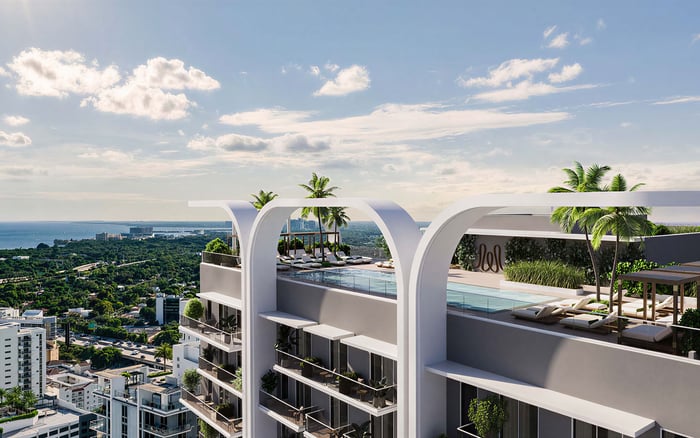
Orientation is one of the quiet luxuries of a private terrace. A corner residence can reduce direct face-to-face exposure, but only if the corner opens toward a protected diagonal. A long linear balcony can be elegant, but if it runs parallel to another tower, the experience may feel less secluded. Curved façades, angled slabs, and staggered balconies can soften the relationship between buildings.
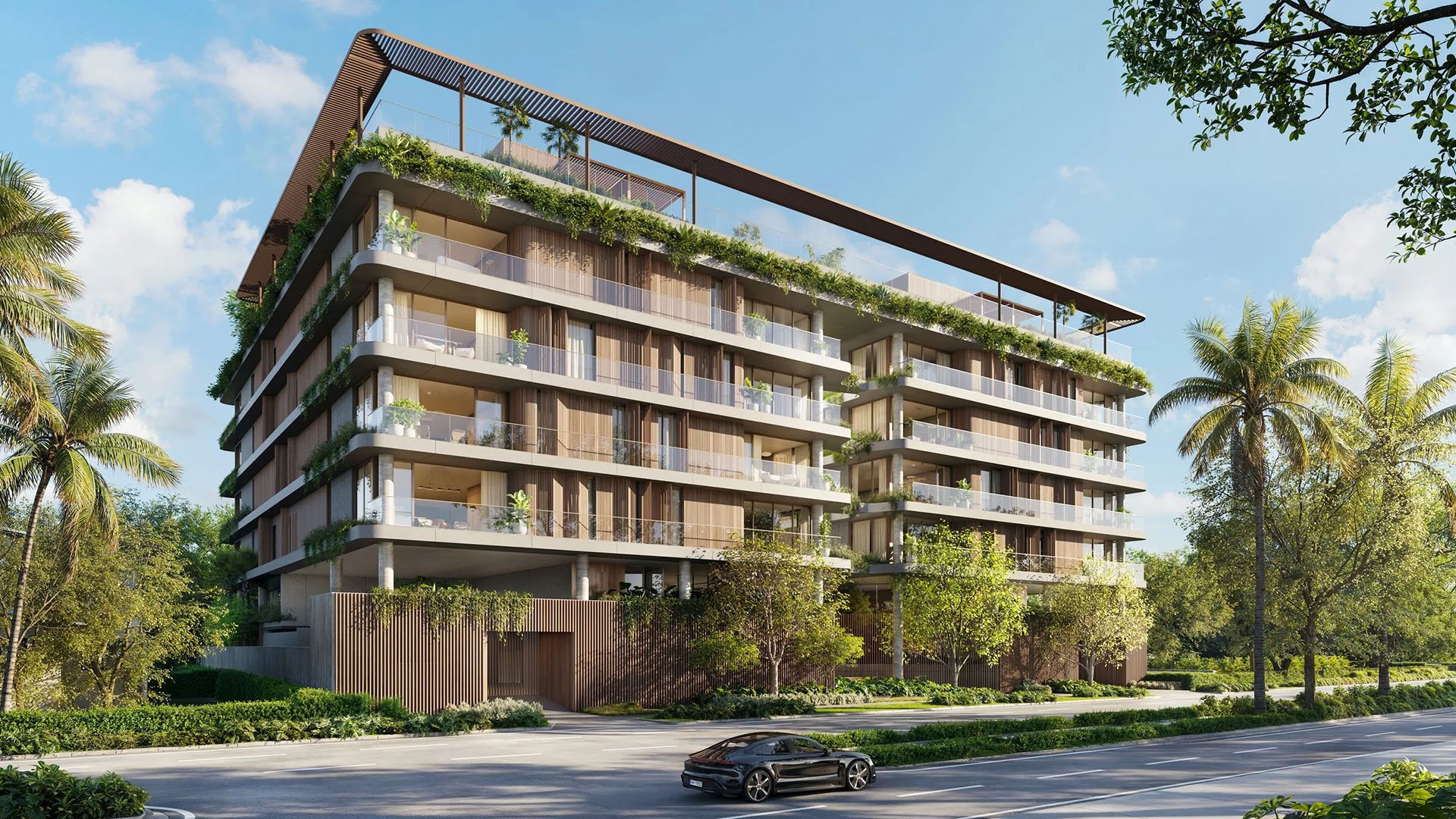
Depth also matters. A shallow balcony places the owner close to the glass rail and deeper into the visual field of neighbors. A deeper terrace creates an outdoor room, allowing furniture to sit farther back from the edge. Overhangs, side walls, columns, and landscape planters can add a layer of discretion without making the space feel enclosed.
In Edgewater, where water views and skyline density often meet, buyers should pay close attention to how a building turns toward Biscayne Bay and how terraces relate to neighboring structures. At Aria Reserve Miami, as with any high-rise residence in a growing waterfront corridor, the question is not only what the view captures, but what the terrace reveals.
Terrace privacy changes after sunset. During the day, reflections, glare, distance, and outdoor brightness can work in a homeowner’s favor. At night, interior lighting can turn glass walls into a stage. A terrace that feels sheltered at noon may feel more exposed during dinner.
The practical test is simple: imagine the residence with lights on, shades open, and guests moving between the living room and terrace. If another tower has a direct line into the entertaining space, the home may require more frequent use of window treatments than expected. That is not necessarily a flaw, but it should be priced into the buyer’s lifestyle expectations.
For oceanfront and coastal buyers, the same issue can appear in a different form. A residence near the water may have fewer landward exposures on one side, yet still face neighboring balconies along the coast. In Miami Beach, privacy can depend on the spacing between buildings, the angle of the shoreline, and whether terraces are stacked or offset. A buyer considering The Perigon Miami Beach would be well served by studying how outdoor spaces relate not only to the ocean, but also to the neighboring residential context.
Private terraces are sometimes most exposed not to another apartment, but to a pool deck, restaurant terrace, fitness lounge, or shared garden. These spaces create longer periods of observation. Residents and guests may sit for hours, facing outward, especially at sunset or on weekends.
When reviewing plans, identify amenity levels in your building and nearby buildings. A residence just above or across from an amenity deck may experience more visual activity than a unit aligned with private residences. Conversely, being several levels above an amenity podium can create a softer relationship, particularly if the terrace is recessed or angled away.
This is where boutique scale and tower spacing can become meaningful. In Sunny Isles, buyers often compare height, coastline position, and building rhythm. At Bentley Residences Sunny Isles, as in other coastal towers, the evaluation should include not only the horizon view, but also the daily choreography of neighboring balconies and shared outdoor areas.
Before committing, buyers should ask for the most complete visual package available: floor plans, elevation drawings, terrace sections, stack plans, renderings from comparable heights, and any available context showing adjacent parcels. The goal is not to predict every future development. It is to understand the known and plausible privacy envelope.
Helpful questions include: Which direction does the primary terrace face? What is directly across today? What could reasonably rise nearby? Are the main bedroom and bath visible from the terrace edge or neighboring tower line? Are outdoor kitchens, pools, or seating areas placed forward or recessed? Does the residence include side returns, screens, planters, or architectural fins that reduce visibility?
The strongest privacy decisions are made before finishes, furniture, and view premiums enter the conversation. Once a buyer falls in love with a sunset or a water view, it becomes harder to evaluate exposure objectively.
There is no universal privacy formula. A part-time owner who uses the terrace for morning coffee may tolerate more exposure than a family that entertains outdoors every weekend. A collector who values discretion may prefer a more protected city-facing angle over a postcard view. A buyer who loves energy and skyline drama may accept a closer urban relationship in exchange for spectacle.
Luxury is not always distance from neighbors. Sometimes it is control: the ability to open the doors, host dinner, read outside, or swim without feeling observed. The most successful purchase aligns the terrace with the owner’s rituals, not only with the sales brochure’s view.
Is a higher floor always more private? Not always. A higher floor can still face another tower directly, while a lower or mid-level residence may have a better angle and fewer direct sightlines.
What is the first thing to study on a terrace plan? Start with orientation. The direction of the terrace and its relationship to nearby buildings often matter more than square footage.
Do corner residences offer better privacy? They can, especially when the corner opens toward a diagonal view. If the corner faces another tower directly, the benefit may be reduced.
Why do amenity decks matter? Amenity decks create sustained visual activity. A terrace facing a pool, lounge, or garden may feel more exposed than one facing private residences.
Can landscaping improve terrace privacy? Yes. Planters and greenery can soften views, but they rarely solve a direct sightline by themselves. Architecture and orientation do more of the work.
Should buyers worry about towers that are not finished yet? Buyers should evaluate plausible future sightlines before contract. The goal is to understand risk, not to assume every nearby parcel will remain unchanged.
Are deep terraces usually better for privacy? Often, yes. Depth allows seating to sit farther from the rail, which can make daily use feel more discreet and comfortable.
Does glass railing reduce privacy? Glass railings preserve views but reveal more of the terrace. Furniture placement, side walls, and overhangs become especially important.
How should nighttime privacy be evaluated? Imagine the home fully lit with shades open. Night conditions can make interiors and terraces more visible than they appear during the day.
What is the best way to shortlist comparable options for touring? Start with location fit, delivery status, and daily lifestyle priorities, then compare stacks and elevations to validate views and privacy.
For a tailored shortlist and next-step guidance, connect with MILLION.
If branded residences are on your mind — as a home or as an allocation — we would be glad to share what we are seeing, privately.
Begin a quiet conversation