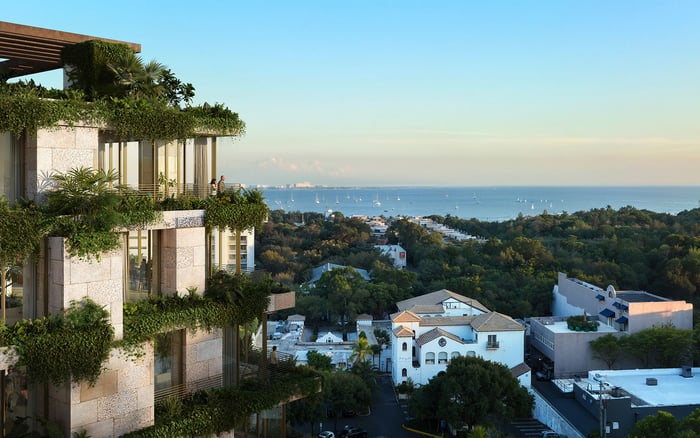
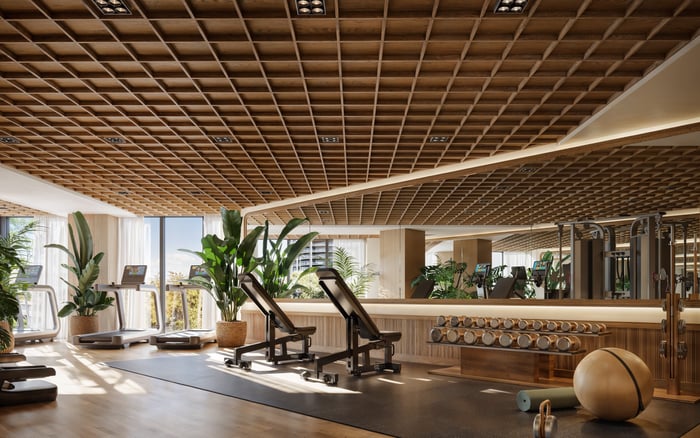
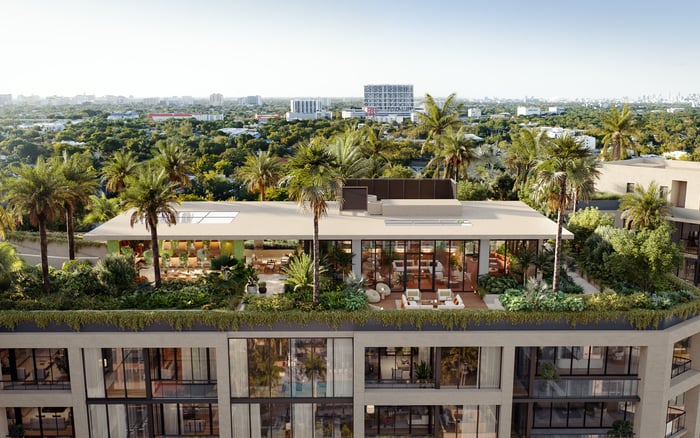
A buyer-focused comparison of Ziggurat Coconut Grove and Four Seasons Residences Coconut Grove, separating architectural identity from branded-service ownership in one of Miami’s most personal luxury neighborhoods.
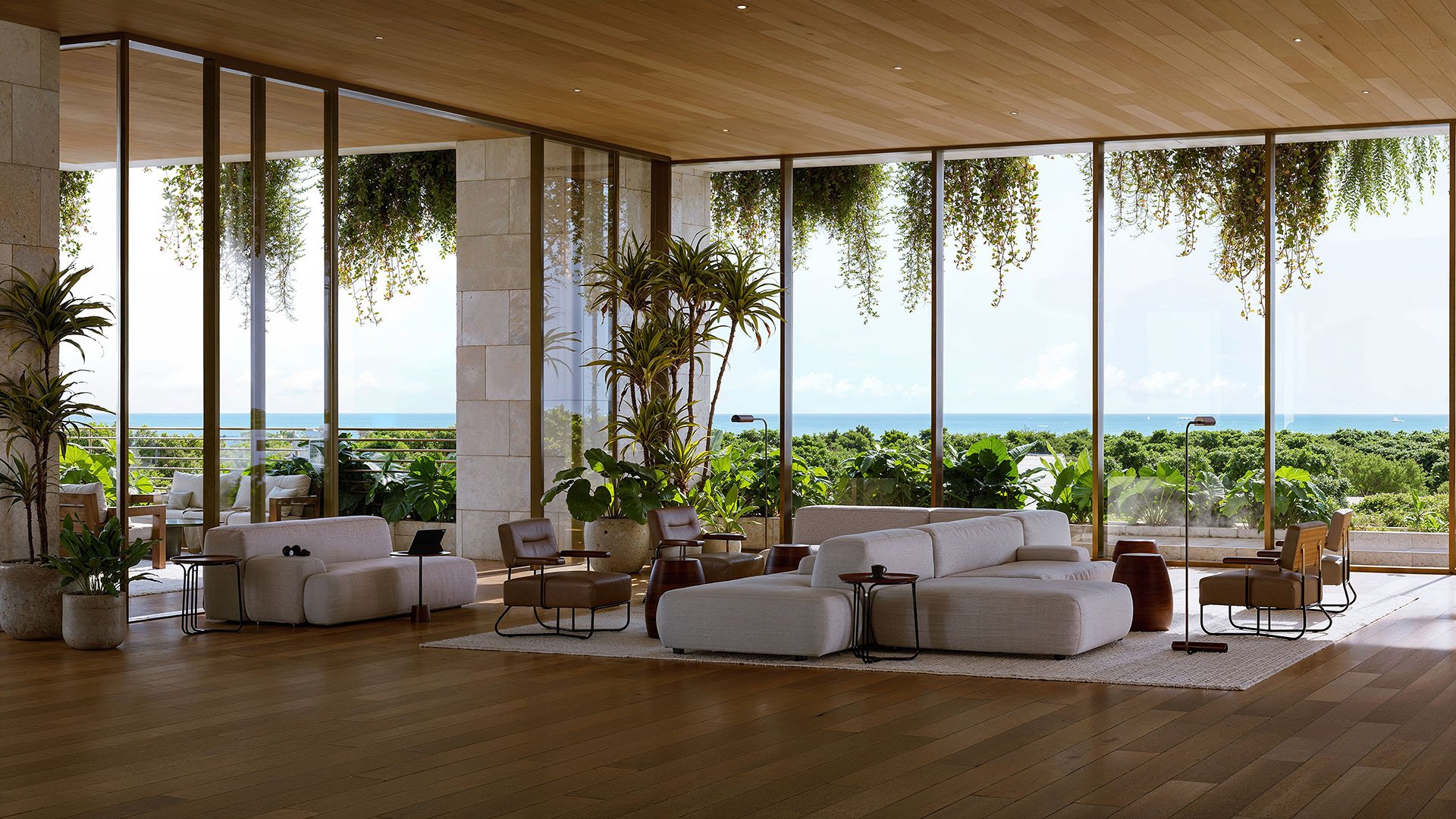
Coconut Grove has always rewarded buyers who understand nuance. This is not a neighborhood that performs luxury in a single register. The Grove can be discreet, tropical, architectural, bohemian, deeply established, and newly ambitious all at once. That is why the comparison between Ziggurat Coconut Grove and Four Seasons Residences Coconut Grove is not a simple contest over which project is superior. It is a more revealing question: should the residence itself function as the statement, or should the ownership experience be shaped by a hospitality-backed service model?
That distinction matters. Ziggurat Coconut Grove belongs on the architectural side of the conversation, where form, identity, and visual distinction carry the editorial weight. Four Seasons Residences Coconut Grove sits on the service-led side, where brand association, hospitality standards, and managed residential living define the ownership promise. Both are part of the same Coconut Grove luxury dialogue, but they appeal to different instincts.
Ziggurat’s most immediate power is its name. It directs attention to architecture before any discussion of lifestyle, amenities, or pricing. The project is best understood through the lens of design intent: how a building announces itself, how it contributes to the Grove’s evolving residential vocabulary, and whether it can read as a landmark residence rather than another luxury address.
For a design-driven buyer, that matters more than a conventional checklist. A residence can be valuable because it is rare, but it can also be valuable because it is legible. Ziggurat Coconut Grove’s positioning invites that interpretation. It suggests ownership for someone who wants to identify with a specific architectural idea, not simply with a brand standard or a familiar luxury formula.
That reading does not require unsupported claims about unit counts, delivery dates, named designers, exact pricing, or amenity programming. The cleaner approach is to avoid those specifics unless they are firmly disclosed. The central point is more strategic: Ziggurat is framed as an object of design. Its appeal begins with how it looks, how it feels in the neighborhood, and whether the building’s visual identity aligns with a buyer’s personal taste.
Four Seasons Residences Coconut Grove approaches the same neighborhood from a different angle. Its most important differentiator is not architectural novelty. It is the Four Seasons association, which shifts the ownership conversation toward service consistency, hospitality culture, and reduced friction in daily residential life.
For many ultra-premium buyers, especially those splitting time between multiple homes, this can be the more persuasive proposition. Service-led ownership is not merely about convenience. It is about predictability. The appeal is the idea that a residence can be supported by a familiar operating philosophy, with expectations shaped by a global hospitality name rather than by an independent residential identity alone.
That distinction is especially relevant in Coconut Grove, where buyers may want the intimacy of a neighborhood setting without giving up the structure of a managed residential environment. Four Seasons Residences Coconut Grove speaks to the owner who values ease, brand confidence, and the assurance that residential life has been organized around hospitality standards.
Coconut Grove is not Brickell, South Beach, or Sunny Isles. Its luxury is more contextual. Buyers are often drawn to canopy, scale, privacy, village rhythm, and a subtler relationship between architecture and landscape. In that setting, the loudest building is not automatically the most compelling one, and the most serviced residence is not automatically the most desirable.
This is why the comparison should remain disciplined. Ziggurat asks whether a buyer wants a residence with design presence. Four Seasons asks whether a buyer wants ownership made smoother by brand-backed service. Neither premise cancels the other. Together, they reveal two mature forms of luxury.
The broader Grove field reinforces that point. Arbor Coconut Grove, Park Grove Coconut Grove, and The Well Coconut Grove all sit within a neighborhood conversation where the buyer is rarely choosing only square footage. The decision often involves identity, wellness, discretion, convenience, and how a building participates in the Grove’s atmosphere.
Ziggurat Coconut Grove is best aligned with the buyer who wants the building to matter as an object. This is the person who notices silhouette, massing, arrival, and the emotional effect of a residence before turning to operational details. They may be less interested in a universally recognized hospitality logo and more interested in living somewhere that feels specific.
That kind of buyer often thinks like a collector. Not necessarily a collector of art, though that may be true, but a collector of environments. They are drawn to residences that feel intentional and finite, where the design identity becomes part of the ownership story. Ziggurat’s architectural framing gives it that editorial role.
The risk, from a buyer-psychology standpoint, is that design-forward residences ask for conviction. A strong architectural idea can be more personal than a service-led brand promise. It may feel more memorable, but also more taste-specific. For the right owner, that is precisely the point.
Four Seasons Residences Coconut Grove is best suited to the buyer who prioritizes service infrastructure and ownership ease. This is the person who values the confidence that comes with a hospitality standard, particularly if the residence is used seasonally, shared among family members, or held as part of a larger portfolio of homes.
The emotional appeal is different from Ziggurat’s. Four Seasons is less about asking the building to declare itself as a design statement and more about trusting the experience around the home. For some buyers, that is the ultimate luxury: fewer variables, clearer expectations, and a recognizable service culture supporting everyday life.
This can be especially attractive in a market where luxury buyers are increasingly sensitive to time. A home is not only a place to occupy. It is something to manage, maintain, and return to. A branded-residence model addresses that reality directly.
From an ownership perspective, the comparison should be made carefully. Without relying on unverified figures, the key distinction is qualitative. Design-forward residences may attract buyers who assign value to architectural distinctiveness and scarcity of expression. Branded residences may attract buyers who assign value to service assurance, hospitality alignment, and operational clarity.
Those are different forms of confidence. Ziggurat’s confidence is visual and experiential. Four Seasons’ confidence is institutional and service-based. The stronger choice depends on what the buyer believes will remain meaningful over time.
In the Grove, that question is unusually personal. Some buyers want a home that feels authored. Others want a home that feels supported. The best advisors do not flatten those differences into a single recommendation. They help buyers identify which version of luxury they will still appreciate after the purchase excitement fades.
Is Ziggurat Coconut Grove better than Four Seasons Residences Coconut Grove? Not necessarily. Ziggurat is framed around architectural identity, while Four Seasons is framed around service-led ownership.
What is the main appeal of Ziggurat Coconut Grove? Its appeal is the idea of the residence as a design statement, with architecture and visual distinction leading the conversation.
What is the main appeal of Four Seasons Residences Coconut Grove? Its appeal is brand-backed residential living, with hospitality standards and service consistency shaping the ownership experience.
Are both projects considered Coconut Grove luxury residences? Yes. Both belong in the Coconut Grove luxury-residential conversation, though they approach that conversation from different directions.
Who should consider Ziggurat Coconut Grove? Buyers who want the building itself to feel distinctive, authored, and visually memorable may find Ziggurat especially compelling.
Who should consider Four Seasons Residences Coconut Grove? Buyers who prioritize service, convenience, brand confidence, and lower-friction ownership may prefer Four Seasons Residences Coconut Grove.
Is this comparison mainly about amenities? No. The cleaner comparison separates architectural identity from service infrastructure rather than focusing on unverified amenity specifics.
Does Coconut Grove make this decision different from other Miami neighborhoods? Yes. The Grove’s appeal is more intimate and contextual, so buyers often weigh atmosphere, discretion, and lifestyle fit very carefully.
Should a buyer choose based on resale alone? Resale matters, but the more immediate question is whether the buyer values design distinction or hospitality-backed ownership more deeply.
Can both ownership models appeal to the same buyer? Yes. A buyer may appreciate both, but the final decision usually depends on whether architecture or service feels more essential.
To compare the best-fit options with clarity, connect with MILLION.
If branded residences are on your mind — as a home or as an allocation — we would be glad to share what we are seeing, privately.
Begin a quiet conversation