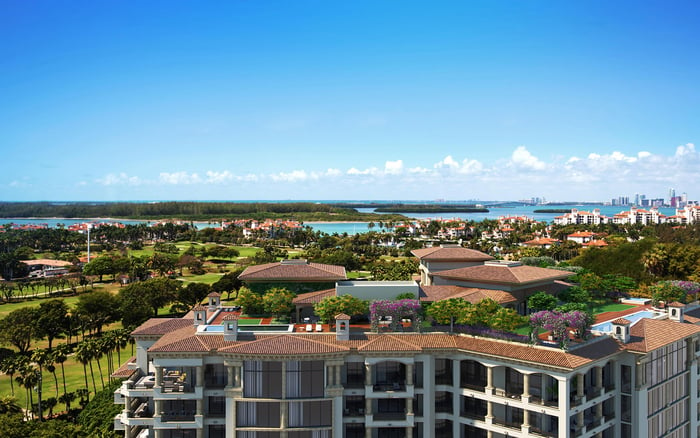
A discreet buyer’s guide to title review for Fisher Island waterfront property, from condominium documents and dock rights to flood disclosure, estoppels, entity authority, and title insurance endorsements.

On Fisher Island, the most valuable parts of a residence are not always visible in the deed. A buyer may be drawn to the terrace line, marina proximity, bay view, privacy, and service rhythm of the island, yet the legal value often sits in recorded instruments, condominium declarations, association rules, estoppels, surveys, permits, and title exceptions. That is why title review for Fisher Island luxury real estate should begin early, not as a closing-week formality.
This is especially true for waterfront property. The practical question is not simply whether the seller can convey a unit or estate. It is whether the buyer will receive the precise bundle of rights they believe they are purchasing, including access, exclusive use, parking, terraces, beach paths, dockage, marina privileges, and future improvement flexibility.
For buyer’s guides focused on Fisher Island, the central discipline is to separate lifestyle assumptions from recorded rights. A residence near the water may feel private, but ownership, maintenance, and use may still be governed by condominium documents, association approvals, club rules, environmental permitting, flood considerations, and title policy exclusions.
The first question is foundational: is the Fisher Island residence a condominium unit, a single-family estate, or another ownership structure? In a condominium, ownership generally includes the unit plus an undivided share of common elements, all governed by the recorded declaration and applicable Florida condominium law. The deed alone rarely tells the full story.
Ask for the complete recorded declaration, amendments, plats, bylaws, rules, and association materials. These documents may define use limits, voting interests, maintenance obligations, transfer rules, leasing restrictions, insurance responsibilities, and the legal status of waterfront amenities. At The Residences at Six Fisher Island, as with any ultra-premium island purchase, the review should focus on what is appurtenant to the residence and what remains subject to association or club control.
A careful buyer should ask whether terraces, seawalls, beach access routes, docks, marina slips, waterfront lawns, storage areas, cabanas, and service corridors are deeded property, common elements, limited common elements, leases, licenses, assigned rights, or revocable permissions. The distinction can materially affect privacy, resale value, financing, and future use.
A title commitment is not merely an administrative document. It is a map of the matters the title insurer is willing to insure and the exceptions that may remain after closing. Ask the title company and attorney to identify every exception for easements, covenants, restrictions, access rights, utility rights, association documents, submerged-land matters, and recorded amendments.
The goal is to understand what will survive closing. A utility easement may be routine. A waterfront access right, maintenance covenant, or restriction affecting dockage may be more consequential. A buyer should not accept broad exceptions without understanding their location, priority, and practical effect.
The public-record review should also include deeds, mortgages, liens, releases, easements, declarations, amendments, lis pendens, and judgments affecting the property. For luxury properties that have moved through trusts, limited liability companies, corporations, estates, or other entities, confirm that the seller has clear authority to convey title. Entity documents, resolutions, trustee authority, estate approvals, and signatory capacity should be resolved before the deed is prepared.
A view may be enjoyed. A boat slip must be documented. For a Fisher Island waterfront buyer, the legal status of dockage or marina use deserves its own diligence track. Ask whether the slip or dock right is deeded, assigned as a limited common element, leased, licensed, or subject to a revocable club or association arrangement. Ask whether transfer is automatic, discretionary, fee-based, or subject to size, insurance, or vessel restrictions.
The same scrutiny applies to marina access, boat lifts, dredging, seawalls, and shoreline work. Ask whether any waterfront improvements were properly permitted and whether maintenance obligations or permit conditions transfer to the buyer. If any part of the use involves state-owned submerged lands, the buyer should understand whether the right is granted, regulated, conditioned, or limited.
A residence at Palazzo della Luna or Palazzo del Sol may be evaluated through the same disciplined lens: what is owned, what is shared, what is assigned, and what is merely permitted. That distinction can be more important than the marketing language surrounding the amenity.
Condominium and association estoppels should be reviewed before closing, not filed away. Ask whether they show unpaid assessments, special assessments, fines, transfer fees, pending charges, or other sums that could become the buyer’s responsibility. Also ask whether there are pending or approved special assessments for seawalls, docks, concrete restoration, elevators, roofs, insurance, security, ferry infrastructure, or other shared systems.
On Fisher Island, island operations and shared systems matter because access, service entry, security, waterfront maintenance, and ferry logistics are part of the lived experience. Ask whether association documents or club rules control guest access, ferry use, parking, service-provider entry, marina access, and security procedures. A title policy may insure ownership, but it will not necessarily resolve a use conflict after closing.
Construction liens also deserve attention. If recent improvements involved contractors, designers, shoreline work, marine contractors, or building repairs, ask whether lien waivers, releases, and final payments are complete. Florida construction lien law can affect real property title, and unpaid improvement bills should be addressed before funds are released.
For waterfront property, a current survey or condominium plan review can reveal issues the deed does not. Ask the surveyor and counsel to identify boundary matters, encroachments, exclusive-use areas, seawall locations, dock footprints, access paths, and conflicts with recorded plats. If the property is a condominium, confirm how the plan and declaration describe the unit, appurtenant areas, limited common elements, and common-element boundaries.
Flood due diligence should run in parallel. Ask whether the property sits in a federal flood-zone designation and how that affects insurance, lender conditions, renovation planning, and long-term carrying costs. Ask for the required Florida flood disclosure and confirm whether the seller has disclosed prior flood claims, flood damage, or flood-insurance obligations where applicable.
Coastal and shoreline restrictions should also be reviewed before a buyer assumes future improvements are possible. Ask whether any coastal construction control line, shoreline protection, erosion-control, or beach-management restriction affects renovations, seawall work, dock modifications, or future waterfront improvements. A spectacular terrace may be simple to enjoy, but shoreline modifications can be far more complex.
Before closing, ask whether property-appraiser records align with the seller, legal description, folio, assessed value, exemptions, and classification shown in the title materials. Discrepancies do not always indicate a fatal issue, but they should be reconciled before a buyer accepts title.
Ask whether old covenants, recorded restrictions, or marketable title issues could survive closing or require curative action. If exceptions are vague, if releases are missing, or if an entity’s authority is incomplete, the closing timeline should adjust to the legal work, not the other way around.
Title insurance should be discussed with specificity. Ask whether endorsements or expanded coverage are available for survey matters, access, condominium interests, encroachments, easements, or Fisher Island-specific risks. The policy should match the asset, particularly where waterfront use, island access, and association rights are central to value.
For estate-style inventory such as The Links Estates at Fisher Island, the same principle applies with added focus on boundaries, access, entity ownership, and future improvement flexibility. The most elegant acquisition is one in which the legal record, the physical property, and the buyer’s expectations all agree.
What is the first title question for a Fisher Island buyer? Ask what is legally being conveyed, including whether the property is a condominium unit, estate, or other ownership structure.
Why is the condominium declaration so important? It can define common elements, limited common elements, use rights, restrictions, assessments, and maintenance responsibilities.
Should dock rights be reviewed separately? Yes. A dock or slip may be deeded, assigned, leased, licensed, or revocable, and each structure carries different risk.
What title exceptions deserve special attention? Focus on easements, covenants, access rights, utility rights, waterfront restrictions, submerged-land matters, and association documents.
Can unpaid assessments affect the buyer? They can. Association and condominium estoppels should disclose unpaid assessments, fines, fees, and pending charges.
Why does seller authority matter in luxury transactions? High-value properties are often held by entities, trusts, or estates, so signing authority must be verified before closing.
Are flood disclosures part of title review? They are related due diligence. Flood designation and required disclosures can affect insurance, lending, and renovation planning.
Should waterfront permits be reviewed before closing? Yes. Docks, seawalls, boat lifts, dredging, and shoreline work may involve permits or ongoing maintenance obligations.
What should the survey confirm? It should help identify boundaries, encroachments, dock footprints, seawall locations, exclusive-use areas, and plan conflicts.
Is title insurance enough by itself? No. It should be coordinated with document review, surveys, estoppels, flood diligence, permits, and legal counsel.
For a tailored shortlist and next-step guidance, connect with MILLION.
If branded residences are on your mind — as a home or as an allocation — we would be glad to share what we are seeing, privately.
Begin a quiet conversation