An editorial guide for affluent buyers considering North Bay Village as a lower-maintenance waterfront base after years in a large single-family estate.
For many South Florida buyers, leaving a large waterfront home is not a retreat from scale. It is a refinement of priorities. The house may have served its purpose beautifully: space for children, guests, staff, entertaining, vehicles, boats, pets, and the complex choreography of ownership. Yet at a certain point, even the most graceful estate can begin to feel overbuilt for the way one actually lives.
North Bay Village enters that conversation as a compelling idea, not a compromise. It can offer a waterfront sensibility, a South Florida address, and a more edited daily rhythm without asking buyers to abandon the visual and emotional qualities that made the original home desirable. The appeal is not simply reduced square footage. It is fewer operational burdens, a clearer lock-and-leave lifestyle, and a more intentional relationship with place.
A North Bay Village search is therefore less about downsizing than right-sizing. The question is not, “What am I giving up?” It is, “What do I no longer need to manage?”
Waterfront is often the last element estate owners are willing to relinquish. It is not only a view. It is light, movement, privacy, air, and a sense of distance from the ordinary pace of the city. Buyers who have lived with water tend to understand its value instinctively, even when they are ready to release the maintenance obligations of a large single-family property.
North Bay Village can serve this buyer because it translates the waterfront brief into a more vertical, service-oriented format. The right residence can keep the emotional core of waterfront living intact while shifting the responsibilities of exterior care, building systems, and common amenities into a more managed environment.
This is where the condominium decision becomes highly personal. Some buyers will want expansive terraces and a quiet morning routine. Others will care more about arrival privacy, parking ease, storage, guest accommodations, and the ability to leave for extended travel without an estate sitting idle. The best choice supports life as it is actually lived, not life as it once required.
A South Florida base should not feel temporary. For the buyer leaving a large waterfront home, the residence must still carry presence. It should receive friends comfortably, allow for family visits, and offer enough spatial dignity that the owner does not feel compressed. The difference is that the home becomes more curated: fewer rooms requiring purpose, fewer outdoor areas demanding attention, and fewer layers of upkeep.
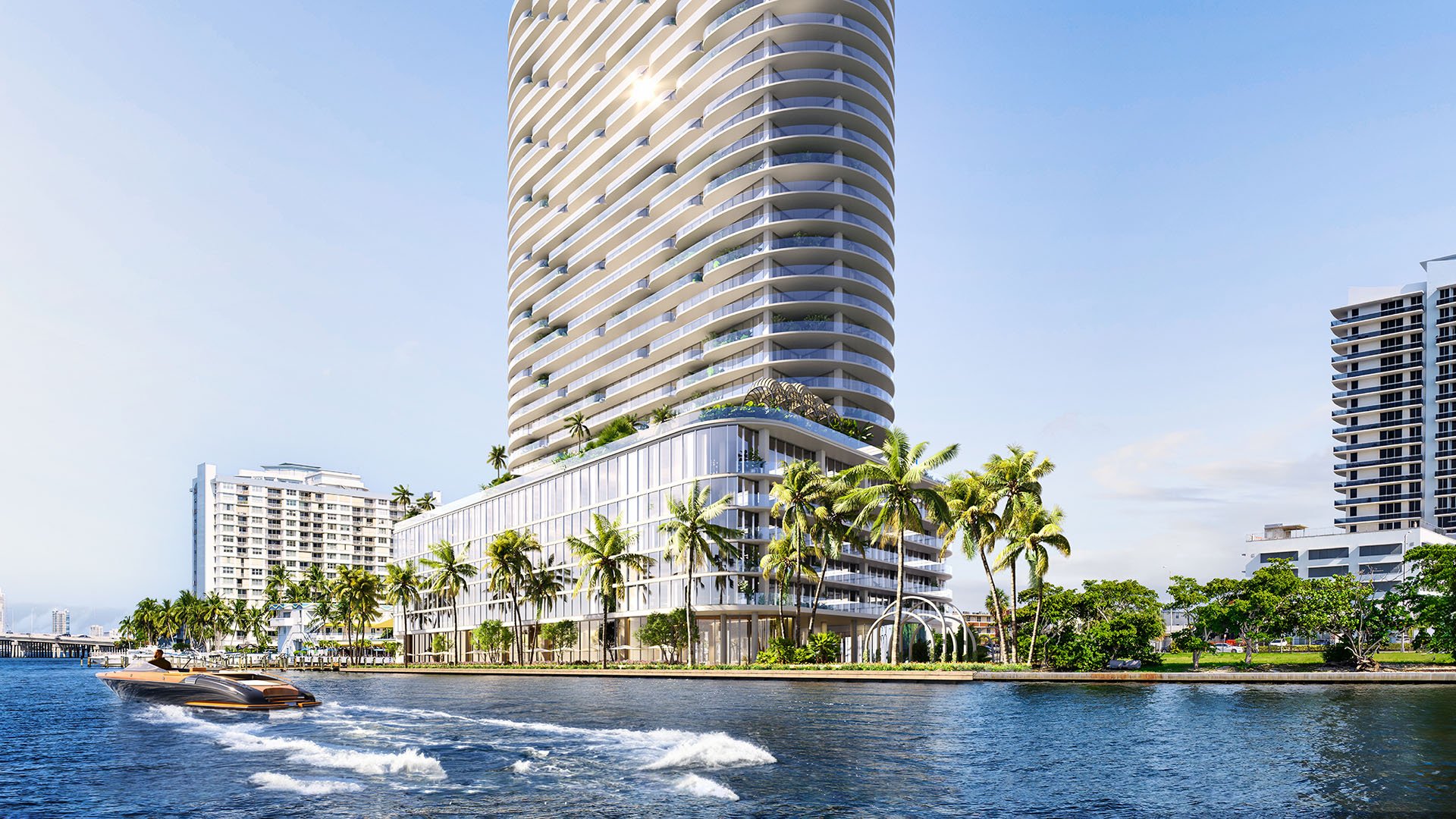
Projects such as Continuum Club & Residences North Bay Village are part of the reason the area is being considered through a more elevated lens. Buyers are not only comparing addresses. They are comparing the proposition of a full-life residence that can serve as a primary home, a seasonal base, or a flexible point of return within South Florida.
That distinction matters. A refined base is not merely a pied-à-terre with a better view. It is a home that can absorb real life: wardrobe, art, guests, work, wellness, entertaining, and rest. It should be easy to inhabit for a week and equally credible for a season.
The buyer coming from a large home should begin with operations, not finishes. Finishes can seduce quickly, but the daily test is practical. How does one arrive? Where do deliveries go? How private is the elevator sequence? Can household help work efficiently? Is there adequate storage for the things that will not fit into a minimalist floor plan? Does the building support the owner’s travel rhythm?
A residence such as Shoma Bay North Bay Village may enter the conversation for buyers comparing the area’s evolving residential options. The point is not to select by name alone. It is to study how each project handles the invisible architecture of luxury: convenience, discretion, security, service, and the ability to move through the day without friction.
Second-home buyers should be particularly disciplined. The ideal second home is not the largest one available. It is the one that functions flawlessly when the owner is present and remains simple when the owner is away. That means evaluating management, access, building culture, package handling, parking logistics, and guest protocol with the same seriousness one would apply to views and kitchen specifications.
Boutique scale can be deeply appealing to former estate owners who value privacy and a quieter residential feel. A smaller environment may feel more personal, less anonymous, and more aligned with owners who do not want a constant resort atmosphere. Boutique does not necessarily mean modest. In the luxury context, it can mean controlled, composed, and intimate.
Amenity scale, by contrast, may attract buyers who want wellness, social spaces, and hospitality without maintaining those elements privately. The decision is less about which model is superior and more about temperament. Some buyers want the building to disappear into the background. Others want the building to act as an extension of their lifestyle.
That is why Tula Residences North Bay Village can be considered alongside other North Bay Village options as part of a broader exercise in fit. The most sophisticated buyers will look beyond renderings and ask how the property will feel on an ordinary Tuesday, after a late dinner, during a quiet weekend, or before a long flight.
Many buyers leaving large waterfront homes do not look at one neighborhood in isolation. They compare a waterfront base against beach addresses, urban towers, boutique island communities, and established residential enclaves. In that context, North Bay Village can function as a measured alternative for buyers who want South Florida access without recreating the scale of the estate they are leaving.
The comparison should include nearby and parallel lifestyle models. For example, a buyer considering a wellness-forward or more intimate residential atmosphere may also study The Well Bay Harbor Islands as part of a wider South Florida evaluation. The exercise is useful because it clarifies what the buyer truly values: waterfront energy, building services, privacy, neighborhood tone, or the ability to simplify without feeling diminished.
Lifestyle is the key word. A move of this kind should improve the day. If a residence saves time, reduces maintenance, preserves beauty, and supports travel, it may be more luxurious than the larger home it replaces.
North Bay Village is particularly relevant for buyers who are emotionally finished with estate management but not finished with waterfront living. They may still entertain, still host family, still work from home, and still expect design quality. What they no longer want is the recurring burden of a property that requires constant orchestration.
These buyers often know exactly what they will miss: the driveway, the garden, the waterline, the independence, the feeling of arrival. They should acknowledge those attachments honestly. The successful transition is not about pretending that condominium living is identical to estate living. It is about selecting a residence that offers enough of the old pleasures, then adds a more modern layer of ease.
The result can be a more graceful South Florida chapter: still connected to water, still polished, but lighter in obligation.
Is North Bay Village only for buyers downsizing from large homes? No. It can also suit buyers seeking a refined base, seasonal residence, or more manageable waterfront lifestyle within South Florida.
What should former estate owners prioritize first? They should evaluate privacy, arrival sequence, storage, service quality, parking, and how easily the residence supports travel.
Does leaving a large waterfront home mean giving up outdoor living? Not necessarily. The goal is to identify residences with outdoor space and water orientation that feel meaningful rather than burdensome.
Can a condominium feel substantial enough after a large house? Yes, if the floor plan, ceiling volume, terrace experience, and service model support the owner’s daily routines.
Is a boutique building better than a larger amenity building? It depends on temperament. Some buyers prefer intimacy and discretion, while others value broader services and shared amenities.
Should buyers choose the largest available residence? Not automatically. The strongest choice is the one that balances comfort, storage, privacy, and ease of ownership.
Can North Bay Village work as a second-home location? It can, especially for buyers who want a South Florida base that remains simple to manage when they are away.
How should buyers compare North Bay Village with other areas? They should compare lifestyle fit, building operations, privacy, water orientation, and the daily convenience of each option.
What is the main appeal for former waterfront homeowners? The appeal is retaining a connection to water while reducing the operational demands of a large private property.
When is the right time to begin the search? The best time is when the current home feels larger than the life being lived inside it.
For a tailored shortlist and next-step guidance, connect with MILLION.
If branded residences are on your mind — as a home or as an allocation — we would be glad to share what we are seeing, privately.
Begin a quiet conversation