A discreet buyer’s guide to choosing between West Palm Beach and Palm Beach when private dining, staffing, entertaining flow, and residential support shape the decision.
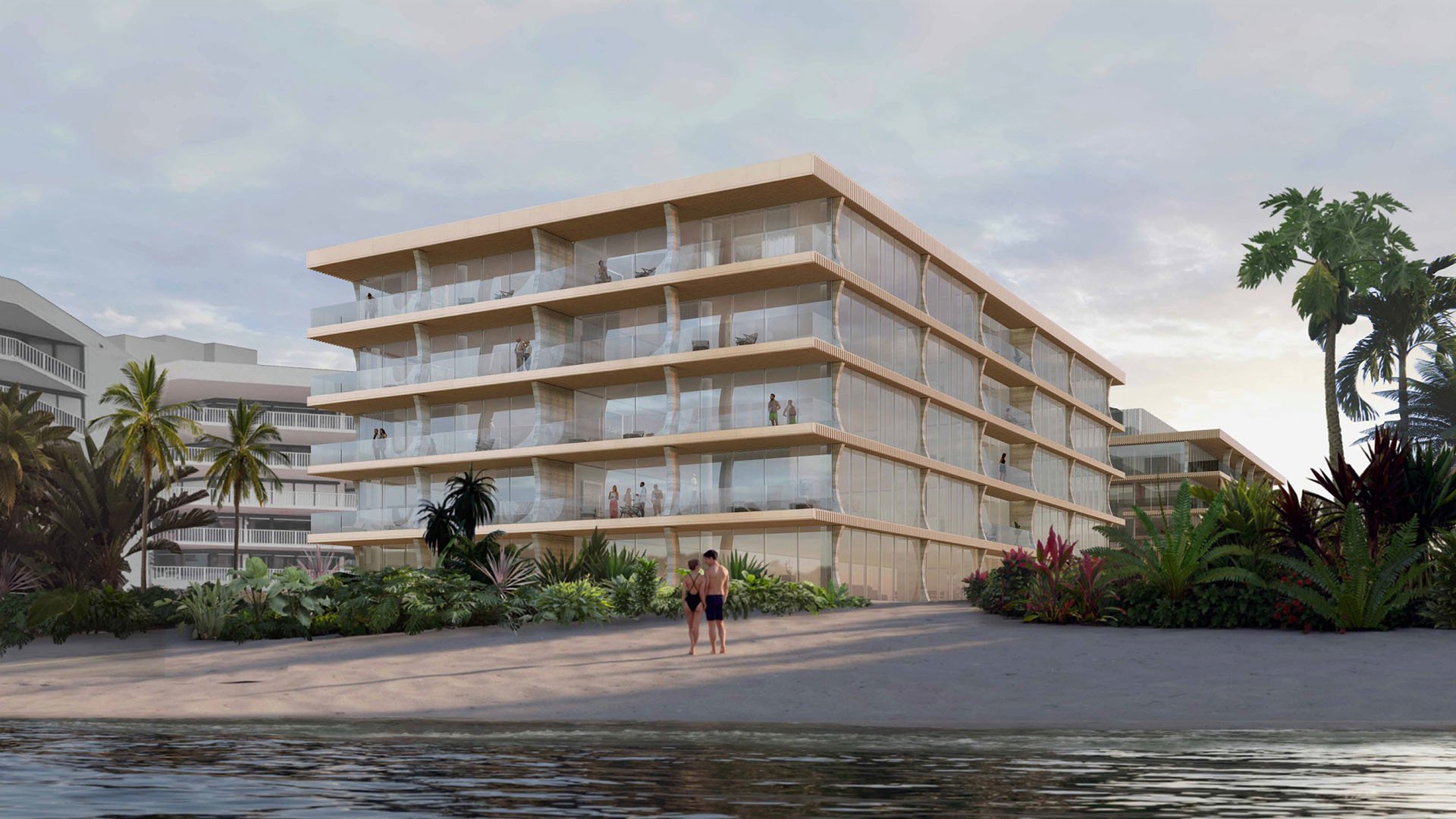
For many South Florida buyers, the choice between West Palm Beach and Palm Beach is not simply about views, architecture, or proximity to the water. It is about how life is staged. Private dining, household staffing, valet choreography, chef access, floral deliveries, wine storage, guest circulation, and after-dinner privacy can matter as much as bedroom count.
West Palm Beach and Palm Beach answer those priorities differently. West Palm Beach tends to feel more flexible for buyers who entertain often, move between restaurants and residences, and want the practical advantages of urban adjacency. Palm Beach, by contrast, tends to appeal to owners who value a quieter social cadence, a more residential sense of ceremony, and a clearer separation between public life and private home life.
The question is not which market is more prestigious. It is which environment makes hosting feel effortless.
West Palm Beach is often the better fit for owners who entertain with range. A single week may include a chef-prepared dinner at home, cocktails before an arts event, a family brunch, and an impromptu gathering that begins elsewhere and ends on the terrace. The city’s appeal lies in its ability to support movement.
Buyers considering Alba West Palm Beach, for example, are typically thinking beyond the residence itself. They are weighing how easily guests arrive, how vendors coordinate, how quickly a dining plan can change, and whether the home can feel polished without becoming rigid. In this context, West Palm Beach can be especially compelling for households that rely on a rotating mix of private chefs, event staff, family offices, drivers, trainers, and visiting guests.
The practical questions are direct. Is there a sensible path from arrival to elevator to residence? Can catering support happen without disrupting the primary entertaining rooms? Is there room for a proper service setup before guests arrive? Can the dining area expand from six to twelve without blocking circulation? In West Palm Beach, buyers often prioritize convenience, efficiency, and adaptable entertaining over pure formality.
Palm Beach is for a different kind of host. The island tends to reward buyers who value discretion, ritual, and residential calm. Entertaining may be highly polished, but it is often less about frequency and more about control: the right guest list, the right evening, the right lighting, and the right sense of arrival.
For buyers focused on Palm Beach, the home itself carries more of the entertaining burden. A dining room should feel complete, not improvised. A terrace should support conversation without exposing the evening to unnecessary visibility. A kitchen may need to accommodate professional preparation while preserving the grace of the main rooms. Service pathways, storage, powder room placement, and acoustics all become central.
A buyer considering Palm Beach Residences should think carefully about how a residence handles both ceremony and retreat. Palm Beach can be exceptional for owners who prefer to host fewer events at a higher level of privacy, with a home that reads as a private world rather than an extension of the city.
The most successful entertaining residences share one quality: they do not force guests, staff, and owners into the same path. In luxury real estate, this is the difference between a beautiful home and a home that performs.
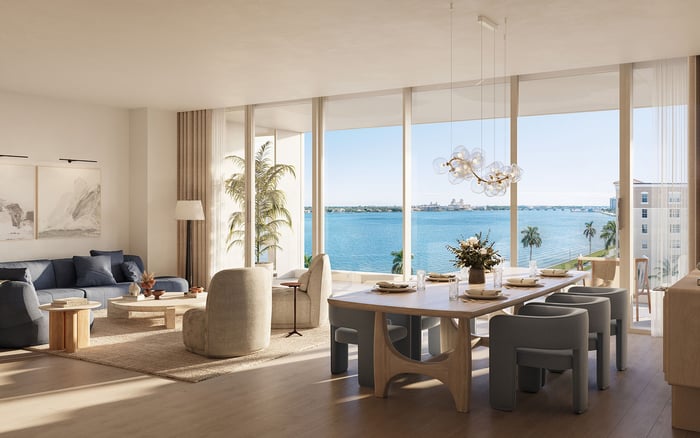
Look first at the kitchen hierarchy. A show kitchen may be desirable, but for serious private dining, the support zone matters more. Buyers should evaluate prep space, refrigeration, storage, service access, and whether staff can plate, clear, and reset without crossing the central social area. A residence may photograph beautifully yet still fail the dinner-party test if the kitchen has no backstage function.
Next, study dining adjacency. The strongest homes allow a natural progression from arrival to cocktails, from cocktails to table, and from table to lounge or terrace. If guests must pass through private bedroom corridors or squeeze around furniture, the plan is doing too much work. At Forté on Flagler West Palm Beach, buyers should examine how the residence plan supports that sequence, especially if the goal is to host seated dinners rather than casual gatherings.
Private dining is never only inside the residence. The building, arrival experience, and surrounding neighborhood all affect whether hosting feels seamless.
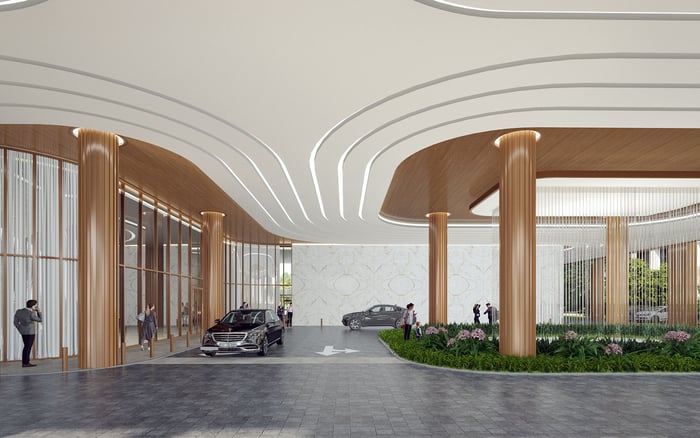
In West Palm Beach, buyers may place greater weight on valet operations, guest parking, delivery coordination, and access to off-site dining before or after a private event. This matters for owners who frequently mix home entertaining with restaurants, clubs, cultural evenings, or business dinners. A residence can become the anchor of a larger social circuit.
Palm Beach places more emphasis on discretion. Owners may care less about spontaneity and more about privacy at every threshold. If the building or property does not control arrivals gracefully, the evening can feel exposed before guests reach the table. For this buyer, fewer moving parts may be preferable.
The same analysis applies to terraces. A terrace should not be judged only by size. Orientation, privacy, wind, lighting, sound, and furniture depth all determine whether it supports a proper cocktail hour or merely offers a view. A generous terrace can be a superb entertaining asset, but only if it is usable at the hours when owners actually host.
Branded residences can be attractive to buyers who want elevated service culture, but the decision should remain specific. A recognizable name is not a substitute for operational clarity. Ask how the residence handles private arrivals, guest management, package and catering flow, maintenance requests, and the handoff between owner preferences and building protocols.
For buyers comparing West Palm Beach options, Mr. C Residences West Palm Beach may enter the conversation for those who like the idea of hospitality language in a residential setting. At the upper end, The Ritz-Carlton Residences® West Palm Beach may appeal to buyers who want service expectations to be part of the address evaluation from the beginning.
Still, service should be tested, not assumed. The best question is simple: if twelve guests arrive, two vendors are downstairs, a chef is already setting up, and the owner is still dressing, does the property make that moment calmer?
Choose West Palm Beach if you want a residence that supports movement, flexibility, and frequent entertaining. It is often the stronger choice for owners who enjoy a more urban rhythm, need practical access for staff and guests, and want home dining to coexist with a broader lifestyle.
Choose Palm Beach if you want privacy, formality, and a more controlled entertaining environment. It is often the stronger choice for owners who host selectively, prize discretion, and want the home itself to carry the full social experience.
In both markets, new construction can be appealing when the plan has been designed for contemporary living, but the label alone is not enough. Study the working parts: service access, storage, dining proportions, acoustic separation, elevator experience, guest arrival, staff comfort, and the ability to close the door after the evening ends.
The best luxury residence does not merely impress guests. It protects the host.
Is West Palm Beach better for frequent entertaining? Often, yes. West Palm Beach can suit buyers who want flexibility, easier logistics, and a more active social rhythm.
Is Palm Beach better for private dining? It can be, especially for owners who value discretion, formality, and a quieter residential setting for curated evenings.
What is the most important room for private dining? The kitchen support zone is critical. Prep, storage, plating, and service access matter as much as the visible dining room.
Should I prioritize a formal dining room or a terrace? Prioritize the space you will use most often. A terrace is valuable only if privacy, wind, sound, and lighting make it comfortable.
How should staff circulation affect my purchase? Staff should be able to arrive, prepare, serve, and clear without disrupting guests or moving through private bedroom areas.
Are branded residences always better for entertaining? Not automatically. The service culture must align with the way you host, from guest arrivals to catering coordination.
What should I ask during a private showing? Ask how deliveries, chefs, florists, valet, guest access, and after-event cleanup are handled in real conditions.
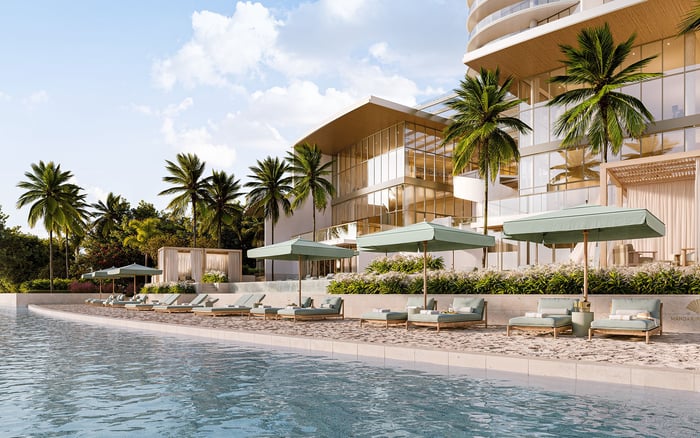
Does waterfront living matter for entertaining? Waterfront views can elevate an evening, but privacy, layout, and service flow are more important for repeated hosting.
Which market is better for a second home? West Palm Beach may suit active use, while Palm Beach may suit quieter retreats. The right choice depends on your hosting style.
Can one residence serve both casual and formal entertaining? Yes, if the plan offers flexible seating, strong service zones, acoustic separation, and a graceful indoor-outdoor sequence.
If you'd like a private walkthrough and a curated shortlist, connect with MILLION.
If branded residences are on your mind — as a home or as an allocation — we would be glad to share what we are seeing, privately.
Begin a quiet conversation