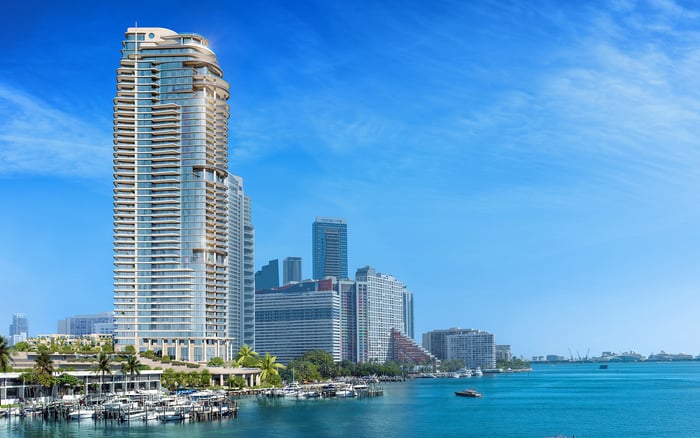
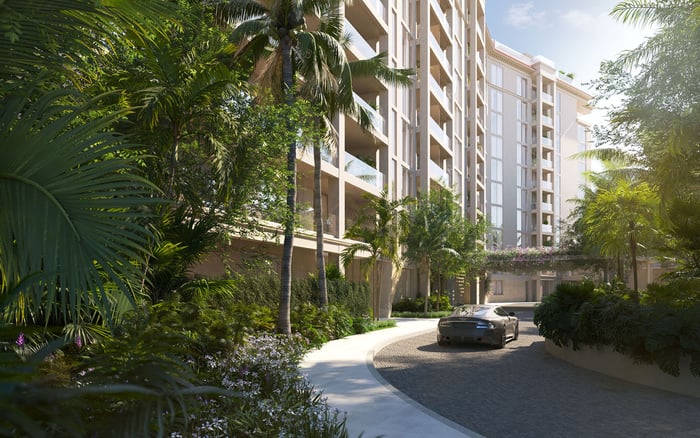
A buyer-focused guide to evaluating refrigerated package storage at Palazzo della Luna, with questions on cold-chain workflow, monitoring, capacity, liability, backup power, maintenance, and Fisher Island operations.

At the highest end of South Florida condominium living, the package room has become a quiet measure of operational sophistication. For buyers at Palazzo della Luna, the question is not simply whether deliveries are accepted. It is whether perishable deliveries are handled with the same precision expected throughout the building experience.
That distinction matters because luxury households increasingly rely on time-sensitive deliveries: groceries, meal kits, floral arrangements, specialty foods, medications, wellness products, seafood, wine, frozen goods, catering orders, and chef-managed provisions. A general package room may be adequate for dry goods. It may not be sufficient for cold-chain items that require prompt intake, clear authorization, and controlled storage.
For Palazzo della Luna Fisher Island, refrigerated package storage should be treated as both an operations and governance issue. Fisher Island adds another layer because access is controlled, delivery timing can be more complex, and third-party logistics may differ from mainland Miami. Waterfront privacy and exclusivity are part of the appeal, but they also make workflow clarity essential.
Begin with the most direct question: does the building have dedicated refrigerated package storage, or are perishable deliveries placed in a general package area? The distinction sounds small, but it is central to risk, convenience, and household planning.
A serious buyer should also ask whether the building separates ambient, refrigerated, and frozen deliveries. If groceries, chilled flowers, frozen items, and standard parcels move through the same room without defined zones, residents may have less confidence in how perishables are protected. Separate zones can help reduce confusion, leakage issues, misplaced items, and improper handling.
Temperature is the next layer. Ask what range the refrigerated storage is designed to maintain, whether staff monitor it continuously, and whether temperature logs are kept. If logs exist, ask whether residents can review the written policy or operating standards. The goal is not to micromanage staff. It is to understand whether the building has a repeatable system rather than an informal habit.
This is especially relevant for second-home ownership. When residents travel frequently, the building’s procedures may be the difference between a seamless arrival and a missed perishable delivery.
The strongest questions follow the delivery from the moment it reaches the property. Where are refrigerated deliveries received? Who logs them? How are they identified as perishable? How quickly are they transferred into cold storage?
That timeline matters. A chilled item may be safe only if the handoff is prompt and staff understands it is not a standard parcel. Ask whether notifications distinguish perishable items from ordinary packages. A generic package alert is less useful than a message that tells the resident, assistant, chef, or house manager that the delivery needs timely attention.
Retrieval authority deserves equal attention. Ultra-premium households often involve family offices, personal assistants, chefs, house managers, and authorized staff. Buyers should ask who may retrieve refrigerated deliveries and how authorization is documented. The stronger the building’s privacy culture, the more important it is to have a clear system that protects both resident convenience and access control.
On Fisher Island, comparisons are natural. Buyers considering Palazzo del Sol, The Residences at Six Fisher Island, or The Links Estates at Fisher Island should look beyond finishes and views to how each residential environment manages day-to-day lifestyle logistics.
Capacity is where a package-room amenity becomes a building-wide stress test. Ask whether refrigerated-package capacity is sized for seasonal occupancy spikes, holidays, peak delivery periods, and multiple simultaneous grocery orders. A quiet summer weekday is not the same as a fully occupied holiday week.
The inquiry should also include oversized and specialized deliveries. Does the building have protocols for catering trays, wine shipments, seafood, frozen goods, medical deliveries, or wellness products? What happens when an item does not fit neatly into a standard refrigerated cabinet? Who decides whether a delivery is stored, escalated, redirected, or rejected?
This is also where resale buyers should be especially careful. A residence can show beautifully while the building’s back-of-house procedures remain underexamined. Refrigerated storage does not need to be theatrical. It needs to be sufficient, clean, monitored, and governed.
Ask what happens if a resident is away, traveling, or delayed. Is there a time limit for refrigerated holding? Are repeated notifications sent? Can an authorized person retrieve the item? At the upper end of the market, the best buildings make absence manageable without turning staff into household decision-makers.
Cold storage combines equipment, policy, staffing, and risk management. Buyers should ask whether the building has written liability rules for spoiled, damaged, leaking, mislabeled, or misdelivered refrigerated packages. This is not an adversarial question. It clarifies expectations before a problem occurs.
Backup power is also important in South Florida. Ask whether cold-storage equipment is connected to backup power in the event of outages, storms, or mechanical failures. A refrigerated room without continuity planning may be vulnerable precisely when residents expect the building to perform calmly.
Maintenance belongs in the same conversation. How often is the equipment serviced, cleaned, sanitized, and inspected? Who is responsible for documenting that work? Does staff receive specific training on cold-chain handling, resident privacy, delivery authorization, and escalation procedures?
Finally, ask whether the condominium association has planned reserves or capital budgets for future upgrades to package-room refrigeration systems. As delivery behavior evolves, today’s adequate setup may require expansion or replacement. For a buyer’s guides reader evaluating a Fisher Island purchase, that capital planning can be as revealing as the visible amenity deck.
Mainland comparisons can sharpen the questions. A buyer looking at service-intensive urban residences such as The Residences at 1428 Brickell may find that delivery volume, access patterns, and staff workflows differ from Fisher Island. The point is not to declare one model superior. It is to understand which system best fits the household’s daily rhythm.
Before contract, ask for the building’s package-room and cold-storage policy in writing. If written standards are not available, request a clear explanation of the operating process. Focus on five areas: dedicated refrigerated storage, temperature monitoring, transfer timing, resident notification, and liability.
Then ask to understand peak-period capacity and backup power. If the building can explain how it handles holidays, multiple simultaneous grocery deliveries, storms, oversized catering, and authorized retrieval, the buyer gains a more complete picture of service quality.
For Palazzo della Luna, this is not about diminishing the building’s prestige. It is about aligning an exceptional address with the private realities of luxury living: travel, household staff, wellness routines, entertaining, and sensitive deliveries. The most refined buildings are often defined by what residents rarely have to think about.
Should I ask whether Palazzo della Luna has dedicated refrigerated package storage? Yes. Confirm whether cold items go into dedicated refrigeration rather than a general package room.
Why do separate ambient, refrigerated, and frozen zones matter? Separate zones help reduce confusion and protect items that require different handling conditions.
Should I ask about temperature monitoring? Yes. Ask what temperature range is maintained, whether it is monitored continuously, and whether logs exist.
Can I ask to review the building’s cold-storage policy? Yes. Written operating standards are preferable to informal explanations.
Who should be allowed to retrieve refrigerated deliveries? Ask whether owners, family members, assistants, chefs, house managers, or authorized staff may retrieve items.
What if I am traveling when a perishable delivery arrives? Ask how long items are held, how you are notified, and whether an authorized person can collect them.
Should refrigerated storage be connected to backup power? Buyers should ask whether equipment remains supported during outages, storms, or mechanical issues.
Are liability rules important for spoiled or damaged packages? Yes. Written rules clarify responsibility for spoiled, leaking, mislabeled, or misdelivered items.
Does Fisher Island access affect delivery workflow? It can. Ask how controlled access and third-party delivery timing are built into the package process.
How should I compare Palazzo della Luna with peer buildings? Compare written policies, staff training, capacity, backup power, and notification procedures, not just amenity language.
To compare the best-fit options with clarity, connect with MILLION.
If branded residences are on your mind — as a home or as an allocation — we would be glad to share what we are seeing, privately.
Begin a quiet conversation