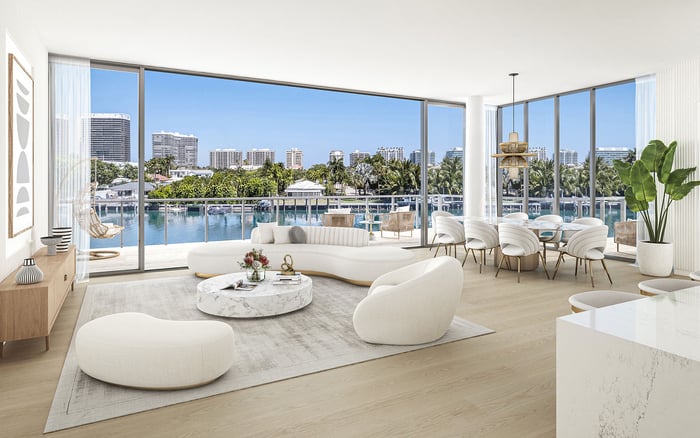
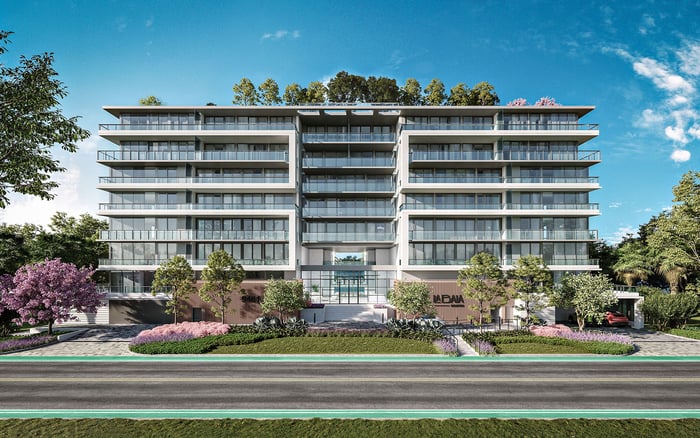
A buyer-focused comparison of La Baia North Bay Harbor Islands and Alina Residences Boca Raton for owners who expect a residence to function as both a private home and a controlled setting for dinners, salons, philanthropic gatherings, art installations, and discreet entertaining.
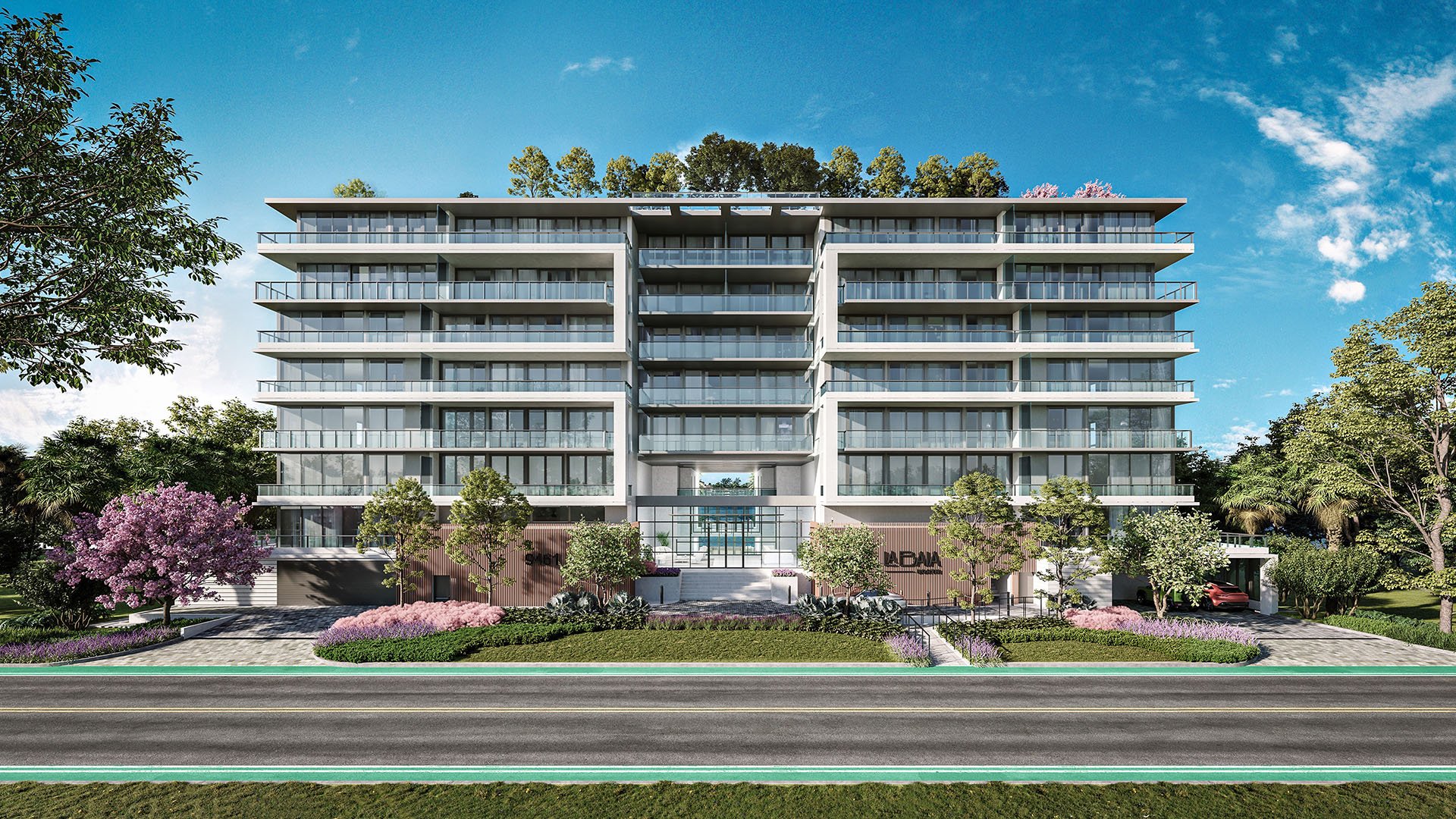
For a buyer weighing La Baia North Bay Harbor Islands against Alina Residences Boca Raton, the question is not simply which residence feels more elegant. The more revealing question is which building can protect the owner’s privacy when the home becomes a controlled setting for dinners, salons, philanthropic events, collector previews, or intimate family celebrations.
That distinction matters. A residence can have a beautiful plan and still become operationally exposed when florists, caterers, musicians, security personnel, art handlers, and invited guests arrive at once. In a truly private building, event logistics should feel quiet, sequenced, and contained. The best experience is not theatrical. It is disciplined.
La Baia North should be evaluated in a Miami-Dade waterfront-island context, where arrival, service circulation, and neighbor visibility carry particular importance. Alina Residences should be evaluated in a Palm Beach County luxury-residential context, where formality, concierge control, and amenity-adjacent entertaining may shape how events are managed. Both can appeal to privacy-conscious owners, but the buyer’s diligence should move beyond finishes and views.
In plain buyer terms, this decision sits at the intersection of Bay Harbor discretion, Boca Raton residential formality, water-view living, and new-construction operating rules.
The first privacy test is the arrival sequence. For La Baia North, buyers should ask how guest arrival, valet, lobby movement, elevator use, and residence entry can be organized so an evening gathering remains discreet from other residents and normal building traffic. A waterfront-island address can feel inherently private, but the building’s actual protocols determine whether that privacy holds during a busy event window.
For Alina Residences Boca Raton, the parallel question is how arrival, concierge interaction, amenity pathways, and vertical circulation support controlled entertaining. A Palm Beach County buyer may be accustomed to highly managed environments, but assumptions are not enough. The building should be tested against real scenarios: guests arriving in a short interval, a security-screened list, a caterer unloading before sunset, and post-event breakdown after guests depart.
A useful comparison is to ask each sales or management team to walk through the event as if it were happening next Friday. Where do guests pull up? Who confirms names? Which elevator is used? Can the owner avoid turning the lobby into a social checkpoint? If the answer relies on improvisation, the buyer has learned something important.
For collectors, art installation should be treated as a core purchase issue. Large-format works may require advance review of elevator dimensions, corridor turns, door clearances, wall conditions, permitted installation hours, and rules for protective padding. Even when a residence has the right visual drama, the route from delivery vehicle to final wall may determine whether the piece can be installed without compromise.
At La Baia North Bay Harbor Islands, the buyer should verify the complete path from service entry to residence. Is there a freight or service route that can accommodate handlers without pulling them through primary resident spaces? Can installation be scheduled at hours that avoid unnecessary attention? Are there limitations on equipment, wall anchoring, insurance certificates, or staff access?
At Alina Residences Boca Raton, the same questions apply with a slightly different emphasis. Buyers should focus on whether the building’s concierge and vertical-circulation protocols can coordinate handlers, installers, and building protection measures without creating friction for residents. The more valuable the art, the more important it becomes to avoid public staging, visible delays, or repeated elevator negotiations.
This is also where buyers comparing other boutique or collector-oriented buildings, such as The Well Bay Harbor Islands and Glass House Boca Raton, should maintain the same discipline. A beautiful residence is only one part of the acquisition. The building must also support the quiet movement of objects, vendors, and staff.
Freight access is often the least glamorous part of a purchase conversation, yet it is one of the clearest indicators of whether private entertaining will feel effortless. Catering, florals, rentals, lighting, security equipment, and art handling all require routes that do not compromise the owner’s personal space or broadcast the event to the building.
For La Baia North, buyers should ask whether freight and service access are separated from resident and guest circulation during events. If a caterer must cross the same lobby used by invited guests, the event may feel less composed. If florals and rental pieces wait in visible areas, the owner loses some of the discretion luxury living is meant to provide.
For Alina Residences, the key diligence point is whether vendors can use back-of-house loading, staging, and elevator paths without crossing primary residential spaces. Buyers should also ask about loading dock reservations, vendor insurance requirements, elevator protection, staff check-in, delivery windows, and event-hour restrictions. These are not minor administrative details. They determine whether a private dinner feels private.
The strongest buyer move is to create a sample event plan and ask each building to respond. Include a caterer arrival, floral delivery, art-handler movement, guest list screening, staff meal break, trash removal, and next-morning pickup. The building that can answer calmly and specifically is usually the building that will feel better to live in.
Privacy-focused event living often requires more than closets. Owners may need secure storage for art crates, wine, event inventory, linens, seasonal décor, collectible objects, archival materials, or specialty serving pieces. If those items cannot be stored discreetly and safely, they may migrate into the residence, compromising both design and daily comfort.
For La Baia North, buyers should confirm whether any assigned storage is climate-controlled, where it is located, and whether access can be restricted to approved staff or handlers. Location matters because a storage room that requires vendors to pass through visible residential corridors may not support the desired level of privacy.
For Alina Residences, buyers should confirm whether storage areas are conditioned, monitored, and suitable for sensitive belongings rather than only general household overflow. The phrase “storage” can mean many things. A climate-sensitive collector should not assume that a general storage area is appropriate for art materials, wine, textiles, or event inventory.
The key is to connect storage to event choreography. Where do empty crates go after installation? Where are folding chairs or specialty linens held between events? Who may access them? Is the area monitored? Can a property manager retrieve items without involving the owner? These questions sound practical because they are. They are also privacy questions.
A privacy-focused buyer should review not only the residence plan but also the rules that govern how the building operates. Buyer’s counsel or a trusted property manager should examine condominium documents for private-event rules, freight use, storage access, vendor insurance, staff entry, loading reservations, elevator padding, and alterations required for art display.
This review is especially important because event living depends on repeatability. A one-time accommodation is not the same as a dependable protocol. If a building allows a certain installation only with special approval, the buyer should understand who grants that approval, how long it takes, and whether it can be denied.
The most elegant outcome is a residence where hospitality feels natural but never public. La Baia North may appeal to the buyer drawn to a waterfront-island setting with a strong need to test service separation. Alina Residences may appeal to the buyer who values Boca Raton’s polished residential environment and wants to test concierge, amenity, and vertical-circulation control. Neither should be judged only by imagery. Judge the building by the path people and objects take when the owner is entertaining.
Which building is better for private events? The better choice depends on verified operating protocols, not only location or design. Buyers should compare arrival control, service routes, elevator use, and post-event breakdown.
Why is art installation part of the purchase decision? Large works may require specific elevator, corridor, doorway, and scheduling conditions. If those are not workable, the residence may limit what a collector can install.
What should La Baia North buyers verify first? They should verify whether guest arrival, valet, lobby, elevator, and residence-entry sequences can keep events discreet from other residents and building traffic.
What should Alina Residences buyers verify first? They should verify whether arrival, concierge, amenity, and vertical-circulation protocols can support controlled private entertaining without unnecessary exposure.
Why does freight access matter for privacy? Caterers, florists, rental teams, security staff, and art handlers need service paths that do not cross the owner’s principal living or guest areas.
Is climate-controlled storage always included? Buyers should not assume it is included or suitable for sensitive items. They should confirm conditioning, location, monitoring, and access rules.
Who should review the event-related rules? Buyer’s counsel or a property manager should review condominium documents, building policies, insurance rules, staff access, and storage provisions.
Should buyers ask for a sample event walkthrough? Yes. A practical walkthrough can reveal whether the building can manage guests, vendors, art deliveries, and cleanup in a discreet sequence.
Are amenity spaces enough for entertaining privacy? Not necessarily. Amenity spaces can be useful, but privacy depends on access control, circulation, staffing, and how events affect other residents.
What is the most important takeaway? Compare each building as an operating environment. The right residence protects both the owner’s lifestyle and the quiet movement behind it.
When you're ready to tour or underwrite the options, connect with MILLION.
If branded residences are on your mind — as a home or as an allocation — we would be glad to share what we are seeing, privately.
Begin a quiet conversation