A practical luxury buyer's guide to evaluating outdoor kitchen durability in and around Miami Design District, with questions on materials, exposure, drainage, ventilation, service access, warranties, and long-term maintenance.
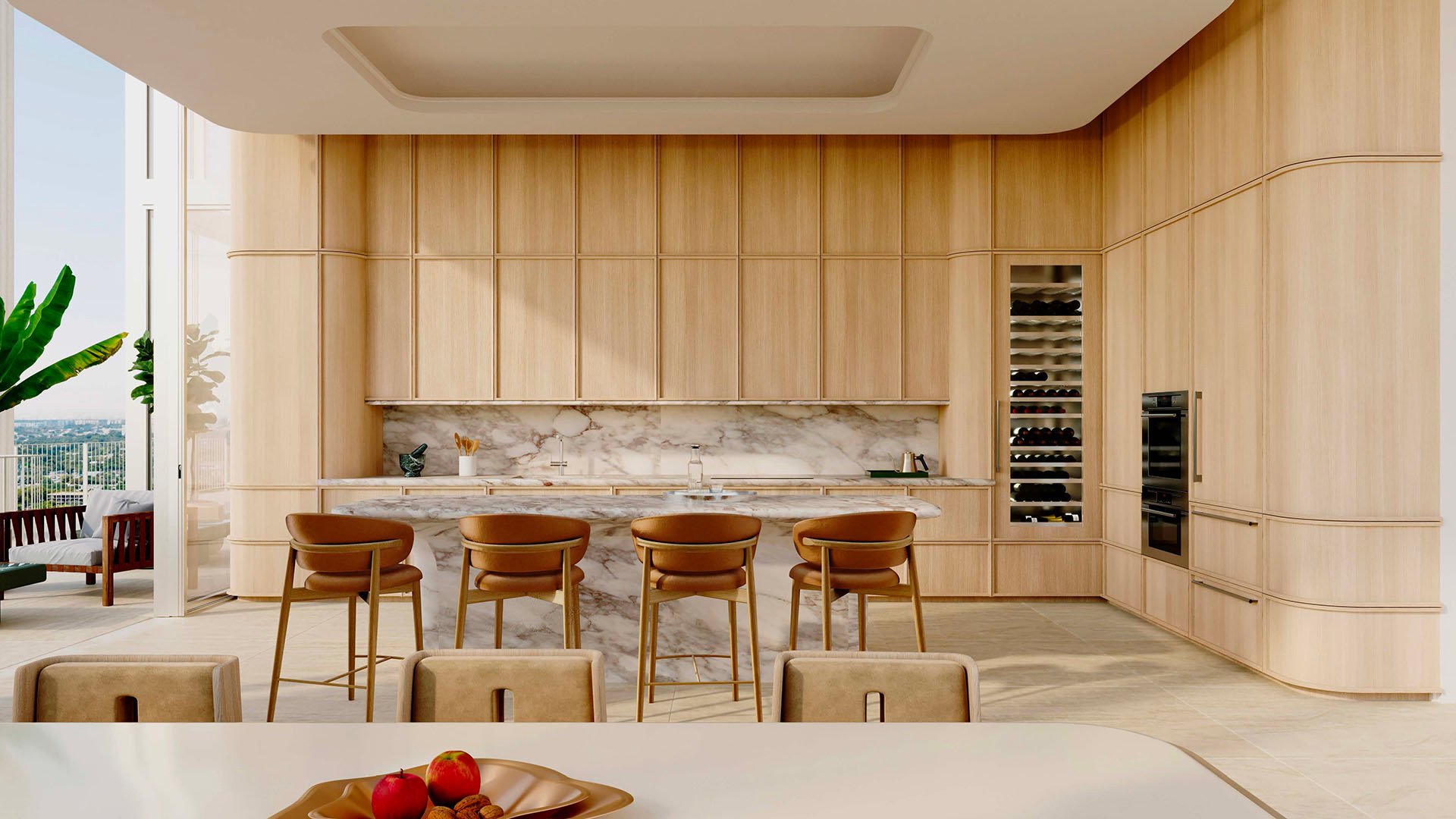
In Miami Design District luxury real estate, the outdoor kitchen often presents as a signature amenity. It frames the Terrace, anchors the Balcony, and turns a residence into a private entertaining environment. Yet before a buyer is drawn in by polished stone, integrated lighting, and a sculptural grill, the sharper question is more practical: how will this installation perform after years of heat, humidity, rain, and repeated use?
The Design District buyer is typically fluent in Design & Architecture. Finishes matter. Proportion matters. But outdoor kitchens are working systems, not decorative vignettes. They combine cabinetry, appliances, plumbing, drainage, electrical components, ventilation, waterproofing, countertop materials, and maintenance obligations. If one element is poorly specified, the entire experience can become costly and inconvenient.
For buyers comparing design-forward residences such as Kempinski Residences Miami Design District or nearby urban options like Miami Design Residences Midtown Miami, the right diligence is not simply asking whether an outdoor kitchen exists. It is asking whether it was built to be owned.
Outdoor cabinetry should be evaluated as a weather-facing component. Ask what material is used for the cabinet boxes, door fronts, hinges, drawer tracks, pulls, and internal supports. A luxury finish can conceal hardware that is less durable than the visible surface suggests.
The questions should be direct. Are the cabinet interiors suitable for repeated exposure to humidity? Are hinges and fasteners corrosion-resistant? Are drawers designed to drain or ventilate if moisture enters? Is there a maintenance protocol for cleaning tracks, tightening hardware, and protecting finish surfaces?
Do not stop at brand names. Ask for specifications. In a new-construction purchase, request the outdoor kitchen schedule, appliance cut sheets, warranty documents, and maintenance requirements before the final walkthrough. If the residence is resale, ask what has already been repaired, replaced, adjusted, or serviced.
Countertops carry much of the visual drama, but they also absorb constant use. Sun, water, food acids, oils, cleaning products, and hot cookware can each affect a surface differently. Ask whether the selected stone or porcelain is intended for exterior use, how it should be sealed or cleaned, and whether the finish can be repaired if it stains, etches, chips, or cracks.
Buyers should also study seams, overhangs, edges, penetrations, and appliance cutouts. These are the points where water can linger and thermal movement can expose weak workmanship. A dramatic slab is only as durable as its installation.
If the countertop wraps around a grill, sink, ice maker, or refrigeration unit, ask how heat and moisture are separated from adjacent surfaces. The most elegant outdoor kitchens are quiet about their engineering, but the engineering still has to be there.
Outdoor does not automatically mean ventilated. Depending on the layout, an outdoor kitchen may sit beneath a covered terrace, within a recessed balcony, or close to operable doors. Ask how smoke, heat, and cooking odors move away from the residence and neighboring outdoor spaces.
This is especially important in vertical luxury living. A grill that looks perfect in renderings may feel different when wind, ceiling height, building rules, and adjacency to glass walls are considered. Ask whether the appliance placement complies with the building's outdoor cooking rules and whether any limitations exist on grill type, fuel source, hours of use, or ventilation.
In dense urban settings, this diligence can be as important as view orientation. Buyers considering a move between Design District, Edgewater, and Brickell lifestyles may encounter different approaches to outdoor cooking. At 888 Brickell by Dolce & Gabbana, for example, the broader question for any buyer remains the same: how do private outdoor features interact with the building's operational standards?
Drainage is one of the least glamorous and most important topics. Ask where rainwater, wash water, and condensation are intended to go. Look at the slope of the floor, the position of drains, the underside of counters, and the way cabinetry meets the terrace or balcony surface.
Standing water is not a luxury detail. It can affect finishes, create odors, attract maintenance concerns, and shorten the life of components. Buyers should ask whether the outdoor kitchen was designed with cleaning in mind. Can the area be rinsed safely? Are electrical outlets protected and properly located? Are there low points where water collects?
For a high-floor Balcony, drainage and wind exposure deserve particular attention. For a larger Terrace, the questions extend to furniture placement, planters, shade systems, and how each element affects airflow and water movement around the kitchen.
A durable outdoor kitchen is also serviceable. Ask how technicians access the grill, refrigerator, sink, plumbing connections, electrical panels, shutoff valves, and gas connections if applicable. Beautiful millwork that must be dismantled for routine service is more than a small inconvenience.
Request a clear explanation of who maintains what. In condominium living, the line between owner responsibility and association responsibility can matter. Outdoor kitchens may involve private components connected to shared systems or building-regulated areas. Ask for that boundary in writing.
The same principle applies when comparing residences outside the Design District. In waterfront-oriented or bay-facing settings such as The Residences at Mandarin Oriental, Miami, exterior durability questions should include not only beauty and privacy, but also access, replacement logistics, and ongoing care.
Luxury buyers often ask about appliance brands. They should also ask about warranty duration, exclusions, labor coverage, service availability, and what happens if an outdoor-rated component fails in a coastal climate. A warranty that excludes the most likely conditions is less reassuring than it appears.
Ask whether the developer, seller, appliance manufacturer, fabricator, or installer is responsible for each part of the kitchen. Ask whether finishes are covered separately from mechanical components. Ask whether using certain cleaners, covers, fuels, or accessories affects coverage.
Building rules also matter. Some properties restrict open flames, propane storage, modifications, replacement appliances, exterior penetrations, or after-closing alterations. The finest amenity is the one that can be used without friction.
An outdoor kitchen can add emotional value, especially in Miami, where entertaining often moves between interior and exterior spaces. But buyers should resist treating it as an isolated upgrade. It is part of the residence's total ownership quality.
Ask how the kitchen relates to the floor plan. Is it close enough to the interior kitchen to be useful? Does it interrupt furniture layouts? Is there shade at the time of day you expect to use it? Does the smoke path affect seating? Does lighting make it practical after sunset? Does the view remain the main event, or does the equipment dominate the outdoor room?
Durability is not merely the absence of rust or stains. It is the ability of a feature to remain elegant, functional, maintainable, and desirable across seasons of ownership.
Should I prioritize the appliance brand or the installation quality? Both matter, but installation quality often determines how well premium appliances perform outdoors over time.
What is the first document I should request for an outdoor kitchen? Ask for the specification package, including appliance details, finish schedules, warranties, and maintenance instructions.
Is an outdoor kitchen on a Balcony riskier than one on a Terrace? It can be more sensitive to wind, drainage, ventilation, and building rules, so diligence should be especially specific.
Should I ask whether the cabinetry is outdoor-rated? Yes. Ask about cabinet boxes, doors, hinges, fasteners, drawer tracks, and how each component handles moisture.
How important is drainage? Very important. Poor drainage can undermine finishes, comfort, cleanliness, and the long-term performance of the kitchen.
Can I change the grill after closing? Possibly, but building rules, utility connections, ventilation, dimensions, and warranty terms may limit replacements.
What should I look for during a walkthrough? Check seams, slope, cabinet alignment, appliance fit, outlet locations, water collection points, and access panels.
Do warranties usually cover exterior exposure? Coverage varies, so review exclusions carefully and confirm who is responsible for labor, parts, and finish defects.
Is outdoor kitchen durability different in Brickell than in Design District? The same principles apply, though exposure, building rules, height, and terrace configuration can differ by property.
Should outdoor kitchen condition affect my offer strategy? Yes. If replacement, repair, or unclear responsibility is likely, address it before closing rather than after ownership begins.
To compare the best-fit options with clarity, connect with MILLION.
If branded residences are on your mind — as a home or as an allocation — we would be glad to share what we are seeing, privately.
Begin a quiet conversation