A practical MILLION buyer’s guide to evaluating outdoor kitchen durability in Brickell luxury real estate, with questions on materials, drainage, appliances, ventilation, maintenance, and association rules.
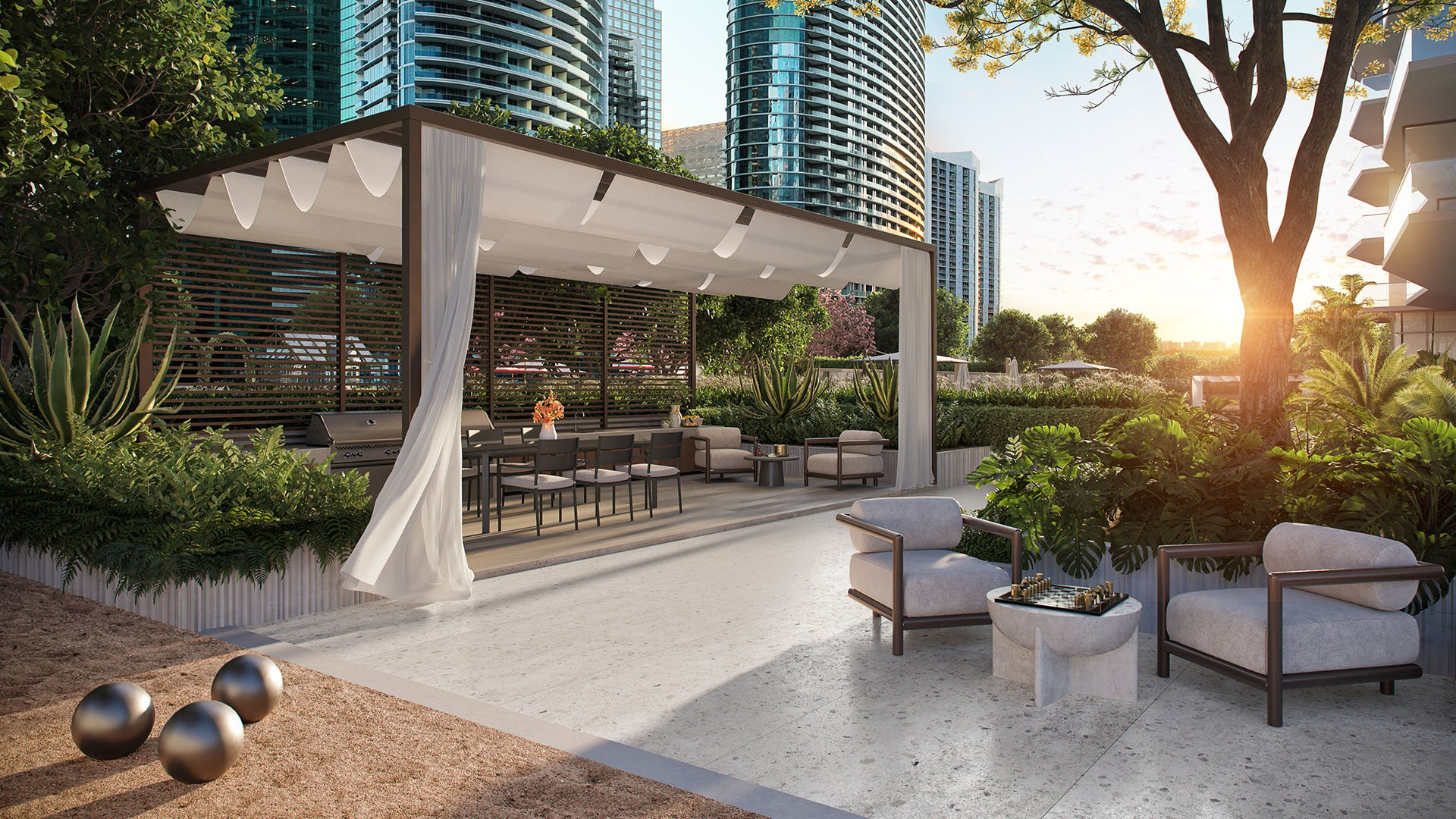
An outdoor kitchen in Brickell can elevate a residence from polished to genuinely livable. It extends private entertaining space, softens the edge between skyline and bay, and gives a high-rise home the ritual of a waterfront house. For a luxury buyer, however, the essential question is not whether the space photographs well. It is whether the installation will remain elegant, safe, and serviceable through heat, humidity, wind, rain, and regular use.
Brickell’s appeal is vertical and urban, but its climate is coastal. Outdoor kitchens on terraces and balconies occupy a demanding environment where salt air, moisture, sun exposure, and storm preparation all matter. The better question is not “Does it have a grill?” It is “Was this designed as a durable exterior system?”
That distinction is especially important when comparing high-profile Brickell residences such as Baccarat Residences Brickell, Cipriani Residences Brickell, and St. Regis® Residences Brickell. The residence, terrace plan, association standards, and building service infrastructure all shape how practical an outdoor kitchen will be over time.
Before discussing finishes, ask where the outdoor kitchen sits and how exposed it is. A protected loggia, deep terrace, and open-edge balcony can perform very differently. The more exposed the installation, the more important it becomes to understand weather resistance, covers, drainage, and fastening methods.
Also clarify how you intend to use the space. Occasional cocktails demand less from a kitchen than frequent grilling, wine service, refrigerated storage, and catered entertaining. A buyer who expects the terrace to function as a second dining room should evaluate the outdoor kitchen with the same rigor applied to an interior kitchen: workflow, surfaces, lighting, utilities, and clean-up.
In Brickell, the terms waterfront, terrace, balcony, and new-construction often converge around one point: outdoor space is only as valuable as its usability. A beautiful exterior kitchen that is difficult to maintain, restricted by rules, or poorly serviced may add less practical value than its first impression suggests.
Begin with the cabinetry. Ask what material is used, how it resists corrosion, and whether exposed hardware, hinges, pulls, and fasteners are rated for exterior conditions. The cabinet box may look substantial, but long-term performance often depends on small components that are easy to overlook during a showing.
Next, examine the countertop and backsplash. Ask whether the surface is intended for outdoor use, how it handles heat, staining, ultraviolet exposure, and standing water, and which cleaning products are recommended. A luxury finish should not require constant anxiety. If the surface is porous or delicate, understand the maintenance rhythm before assigning premium value to it.
For appliances, ask whether the grill, refrigerator, icemaker, sink, and storage units are purpose-built for exterior use. Request model information, warranty details, and access requirements. In a residence such as The Residences at 1428 Brickell or Una Residences Brickell, the elegance of the private outdoor zone should be matched by a clear maintenance and service path.
Durability is not only about materials. It is about infrastructure. Ask how the outdoor kitchen is powered, how water is supplied, where shutoff valves are located, and how service technicians access components without disturbing finished surfaces.
Ventilation deserves particular attention. A grill in an outdoor area still needs thoughtful placement so heat, smoke, and odor do not compromise adjacent seating areas or neighboring residences. Ask whether there are restrictions on fuel type, grill placement, hooding, or operating hours. Association documents can be as important as the appliance specification sheet.
Drainage is another essential question. Ask where rainwater, sink water, and cleaning water go. Look for slope, drains, scuppers, and any thresholds that might trap water against cabinetry or sliding doors. Standing water is rarely a friend to luxury finishes. It can also make an otherwise refined terrace less pleasant after a storm.
In a condominium, the outdoor kitchen is never just a private design choice. It may involve association approvals, architectural standards, maintenance obligations, and insurance considerations. Ask whether the kitchen was delivered by the developer, installed after closing, or modified by a prior owner. Then ask for documentation.
A careful buyer should review whether the association permits the existing installation, whether alterations require approval, and who is responsible for repairs if water, smoke, or heat affects common elements or neighboring property. If the outdoor kitchen includes gas, plumbing, or electrical work, documentation becomes especially important.
Do not assume that every attractive terrace installation is equally compliant. A discreet, well-documented improvement is more valuable than a dramatic feature with unclear approvals. In Brickell, where luxury living is both private and highly managed, governance can determine the long-term ease of ownership.
A durable outdoor kitchen should be easy to inspect, clean, repair, and prepare for periods of nonuse. Ask whether appliances can be removed without demolishing stone or millwork. Ask whether filters, burners, refrigeration coils, drain lines, and electrical panels are accessible. Ask who maintains the equipment and how often service is recommended.
This is where luxury buyers can be misled by perfect staging. A seamless counter line may look exceptional, but hidden access panels can make the difference between a simple repair and an expensive intervention. True refinement includes the ability to maintain the object without compromising the design.
For resale value, documentation helps. Keep appliance manuals, warranty information, maintenance records, association approvals, and contractor details. A future buyer will want the same assurance you do now: that the terrace kitchen is not just beautiful, but responsibly built.
When touring multiple residences, create a simple comparison: exposure, materials, appliances, utilities, drainage, approvals, maintenance history, and service access. Resist the instinct to rank outdoor kitchens by size alone. A compact, protected, well-detailed installation can be superior to a larger kitchen that is overly exposed or difficult to maintain.
Also consider the relationship between the kitchen and the rest of the terrace. Is there enough dining space once doors are open? Does smoke travel toward seating? Is there lighting for evening use? Is the refrigerator convenient to the interior kitchen? Does the design support daily life, or does it require a staff-level production every time it is used?
The strongest Brickell outdoor kitchens feel effortless because the technical questions were solved before the first guest arrived. That is the standard luxury buyers should hold.
What is the first question to ask about an outdoor kitchen in Brickell? Ask whether it was designed and approved as an exterior installation, including materials, utilities, drainage, and association documentation.
Are outdoor kitchen appliances the same as indoor appliances? No. Ask whether each appliance is intended for exterior use and what maintenance or coverage is required.
Why does salt air matter for outdoor kitchens? Salt air can be demanding on metals, hardware, and finishes, so corrosion resistance and regular maintenance are important.
Should I ask about drainage before buying? Yes. Proper drainage helps protect cabinetry, flooring, thresholds, and the comfort of the terrace after rain.
Can a condo association restrict outdoor grills? Yes. Ask for building rules on fuel type, placement, ventilation, noise, hours, and permitted equipment.
Is a larger outdoor kitchen always more valuable? Not necessarily. Protection, serviceability, compliance, and usability may matter more than size.
What documents should a seller provide? Request approvals, permits if applicable, appliance information, warranties, maintenance records, and contractor details.
How do I evaluate countertop durability? Ask whether the surface is rated for exterior exposure, heat, staining, UV light, and the recommended cleaning routine.
What is often overlooked during a showing? Buyers often miss shutoff valves, access panels, drainage paths, appliance ventilation, and hardware condition.
Should I hire a specialist before closing? For a significant outdoor kitchen, a qualified inspection or contractor review can clarify condition, access, and future maintenance needs.
For a discreet conversation and a curated building-by-building shortlist, connect with MILLION.
If branded residences are on your mind — as a home or as an allocation — we would be glad to share what we are seeing, privately.
Begin a quiet conversation