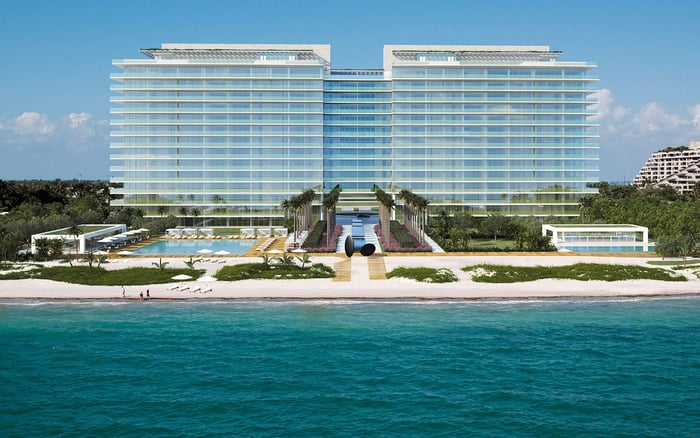
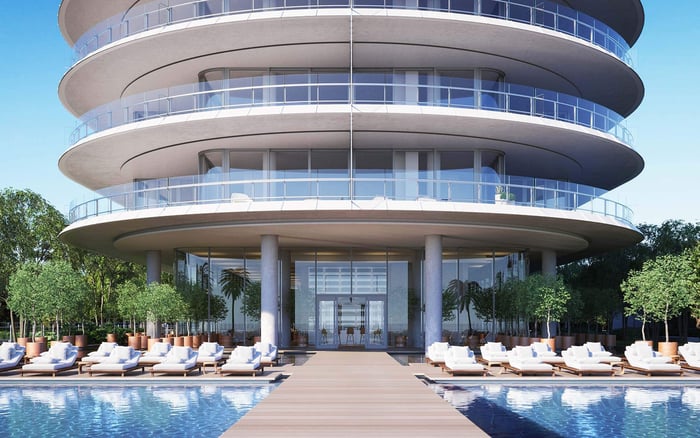
A practical, discreet guide for Key Biscayne luxury buyers assessing neighboring development risk before committing to a waterfront residence, oceanfront condominium, or estate purchase.
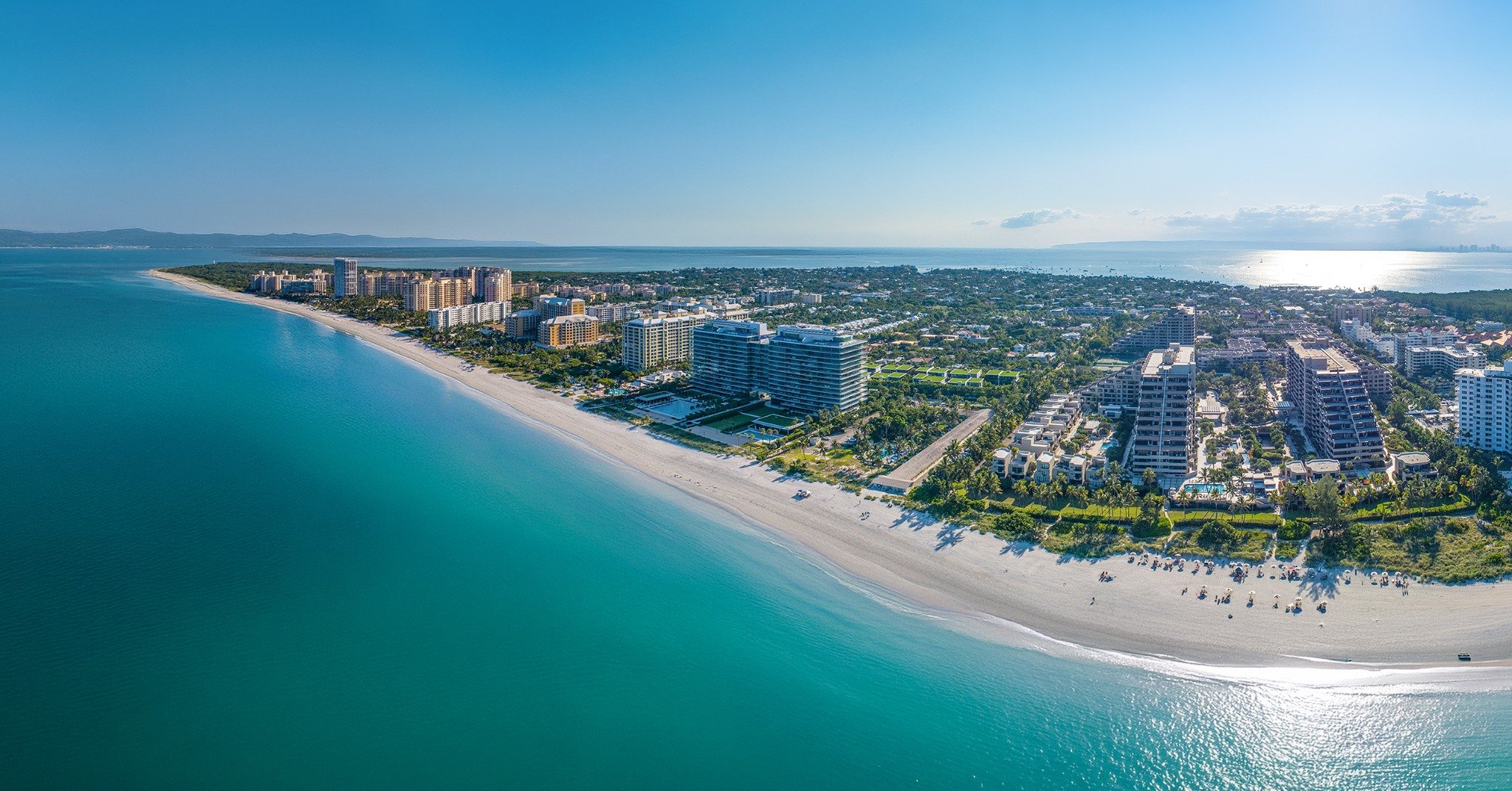
In Key Biscayne, luxury real estate is often judged through light, water, privacy, arrival sequence, and daily ease. A residence may feel complete at first showing, yet the neighboring parcel can quietly define the long-term ownership experience. The essential question is not only what stands next door today, but what could be built, renovated, elevated, expanded, demolished, or reconfigured tomorrow.
For a Waterfront or Oceanfront buyer, neighboring development risk is not abstract. It can influence views, sunlight, noise, privacy, drainage, access, security, and ultimately Resale confidence. This is especially relevant in a market where scarcity and lifestyle are tightly linked. A well-bought home in Key Biscayne should be evaluated not only by finishes and frontage, but by the durability of its setting.
This Buyer's Guides approach is not about fear. It is about disciplined curiosity. Before writing a serious offer, ask precise questions that reveal whether the surrounding environment is stable, vulnerable, or simply misunderstood.
The first question is deceptively simple: what is legally possible on each adjacent parcel? A low-profile neighboring structure may look permanent, but its current form is only one moment in the life of that site. Ask your adviser to review the applicable zoning, allowable use, height potential, setbacks, lot coverage, parking requirements, and any conditions that could affect a future build.
Do not rely on a visual impression from the street. A modest structure may sit on a lot with unused development potential. A dated building may become more valuable as a redevelopment site than as an income-producing or owner-occupied property. Even if a neighbor has no current project, the rules attached to the land may matter more than the owner’s present intentions.
Luxury buyers often compare this diligence across South Florida. The same discipline used to evaluate view corridors near Oceana Key Biscayne can be useful when studying any estate, condominium, or boutique waterfront address where neighboring land is limited and highly consequential.
Neighboring development risk becomes more concrete when a nearby owner has filed, discussed, or pursued approvals. Ask whether there are pending permits, variance requests, design reviews, demolition plans, seawall work, utility upgrades, roadwork coordination, or other public-facing steps that may signal future activity.
Timing is critical. A buyer may be comfortable with a future project if it is known, understood, and reflected in the acquisition. The greater concern is surprise after closing. If approvals are already moving, your offer strategy, inspection period, and contract language should reflect that reality.
Ask for a written summary of known nearby activity before the end of due diligence. If the response is vague, keep asking. In high-value transactions, “we have not heard anything” is not the same as “there is no active risk.”
In Key Biscayne, value is often emotional before it is financial. Morning light, a protected terrace, a line of palms, or an uninterrupted water view can define why a buyer chooses one residence over another. Neighboring development can alter that experience even when it does not technically block a primary view.
Ask your architect, broker, or planning consultant to think three-dimensionally. Could a future addition introduce upper-level sightlines into bedrooms, baths, outdoor dining areas, pool decks, or staff areas? Could new massing shade a garden, terrace, lap pool, or interior room during the hours you expect to use them? Could mechanical equipment, lighting, or service areas face your property?
This is where established luxury comparables can sharpen the conversation. Buyers who study privacy and frontage at The Residences at Six Fisher Island, or the spatial discipline of coastal buildings such as Oceana Bal Harbour, tend to ask better questions about how neighboring mass and orientation affect everyday life.
Even a tasteful neighboring project can test patience during construction. Ask what a nearby build could mean for noise, dust, truck access, staging, cranes, temporary fencing, street closures, landscaping disruption, and service access. The question is not simply whether construction may occur. The question is how close, how long, how intrusive, and under what controls.
For condominium buyers, review the building’s policies for nearby construction communication and resident coordination. For single-family purchasers, ask whether narrow access points, utility work, or shared boundaries could affect deliveries, guest arrival, emergency access, or staff routines. A property that lives beautifully in silence may feel very different beside an active site.
Construction risk is not necessarily a reason to walk away. It may be a reason to negotiate, adjust timing, or secure stronger contingencies. The mistake is treating temporary disruption as irrelevant simply because the residence itself is move-in ready.
In coastal luxury markets, development risk is also environmental and infrastructural. Ask whether a future neighboring project could change drainage patterns, grading, hardscape runoff, seawall interfaces, dock conditions, landscape buffers, or utility placement. A neighboring improvement may benefit the area, but it may also introduce questions that deserve technical review.
For waterfront homes, bring in qualified specialists early. They should consider how adjacent work might interact with your seawall, yard elevation, pool equipment, exterior living areas, and lower-level storage. For condominium buyers, ask how the association monitors nearby exterior work and whether adjacent activity could affect access, vibration, landscaping, or common elements.
This is where Investment discipline and lifestyle diligence meet. A beautiful residence may still deserve a discount if the adjacent property creates uncertainty that future buyers will also notice.
Once development questions are identified, the contract should not remain generic. Ask your attorney and adviser whether the offer should include time to review neighboring parcel records, pending approvals, association documents, surveys, title matters, easements, disclosures, and construction-related information.
If your purchase depends heavily on a particular view, privacy condition, access route, or quiet enjoyment assumption, say so internally before you negotiate. Not every preference can be protected, but every major assumption should be tested. The most sophisticated buyers do not wait until after closing to discover that a treasured feature was never secure.
A careful contract posture is not adversarial. It is appropriate to the scale of the asset. The same mindset appears across the region, from Key Biscayne to Surfside, where buyers evaluating residences such as The Surf Club Four Seasons Surfside often look beyond interiors to the permanence of the surrounding environment.
Resale begins on acquisition day. Before buying, ask how a future buyer will evaluate the neighboring parcels. Would they see stability, exposure, uncertainty, or opportunity? Would a new structure beside the property make your residence feel more private and polished, or more constrained? Would construction fatigue affect the buyer pool during a future sale window?
This question prevents overpaying for a condition that may not endure. It also helps separate manageable risk from structural weakness. If the home is exceptional and the neighboring exposure is modest, the purchase may still be compelling. If the price assumes permanent calm but the surroundings suggest change, the negotiation should reflect that mismatch.
In Key Biscayne, the most valuable properties often possess both beauty and resilience. The best purchase is not simply the one with the most seductive first impression. It is the one whose setting can withstand scrutiny.
What is neighboring development risk? It is the possibility that nearby land, buildings, or infrastructure may change in ways that affect your property’s privacy, views, access, noise, or value.
Should I worry if the neighboring property looks unchanged? Yes, at least enough to investigate. The important issue is what can be built or approved, not only what exists today.
Can neighboring construction affect a luxury condo purchase? It can. Noise, dust, access, vibration, views, and common-area enjoyment may all become part of the ownership experience.
What should I ask before buying an Oceanfront residence? Ask about height potential, setbacks, view corridors, construction staging, seawall interfaces, drainage, lighting, and privacy from adjacent parcels.
Is development risk always negative? No. A well-executed neighboring improvement may enhance the area, but uncertainty should be understood and reflected in pricing.
Who should help review neighboring parcels? Your real estate adviser, attorney, surveyor, architect, and relevant technical specialists can each review a different part of the risk.
Can contract contingencies address these issues? Often, yes. A buyer can request time to review records, association documents, surveys, title matters, and known nearby activity.
How does this affect Resale? Future buyers will evaluate the same exposure. If the risk is visible or unresolved, it may affect demand, timing, or negotiation leverage.
Is Key Biscayne uniquely sensitive to this analysis? Key Biscayne’s appeal is closely tied to privacy, water, landscape, and quiet residential character, which makes adjacent change especially relevant.
What is the most important question to ask first? Ask what the neighboring parcels are legally allowed to become, then compare that answer with the lifestyle you believe you are buying.
For a confidential assessment and a building-by-building shortlist, connect with MILLION.
If branded residences are on your mind — as a home or as an allocation — we would be glad to share what we are seeing, privately.
Begin a quiet conversation