A buyer-focused look at how oceanfront exposure, Collins Avenue access, privacy, orientation, and Sunny Isles Beach scarcity shape long-term ownership comfort at St. Regis® Residences Sunny Isles.
For long-term owners, the most enduring luxury is not always the most visible. It is the comfort of returning to a residence that feels properly placed, oriented, buffered, and connected. At St. Regis® Residences Sunny Isles, location is not a background detail. It is the framework for daily life, shaping how residents experience light, air, privacy, movement, and the emotional rhythm of the shoreline.
Sunny Isles Beach has a distinct coastal intensity. It is not a low-density resort village, nor is it an inland urban district with occasional water views. It is a high-rise luxury condominium environment set along a narrow barrier island, where true oceanfront placement carries both lifestyle and scarcity value. That geography matters. The Atlantic is not simply nearby; it defines the eastern edge of ownership.
In buyer terms, this is an oceanfront and waterfront setting where beach access, branded residences identity, Sunny Isles Beach positioning, and St. Regis® Residences Sunny Isles all intersect. For sophisticated buyers, the question is not whether the address is desirable. It is whether the location can support comfort over years of ownership.
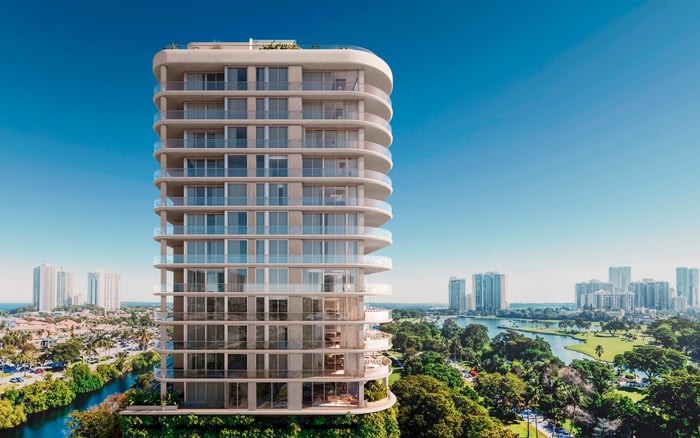
The oceanfront side of the property is where the ownership thesis becomes most immediate. Eastern exposure gives residences a relationship with sunrise, open horizons, shifting light, sea air, and the visual release of the Atlantic. These are not decorative benefits. Over time, they influence how a home feels in the morning, how terraces are used, how interiors respond to natural light, and how owners decompress from the pace of the city.
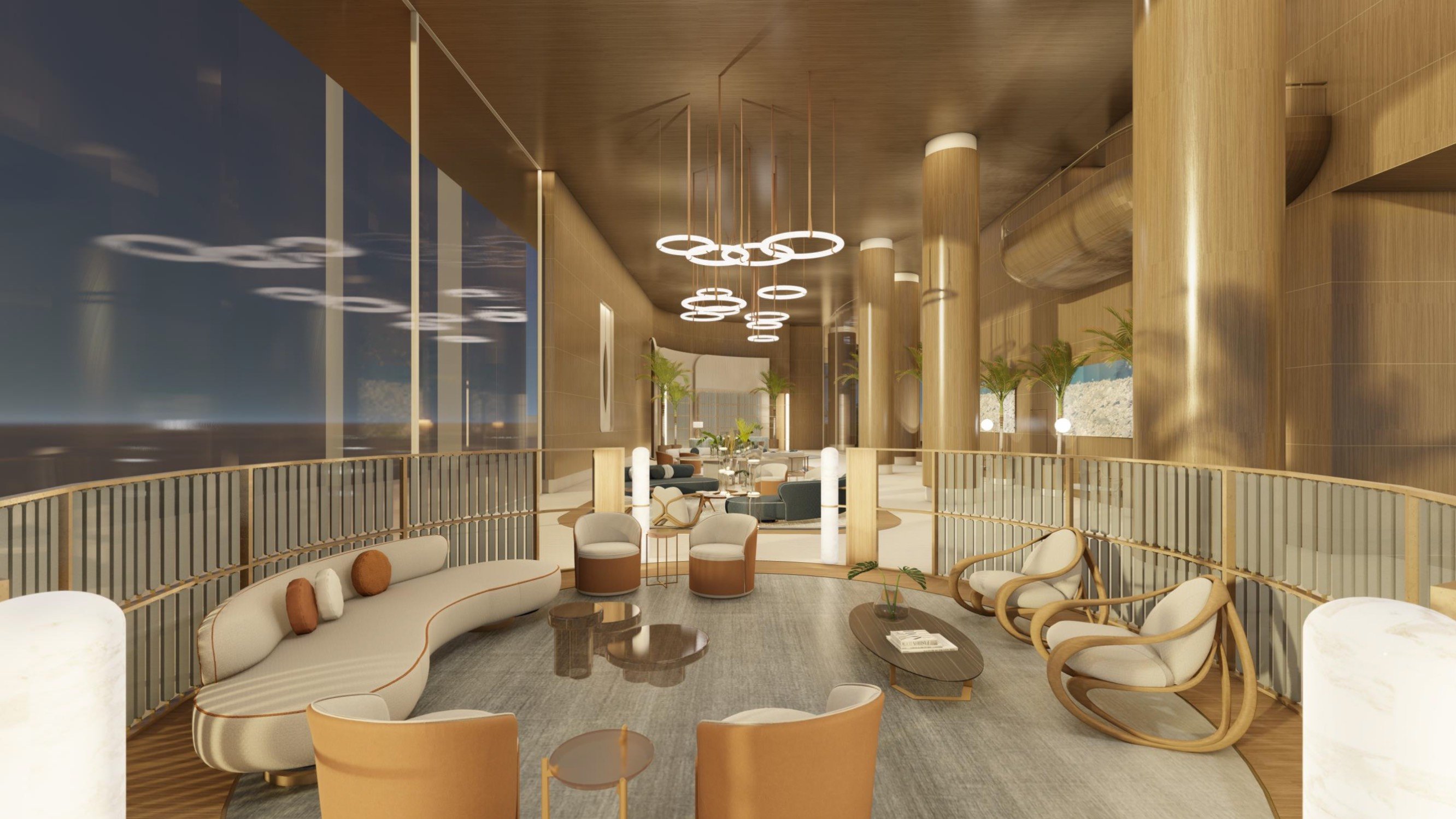
For many South Florida buyers, the distinction between a water view and oceanfront living is substantial. A long view may impress on arrival, but direct shoreline adjacency shapes daily routine. Beach access turns the coast into an extension of the private residential experience, while outdoor amenity areas oriented toward the ocean can deepen the sense of retreat.
This is where location becomes more than convenience. It becomes a sensory profile: brightness, breeze, sound, horizon, and distance from the street. Long-term comfort often depends on these quieter factors as much as on service, finishes, or brand identity.
The western side of the site introduces the other half of the equation. Collins Avenue is the primary north-south coastal corridor through Sunny Isles, connecting the neighborhood with nearby luxury and lifestyle destinations. For owners who divide time among Miami Beach, Aventura, Bal Harbour, Fort Lauderdale, and the broader South Florida coast, that connectivity is part of the appeal.
This is the classic retreat-plus-access profile: direct beachfront living without being fully removed from the Miami coastal network. It allows an owner to live with the ocean to the east while preserving practical mobility to the west.
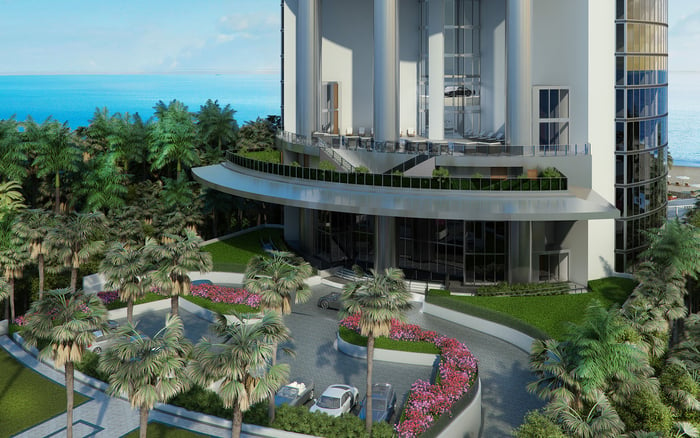
Still, Collins Avenue is not an invisible road. Its presence brings street activity, traffic patterns, and an urban edge. For discerning buyers, that is not necessarily a flaw; it is a design question. Long-term comfort depends on how the building mediates the transition between public movement and private residential life. Arrival sequences, setbacks, landscaping, amenity placement, and the separation of quiet residential zones from the corridor all matter.
In Sunny Isles, peer context is also useful. Nearby high-rise addresses such as Bentley Residences Sunny Isles and The Ritz-Carlton Residences® Sunny Isles reflect the same broader coastal logic: prestige is amplified when a site balances waterfront presence with usable access.
Sunny Isles’ narrow coastal geography creates a clear constraint: true oceanfront land is finite. That scarcity is relevant to long-term ownership and resale positioning, especially in a market where buyers often draw a sharp line between direct beachfront placement and inland convenience.
Yet scarcity alone does not create comfort. The neighborhood’s high-rise character means owners should understand the setting as an elevated coastal district rather than a secluded estate enclave. The skyline, neighboring towers, and Collins Avenue energy are part of the lived environment. For some owners, that density brings confidence, services, and a sense of belonging among other luxury coastal addresses. For others, privacy and view-corridor selection become decisive.
This is where branded residential identity can add psychological comfort. A recognized hospitality name may signal consistency, discretion, and a certain standard of residential experience. But branding performs best when supported by the fundamentals of site: shoreline exposure, thoughtful access, sufficient privacy, and a location that remains useful through different seasons of ownership.
The same principle applies along the coast at projects such as Jade Signature Sunny Isles Beach and Turnberry Ocean Club Sunny Isles, where buyers are often evaluating not just the building, but the relationship between tower, beach, views, and neighborhood movement.
A buyer considering St. Regis® Residences Sunny Isles should evaluate location through several layers. The first is orientation. Eastern-facing residences with Atlantic exposure may offer the strongest connection to sunrise, open water, and visual calm. The second is distance from Collins Avenue activity. Even within the same project, perceived quiet can vary based on residence position, elevation, and layout.
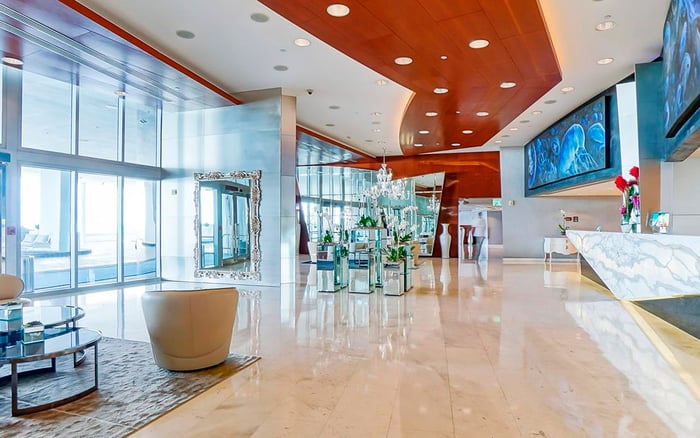
The third is the path of daily use. How does one arrive, move from private spaces to amenities, access the beach, and return to the residence after time outdoors? Comfort is often built through repetition. A graceful arrival, a protected transition from street to lobby, and easy access to the ocean can quietly define the ownership experience.
The fourth is regional mobility. Sunny Isles sits between Miami Beach and Fort Lauderdale, a placement that can be practical for owners who rely on multiple airports, business districts, dining corridors, marinas, shopping destinations, or family networks across South Florida. This regional middle position is part of the ownership logic, especially for seasonal or second-home residents.
The final layer is emotional resilience. A home should feel as desirable on an ordinary weekday as it does during a first showing. In that sense, long-term comfort is the compound result of site, shoreline exposure, mobility, building orientation, amenity placement, and neighborhood character.
St. Regis® Residences Sunny Isles is best understood through the lens of location comfort. Its oceanfront placement provides the elemental luxuries of light, air, horizon, and beach adjacency. Its Collins Avenue edge provides access, visibility, and connection to the wider coastal network. Between those two forces lies the real ownership question: how well does the residence protect serenity while preserving mobility?
For luxury buyers, this is the difference between an impressive address and a home that continues to feel right over time. The most successful long-term oceanfront ownership in Sunny Isles is rarely about a single feature. It is about the daily choreography of retreat, access, privacy, and view.
Why is location so important at St. Regis® Residences Sunny Isles? The location shapes daily comfort through ocean exposure, beach access, views, privacy, and Collins Avenue connectivity.
Is the project considered oceanfront? Yes. It is positioned as an oceanfront luxury residential project in Sunny Isles Beach tied directly to the Atlantic shoreline lifestyle.
What does “retreat plus access” mean here? It means owners can enjoy direct beachfront living while remaining connected to the broader Miami coastal network through Collins Avenue.
Does Collins Avenue affect long-term comfort? It can. Collins Avenue improves access, but buyers should also consider traffic, street activity, and how the building buffers private areas.
Why do eastern-facing residences matter? Eastern exposure can emphasize sunrise views, open horizons, natural light, and a stronger daily connection to the Atlantic.
Is Sunny Isles Beach a quiet resort enclave? Not exactly. Sunny Isles Beach is a high-rise luxury condo environment with a coastal urban character rather than a low-density resort setting.
How does scarcity affect ownership? The narrow barrier island geography limits true oceanfront opportunities, which can support long-term desirability and resale positioning.
What sensory factors should buyers consider? View corridors, sunlight, sea breeze, terrace usability, and distance from traffic noise all influence long-term comfort.
Why does regional accessibility matter? The location between Miami Beach and Fort Lauderdale can be useful for owners who move among airports, business districts, and lifestyle hubs.
What is the main buyer takeaway? Long-term comfort depends on the combined effect of shoreline exposure, mobility, orientation, amenity placement, and neighborhood character.
For a tailored shortlist and next-step guidance, connect with MILLION.
If branded residences are on your mind — as a home or as an allocation — we would be glad to share what we are seeing, privately.
Begin a quiet conversation