A refined due-diligence guide for Fisher Island buyers evaluating access, ferry timing, valet choreography, guest clearance, service routing, and emergency logistics at Palazzo del Sol.

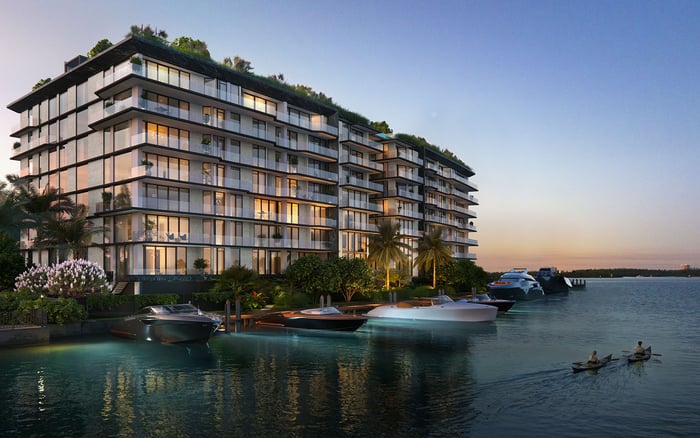
For a buyer considering Palazzo del Sol, access is not a minor operational detail. It is part of the value proposition. Palazzo del Sol is a luxury residential condominium on Fisher Island, and that private-island setting makes circulation, ferry timing, guest clearance, valet choreography, and service logistics central to daily life.
The question is not simply whether the building feels serene once you are inside. It is whether the journey from mainland to ferry, ferry to island road, island road to porte-cochère, and porte-cochère to residence has been considered with the same discipline as the architecture and interiors. In a market where buyers compare Fisher Island with South Beach, Surfside, Bal Harbour, and waterfront enclaves across Miami, private-island privilege carries a specific due-diligence obligation.
This is especially true for Palazzo del Sol Fisher Island buyers who entertain often, travel with drivers, receive household staff, coordinate vendors, or plan to use the residence during holidays and high-occupancy periods. The most sophisticated questions are often operational, not decorative.
On Fisher Island, the arrival sequence begins before the building. Buyers should ask how residents, guests, staff, vendors, and service vehicles are separated or prioritized from the ferry terminal through the building arrival experience. If multiple categories of traffic converge at the same moments, the island’s exclusivity can feel less effortless than expected.
The essential question is simple: who moves first, and under what circumstances? A resident returning from dinner, a chauffeured guest, a rideshare vehicle, a contractor, a food delivery, and a housekeeping team may all need access during the same window. Ask whether there is a written framework for these interactions or whether they are handled informally by security, valet, building staff, and island personnel.
Buyers comparing private-island options such as The Residences at Six Fisher Island should apply the same lens. Prestige is reinforced when the least glamorous details, including vehicle staging and clearance, operate quietly in the background.
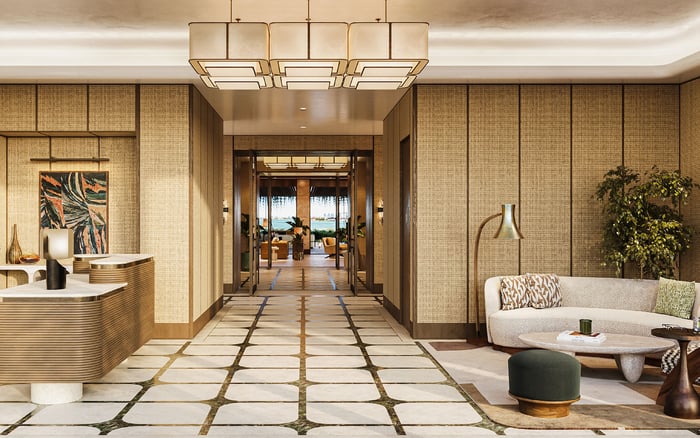
The porte-cochère is where luxury either feels composed or congested. Ask for the current protocol for resident arrivals, guest arrivals, valet drop-offs, and chauffeured vehicles at Palazzo del Sol. Keep the inquiry practical: where does each vehicle stop, how long may it remain, and who has priority when arrivals overlap?
Valet capacity deserves particular attention. Ask how valet staffing and parking capacity are sized for full-building occupancy, and whether queues can spill into internal island roads or block the building entrance. A quiet weekday preview may not reveal the dynamics of a holiday weekend, a dinner-party evening, or a high-season turnover day.
Parking allocation is another core question. Ask how many self-parking and valet spaces are allocated per residence, and whether overflow parking exists for guests or service providers. Buyers with multiple cars, drivers, security personnel, or frequent visitors should not assume that a luxury setting automatically resolves every parking scenario.
Fisher Island access depends on control, which is part of its appeal. Still, control requires clarity. Ask whether Palazzo del Sol has written policies for guest pre-clearance, rideshare access, private drivers, vendors, deliveries, and contractors. The goal is not to challenge the system, but to understand it before ownership.
A buyer should know whether guests must be entered in advance, whether drivers receive separate instructions, how rideshare vehicles are handled, and what happens when an unexpected guest arrives. The same applies to household employees, personal assistants, nannies, chefs, nurses, trainers, and recurring vendors. For many ultra-premium buyers, the residence is supported by a network of people whose access must feel seamless without compromising security.
This is where Fisher Island differs from mainland luxury towers. At Palazzo della Luna, the same buyer mindset applies: privacy is most successful when the rules are known, documented, and consistently executed.
The most revealing operational questions often involve what residents do not see. Ask how package deliveries, food deliveries, moving trucks, contractors, housekeeping staff, and maintenance teams are routed so they do not conflict with resident arrivals. A graceful front-of-house experience depends on disciplined back-of-house circulation.
Buyers should ask whether service elevators, loading areas, and back-of-house routes are sufficient for simultaneous deliveries, move-ins, maintenance, and staff traffic. Luxury buildings are increasingly judged by their ability to absorb daily complexity without visible friction. A residence may be quiet, but if the service corridor is strained, the inconvenience can migrate into elevators, lobbies, parking areas, and resident schedules.
If you are considering broader Fisher Island ownership, including estate-style options such as The Links Estates at Fisher Island, the same principle holds. The more private the address, the more important it becomes to understand who controls the approach, the checkpoints, the service paths, and the contingency plans.
Ask whether Palazzo del Sol has dedicated traffic-management procedures during weekends, holidays, events, and high-occupancy seasons. A building can feel flawless in a private showing and perform differently when residents, guests, club activity, marina movement, staff shifts, and service appointments overlap.
Ferry access should be discussed in terms of real travel time, not merely distance. Ask how the ferry affects expected travel to and from the mainland, including typical delays during staff shift changes or large island events. The point is not to eliminate every delay, which is unrealistic in any private-access environment. The point is to understand the rhythm of the island and decide whether it fits your lifestyle.
Buyers should also ask existing residents or management whether the actual traffic experience matches the sales presentation, particularly during peak arrival and departure windows. The most valuable answer may be less about perfection and more about predictability.
At Palazzo del Sol, a buyer should ask who controls traffic rules affecting the building: the condominium association, Fisher Island community management, ferry operators, security, or multiple entities. This matters because operational responsibility can be distributed. If a delay occurs, a rule changes, or a guest process fails, the practical question becomes who can solve it.
Ask for any written policies that govern access, parking, deliveries, contractors, and emergency movement. Also ask whether there is an incident history involving access delays, valet backups, delivery conflicts, guest confusion, emergency access, traffic noise, or complaints. The word “incident” should be understood broadly. Even minor recurring frictions can shape the ownership experience.
Future change belongs in the same conversation. Ask whether island development, club events, marina activity, infrastructure work, or ferry schedule changes could affect daily access. For a long-term owner, today’s convenience should be weighed against tomorrow’s operational variables.
In a constrained-access environment, emergency planning is not theoretical. Buyers should ask how emergency vehicles, hurricane evacuations, medical transport, and post-storm access are handled. The question should be asked calmly and directly, because the best luxury ownership experience is one in which serious scenarios have already been planned.
This is not only about storms. It is about medical response, security coordination, post-event access, and the ability to keep essential services moving when normal patterns are interrupted. In a private-island context, resilience is part of comfort.
Before signing, ask to review written procedures where available. Ask for the resident, guest, vendor, delivery, contractor, rideshare, and valet protocols. Ask how full occupancy is handled. Ask where vehicles queue, how overflow parking works, and whether front-of-house and back-of-house circulation are truly separated.
Then test the story against real life. Visit at different times if possible. Discuss peak windows. Ask how staff shifts affect ferry timing. Ask whether guest instructions are simple enough for an out-of-town visitor to follow without confusion. The most refined buildings do not merely look calm. They are managed so calm can be repeated.
Why is traffic management so important at Palazzo del Sol? Because Fisher Island access depends on ferry movement, security clearance, valet flow, and internal island circulation, all of which shape daily convenience.
Should I ask for written traffic and access policies? Yes. Written policies for guests, vendors, deliveries, rideshare vehicles, private drivers, and contractors help reveal how consistently the system operates.
What should I ask about the ferry? Ask how ferry timing affects typical travel to and from the mainland, especially during staff shift changes, island events, weekends, and holidays.
How should valet capacity be evaluated? Ask how valet capacity is sized for full occupancy and whether queues can block the entrance or spill into internal island roads.
Are guest arrivals a separate due-diligence issue? Yes. Guest pre-clearance, driver instructions, and arrival routing determine whether entertaining feels graceful or complicated.
What service logistics should buyers review? Ask how packages, food deliveries, moving trucks, contractors, housekeeping teams, and maintenance crews are routed away from resident arrivals.
Who may control access rules affecting the building? Rules may involve the association, Fisher Island management, ferry operations, security, or several parties, so buyers should clarify responsibility.
Should I ask about past access problems? Yes. Ask about delays, valet backups, delivery conflicts, guest confusion, emergency access concerns, traffic noise, or recurring complaints.
How do emergencies factor into ownership? Buyers should ask how medical transport, emergency vehicles, hurricane evacuations, and post-storm access are handled in the island setting.
Can future island activity affect daily access? Yes. Future development, club events, marina activity, infrastructure work, or ferry schedule changes may influence the ownership experience.
To compare the best-fit options with clarity, connect with MILLION.
If branded residences are on your mind — as a home or as an allocation — we would be glad to share what we are seeing, privately.
Begin a quiet conversation