A discreet buyer’s guide to assessing a seasonal Fisher Island pied-à-terre through livability, privacy, service, orientation, and off-season resilience before committing to a view.
A seasonal pied-à-terre on Fisher Island is rarely judged in the abstract. It is judged in the quiet hour before dinner, in the morning when the terrace is still cool, in the ease of returning after several weeks away, and in whether the residence makes a compressed season feel beautifully uncompressed. The view matters, of course. But the strongest purchase is not necessarily the one with the most theatrical first impression. It is the one that remains composed after the initial spell has passed.
For a Miami Beach buyer evaluating a Fisher Island second home, the shorthand often begins with Waterfront, Waterview, and Balcony priorities. Those words are useful, but they are not sufficient. A pied-à-terre is a precision instrument. It must support arrival, privacy, storage, guests, maintenance, and the ritual of living well for a few intense months of the year, then remain secure and uncomplicated when you are elsewhere.
The first showing is often designed to flatter the residence. Before assigning a premium to the outlook, see it at more than one time of day. Notice glare, reflected heat, evening privacy, neighboring sightlines, and whether the terrace is genuinely usable or merely photogenic. A beautiful view that forces the blinds closed for half the day may be less valuable than a quieter exposure that supports breakfast, reading, and conversation without effort.
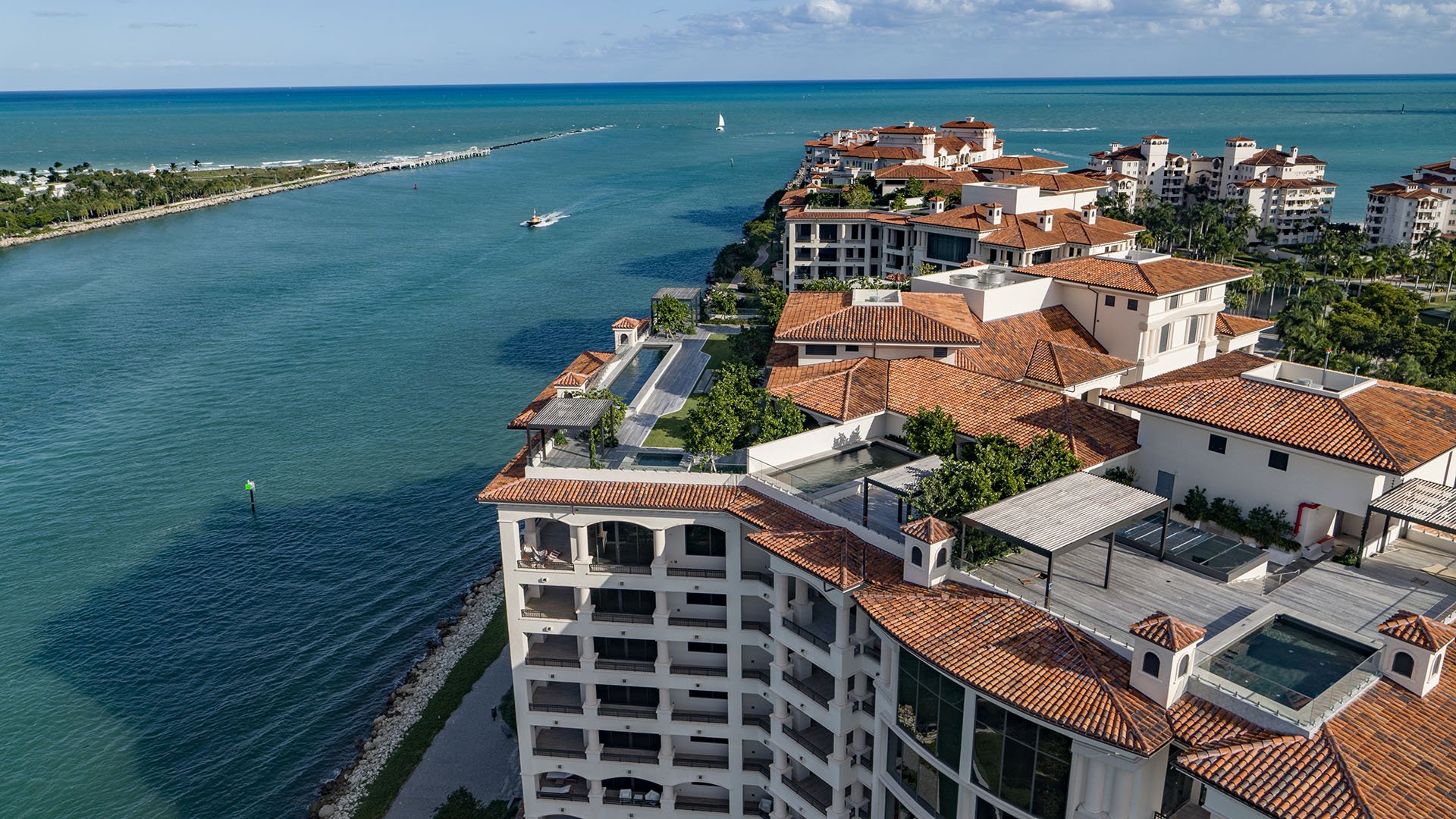
Ask how the room behaves when the view is not the main event. Does the living area still have balance? Can art, lighting, and seating be arranged naturally, or does every decision defer to the glass? In residences such as Palazzo del Sol, buyers often weigh the relationship between interior volume and exterior drama because the best seasonal homes do not depend on a single cinematic angle. They work in layers.
A pied-à-terre should feel open without feeling exposed. This distinction is especially important in a seasonal market where entertaining, family visits, and house staff may all converge within a short window. Study who can see into the primary suite, terrace, kitchen, and main seating areas. Consider not only adjacent residences, but also circulation paths, amenity areas, and evening illumination.
Privacy is not only visual. It is acoustic, logistical, and emotional. A home can have a dazzling outlook and still feel restless if every arrival, service call, or guest movement seems too visible. Conversely, a more restrained view can feel far more luxurious when the plan gives owners a sense of retreat. The better question is not “what can I see?” It is “how do I feel when I am here for two weeks straight?”
Seasonal use has a particular rhythm. You may arrive with luggage, invite houseguests, host dinners, spend long mornings on the terrace, and then leave the residence unoccupied for stretches. The floor plan should anticipate that cadence. Look for a gracious arrival sequence, practical separation between owner and guest spaces, enough storage for repeat use, and a kitchen that suits your real habits rather than an imagined lifestyle.
At Palazzo della Luna, the conversation for many buyers naturally turns to how formal and informal spaces interact. That same discipline should apply at every level of the market. A seasonal residence should not require you to unpack your life each time you return. It should feel as though it has been waiting: ready, orderly, and equipped with the right pieces already in place.
Finishes are seductive because they are immediate. Service is more revealing because it determines how the home behaves over time. Before falling for stone, millwork, or a perfect horizon line, examine how packages are handled, how vendors are coordinated, how guests are received, and how the residence is monitored in your absence. A pied-à-terre can be exquisite and still fail if the operational layer is weak.
This is where a buyer should be quietly demanding. Who has access? How are instructions documented? What happens when a repair is needed while you are away? How easy is it to prepare the home before arrival? Luxury, in this context, is not abundance. It is the absence of friction.
Fisher Island is not a monolith, and the right seasonal property depends on how you want to occupy the island setting. A condominium residence may suit a buyer who values lock-and-leave simplicity, staff support, and a contained footprint. A larger or more estate-like option may suit a family that expects longer stays, multigenerational visits, and a stronger sense of private domain.
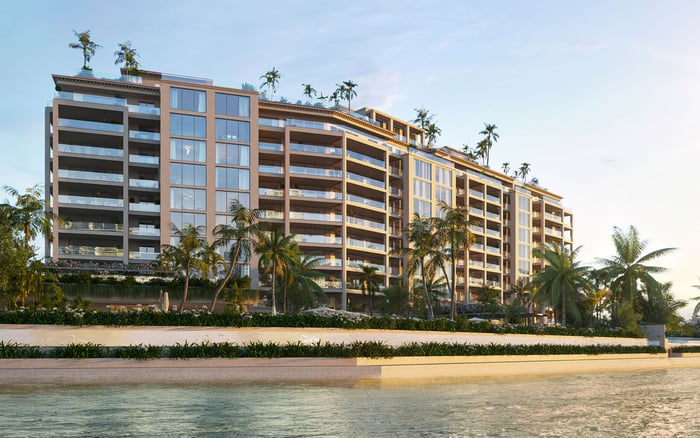
That distinction is why comparisons should include both residence type and lifestyle posture. The Residences at Six Fisher Island may appeal to a buyer thinking about new-generation seasonal ease, while The Links Estates at Fisher Island invites a different conversation around scale, autonomy, and how private outdoor space functions during the season. Neither framework is inherently better. The better choice is the one that reflects your pattern of use with the least compromise.
A pied-à-terre is never only the private interior. It is the path from arrival to elevator, the transition from lobby to home, the route for guests, the feel of common areas, and the quality of everyday discretion. Walk the experience as if you already own there. Imagine arriving after travel. Imagine a guest coming to dinner. Imagine sending staff ahead. Imagine leaving for a month and returning with little notice.
This exercise often reveals more than a specification sheet. The best seasonal homes have a calm continuity between the exterior world and the private residence. Nothing feels improvised. Nothing feels overly public. The ownership experience should be as considered as the architecture.
Terraces sell emotion, but they must also support use. Measure the value of a Balcony by comfort, furnishing depth, shade, wind exposure, privacy, and connection to the main living spaces. If dining outdoors is part of the dream, confirm that the terrace can accommodate it gracefully. If mornings are your priority, study the light. If evenings matter, consider how the space feels after dark.
A terrace that photographs beautifully but cannot be furnished well is a marketing asset, not necessarily a lifestyle asset. The strongest pied-à-terre terraces behave like outdoor rooms, with enough proportion and protection to become part of the daily routine.
Every second home requires some degree of management. The question is whether that burden is acceptable for the pleasure it delivers. Before purchasing, make a private list of what you do not want to think about: furniture protection, storm preparation, vendor access, wardrobe storage, car logistics, guest coordination, or frequent small decisions. Then test the residence and building against that list.
A seasonal purchase should make life feel larger, not administratively heavier. The view may be the reason you asked for the first showing. It should not be the reason you ignore operational complexity.
Return to the residence after the initial showing and resist the urge to stand at the glass. Sit where you would actually sit. Open the doors you would actually use. Walk from the primary suite to the kitchen. Imagine a rainy afternoon, a quiet Sunday, an early departure, and a full house. If the home still feels elegant in those ordinary moments, the view has a better chance of being worthy of the premium.
On Fisher Island, the most rewarding pied-à-terre is not simply the one that dazzles. It is the one that lets the season unfold with grace, privacy, and very little negotiation.
Should a Fisher Island pied-à-terre be judged mainly by the view? No. The view is important, but privacy, service, layout, terrace usability, and ease of seasonal ownership should carry equal weight.
How many times should I visit before deciding? More than once is ideal. Try to experience the residence at different times of day to understand light, glare, privacy, and atmosphere.
What makes a seasonal floor plan successful? It should support easy arrival, guest separation, useful storage, and comfortable daily routines without feeling over-scaled or under-equipped.
Is a larger residence always better for seasonal use? Not necessarily. A smaller, better-serviced residence may outperform a larger home if your stays are shorter and you value simplicity.
How should I evaluate a terrace? Treat it like a real room. Consider furniture depth, shade, wind, privacy, and whether you would use it daily.
Why does service matter so much in a pied-à-terre? Seasonal owners depend on preparation, oversight, and responsiveness when they are away. Good service preserves both time and peace of mind.
What is the biggest mistake buyers make? They fall in love with a single view corridor before testing how the residence performs during ordinary living moments.
Should I compare condominium and estate-style options? Yes. The right format depends on your need for scale, privacy, staff support, and lock-and-leave convenience.
How can I tell if the home will feel private? Study sightlines from neighboring residences, shared areas, terraces, and evening lighting, not just the daytime view.
What should I prioritize if I will use the home only part of the year? Prioritize operational ease, secure absence, durable finishes, storage, and a layout that feels ready the moment you arrive.
For a confidential assessment and a building-by-building shortlist, connect with MILLION.
If branded residences are on your mind — as a home or as an allocation — we would be glad to share what we are seeing, privately.
Begin a quiet conversation