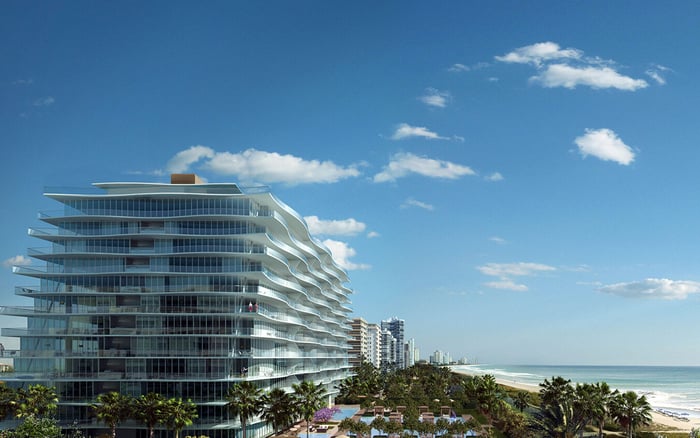
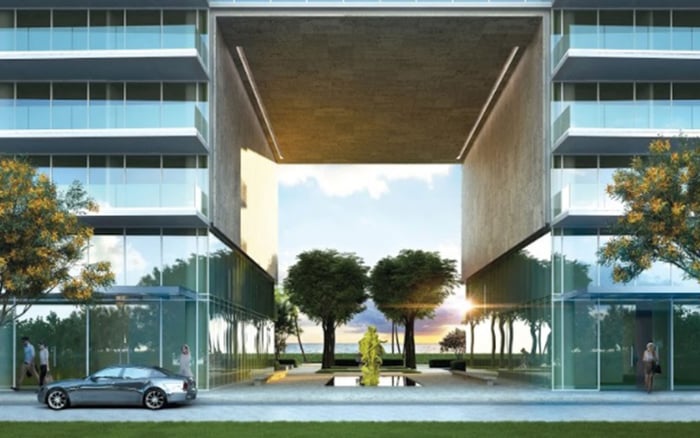
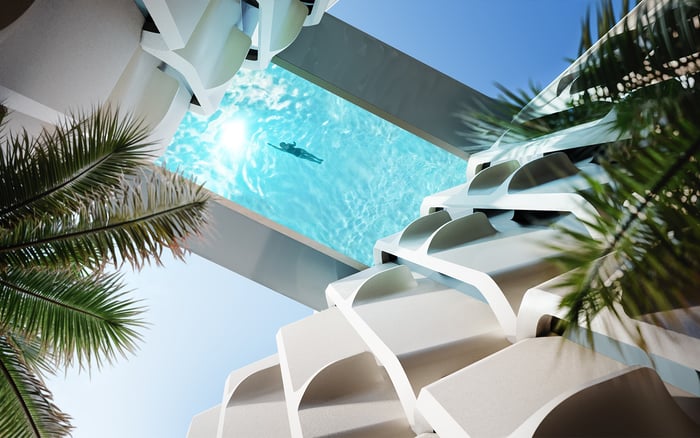
Arte Surfside represents a quieter interpretation of club-adjacent living: boutique, oceanfront, residentially independent, and positioned beside the hospitality energy of Surfside and Bal Harbour without being absorbed into a hotel or club operation.
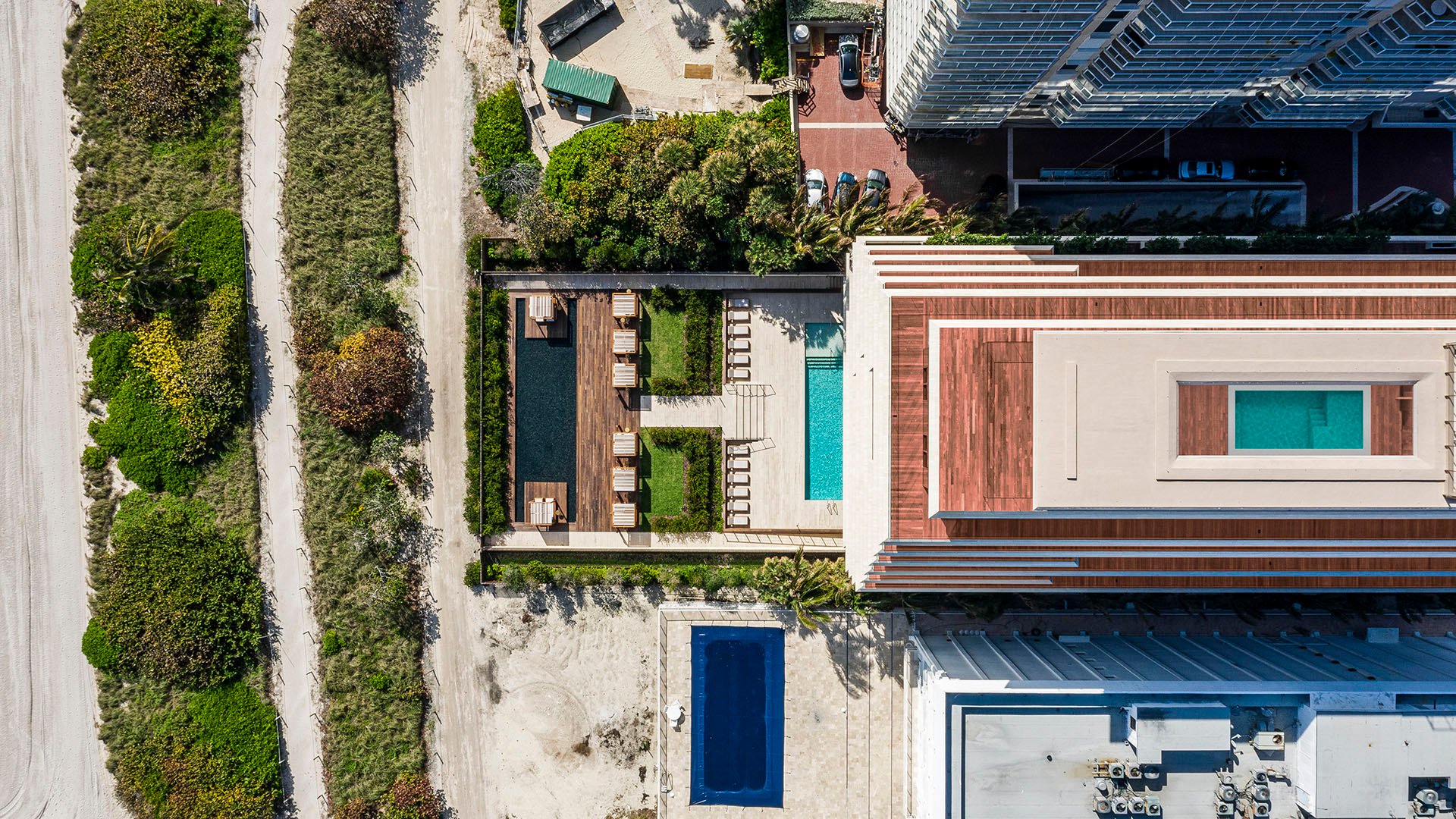
Club-adjacent living is not the same as living inside a club. That distinction matters in Surfside, where luxury buyers increasingly evaluate not only the residence itself, but the social, dining, wellness, and hospitality atmosphere around it. In this context, Arte Surfside occupies a refined lane: private, boutique, oceanfront, and residentially independent.
The appeal is not built on spectacle. Arte Surfside is framed as a boutique oceanfront residential building in Surfside, rather than a full resort-style or club-branded residence. Its relevance comes from adjacency, not absorption. Residents can remain close to the energy of Surfside and Bal Harbour while preserving the feel of a private home base. For buyers who want proximity to a curated luxury environment without living inside a hospitality operation, that separation is the point.
In South Florida, the premium residential map is increasingly shaped by clusters of high-end restaurants, wellness spaces, hotels, private social settings, and design-driven residential buildings. Buyers are not simply purchasing square footage or views. They are choosing a daily radius, a pattern of arrival, a neighborhood tempo, and a degree of exposure.
Surfside and neighboring Bal Harbour now read as a micro-district where residential privacy sits close to luxury hospitality and private-social energy. That does not mean every building must become a branded club or resort. For certain buyers, the more compelling choice is the opposite: a quiet residence close enough to the ecosystem to benefit from it, yet removed enough to avoid its constant movement.
That is where Arte Surfside fits. It offers the sensibility of being beside the scene rather than inside it. The distinction is subtle, but for ultra-premium buyers, subtlety often carries the most value.
Arte’s boutique scale is central to its lifestyle proposition. A controlled-density building naturally creates a different atmosphere from a high-traffic hospitality asset. The experience is less about a constant resort cadence and more about discretion, arrival, and the feeling of returning to a private address.
This is also why Arte should not be forced into the category of branded residences or club-integrated living. Club-integrated residences are typically tied operationally to a hotel, resort, or membership-club brand. Arte’s proposition is more restrained. It belongs to the conversation because it is near the luxury venues and social infrastructure that shape Surfside’s appeal, while remaining residentially independent.
For buyers comparing the area, projects such as Ocean House Surfside and Fendi Château Residences Surfside help illustrate the importance of Surfside’s residential identity. The neighborhood’s best addresses are not defined only by amenity quantity. They are often judged by privacy, architecture, oceanfront presence, and how elegantly they relate to the surrounding luxury environment.
The Arte buyer is not necessarily trying to live at the center of constant activity. The more likely appeal is control. This buyer wants the ability to participate in nearby social and dining energy, then step back into a residence that feels calm, design-led, and separate from the operational tempo of a hotel or club.
That preference is especially relevant in a market where hospitality language has entered almost every segment of luxury real estate. Service, access, wellness, and social programming have become part of the vocabulary. But not every buyer wants the same intensity. Some want the convenience of adjacency without the visibility of full integration.
Arte’s strongest editorial framing is therefore not “Arte as a club.” It is Arte as a private home base beside Surfside’s club-like ecosystem. That makes the building appealing to buyers who value discretion and controlled density more than constant resort activity.
Surfside and Bal Harbour operate as a shared luxury radius in the buyer’s mind. One side contributes residential intimacy and oceanfront calm. The other deepens the sense of curated hospitality, high-end dining, and refined social atmosphere. Together, they create a setting where adjacency becomes part of the value proposition.
A buyer looking north and south across this coastal corridor may weigh Arte’s private character against more buzz-driven or visibly branded models. Nearby, The Delmore Surfside adds to the Surfside conversation, while Rivage Bal Harbour reflects how Bal Harbour continues to occupy a place in the broader ultra-luxury imagination.
The key is not to suggest that these buildings are interchangeable. They are not. The point is that buyers are increasingly thinking in terms of lifestyle ecosystems. They may want the restaurant, the lobby atmosphere, the beach, the wellness routine, and the social convenience nearby, while still wanting home to remain home.
Branded residences can offer a powerful promise: a recognized hospitality or design identity, a service language, and a built-in lifestyle narrative. For many buyers, that is precisely the attraction. But the growth of that category has also created a counter-preference among buyers who want luxury without constant branding, service without overexposure, and access without operational entanglement.
Arte speaks to that quieter preference. Its value is not in trying to replicate a resort. Its value is in giving residents a private residential identity within reach of a luxury hospitality landscape. That positioning can feel especially relevant in Surfside, where the surrounding environment already carries a club-like atmosphere through proximity, dining, and social infrastructure.
In this sense, Arte’s restraint becomes a form of luxury. It does not need to perform as a club because the neighborhood already supplies much of the adjacent energy. The building can remain focused on privacy, design, and residential calm.
For a buyer evaluating Arte Surfside, the central question is not whether the building is the loudest expression of luxury in the area. It is whether its quieter expression is the better fit. The answer depends on lifestyle priorities.
If the priority is immersion in a hotel or club environment, a more integrated model may be more appropriate. If the priority is a private oceanfront residence near Surfside and Bal Harbour’s luxury rhythm, Arte becomes far more compelling. Its strength lies in the balance between access and separation.
That balance is increasingly rare. As South Florida’s luxury market becomes more amenity-rich and brand-driven, buildings that preserve a private residential atmosphere can stand apart precisely because they do less publicly. Arte’s role in the club-adjacent conversation is therefore not secondary. It is a clear alternative: proximity without surrender, social context without constant activity, and luxury that remains discreet.
Is Arte Surfside a club-branded residence? No. Arte Surfside is positioned as a boutique oceanfront residential building, not as a full resort-style or club-branded residence.
What does club-adjacent living mean here? It means living near Surfside and Bal Harbour’s luxury hospitality and social energy without being inside a hotel or club operation.
Why is Arte relevant to this trend? Arte combines private residential identity with proximity to a broader luxury ecosystem, making adjacency part of its appeal.
Is privacy central to Arte’s positioning? Yes. Arte is presented as privacy-forward, with controlled density and a quieter residential character.
How does Arte differ from branded residences? Branded residences are often tied to a hotel, resort, or membership-club identity, while Arte remains residentially independent.
Why does boutique scale matter? Boutique scale supports a calmer, more private atmosphere than a high-traffic hospitality asset.
Is oceanfront living part of the appeal? Yes. Arte is framed as an oceanfront residence, which reinforces its private coastal lifestyle proposition.
How does Bal Harbour influence the conversation? Bal Harbour adds nearby luxury hospitality, dining, and social energy to the broader residential radius.
Who is the likely Arte buyer? The likely buyer values discretion, design, and access to a curated environment without constant resort activity.
What is the simplest way to understand Arte’s position? Arte is best understood as a private Surfside home base beside a club-like coastal ecosystem.
When you're ready to tour or underwrite the options, connect with MILLION.
If branded residences are on your mind — as a home or as an allocation — we would be glad to share what we are seeing, privately.
Begin a quiet conversation