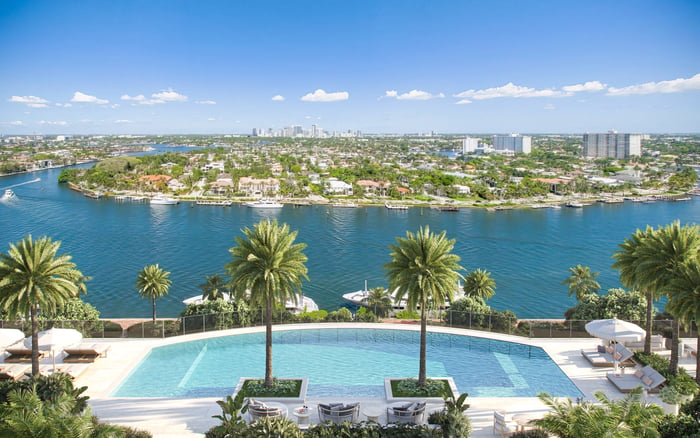
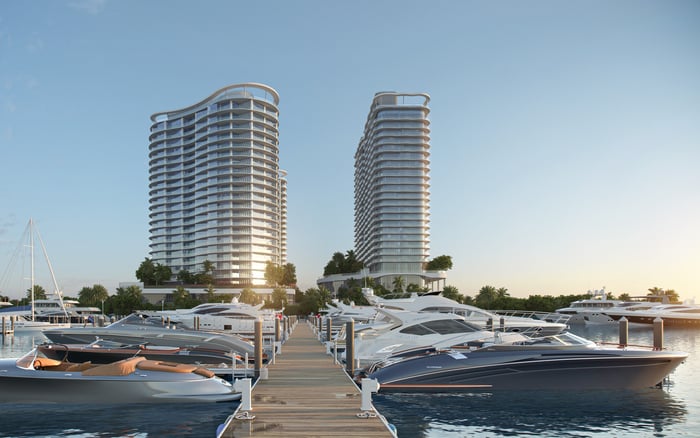
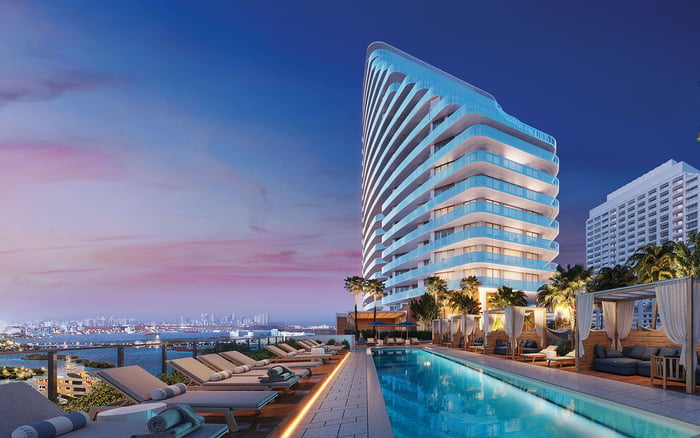
A practical buyer’s guide to evaluating developer delivery risk before committing to Fort Lauderdale luxury pre-construction and new-construction residences.
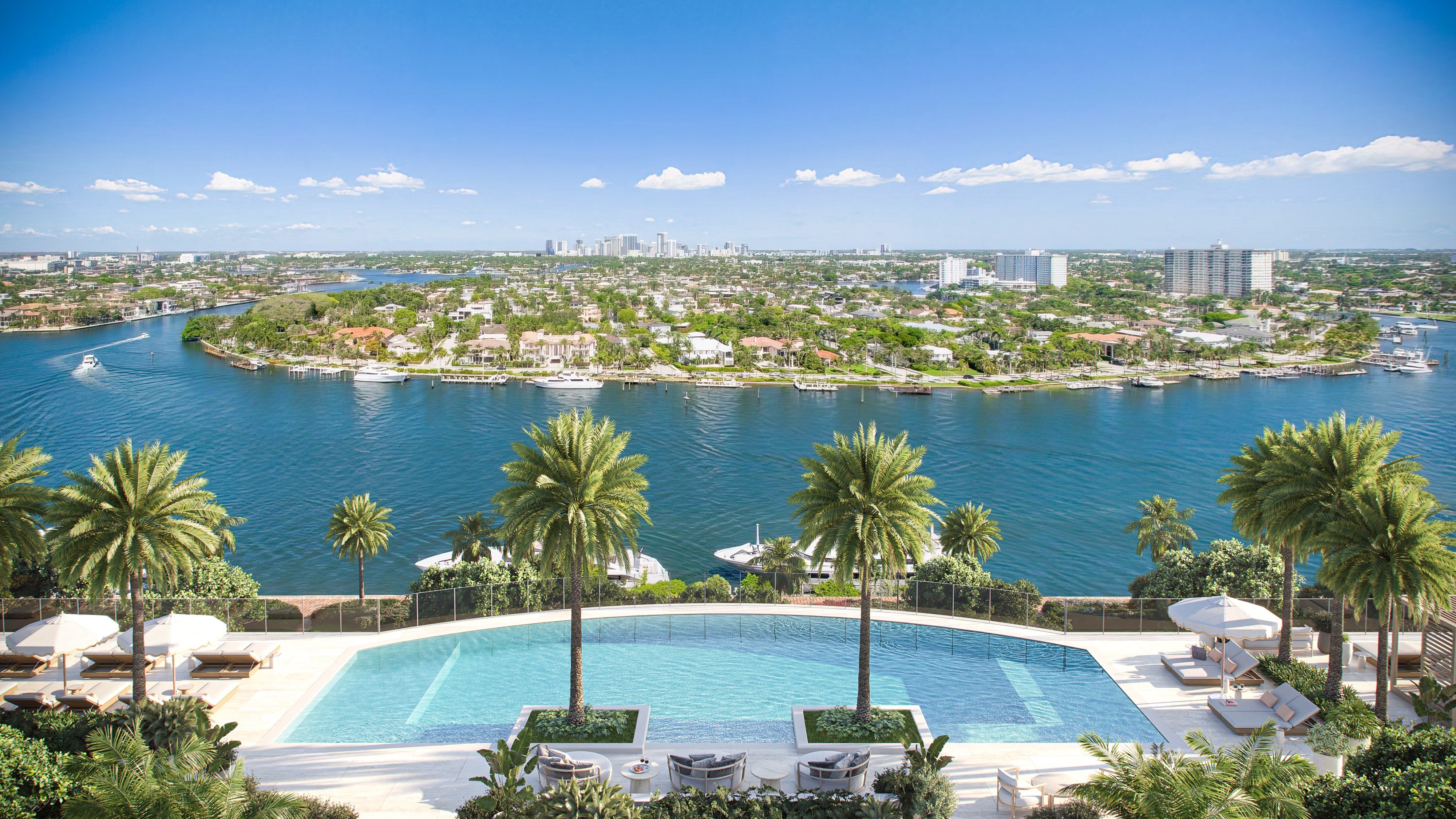
In Fort Lauderdale luxury real estate, the most elegant presentation can make a residence feel inevitable. The waterfront renderings are serene, the lobby is composed, the amenity program is persuasive, and the sales gallery is designed to make the future feel already built. Yet for a buyer committing meaningful capital before completion, one question should sit at the center of the process: what has to go right for this project to be delivered as promised?
Developer delivery risk is not a single concern. It includes non-completion risk, delay risk, specification and value-engineering risk, and operational delivery risk. For ultra-premium buyers, the question is rarely whether a building looks compelling on paper. The question is whether the finished residence, the common areas, the service model, and the closing experience will match the standard implied at purchase.
This is especially relevant in Fort Lauderdale, where waterfront scarcity, branded living, and lifestyle demand have elevated expectations. Buyers comparing St. Regis® Residences Bahia Mar Fort Lauderdale with other coastal opportunities are not simply buying square footage. They are buying confidence in execution.
Begin with the development team. A project may have a celebrated brand, a prominent design voice, or an exceptional address, but delivery ultimately depends on the parties contractually responsible for land, financing, construction, sales, and operations. Ask who the developer is, who controls key decisions, who the general contractor is, and whether the same team has delivered comparable luxury residential work.
The question is not adversarial. It is disciplined. A sophisticated buyer should understand whether the project is led by an experienced sponsor with a history of completing complex residential buildings, or by a thinner platform relying heavily on outside parties. In Broward, where luxury waterfront development often involves demanding sites, tight logistics, and exacting buyers, team depth matters.
Also ask how decisions are made if costs rise, schedules shift, or design conflicts emerge. A beautiful project can still suffer if accountability is diffuse. The most reassuring answer is not a slogan. It is a clear chain of responsibility.
Before becoming absorbed in stone, appliances, ceiling heights, or terrace dimensions, ask how the project is capitalized. Has construction financing been arranged? What conditions must be satisfied before vertical work proceeds? Are buyer deposits held in a manner consistent with the contract? What happens if sales pace, costs, or lending conditions change?
A buyer does not need to become the developer’s banker. But a buyer should understand whether the project has the financial structure to move from concept to completion. In pre-construction purchases, the period between reservation, contract, construction, and closing can expose buyers to changes outside their control. The stronger the capital structure, the less fragile the promise feels.
This is also where counsel should review deposit terms, rescission rights, default provisions, outside closing dates, and remedies. The sales conversation may be gracious, but the contract governs the relationship.
Specification risk is one of the most overlooked delivery issues in luxury real estate. Buyers often focus on the residence plan, the view corridor, and the amenity story. They may spend less time asking what substitutions are permitted, what finishes are fixed, and which elements remain subject to developer discretion.
Value engineering is not automatically negative. Every project evolves. Materials, systems, supply chains, and code requirements can change. The buyer’s concern is whether substitutions may materially alter the quality, character, or value of the residence and shared spaces. Ask which specifications are contractual, which are illustrative, and which are representative only.
For buyers evaluating Riva Residenze Fort Lauderdale or another new-construction opportunity, this line of questioning can be more revealing than a discussion of finishes alone. The goal is to understand the difference between design intent and binding obligation.
Delay risk is not just a matter of inconvenience. For many luxury buyers, timing intersects with school calendars, tax planning, yacht logistics, financing, lease expirations, or the sale of another residence. A six-month shift can be manageable. An open-ended delay can be costly.
Ask for the current construction timeline, the outside date in the contract, and the circumstances that may extend that date. Ask what milestones have already occurred and what must still happen before completion. If a project is earlier in the cycle, ask what approvals, site work, financing, or construction steps remain.
Do not ask only, “When will it be ready?” Ask, “What would cause this date to move, and what protection do I have if it does?” The second question is where the substance lives.
Operational delivery risk begins where construction ends. A residence may be physically complete yet not fully mature as a living environment. Staffing, valet systems, security protocols, amenity rules, association budgets, maintenance standards, and brand-service integration all shape the owner experience.
This is particularly important in branded or hospitality-influenced properties. The promise is not merely architecture. It is choreography. Ask who will manage the building, how service standards will be implemented, what costs are projected, and how early operating budgets may evolve after turnover.
A buyer considering Four Seasons Hotel & Private Residences Fort Lauderdale, for example, should evaluate not only the residence itself but also how the service environment is structured, funded, and governed. In the highest tier of the market, operations are part of the asset.
The most refined sales presentation can still leave important questions unresolved. Review the purchase agreement, condominium documents, budget materials, disclosures, brand or management-related provisions, and any amendment rights. Ask where the developer retains discretion and where the buyer has enforceable rights.
Pay attention to what is described as approximate, proposed, anticipated, conceptual, or subject to change. These words may be reasonable in a development context, but they signal where expectations should be tested. Luxury buyers should not assume that every visual or verbal representation carries the same legal weight.
This is where a calm, meticulous review creates leverage. If the documents support the narrative, confidence increases. If they diverge, the buyer can decide whether the risk is acceptable before committing further.
Delivery risk is most acute before completion, but the buyer’s decision is rarely limited to unfinished product. Fort Lauderdale has completed luxury inventory as well as new offerings, allowing a buyer to compare certainty against potential upside. A completed residence may offer immediate visibility into views, finishes, service, and building culture. A pre-completion residence may offer choice, freshness, and a more tailored entry point, but it asks the buyer to accept more execution risk.
When comparing The Ritz-Carlton Residences® Fort Lauderdale with newer pipeline options, the key is not to declare one category superior. The key is to price certainty. What premium are you paying for immediate clarity? What discount or advantage are you receiving for assuming future delivery risk?
The strongest buyers make this comparison deliberately. They do not treat risk as a reason to avoid a project. They treat it as a variable to underwrite.
Before signing, ask these questions in writing or through counsel: Who is the accountable developer? What is the delivery record of the team? What financing is in place? What approvals and milestones remain? What is the outside completion date? What extensions are permitted? What specifications are binding? What substitutions are allowed? What happens if amenities or services change? Who will operate the building? How are budgets projected? What remedies exist if the project is materially delayed or altered?
The answers will not eliminate risk. They will make it visible. In a market where design, branding, and waterfront positioning can command exceptional premiums, visibility is a form of protection.
What is developer delivery risk? It is the risk that a project is not completed, is delayed, changes materially, or opens with operations below the expected standard.
Is delivery risk only a pre-construction issue? It is most pronounced before completion, but operational delivery can remain relevant after a building opens.
What should I ask before signing a contract? Ask about the developer, financing, construction timeline, allowed changes, outside dates, and buyer remedies.
Can luxury branding reduce delivery risk? Branding may support confidence, but it does not replace review of the developer, contract, budget, and operating plan.
Why do specifications matter so much? Specifications define what is being delivered, and broad substitution rights can affect perceived quality and value.
How should I think about delays? Focus on both the expected completion date and the contractual rights if that date moves materially.
Should I compare pre-construction with completed residences? Yes. Completed residences offer more certainty, while earlier-stage purchases may offer different advantages and risks.
Who should review the documents? A qualified real estate attorney familiar with condominium and luxury development contracts should review them.
What is operational delivery risk? It concerns staffing, service standards, amenity access, budgets, management, and the owner experience after opening.
What is the best way to shortlist comparable options for touring? Start with location fit, delivery status, and daily lifestyle priorities, then compare stacks and elevations to validate views and privacy.
If you'd like a private walkthrough and a curated shortlist, connect with MILLION.
If branded residences are on your mind — as a home or as an allocation — we would be glad to share what we are seeing, privately.
Begin a quiet conversation