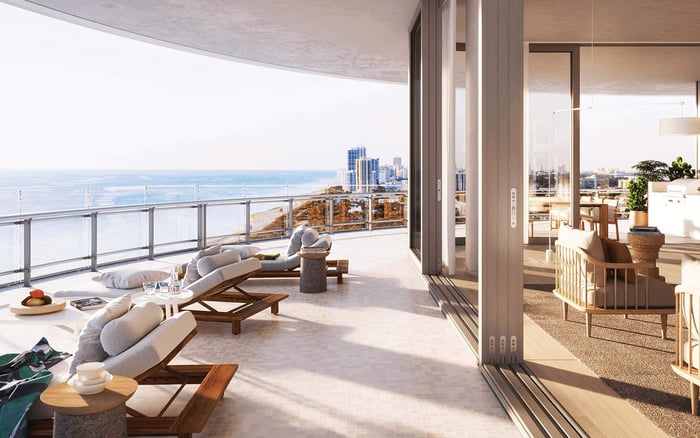
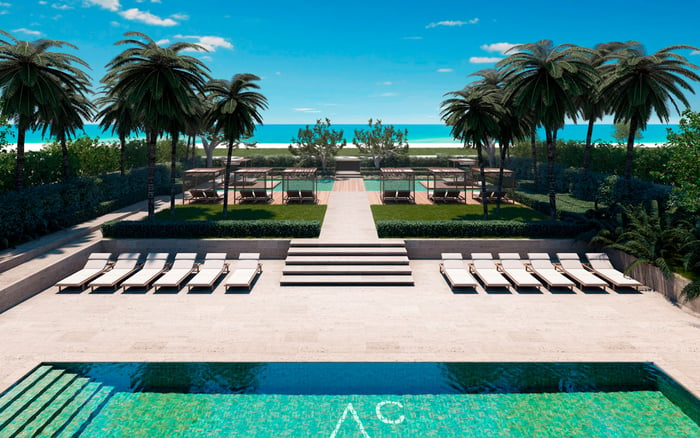
For collectors considering Ocean House Surfside, the Atlantic view is only the beginning. A residence-specific review of daylight, hanging surfaces, HVAC stability, backup power, security, and delivery logistics can reveal whether an oceanfront home will support a collection as elegantly as it displays it.
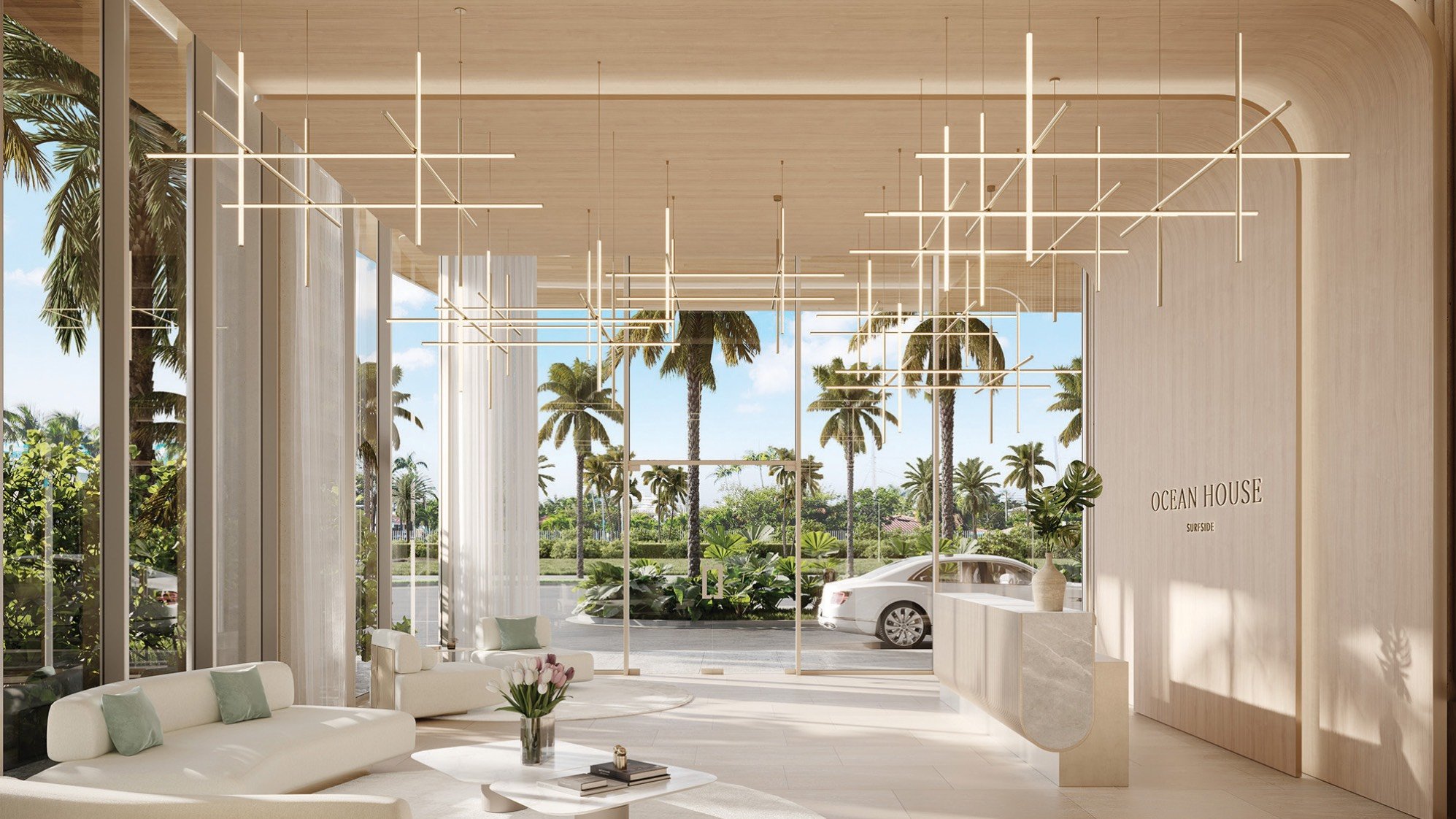
Ocean House Surfside presents a compelling proposition for collectors: a boutique oceanfront condominium in Surfside, with direct Atlantic views and a quieter setting than denser Miami districts. Yet the expansive glazing that creates luminous interiors can also complicate the display and care of art.
For an art-focused buyer, beauty and suitability are separate considerations. The essential test is not whether a residence appears gallery-like during a showing, but whether its light, wall dimensions, mechanical systems, circulation, and operating rules suit the collection. This distinction is especially important for works on paper, photographs, textiles, wood panels, and mixed-media pieces.
Floor-to-ceiling windows provide abundant natural light while reducing conventional wall area. Near ocean-facing glass, reflections from the Atlantic, beach, terraces, and light-colored exterior surfaces may intensify brightness. Conditions shift throughout the day, so a single visit provides only a partial reading.
Before purchasing, map direct sun and reflected light in every prospective display zone. Request the window schedule and confirm impact resistance, UV filtration, tint, and solar-control coatings. Luxury glazing should not automatically be considered conservation-grade protection; supplemental shading and carefully planned artwork placement may still be necessary.
Collectors comparing nearby options such as Arte Surfside should apply the same residence-specific light study rather than draw conclusions from renderings, model units, or building category alone.
Open-plan living may feel generous while offering fewer uninterrupted hanging surfaces than expected. A useful art plan should document usable wall widths and heights, along with switches, outlets, air-conditioning vents, doors, furniture clearances, and circulation paths.
Where conventional walls are limited, potential solutions include freestanding display walls, reinforced partitions, ceiling-mounted systems, or custom millwork. Each intervention should be evaluated for structural suitability and its effect on movement through the home. Large works require more than a visually available plane; they also need secure anchoring, appropriate lighting, and a practical installation route.
This wall-by-wall discipline is equally relevant when evaluating another Surfside residence, including The Delmore Surfside. The floor plan must be tested against the collection-not the reverse.
Large terraces strengthen the indoor-outdoor connection, but they also place interior works near a humid, salt-laden coastal environment. For oceanfront buyers, the mechanical review should be as rigorous as the aesthetic assessment.
Ask whether the residence offers independent HVAC zones and whether temperature and humidity can remain sufficiently stable for sensitive works. Obtain the HVAC specifications rather than rely on general assurances. Vent locations also matter: direct airflow can make an otherwise attractive wall unsuitable for certain objects.
Backup power warrants written clarification. Determine whether an outage supports only common areas or also keeps residential air-conditioning and dehumidification operating. The distinction can be material for a collection. Before a purchase is finalized, a conservator and HVAC engineer can translate the collection's needs into practical performance questions.
Staffed access is only one component of art security. Buyers should review elevator controls, service-entry procedures, camera coverage, contractor access, and the privacy afforded during art deliveries. The objective is a controlled chain of movement from arrival through installation, with unnecessary visibility minimized.
Oversized works introduce another layer of due diligence. Confirm elevator dimensions, loading access, receiving rules, permitted delivery hours, and insurance requirements. A canvas may fit its destination wall yet fail to clear a service corridor or elevator opening. Written procedures are preferable before acquisition or move-in planning begins.
Collectors considering Eighty Seven Park Surfside alongside Ocean House can apply one consistent security and logistics checklist, making comparisons more disciplined and less dependent on presentation.
The strongest approach combines design and architecture review with collection management. Request architectural plans, glazing schedules, HVAC details, generator coverage, condominium rules, elevator measurements, and art-delivery procedures. Then test those materials against a scaled inventory of significant works.
A lighting designer can address illumination and shading. A conservator can identify vulnerable objects and placement risks. A security consultant can examine access, surveillance, and delivery privacy, while an HVAC engineer can assess zoning and environmental stability. This is the practical lens readers expect from buyer's guides: not a promise that one specification suits every collector, but a framework for asking precise questions before committing.
Does Ocean House Surfside provide abundant natural light? Its expansive glazing brings substantial daylight into residences, although conditions should be evaluated in the specific home.
Can floor-to-ceiling windows affect art placement? Yes. They reduce conventional wall area and can expose nearby works to strong, changing daylight.
Should buyers assume the windows provide conservation-grade UV protection? No. Confirm UV filtration, tint, solar-control coatings, and impact specifications in the window schedule.
What should a pre-purchase light study include? Map direct sun, reflected brightness, shading options, display walls, and the position of sensitive works.
How can an open plan accommodate more art? Freestanding display walls, reinforced partitions, ceiling systems, or custom millwork may create additional hanging surfaces.
Why does the coastal setting matter to collectors? Terraces and ocean proximity place interiors near a humid, salt-laden environment, making climate performance important.
What HVAC questions should a collector ask? Verify independent zoning and whether temperature and humidity can remain sufficiently stable for the collection.
Why is backup-power coverage important? Buyers should determine whether residential HVAC and dehumidification continue operating during an outage.
Which security details deserve review? Examine elevator controls, service access, cameras, contractor procedures, and privacy during art deliveries.
What can prevent an oversized work from reaching the residence? Elevator dimensions, loading access, corridors, receiving rules, delivery hours, and insurance requirements can all affect installation.
For a confidential assessment and a building-by-building shortlist, connect with MILLION.
If branded residences are on your mind — as a home or as an allocation — we would be glad to share what we are seeing, privately.
Begin a quiet conversation