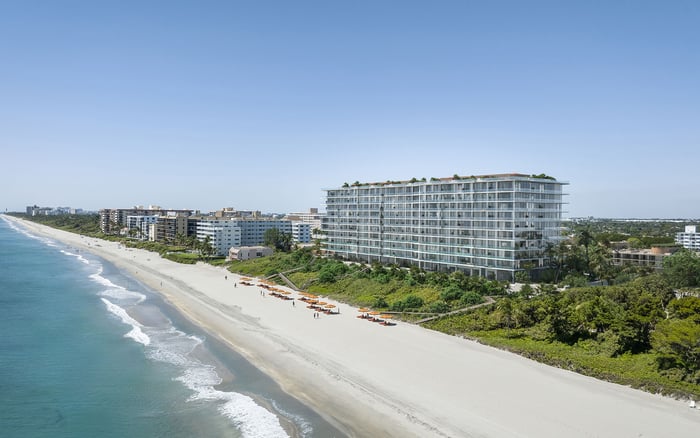
A luxury buyer’s guide to reviewing condominium documents in Pompano Beach, with a focus on governance, reserves, inspections, insurance, assessments, use rights, and the fine print that shapes long-term ownership.

In Pompano Beach, luxury condominium buying is rarely just about a view, a floor plan, or a private elevator arrival. It is about the legal and operating architecture behind the lifestyle. The condominium documents define what you own, what you share, what you pay for, how you may use the residence, and how the building may respond to repairs, insurance pressures, and governance decisions.
For buyers comparing oceanfront residences such as Armani Casa Residences Pompano Beach or The Ritz-Carlton Residences® Pompano Beach, the document review deserves the same seriousness as the contract price. The marketing may describe a resort-caliber life. The documents explain whether the association’s finances, reserves, rights, rules, and responsibilities support the ownership experience you expect.
Your first question should be simple: have I received every required condominium document, and when does my review period begin and end? Ask for the declaration of condominium, articles of incorporation, bylaws, rules and regulations, current budget, financial statements, insurance information, meeting minutes, and any disclosure materials tied to the purchase.
The timing matters. Review rights and cancellation questions can depend on the transaction structure, the documents delivered, and whether the purchase is a resale or a developer sale. A buyer reviewing a completed residence may not be working from the same disclosure framework as a buyer reviewing a new-construction offering. Before you fall in love with a terrace, confirm what was delivered, what remains missing, and who is responsible for answering document questions before the deadline.
For new or large condominium projects, ask whether an offering package, prospectus-style disclosure, or developer document set applies. These materials can be especially revealing because they may describe budgets, amenities, project terms, and rights reserved by the developer.
The declaration should make clear what is included in the unit and what is treated as a common element or limited common element. In a luxury Pompano Beach building, that distinction can affect balconies, terraces, parking, storage, docks, cabanas, elevator lobbies, and exclusive-use areas.
Ask whether the parking space is deeded, assigned, licensed, or subject to association control. Ask the same question about storage, beach facilities, marina access, and cabanas. If a sales presentation highlights a lifestyle feature, the document review should reveal whether that feature is an ownership right, a use right, a revocable privilege, or a shared amenity governed by rules that may change.
This becomes particularly important when comparing properties such as Waldorf Astoria Residences Pompano Beach, where branded-service expectations may shape the buyer’s assumptions, with boutique or smaller-scale buildings where governance and cost allocation can feel more direct.
The annual budget is one of the most important documents in the entire package. Ask whether it separately identifies operating expenses, reserve funding, and planned capital projects. Then ask whether reserves are fully funded, partially funded, waived, or reduced. Reserve decisions can affect future owner obligations, especially when major work is needed.
A polished lobby can mask future costs. Ask what expenses are common expenses and what expenses remain the responsibility of individual unit owners. Cost allocation is controlled by the governing documents, and small distinctions can become meaningful when the building faces insurance increases, concrete restoration, roof work, elevator modernization, waterproofing, window systems, or other capital needs.
Special assessments deserve direct questioning. Do not ask only whether an assessment has been approved. Ask whether one has been proposed, discussed in board meetings, expected by management, or tied to reserve shortfalls, repair planning, insurance conditions, or deferred maintenance. A luxury buyer should understand whether the monthly carrying cost reflects the true cost of maintaining the building.
For coastal condominium towers, structural review is part of prudent ownership due diligence. Ask whether any structural reserve study, engineering report, inspection report, repair plan, or building-condition assessment exists. If reports are available, review them with qualified advisors before your document review period expires.
Ask whether the building has recently completed or is approaching any required inspection, engineering review, or major repair cycle. If reports identify follow-up work, ask how the board plans to fund it, whether reserves are expected to cover the work, and whether owners may be asked to contribute through assessments or budget increases.
This is not a pessimistic exercise. It is a luxury standard. A residence can be beautifully designed and still sit within an association that must solve expensive engineering questions. The stronger the documentation, the more confidently a buyer can understand the ownership horizon.
Recent board and membership meeting minutes can reveal what polished presentation materials cannot. Ask for written board records, accounting records, contracts, bids, inspection materials, insurance documents, and relevant association correspondence that can be reviewed during due diligence.
Minutes may show disputes, owner complaints, contractor delays, deferred maintenance, insurance concerns, litigation, or assessment discussions. They may also show a board that is proactive, disciplined, and transparent. Either way, they give texture to the building’s culture.
For buyers considering Ocean 580 Pompano Beach or W Pompano Beach Hotel & Residences, the question is not only whether the building offers the right lifestyle. It is whether the association’s records support the operating model buyers expect in a high-service coastal property.
Ask what insurance the association carries and how the cost is reflected in the budget. Coverage questions may include windstorm, casualty, flood-related exposures, directors and officers coverage, and fidelity bonding where applicable. Insurance is not merely a line item. In coastal ownership, it is central to risk management and budget stability.
Rules deserve equal attention. Ask about restrictions on leasing, short-term rentals, pets, renovations, guest use, parking, elevator reservations, beach service, marina use, and amenity access. Then ask how the documents can be amended after closing. A rule that feels acceptable today may become more restrictive, or more permissive, if amendment procedures allow meaningful changes.
Mixed-use arrangements require special care. If a building includes or shares facilities with hotel, restaurant, marina, commercial, or beach-club components, ask who controls those facilities, how costs are allocated, and whether owners have guaranteed access or conditional access. A luxury buyer should be comfortable not only with the amenity itself, but with the legal structure behind it.
Ask whether the developer still controls the association or whether control has transitioned to unit owners. Turnover status can affect budgets, records, warranties, governance, and owner oversight. In developer-controlled settings, review management contracts, service agreements, valet arrangements, security contracts, elevator contracts, beach-service agreements, and amenity contracts with particular care.
The service level expected in Pompano Beach luxury real estate must be financially sustainable. A building can promise white-glove operations, but the documents and contracts reveal how that service is paid for and who has authority to change it.
Finally, ask about pending litigation or formal disputes involving the association, developer, contractors, insurers, owners, or shared facilities. The presence of a dispute is not automatically disqualifying, but it should be understood before closing because it may affect financing, reserves, disclosure, and buyer confidence.
What documents should I ask for first? Ask for the declaration, articles, bylaws, rules and regulations, financial statements, budget, insurance information, minutes, and any disclosure documents tied to the purchase.
Does the review period differ for resale and developer purchases? It can. Ask your attorney or advisor how the transaction structure affects document delivery, review timing, and any cancellation rights.
Why does the declaration matter so much? It defines the unit, common elements, limited common elements, expense allocation, and key use rights that shape daily ownership.
Should I ask about reserves before making an offer? Yes. Reserve funding can signal whether the association is preparing for future repairs or may need assessments later.
What should I ask about engineering or inspection reports? Ask whether any structural, engineering, inspection, or repair reports exist and whether they identify future work or funding needs.
Why are building-condition questions important in Pompano Beach? Coastal buildings can face complex maintenance, waterproofing, insurance, and repair considerations, so document-based diligence is essential.
Are meeting minutes really worth reviewing? Yes. Minutes can reveal assessments, disputes, maintenance concerns, insurance issues, contractor problems, and governance culture.
What rules matter most for luxury buyers? Leasing, pets, renovations, guest access, parking, elevator use, beach service, marina access, and amenity rules should all be reviewed.
Should I worry about mixed-use buildings? Not automatically. The key is understanding who controls shared facilities, how costs are allocated, and whether owner access is clearly protected.
When should I involve an attorney or advisor? Involve qualified counsel and experienced advisors before your review period expires, especially when budgets, reserves, inspections, or governance issues are complex.
For a confidential assessment and a building-by-building shortlist, connect with MILLION.
If branded residences are on your mind — as a home or as an allocation — we would be glad to share what we are seeing, privately.
Begin a quiet conversation