A Miami penthouse may feel private in plan yet exposed in practice. Before contract, buyers should test neighbor sightlines from terraces, bedrooms, pools, and living spaces, then address view, privacy, lighting, and future development questions with disciplined diligence.
A penthouse purchase in Miami is rarely only about square footage, ceiling height, or the drama of an arrival sequence. At the top of the market, the most important questions are often quieter: who can see you, from where, at what time of day, and how will that change after you close?
Neighbor sightlines are the invisible architecture of privacy. A residence can be elevated, expensive, and impeccably finished while still sitting in the direct visual path of another tower, hotel suite, amenity deck, rooftop bar, or future building. For buyers who value discretion, that detail belongs in the contract conversation before enthusiasm becomes obligation.
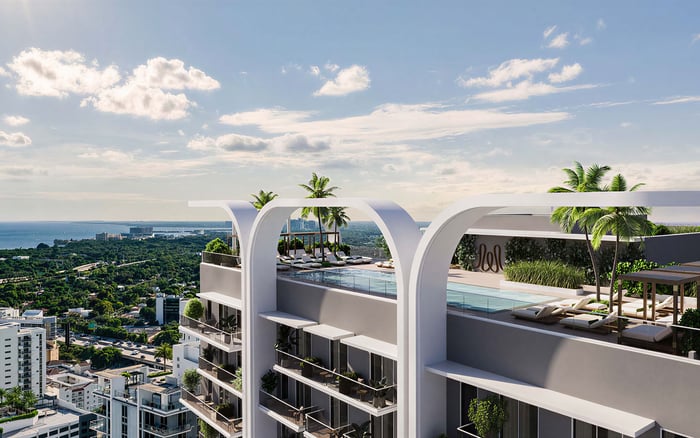
The issue is not simply whether a view is beautiful. It is whether the view cuts both ways. In Brickell, along the waterfront, and across Miami’s high-rise corridors, glass-on-glass living means a spectacular panorama may come with an unexpected audience. High floors can reduce street exposure, but they do not automatically solve lateral visibility from neighboring buildings of similar height.
Most buyers tour a penthouse by looking outward. The better exercise is to reverse the perspective. Ask your advisor to identify the neighboring buildings, amenity levels, and rooflines that face the residence. Then ask what those vantage points can see into: the primary suite, bath, dressing room, living salon, outdoor kitchen, plunge pool, or terrace.
The question should be precise. “Is it private?” is too general. Instead, ask whether someone in a neighboring unit can see a seated dining area, a bed wall, a bathroom window, or a pool lounger. Ask whether the line of sight is direct, partial, oblique, or possible only from certain corners. A modest angle can be manageable. A direct, eye-level corridor across glass can change how the residence is lived.
In ultra-prime homes, privacy is strongest when the plan anticipates everyday behavior. Where will guests gather before dinner? Where will morning routines take place? Which doors remain open in the evening? Sightline diligence should follow the rhythm of the household, not just the geometry of the floor plan.
Sightlines shift dramatically after sunset. During the day, reflective glass may obscure interior views. At night, illuminated rooms can become visible from afar, especially when surrounding towers are dark. A buyer should understand the residence in multiple light conditions rather than relying on one polished afternoon showing.
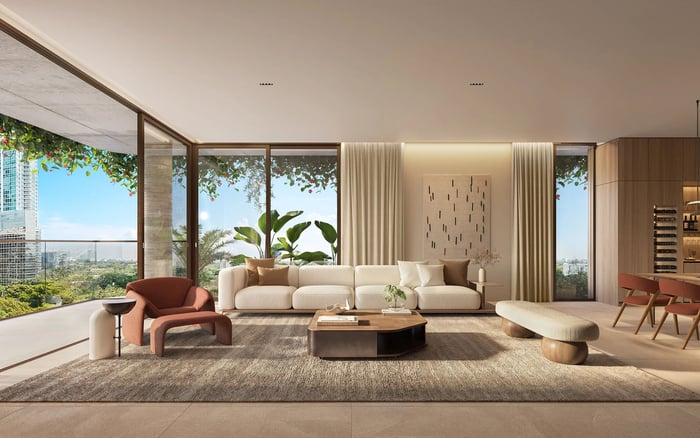
For waterview residences, the eye naturally moves toward bay, river, or ocean exposures. Yet the strongest privacy concern may come from the side elevation, not the primary view. A living room that feels cinematic toward the water may be open to a neighboring stack at dusk. Likewise, a bath or wardrobe area may seem discreet until interior lighting reveals it clearly from another building.
Ask about window treatments, glass specification, lighting design, and the practical use of shades. Motorized privacy is useful only if it aligns with how the owner wants to live. If the best solution requires shades closed every evening, that should be evaluated before contract, not discovered after move-in.
Outdoor space is a defining luxury in Miami, but it is also where sightlines become most personal. A terrace can be visually exposed from above, across, or even below, depending on setback, railing design, and neighboring amenity decks. Buyers should stand at every outdoor zone and ask what is visible from adjacent towers.
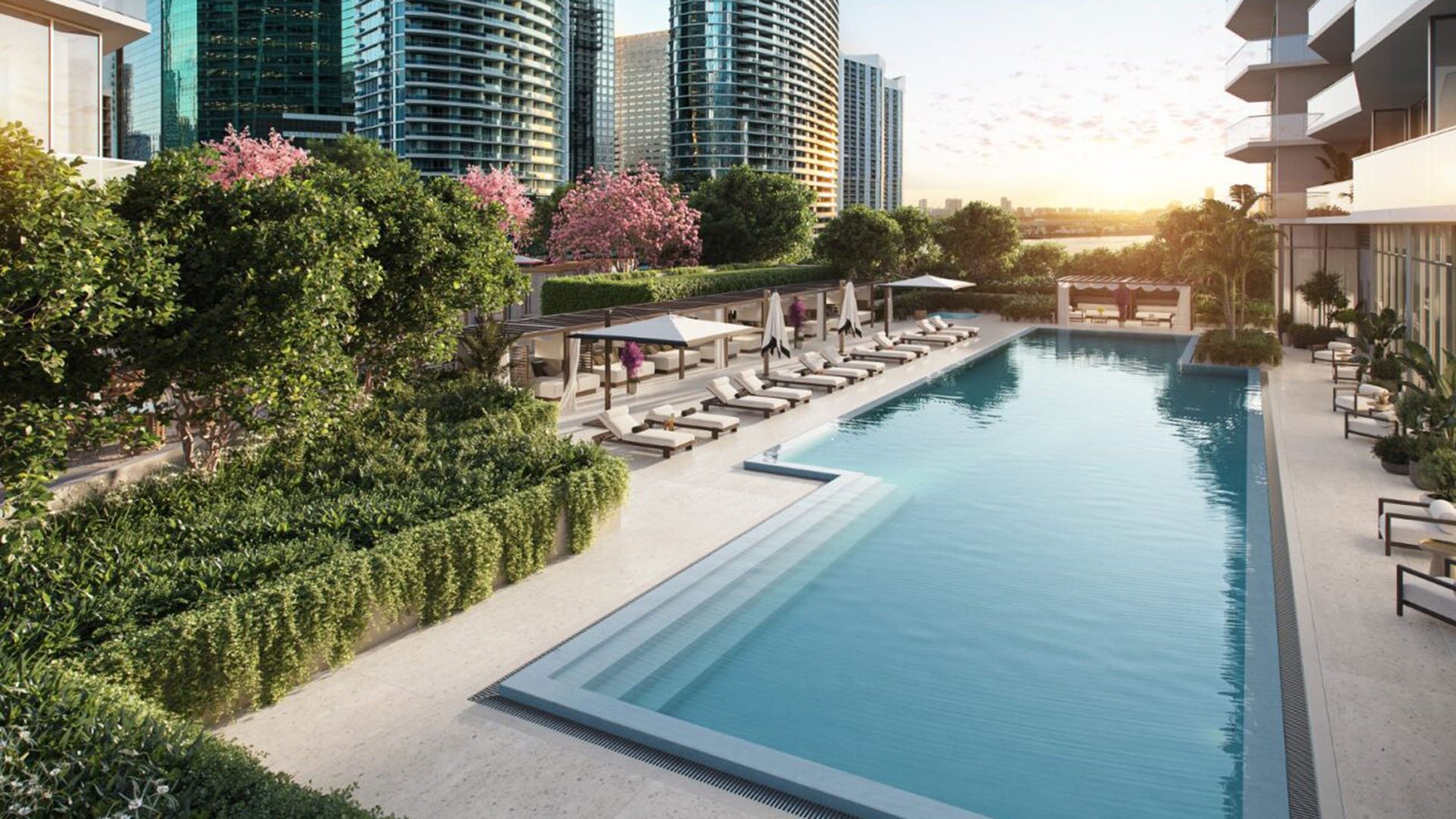
Pool privacy requires particular scrutiny. The relevant question is not whether the pool is high in the sky. It is whether the pool deck is shielded from neighboring bedrooms, hotel rooms, rooftop lounges, or shared amenities. The same applies to summer kitchens, dining terraces, lounge platforms, and wellness areas.
Planting, pergolas, privacy screens, and furniture placement can soften exposure, but they should not be treated as afterthoughts. If screening becomes necessary, ask whether it is permitted, whether it affects views, whether it is consistent with building rules, and whether it can withstand the coastal environment. A beautiful outdoor room should feel deliberate, not improvised.
The most elegant view today may be affected by tomorrow’s construction. New-construction buyers should ask not only about the completed building but also about surrounding parcels, height potential, and likely view corridors. Resale buyers should ask the same questions with equal discipline, particularly in neighborhoods where development patterns are still evolving.
Future sightline risk is different from ordinary view risk. A new tower might not fully block a panorama, yet it could introduce direct visibility into living areas or bedrooms. That distinction matters. A partial view obstruction may be tolerable if privacy remains strong. A new neighbor at a similar elevation, aligned directly across a glass wall, can be more disruptive to daily life.
Before contract, ask for a clear explanation of known adjacent development conditions, expected orientations, and the relationship between your residence and nearby buildable sites. The goal is not to eliminate every unknown. It is to avoid buying a sense of seclusion that depends on vacant land remaining vacant.
Penthouse buyers should move sightline diligence from conversation into written requests. Ask for floor plans with orientation, terrace layouts, window and door locations, neighboring building context, and any available diagrams that clarify exposure. If the residence is not yet complete, ask how the finished condition will differ from renderings, model residences, or sales-gallery impressions.
Also ask about building rules that affect privacy upgrades. Can exterior shades be installed? Are balcony screens restricted? Are planters allowed at meaningful height? Can lighting be modified to reduce nighttime visibility? Can interior designers add privacy films or drapery tracks without affecting warranties or association standards?
For a fully furnished or designer-ready residence, evaluate how the interior layout responds to sightlines. The placement of a bed, soaking tub, dining table, desk, or art wall can either protect privacy or expose it. In luxury real estate, furniture is not merely decorative. It is part of the privacy strategy.
Sophisticated buyers understand that privacy is both a lifestyle attribute and a future market consideration. A penthouse with protected exposures, layered outdoor privacy, and disciplined interior planning can feel more composed over time. A residence with unresolved sightlines may require compromises that become apparent only after the first dinner party, the first overnight guest, or the first evening with every light on.
The best approach is calm, specific, and early. Stand where life will happen. Look outward, then imagine who is looking back. Ask about today’s neighbors and tomorrow’s possibilities. In Miami’s vertical luxury market, altitude is only the beginning. The true measure of a penthouse is not just what it sees, but how gracefully it protects the life inside.
Why do neighbor sightlines matter for Miami penthouse buyers? They affect privacy, daily comfort, and how confidently the residence can be used with lights on, doors open, or guests outside.
Are higher floors always more private? No. High floors can reduce street-level exposure, but nearby towers, rooftop amenities, and similar elevations can still create direct views.
What rooms should buyers examine first? Start with the primary suite, bath, dressing areas, living room, dining zone, pool deck, and any terrace designed for entertaining.
Should sightlines be reviewed at night? Yes. Interior lighting can make rooms more visible after sunset, even when daytime glass reflection feels protective.
Can window treatments solve most privacy issues? They can help, but they may also reduce the open, view-driven lifestyle that attracted the buyer in the first place.
What is the biggest outdoor privacy concern? Pool decks and lounge terraces often need the closest review because they are used for personal routines and entertaining.
How should buyers think about future construction? Ask whether nearby sites could introduce new eye-level neighbors, not only whether they could affect the outward view.
Do building rules matter for privacy upgrades? Yes. Association standards may limit screens, planters, exterior shades, films, lighting changes, or other visible alterations.
Is a waterview residence automatically more protected? Not necessarily. The main view may be open while side exposures create visibility from adjacent buildings.
When should these questions be asked? They should be raised before contract, while the buyer still has leverage to clarify, negotiate, or walk away.
For a discreet conversation and a curated building-by-building shortlist, connect with MILLION.
If branded residences are on your mind — as a home or as an allocation — we would be glad to share what we are seeing, privately.
Begin a quiet conversation