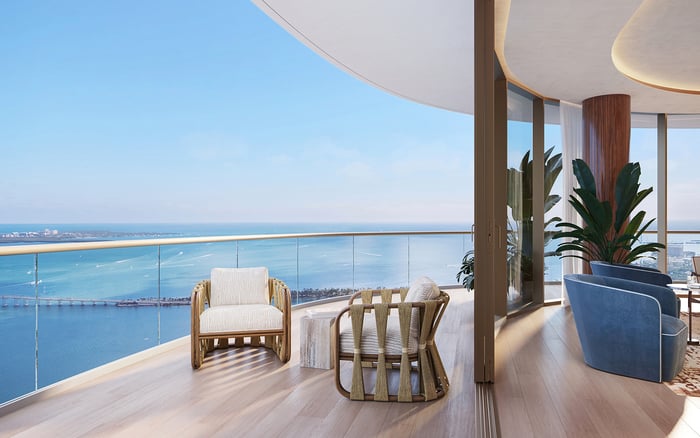
A buyer-focused editorial comparison of penthouse storage priorities at Brickell Heights and Richmond House Miami, emphasizing circulation, wardrobes, service areas, terraces, and the quiet details that preserve a high-floor residence’s elegance.

In a Miami penthouse, storage is not a secondary convenience. It is one of the clearest measures of whether a residence can support the rhythm of a polished life. The question is not simply how many closets appear on a floor plan, but whether the home can absorb arrivals, entertaining, wardrobe rotation, luggage, outdoor furnishings, seasonal objects, deliveries, pets, and daily maintenance without visual friction.
That makes the comparison between Brickell Heights and Richmond House Miami especially useful for buyers looking beyond views and finishes. A penthouse can feel extraordinary during a first showing, then reveal its limits in the first month of ownership if there is no disciplined place for coats, shoes, barware, linens, cleaning tools, technology, terrace cushions, and the practical pieces that make daily life seamless.
For South Florida’s high-end buyer, functional storage is also a design issue. The best solutions are quiet. They protect clean sight lines, preserve volume, and allow the owner to entertain without the home feeling over-managed. In that sense, storage is not the opposite of luxury. It is the infrastructure that allows luxury to look effortless.
When comparing Brickell Heights and Richmond House Miami, the most productive approach is to walk each penthouse as a sequence rather than a set of rooms. Begin at the private or shared arrival point, then move through the kitchen, living area, bedroom wing, terrace access, service zones, and back-of-house functions. A beautiful plan can disappoint if these transitions create clutter at the wrong moments.
At Brickell Heights, buyers will often focus first on the energy of the surrounding Brickell lifestyle and the experience of elevation. Yet the more important question inside the residence is how the plan handles compression. Where do keys, bags, umbrellas, shoes, dog leashes, and packages go before they enter the main living volume? If the first impression opens directly into a view-oriented room, the storage solution needs to be especially discreet.
Richmond House Miami should be evaluated with the same discipline. The name on the building matters less, from a storage standpoint, than the relationship among entry, kitchen, bedrooms, baths, laundry, and outdoor space. A penthouse that places storage in intuitive locations will live larger than one that simply adds oversized closets in isolated corners.
The strongest comparison is therefore not a binary verdict. It is a buyer’s test: which residence lets the owner move through the day with fewer interruptions, fewer visible objects, and less reliance on off-site storage?
The entry sequence is the first storage checkpoint. In a primary penthouse, the arrival area should do more than frame a view. It should give the owner an elegant place to decompress. A shallow architectural cabinet, concealed coat storage, a niche for deliveries, and a surface for small personal items can dramatically change how the home feels.
A common mistake is treating the foyer as purely ceremonial. In practice, the foyer is operational. It receives guests, groceries, flowers, luggage, dry cleaning, catering, and everyday accessories. If these items immediately migrate to the kitchen island or dining table, the layout is asking the public rooms to perform too many jobs.
For buyers comparing Brickell Heights and Richmond House Miami, the test is simple. Enter as if returning from travel, not as if touring with a brochure. Ask where luggage pauses. Ask whether a handbag can disappear without crossing the main entertaining space. Ask whether a guest’s coat has a dignified place that does not interrupt the architecture.
In penthouse living, the kitchen often performs two roles: daily workspace for private use and entertaining support zone when guests arrive. Storage determines whether that dual role is graceful. A large island is appealing, but without proper cabinet depth, pantry logic, and appliance placement, it can become a staging surface rather than a finished design moment.
The best penthouse kitchens separate visible beauty from concealed capacity. Display shelves may hold selected objects, while deeper cabinetry handles cookware, service pieces, small appliances, and bulk storage. If a plan includes a pantry or service-adjacent storage, the buyer should assess whether it is close enough to matter. A pantry that requires awkward circulation during a dinner party may not function as well as it appears.
For Richmond House Miami and Brickell Heights alike, the question is not whether the kitchen photographs well. It is whether the kitchen can reset quickly after breakfast, host cocktails without exposed utility items, and support a catered evening without every surface becoming active at once.
Bedroom storage is where penthouse living becomes personal. A primary suite should accommodate more than hanging garments. It should account for shoes, bags, accessories, luggage, seasonal clothing, linens, jewelry storage, laundry flow, and the owner’s preference for dressing in privacy.
A walk-in closet is not automatically superior. Proportions, lighting, corners, door swings, and circulation matter. A long, narrow closet can be less useful than a smaller, better organized dressing area. Buyers should look for walls that can accept built-ins, sufficient clearance for drawers, and a natural relationship among closet, bath, and bedroom.
Secondary bedrooms deserve equal scrutiny. In a penthouse, these rooms may function as guest suites, offices, wellness rooms, or staff accommodations depending on the owner’s lifestyle. Storage flexibility protects future value because it allows the residence to adapt without immediate renovation.
This is also where terms such as high-floor living, water views, terraces, Brickell, and penthouse design should be translated into lived experience. A view may sell the room, but storage determines whether the room remains serene after six months of use.
A terrace can be one of the defining pleasures of a Miami penthouse, but outdoor living introduces its own storage demands. Cushions, covers, planters, serving pieces, candles, outdoor games, and cleaning supplies need a logical home. If the terrace has no clear storage relationship to the interior, those items often drift into closets intended for wardrobe or linens.
Buyers should consider how often the terrace will be used and for what purpose. Morning coffee has different storage needs than outdoor dining. A lounge-oriented terrace may need concealed space for soft goods, while an entertaining terrace may require proximity to glassware, serving trays, and refrigeration inside.
The key is to avoid treating outdoor storage as an afterthought. In South Florida, where exterior space can be integral to the daily routine, the line between interior and exterior storage should feel deliberate. A penthouse that supports terrace living cleanly will usually feel more complete than one that relies on improvisation.
Luxury homes are maintained, not merely occupied. That makes utility storage critical. Laundry areas, mechanical closets, cleaning supply storage, smart-home equipment, owner’s closets, and service access all affect how quietly the residence can operate.
In a penthouse comparison, these zones are easy to overlook because they are rarely the emotional center of a showing. Yet they often determine long-term comfort. A well-positioned laundry area reduces circulation conflicts. A proper cleaning closet prevents supplies from invading the kitchen or bath. A protected technology area keeps routers, controls, and charging equipment from cluttering millwork.
For owners who travel frequently, secure owner storage may also matter. The residence should be able to hold personal effects elegantly during absences, especially if family, guests, or staff will use the home at different times. The more complex the household pattern, the more valuable invisible storage becomes.
The most effective way to compare Brickell Heights and Richmond House Miami is to conduct a storage-focused walkthrough after the first visual impression has passed. Open every closet. Stand inside the wardrobe areas. Trace the path from elevator to kitchen with groceries. Imagine arriving with luggage. Consider where holiday items, art crates, wine accessories, pet supplies, beach gear, and terrace pieces would live.
Then separate what is built in from what would require customization. Some penthouses offer excellent bones but need bespoke millwork to perform at the highest level. That can be a virtue if the owner wants a tailored home, but it should be priced and planned from the beginning.
Finally, judge storage by discretion. The most refined penthouse layouts do not announce how hard they are working. They allow the eye to move toward light, proportion, material, and view while the practical architecture of daily life remains quietly in place.
What is the most important storage area in a penthouse? The entry sequence is often the most important because it controls clutter before it reaches the main living areas.
Should buyers prioritize closet count or closet quality? Closet quality matters more than count. Proportion, access, lighting, and location determine how useful storage feels.
How should Brickell Heights and Richmond House Miami be compared? Compare them by daily circulation, not just room dimensions. The better layout will make routine movement feel more natural.
Why does terrace storage matter in Miami? Terrace living often requires cushions, covers, serving pieces, and cleaning items. Without storage, those objects move indoors.
Can millwork solve a weak storage plan? Bespoke millwork can improve many spaces, but it cannot fully correct poor circulation or badly placed service zones.
What should buyers inspect during a showing? Open closets, test door swings, study laundry placement, and imagine arriving with luggage, groceries, and guests.
Is a large walk-in closet always better? Not always. A smaller dressing area with better proportions and drawer capacity can be more functional.
How does storage affect resale value? Thoughtful storage broadens the home’s appeal because it supports different lifestyles without immediate renovation.
What is often overlooked in penthouse storage? Utility storage is often overlooked, including cleaning supplies, technology equipment, and laundry support.
What is the best way to shortlist comparable options for touring? Start with location fit, delivery status, and daily lifestyle priorities, then compare stacks and elevations to validate views and privacy.
To compare the best-fit options with clarity, connect with MILLION.
If branded residences are on your mind — as a home or as an allocation — we would be glad to share what we are seeing, privately.
Begin a quiet conversation