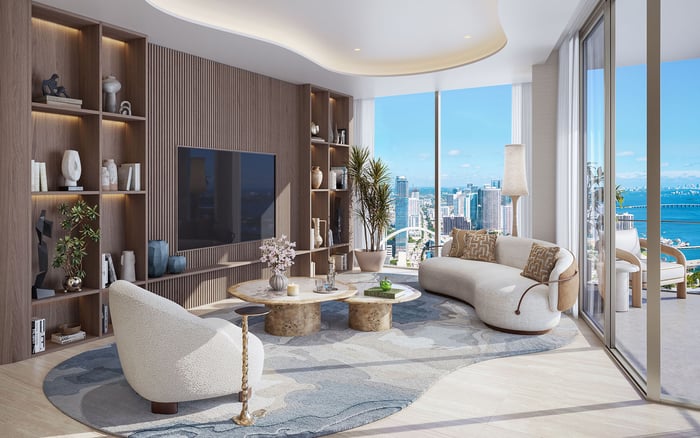
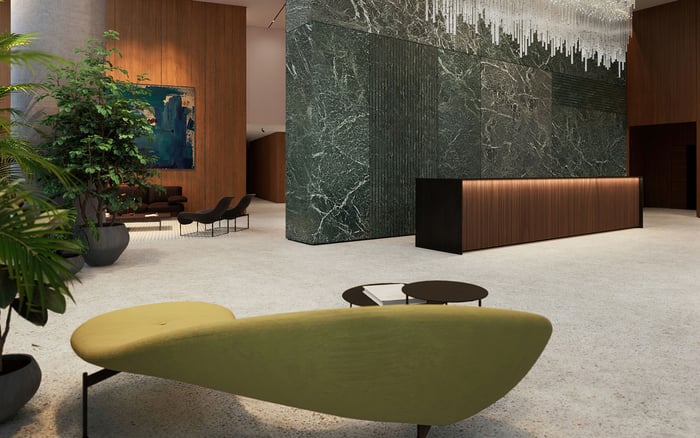
A buyer-focused look at how Waldorf Astoria Residences Downtown Miami reframes luxury around service, ease, proximity, and branded residential reliability.
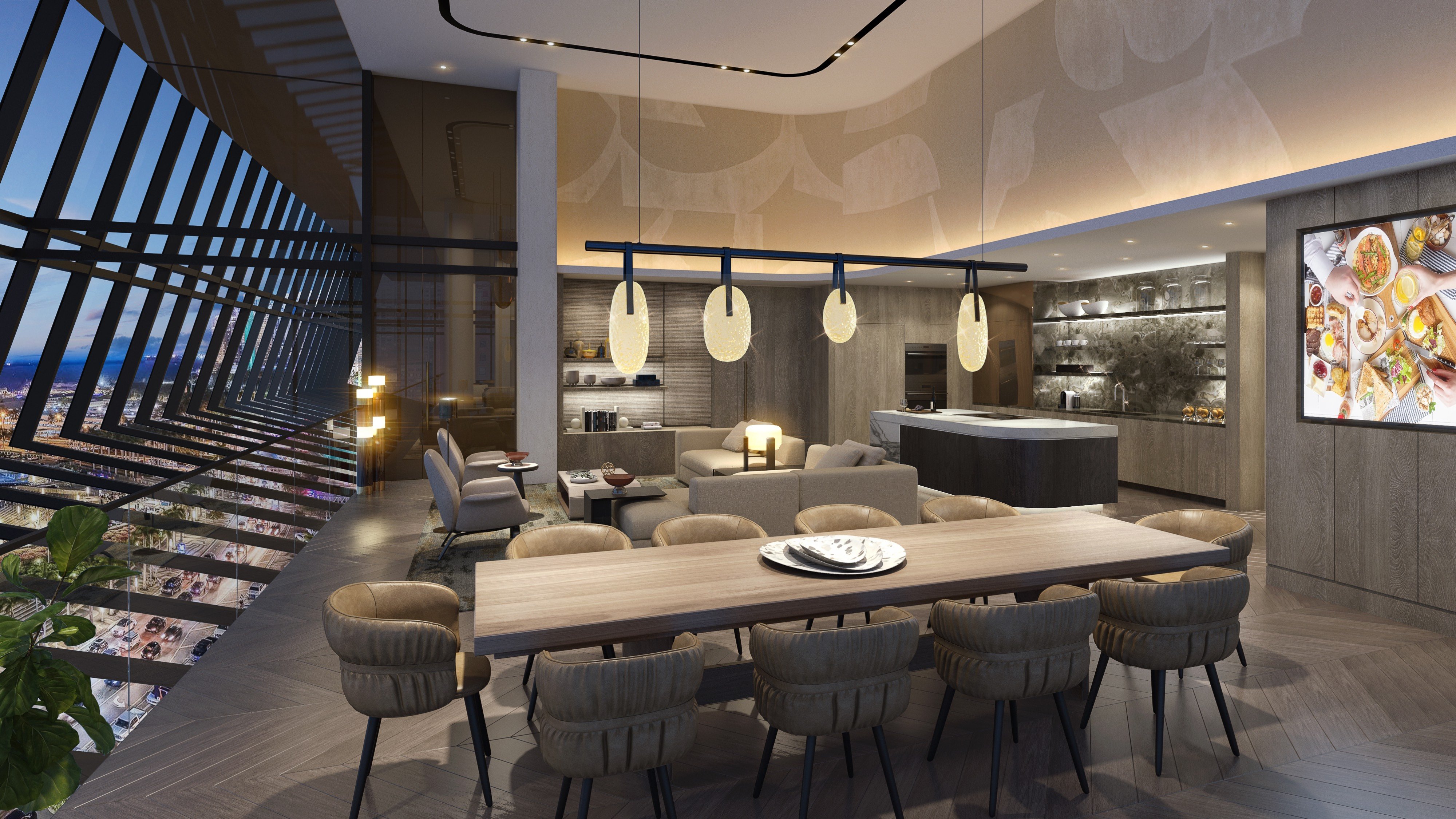
Luxury in Downtown Miami is no longer defined only by height, glass, views, or amenity count. Those elements still matter in a skyline-driven market, but the sharper question for today’s buyer is more practical: how much effort does the residence remove from daily life?
That is where Waldorf Astoria Residences Downtown Miami enters the conversation. The project is positioned as a branded luxury residential address centered on seamless, service-led living. Its appeal is not merely that it carries a recognizable hospitality name, or that it contributes to Downtown Miami’s vertical identity. Its more important role is as a case study in low-friction luxury, where the residence, services, amenities, and location are designed to operate as one integrated system.
For an ultra-premium buyer, that distinction matters. A home can be visually impressive and still require work. Low-friction luxury asks whether the building supports a life with fewer interruptions, fewer logistical burdens, and more dependable access to what the owner actually uses.
The phrase low-friction luxury may sound contemporary, but the desire behind it is enduring. Wealth often buys choice, but time remains scarce. For globally mobile, time-constrained owners, a residence that reduces everyday complexity can be more valuable than one that simply adds more features.
In this sense, Waldorf Astoria Residences Downtown Miami aligns with a buyer who may move between cities, manage business across time zones, host family and guests, and expect residential life to feel composed rather than demanding. The project’s value proposition rests on convenience, operational ease, and hospitality-style service, rather than luxury defined only by scale or spectacle.
That places it within the broader Branded Residences discussion in South Florida. The strongest branded residential concepts are not simply names on a tower. They establish expectations around service culture, consistency, and the management of details that owners do not want to handle themselves. For Downtown Miami, that is a meaningful shift.
Every luxury tower has a visible architecture. Low-friction luxury depends on another layer: the invisible architecture of service. At Waldorf Astoria Residences Downtown Miami, the hospitality association supports expectations around concierge-level service and managed residential ease. The low-friction argument comes from integrating service-minded living into the residential experience.
This is not simply about having amenities. It is about whether those amenities feel accessible, intuitive, and supported. A building can offer many features and still require residents to coordinate, request, reserve, wait, and navigate. The more refined question is how effortlessly the resident can move through the day.
That is why the project’s branded ecosystem matters. Services, amenities, and location are framed together, not as separate selling points. The result is a residential concept where luxury is expressed through fewer points of resistance. For buyers accustomed to private clubs, five-star hotels, and managed residences in other global cities, that operational smoothness is part of the product.
Downtown Miami gives this conversation a specific urban charge. The neighborhood’s appeal is tied to proximity: culture, business, dining, entertainment, and waterfront lifestyle access. In a low-friction framework, location is not just a map point. It is a time-saving device.
A Downtown Miami residence can support owners who want quick access to the city’s professional, cultural, and social centers without treating each outing as an event. That is especially relevant as the district continues to evolve from a primarily business-oriented environment into a more complete luxury residential neighborhood.
Waldorf Astoria Residences Downtown Miami sits within a wider downtown field that includes recognizable luxury addresses such as Aston Martin Residences Downtown Miami, Casa Bella by B&B Italia Downtown Miami, and One Thousand Museum Downtown Miami. Each contributes to the district’s credibility as a setting for high-end residential life, not only office towers or investor-driven condo product.
The point is not that every Downtown Miami tower speaks the same language. Rather, the neighborhood now supports multiple definitions of prestige. Some buyers will prioritize design identity. Others will value privacy, architecture, or views. Waldorf Astoria’s contribution is to place service reliability and daily usability at the center of the value proposition.
The development’s skyline presence contributes to its visibility, but the low-friction argument is more nuanced than exterior impact alone. Height can create recognition. Service creates habit. For an owner, the question is what the building feels like on the third morning after arrival, not only how it appears from across the bay.
That is where the project’s Downtown Miami high-rise model and hospitality brand intersect. The residential concept combines the familiarity of Waldorf Astoria with the vertical lifestyle of the urban core. It suggests a form of luxury where arrival, access, coordination, and day-to-day support are part of the architecture of ownership.
This is a useful contrast to amenity-heavy luxury buildings where the number of offerings can overshadow the resident experience. A longer amenities menu does not automatically create a better life. What matters is whether the building makes those offerings feel natural to use. In the most persuasive low-friction residences, service is not an add-on. It is the system that allows the lifestyle to function.
For buyers evaluating Waldorf Astoria Residences Downtown Miami, the key is to look beyond the obvious markers of prestige. The more important questions are practical and personal. Does the building reduce the number of decisions an owner must make? Does the service culture match the owner’s expectations? Does the location compress the distance between work, culture, dining, and waterfront living?
This is also where lifestyle and value intersect. A residence that saves time, simplifies transitions, and supports a predictable standard of service can be meaningful for both primary and secondary-home owners. In Downtown Miami, that kind of efficiency may be particularly compelling because the neighborhood itself is built around access.
For buyers thinking about investment, the project’s relevance is not merely symbolic. A branded, service-led residential ecosystem can help define a clearer identity in a competitive luxury market. While future performance is never guaranteed, the project’s positioning speaks to a buyer preference that has become increasingly important: simplicity with substance.
Ultimately, Waldorf Astoria Residences Downtown Miami helps frame a new chapter for Downtown Miami luxury. The skyline still matters, but the more sophisticated conversation is shifting toward frictionless living systems, where time savings, brand trust, service reliability, and urban proximity become the true markers of refinement.
What is low-friction luxury in Downtown Miami? It is a model of luxury focused on ease, service reliability, convenience, and access rather than spectacle alone.
How does Waldorf Astoria Residences Downtown Miami fit that idea? The project combines a hospitality brand with a Downtown Miami high-rise living model designed around service-led residential ease.
Is the project only about its skyline presence? No. Its skyline presence supports recognition, but the stronger luxury argument is daily usability and managed convenience.
Why does the Waldorf Astoria brand matter for buyers? The brand creates a hospitality association that supports expectations around concierge-level service and residential consistency.
Who is the likely buyer for this kind of residence? It is especially relevant for globally mobile, time-constrained owners who want to reduce day-to-day logistical burdens.
Why is Downtown Miami important to the proposition? Downtown Miami supports proximity to culture, business, dining, entertainment, and waterfront lifestyle access.
How is this different from an amenity-heavy building? The focus is less on the number of amenities and more on how effortlessly residents can use the building’s services and spaces.
Does this reflect a broader change in Downtown Miami? Yes. The project is part of Downtown Miami’s shift toward a more complete luxury residential neighborhood.
Is Waldorf Astoria Residences Downtown Miami part of the Branded Residences trend? Yes. It reflects the appeal of branded residential ecosystems where service, identity, and convenience work together.
What is the best way to shortlist comparable options for touring? Start with location fit, delivery status, and daily lifestyle priorities, then compare stacks and elevations to validate views and privacy.
To compare the best-fit options with clarity, connect with MILLION.
If branded residences are on your mind — as a home or as an allocation — we would be glad to share what we are seeing, privately.
Begin a quiet conversation