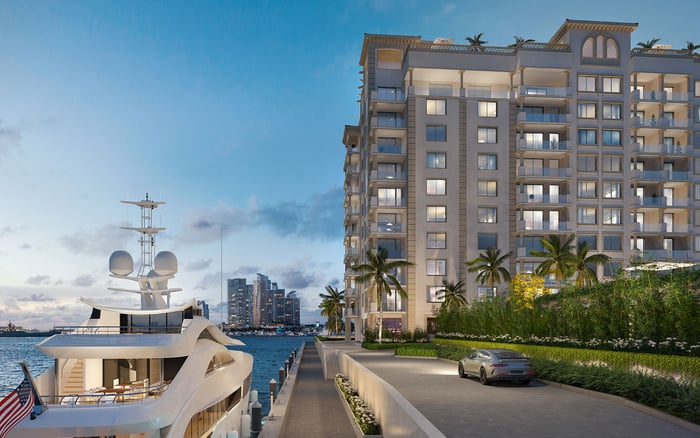
A discreet buyer’s guide to evaluating full-service tower ownership in Key Biscayne through service quality, governance, privacy, maintenance discipline and long-term resale logic.

A full-service tower in Key Biscayne should not be evaluated as a collection of amenities. It should be judged as a residential operating system. For a serious long-term purchase, the question is not whether the building feels impressive during a showing. It is whether it will remain calm, maintained, private and relevant after years of daily use.
That distinction matters. A buyer may first respond to the view, the lobby, the pool deck or the promise of convenience. Those elements are important, but they are only the surface. The deeper value sits in staffing consistency, building governance, physical upkeep, residence quality and the way the tower protects a specific rhythm of life. In Key Biscayne, where buyers are often weighing lifestyle permanence rather than a temporary address, that discipline becomes central.
The strongest full-service buildings make ownership feel uncomplicated without becoming anonymous. They know how to receive guests, manage packages, maintain security, coordinate vendors and preserve privacy without theater. They also understand that luxury is not volume. It is discretion, predictability and the absence of friction.
The word service can be overused in luxury real estate. For a long-term buyer, it should mean something precise: the building has systems that function gracefully when residents are not watching. Staff training, front desk judgment, valet rhythm, maintenance response and management communication all shape the daily experience.
A full-service tower works when the resident does not need to become the building’s project manager. If an elevator issue, contractor visit, guest arrival or maintenance request requires repeated follow-up, the service promise is thin. If the building anticipates those moments and handles them with quiet competence, the purchase begins to justify itself beyond finishes.
This is why buyers comparing Key Biscayne with other premium enclaves often look across buildings such as Oceana Key Biscayne, Continuum on South Beach and The Ritz-Carlton Residences® Miami Beach. The comparison is not simply about address. It is about the nature of service and whether the building’s culture feels durable enough for primary or repeat seasonal living.
A serious purchaser should read the building as carefully as the residence. Governance affects the quality of ownership in ways that are not always visible during a tour. Decision-making, maintenance priorities, rules, insurance planning, reserve philosophy and communication style can all influence the long-term experience.
Well-run buildings tend to feel orderly without feeling rigid. They balance privacy with accountability. They protect common areas, manage capital needs and communicate with residents in ways that minimize uncertainty. Poor governance, by contrast, can turn even a beautiful residence into a high-maintenance asset.
The buyer’s due diligence should therefore look beyond the apartment. The building’s financial posture, management continuity and approach to major work are all relevant. This is not glamour, but it is one of the foundations of enduring luxury.
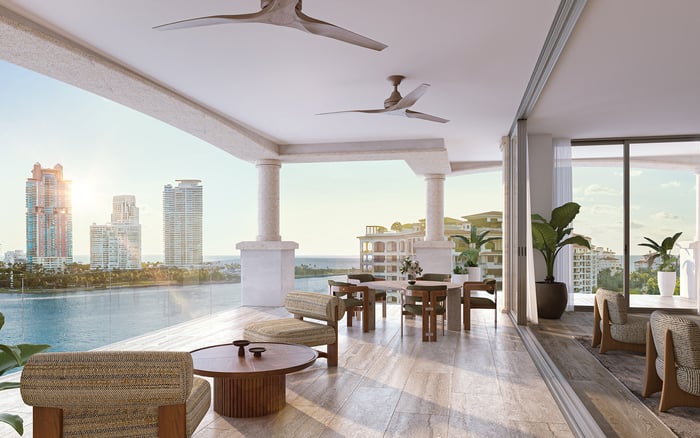
For long-term ownership, a residence must live well on ordinary days. A dramatic view can create the first emotional pull, but the plan determines whether the home remains satisfying. Entry sequence, ceiling perception, bedroom separation, kitchen placement, storage, terrace usability and the relationship between entertaining and private spaces all matter.
The best plans feel intuitive. They provide openness without exposing every function of the home. They allow hosting without compromising the bedrooms. They offer useful outdoor space rather than a token balcony. They support furniture placement, art, lighting and daily circulation.
This is also where resale logic begins. A floor plan that feels elegant across different life stages is easier to understand and easier to reposition later. A plan that relies on one novelty can date quickly. In a full-service tower, the residence should feel tailored, but not so idiosyncratic that the next discerning buyer must be persuaded to overlook its compromises.
The most successful full-service towers create privacy at multiple levels. There is the privacy of the residence itself, but also the privacy of arrival, elevator use, amenity circulation and staff interaction. Buyers should pay attention to how the building moves people. A graceful tower does not make residents feel processed.
Arrival is particularly revealing. Does the experience feel controlled and understated, or busy and exposed? Are guests handled thoughtfully? Are service providers routed sensibly? Does the building make it easy to live privately without appearing guarded? These are subtle questions, but they define daily comfort.
Access should also be considered in practical terms. A buyer should think about school routines, airport patterns, dining habits, medical needs, club commitments and family visits. The right tower is not only beautiful from within. It supports the actual life that will be lived from it.
Waterfront and Oceanfront living can carry an emotional premium, but the long-term buyer should separate romance from utility. The view matters, yet so do exposure, light, terrace comfort, storm protocols, façade care and the building’s ability to maintain exterior areas over time. The best purchase is not merely the most photogenic one. It is the one that remains pleasurable and manageable.
Lifestyle should be examined with equal rigor. A serious Key Biscayne buyer may want calm, service, outdoor space, security and a sense of retreat, but those preferences need to be matched with the right building culture. Some towers feel social. Others feel more residential and private. Neither is inherently superior. The better choice is the one aligned with how the owner actually lives.
Buyers may also look at waterfront-oriented ownership models beyond Key Biscayne, including Park Grove Coconut Grove and The Residences at Six Fisher Island. These comparisons can help clarify whether the priority is seclusion, service, boating adjacency, urban convenience or a more resort-like daily cadence.
Investment thinking should not flatten a luxury purchase into a spreadsheet. Still, it should impose discipline. A full-service tower is a serious asset, and long-term value depends on more than market mood. It depends on scarcity of appeal, condition, building reputation, plan quality and the ability of future buyers to understand the proposition quickly.
A strong purchase should be legible. The residence should have a clear reason to exist in the market: privacy, view quality, scale, finish potential, service profile or a particularly graceful plan. If the story is too complicated, future liquidity may require more explanation than ideal.
Buyers should also consider carrying costs in relation to the service delivered. Higher monthly obligations can be rational when the building is genuinely well operated and protects the asset. They are harder to justify when service is inconsistent or capital planning is unclear. The right question is not whether costs are high or low in isolation. It is whether they are aligned with durable quality.
Before making a long-term purchase, a buyer should walk the building at different times, observe the lobby without rushing, study the garage or arrival sequence and ask how the building handles ordinary complications. Luxury reveals itself in the uneventful moments.
The residence should also be reviewed through a renovation and maintenance lens. Even if no immediate work is planned, the buyer should understand what can be changed, what is structurally fixed and how the building manages approvals. A spectacular apartment can become frustrating if the ownership framework is cumbersome.
Finally, the buyer should decide whether the tower still feels compelling after the first impression fades. A serious long-term purchase in Key Biscayne should not depend on novelty. It should feel inevitable: the right scale, the right service, the right privacy and the right fit for the next decade of living.
What defines a full-service tower for a long-term buyer? It is a building where staffing, management, maintenance and privacy systems work consistently, not just attractively during a tour.
Why does governance matter in a luxury condominium? Governance shapes upkeep, communication, financial planning and the resident experience, all of which affect long-term ownership quality.
Should amenities drive the purchase decision? Amenities matter, but they should support daily life rather than distract from service, plan quality and building discipline.
How important is the floor plan? It is essential because the plan determines comfort, furniture flexibility, privacy and future resale appeal.
Is Key Biscayne better for primary living or seasonal use? The right answer depends on the buyer’s routine, but the tower should support either use with privacy, access and reliable service.
What should buyers observe during a building visit? Arrival, staff interaction, elevator flow, common-area condition and the overall sense of calm are all revealing.
Are higher carrying costs acceptable in a full-service tower? They can be when the building delivers meaningful service, careful maintenance and long-term asset protection.
How should a buyer think about Waterfront exposure? The view should be balanced with practical questions about light, terrace comfort, exterior care and building maintenance.
What makes a residence easier to sell later? Clear value, a graceful plan, strong condition and a building culture that future buyers can understand quickly.
When is a full-service tower the wrong choice? It may be wrong if the buyer values total autonomy more than shared services, rules and collective building standards.
If you'd like a private walkthrough and a curated shortlist, connect with MILLION.
If branded residences are on your mind — as a home or as an allocation — we would be glad to share what we are seeing, privately.
Begin a quiet conversation