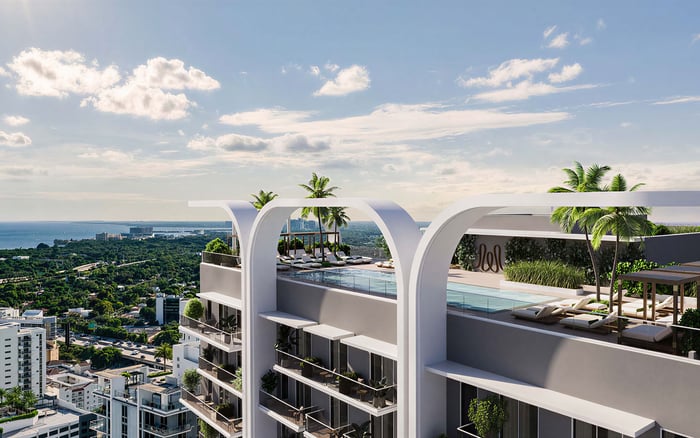
A luxury condo buyer’s guide to evaluating leak-detection alerts, building response protocols, insurance alignment, and smart-home privacy before purchasing in South Florida.

In South Florida’s top condominium market, buyers are accustomed to asking about views, ceiling heights, private elevators, valet protocol, wellness amenities, and the character of the lobby. In 2026, another question belongs near the top of the list: how does the residence, and the building around it, detect, communicate, and respond to water leaks?
This is not a fear-based inquiry. It is a marker of sophistication. A true luxury residence is not defined only by marble, glass, and a cinematic arrival sequence. It is defined by how quietly and competently the building protects daily life when no one is watching. Leak-detection alerts sit at the intersection of smart-home systems, building operations, insurance expectations, and ownership convenience.
For a buyer comparing Brickell, Surfside, Oceanfront residences, New-construction offerings, or a Penthouse with expansive private outdoor space, leak detection should be treated as part of the property’s service architecture. The essential question is not simply, “Does the unit have sensors?” It is, “What happens after an alert?”
The phrase “leak detection” can mean several different things. Some systems may monitor moisture near appliances or under sinks. Others may be tied to shutoff valves, smart-home panels, or building-level monitoring. A buyer should ask for plain-language clarity on what is included within the residence, what belongs to the building, and what remains the owner’s responsibility after closing.
Start with location. Ask whether sensors are installed near water heaters, laundry areas, kitchen plumbing, air-conditioning components, powder rooms, primary baths, service corridors, and any wet bar or summer kitchen. In a large residence, especially one with staff areas or multiple entertaining zones, coverage can vary meaningfully from room to room.
Then ask about function. Does the system only send an alert, or can it trigger a water shutoff? Is that shutoff automatic, manual, or subject to building approval? Can the owner override it? If an alert occurs while the owner is traveling, who has authority to enter, inspect, and mitigate? These are operational questions, not gadget questions.
An alert has value only if it reaches the right person at the right moment. Buyers should ask whether notifications go to the owner, property manager, front desk, engineer, security team, or an outside monitoring service. In a primary residence, the owner may prefer direct alerts. In a second home, the building’s response chain may be even more important.
It is also worth asking whether alerts are delivered by app, text, email, phone call, control panel, or a combination. App-only systems can be elegant, but they rely on owners keeping credentials current and notifications active. A building that serves seasonal owners should have a clear protocol for changed phone numbers, new assistants, family-office contacts, and authorized representatives.
The strongest buildings make alert responsibility feel calm and obvious. The buyer should not have to guess whether the front desk, engineer, or owner acts first. If the response protocol depends on informal judgment, that should be understood before closing.
Luxury service is measured most clearly after midnight, during a holiday weekend, or while the owner is overseas. Buyers should ask how leak alerts are handled after hours and whether building engineers or approved vendors are available when the regular management office is closed.
Access is equally important. If the unit is vacant and an alert is received, can management enter under the condominium documents or the owner’s access authorization? Is there a key, fob, smart-lock, or biometric protocol? Who documents the entry? Who photographs conditions? Who communicates with the owner afterward?
For residences with a Terrace, Balcony, private pool, spa, outdoor kitchen, or planted areas, water management is not limited to interior plumbing. Buyers should ask how drains, irrigation, hose bibs, and outdoor fixtures are monitored or inspected, particularly when wind-driven rain, high humidity, and seasonal vacancy are part of the ownership pattern.
Condominium ownership creates a shared boundary between private responsibility and association responsibility. Leak-detection due diligence should follow that boundary. Buyers should ask which systems are maintained by the association, which are maintained by the owner, and which require coordination between both.
Common-area risers, mechanical rooms, corridors, roof systems, and amenity plumbing may affect the building even if they are not inside the unit. Conversely, an in-unit appliance failure may affect neighboring residences. The buyer’s attorney and inspection team should understand where alert systems connect, what records are available, and what the owner must maintain after closing.
In New-construction, the discussion should include turnover documentation. Ask whether the owner receives manuals, app credentials, warranty information, sensor maps, and vendor contacts. In resale, ask whether the system has been maintained, whether batteries or components have been replaced, and whether any past alerts were documented.
Leak-detection alerts can influence the practical conversation with insurers, even when policy language varies. A buyer should not assume that the presence of sensors automatically changes coverage or responsibility. Instead, ask how the building documents alerts, mitigation, access, and repair steps.
The most useful records are clear and contemporaneous: when the alert occurred, who received it, when the residence was entered, what was found, what was shut off, and which vendor responded. This documentation can be valuable in resolving responsibility between owner, association, neighbor, and insurer.
Buyers should also ask whether the association has any rules requiring owners to maintain leak-detection devices, leave air conditioning at certain settings, shut off water during extended absences, or provide emergency contact information. These obligations may seem administrative, but they shape the ownership experience.
Smart systems in luxury residences can raise privacy questions. Buyers should ask what data is collected, who can view it, and whether the building, developer, management company, or third-party vendor has administrative access. Leak detection may sound narrow, but connected systems can sometimes sit within a broader smart-home ecosystem.
Clarify whether the owner can control notification preferences, delete users, change passwords, and transfer credentials at resale. Ask what happens when a property manager, assistant, tenant, or family member should be removed from the system. Clean digital handover is now part of clean title in the practical sense, even when it is not a legal title issue.
If the residence is intended for occasional leasing, guests, or extended family use, the buyer should understand whether alerts can be separated by role. An owner may want management to receive emergency notices without granting broad control of lighting, climate, cameras, or other residential systems.
A sophisticated leak-detection system is only as good as the building culture supporting it. During due diligence, buyers should listen for operational fluency. Does management answer with precision? Are protocols written? Are vendors known? Is there a clear chain of command? Are prior alerts treated as routine building intelligence rather than embarrassing incidents?
This matters across South Florida’s luxury map. In Brickell, vertical density makes response coordination essential. In Surfside, quiet residential discretion is part of the value proposition. In Oceanfront buildings, ownership patterns may include long absences, house staff, family offices, and seasonal use. The technology should support the lifestyle without becoming intrusive.
The most desirable answer is not necessarily the most technical one. It is the one that shows a building has practiced the moment: alert received, access confirmed, water controlled, owner informed, conditions documented, and repair escalated if needed.
Before contract deadlines expire, ask for a concise explanation of the leak-detection architecture. Request the locations of sensors, whether automatic shutoff exists, who receives alerts, how after-hours response works, how emergency access is authorized, and what the owner must maintain.
Ask whether recent inspections have identified gaps, whether any components require replacement, and whether the system is connected to broader smart-home infrastructure. If the residence is a Penthouse, has unusual plumbing, extensive outdoor entertaining space, or customized interiors, ask whether the standard system was expanded to match the floor plan.
Finally, decide whether the answers match the price point. In the ultra-premium tier, buyers are not merely purchasing square footage. They are purchasing continuity, discretion, and confidence. Leak-detection alerts are a small detail until they become the only detail that matters.
Should every luxury condo buyer ask about leak-detection alerts? Yes. Even if the residence appears immaculate, the alert and response protocol affects ownership convenience, risk management, and peace of mind.
Is a leak sensor the same as an automatic water shutoff? No. A sensor may only send a notification, while a shutoff system may stop water flow under certain conditions.
Who should receive leak alerts in a second home? Ideally, alerts should reach the owner and a responsible on-site or authorized contact who can act quickly if the residence is vacant.
Should buyers ask about common-area leak detection too? Yes. Building systems, risers, mechanical spaces, and shared infrastructure can matter as much as in-unit devices.
What should New-construction buyers request at closing? Ask for manuals, credentials, sensor locations, maintenance guidance, warranty details, and the building’s written response protocol.
Are Terrace and Balcony areas part of the conversation? They should be. Outdoor drains, irrigation, hose connections, and weather exposure can create water-management questions.
Can leak alerts create privacy concerns? Yes. Buyers should understand who has access to alerts, system data, app controls, and administrative permissions.
Should a Penthouse have extra review? Often, yes. Larger floor plans, outdoor areas, private amenities, and custom plumbing may require more specific questions.
Is leak detection only a technology issue? No. The building’s staffing, access rules, vendor relationships, and documentation practices are just as important.
What is the best way to shortlist comparable options for touring? Start with location fit, delivery status, and daily lifestyle priorities, then compare stacks and elevations to validate views and privacy.
For a tailored shortlist and next-step guidance, connect with MILLION.
If branded residences are on your mind — as a home or as an allocation — we would be glad to share what we are seeing, privately.
Begin a quiet conversation