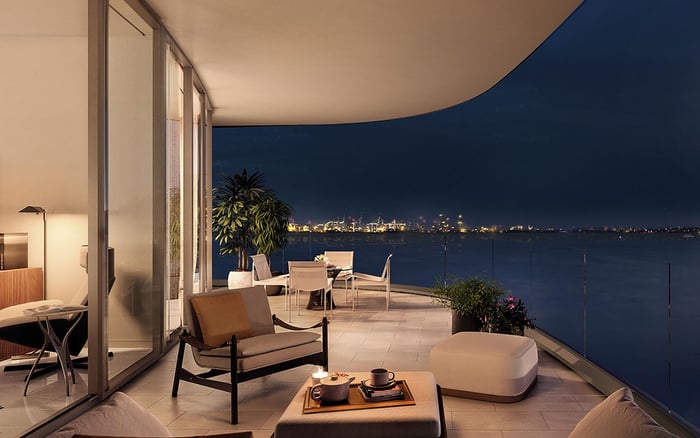
A private yoga room in Miami or Palm Beach should be reviewed as a true wellness room, with attention to layout, privacy, acoustics, light, climate control, technology, compliance, and long-term resale value.

In Miami and Palm Beach luxury residences, a private yoga room deserves the same scrutiny as a primary suite, home office, screening room, or chef’s kitchen. It is not simply an empty bedroom with a mat. For the right buyer, it is a daily-use wellness chamber: quiet, climate-balanced, visually calm, and positioned so practice feels natural rather than improvised.
The strongest examples succeed because they are intentional. They offer proper proportions for movement, thoughtful placement within the floor plan, soft lighting options, suitable flooring, privacy from the home’s social areas, and enough flexibility to support yoga, stretching, breathwork, meditation, Pilates, and recovery work. In larger three-bedroom-plus residences and penthouses, the dedicated wellness room is increasingly assessed alongside dual offices, staff accommodations, entertainment rooms, and outdoor living areas.
Whether the brief is Brickell, oceanfront, penthouse, new-construction, terrace, or pool driven, the essential question is the same: does the space make wellness easier to practice every day?
Before finishes command attention, test the room’s dimensions. A proper yoga room needs uninterrupted floor area for a mat, lateral movement, guided instruction, and possibly two-person practice. Watch for columns, low ceiling planes, awkward corners, door swings, and built-ins that reduce usable space. A room may photograph beautifully yet feel constrained once a mat, props, storage, and lighting are in place.
Circulation matters as much as size. Ideally, the room should be reached without passing through the residence’s most public zones. A yoga room beside a formal entertaining area can feel exposed, while one connected to the primary suite, dressing area, spa bath, terrace, or wellness corridor often feels more intuitive. The goal is not isolation for its own sake. It is a sequence that supports ritual: arrive, change, practice, recover, and re-enter the day without friction.
A luxury yoga room should feel removed from the home’s social energy. In active South Florida residences, that can be difficult. Open kitchens, great rooms, media spaces, elevators, service areas, and outdoor entertaining zones all create sound that can weaken the sanctuary effect.
During a showing, stand in the room with the door closed and listen. Note mechanical hum, corridor noise, elevator movement, traffic, pool-deck activity, and sound from adjacent rooms. Floors and walls should provide enough sound and vibration isolation for early-morning practice or private sessions. This is especially important in condominiums, where neighbors above, below, and beside the residence may shape the experience.
If the buyer plans to add a sprung floor, acoustic underlayment, mirrors, wall padding, or integrated speakers, those upgrades may require building approval. Treat acoustics as both a comfort issue and a compliance issue.
Natural light can elevate a yoga room, especially in glass-forward Miami and Palm Beach residences. It can also create glare, heat gain, and privacy concerns. A room with sweeping exposure may feel luminous at noon but harsh during morning practice. A wall of glass facing a terrace, neighboring tower, or pool area may compromise the sense of seclusion.
The checklist is simple but important. Visit at different times when possible. Test where sunlight lands. Consider whether window treatments can soften brightness without making the room feel enclosed. Confirm that artificial lighting can shift from functional to restorative, with dimming and warmer tones for meditation or breathwork. The best rooms allow both energizing daylight and cocooning calm.
South Florida’s humidity, oceanfront settings, and glass-heavy architecture make climate control more than a technical detail. A yoga room that is too warm, too humid, too cold, or too drafty will be used less often, no matter how beautiful it appears.
Ask how the room is conditioned. Is it served by the same zone as a large living room, or can it be managed independently? Does it heat up because of glass exposure? Does the building envelope perform well enough to keep the room comfortable during humid months? If the intended use includes more vigorous movement, ventilation and temperature response become even more important.
Buyers should also consider storage for mats, blocks, bolsters, towels, cleaning supplies, and small recovery equipment. A wellness room without storage quickly becomes cluttered, undermining the calm it is meant to create.
A refined yoga room does not need to look like a studio. It does, however, benefit from discreet technology. Buyers may want concealed speakers, reliable connectivity for virtual instruction, subtle screens, circadian lighting, or app-based climate and shade control. The key is restraint. Technology should support practice without turning the room into another media environment.
Confirm outlet locations, Wi-Fi strength, AV pathways, lighting controls, and whether any installation would require condominium-board or building-management approval. In a new-construction purchase, ask early about customization options. In a resale, confirm what is already permitted, what is removable, and which alterations may be restricted.
Building-level wellness amenities can be a meaningful advantage. Fitness centers, spa areas, meditation spaces, and yoga or Pilates studios add variety and service depth. They should complement a private yoga room, not replace it.
The value of an in-residence room is control. The buyer controls timing, music, temperature, privacy, instructor access, and atmosphere. This became more important after the shift toward in-home exercise, meditation, and reduced reliance on shared amenity spaces. A shared studio may be excellent, but it cannot fully substitute for a quiet private sanctuary steps from the primary suite.
Wellness has become a major theme in luxury real estate, and a well-executed yoga room can strengthen marketability. The room should feel finished to the same standard as the rest of the residence. Buyers relocating from wellness-focused markets often expect private wellness areas to be intentional, not improvised.
Still, flexibility protects value. A yoga room that can also support meditation, Pilates, stretching, recovery, or a calm reading environment will appeal to more future buyers. Avoid over-specialized installations that make the room difficult to reinterpret. The best wellness spaces feel specific in quality but adaptable in use.
During a private tour, move beyond the marketing language of “wellness living” and test the room as it will be used. Place a mat where practice would happen. Check the clearance around it. Close the door and listen. Look at the windows from inside and outside if possible. Ask how the HVAC is zoned. Review floors, wall assemblies, lighting, shade control, storage, and technology.
Then ask the practical questions: Can the room be used at dawn without disturbing others? Can it remain cool and comfortable in humid weather? Is there a nearby bath, terrace, dressing zone, or recovery area? Are proposed changes allowed by the condominium documents or building management? Does the room feel like a sanctuary inside the home, or does it feel like a leftover space being asked to perform too many roles?
A true yoga room should make wellness feel quiet, repeatable, and private. In the best Miami and Palm Beach residences, that calm is not an amenity line. It is a daily architectural experience.
What makes a private yoga room different from a spare bedroom? A private yoga room is planned around movement, quiet, light control, climate comfort, storage, and privacy rather than general-purpose furniture placement.
How large should a luxury yoga room feel? It should allow a full mat setup, comfortable movement around the mat, and flexibility for stretching, breathwork, meditation, or Pilates-inspired use.
Why is climate control so important in Miami and Palm Beach? High humidity, strong sun, oceanfront exposure, and glass-heavy design can affect comfort, especially during longer or more active practice.
Should a yoga room have natural light? Natural light is valuable, but buyers should test glare, heat gain, privacy exposure, and whether lighting can be softened for restorative use.
Where should the yoga room sit within the floor plan? The strongest locations are quiet, private, and near supportive spaces such as a spa bath, dressing area, terrace, or primary-suite zone.
Do acoustics matter for a yoga room? Yes. Floors and walls should limit sound and vibration so early-morning practice, meditation, or private instruction remains discreet.
Can building amenities replace an in-residence yoga room? Shared wellness amenities can enhance the lifestyle, but they do not replace the privacy, timing control, and calm of an in-residence room.
What upgrades may need condominium approval? Flooring, mirrors, lighting, AV, insulation, and HVAC changes may require approval from the condominium board or building management.
Does a yoga room help resale value? A well-executed wellness room can improve marketability because wellness is now a central priority for many luxury buyers.
What is the best way to shortlist comparable options for touring? Start with location fit, delivery status, and daily lifestyle priorities, then compare stacks and elevations to validate views and privacy.
For a discreet conversation and a curated building-by-building shortlist, connect with MILLION.
If branded residences are on your mind — as a home or as an allocation — we would be glad to share what we are seeing, privately.
Begin a quiet conversation