As automation becomes standard in South Florida's highest-end residences, cybersecurity is now a core design decision rather than a technical afterthought. In Miami estates where access control, lighting, climate, surveillance, AV, and wellness systems operate as a unified digital environment, the quality of protection behind the walls matters as much as the finishes in front of them. This guide outlines the buyer-oriented protocols, governance decisions, and service expectations that define a resilient smart home strategy in the luxury market.
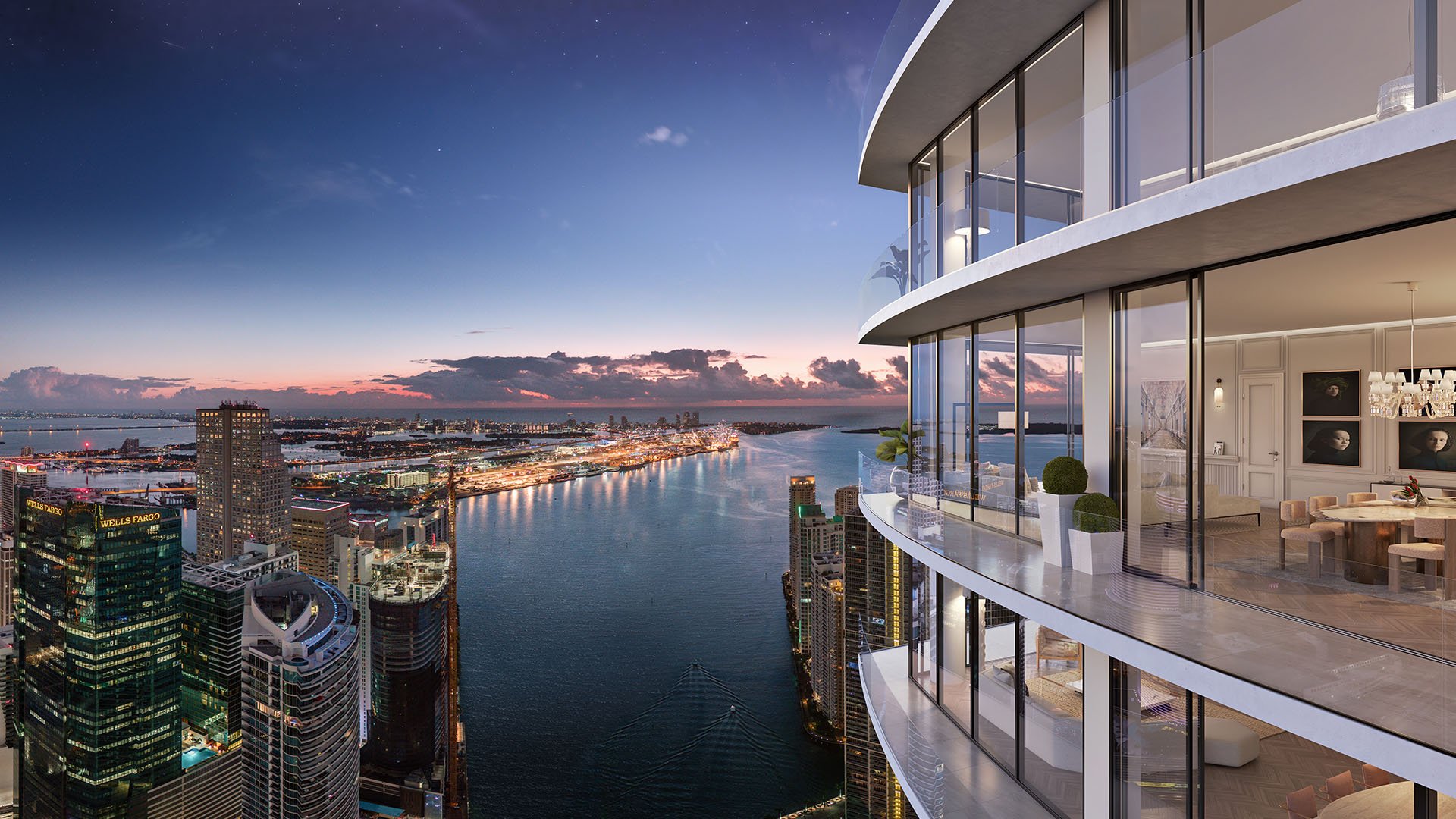
In a fully automated residence, convenience extends far beyond lighting scenes and climate presets. Entry systems, surveillance, whole-home audio, motorized shading, irrigation, pool equipment, backup power monitoring, package access, and wellness settings can all exist within a single connected environment. For owners of high-value residences in Miami, that integration is compelling, but it also creates a wider attack surface.
In practical terms, a luxury estate is now a private digital ecosystem. If the home is managed with the same rigor as a family office, a yacht, or a security detail, cybersecurity should be approached with the same discipline. The question is not whether a residence is smart enough. The question is whether it is segmented, monitored, updated, and governed with care.
That conversation is increasingly relevant across Miami, from waterfront single-family compounds to elevated branded towers. Buyers comparing residences in Brickell, Miami-beach, and nearby enclaves are looking past polished interfaces to the less visible architecture that protects privacy, access, and continuity.
In many estates, the visible technology gets the attention while the invisible layer does the real work. A refined cybersecurity protocol starts with network architecture. That means separating critical systems from guest traffic, isolating work devices from entertainment devices, and ensuring that cameras, locks, and automation processors do not all share a single undifferentiated environment.
For a principal residence, that often means multiple secured networks, distinct credentials for household staff and vendors, professionally managed firewalls, and limited remote pathways into the home. The goal is straightforward: if one device or account is compromised, the entire estate should not be exposed.
This matters whether the residence is a custom waterfront home or a highly serviced condominium. At developments such as The Residences at 1428 Brickell or St. Regis® Residences Brickell, buyers are already attuned to integrated systems, concierge-level service, and the expectation that sophisticated living should feel frictionless. The cybersecurity lens simply extends that expectation into the digital backbone.
The most obvious point of vulnerability in a smart estate is entry. Door hardware, gate systems, garage controls, elevator access, intercoms, and visitor management all intersect with identity. In a luxury residence, access should not be binary. It should be role-based.
An owner may need global control and emergency override privileges. A property manager may need scheduled access to selected systems. Housekeeping may need time-limited entry. Vendors should be temporary, auditable, and restricted to the precise scope of their work. Those distinctions reduce both error and exposure.
Best practice also favors strong authentication. Shared household passwords are elegant only until they become a liability. Individual accounts, multi-factor authentication, credential rotation, and immediate revocation when staff changes occur are more consistent with the standards expected in a serious estate.
In Aventura and along the bay, where second homes and seasonal occupancy are common, this becomes even more important. A residence that sits empty for part of the year should never rely on informal access habits. It should rely on a documented, revocable permission structure.
Owners often think of cyber risk in terms of unauthorized entry, but privacy is equally important. Smart televisions, voice interfaces, Wi-Fi-connected appliances, AV processors, security cameras, and wellness devices can all create data trails. In a primary or secondary residence, that data may reveal occupancy patterns, routines, preferences, and staffing schedules.
A discreet home should minimize unnecessary collection, limit device-to-cloud exposure, and keep retained data intentional. Audio and video systems deserve particular scrutiny. So do remote diagnostic permissions that installers or vendors may retain after commissioning.
This is especially relevant in residences that emphasize seamless lifestyle integration, such as 57 Ocean Miami Beach or The Perigon Miami Beach, where wellness, privacy, and indoor-outdoor fluidity are part of the appeal. Sophistication in these homes is not just about what systems can do. It is about what they are prevented from disclosing.
Luxury homeowners rarely rely on a single provider. One firm may handle automation, another surveillance, another networking, and another audiovisual design. Add pool controls, lighting specialists, elevator maintenance, generator monitoring, and appliance platforms, and the vendor stack becomes complex quickly.
That complexity requires an owner-side framework. Every vendor relationship should answer five basic questions: what systems can this party access, how do they authenticate, when is that access permitted, who approves changes, and how is activity logged? If no one can answer those questions promptly, the residence is under-governed.
The most resilient estates keep a current digital asset register, maintain administrator records outside any one vendor, and require change documentation for updates, password handoffs, and remote support sessions. This is particularly important in Coconut-grove and Coral-gables, where custom homes may accumulate bespoke systems over time, creating elegance on the surface but fragmentation underneath.
Cybersecurity in a smart home is not only about blocking intrusion. It is also about failing gracefully. If internet service drops, can doors still function securely? If an app is unavailable, can the house still operate locally? If a platform update breaks a routine, is there a tested fallback?
For Miami estates, resilience also has a local dimension. High-wind weather, seasonal vacancy, and storm preparation all place unusual pressure on automated systems. Shades, climate, leak detection, backup power alerts, and environmental monitoring need local reliability, not just remote elegance.
That makes robust design especially relevant in newer luxury inventory such as Villa Miami, where buyers are drawn to a highly considered lifestyle proposition and expect systems that perform with the same confidence as the architecture. In this market, true luxury is continuity.
For buyers evaluating a fully automated residence, cybersecurity due diligence should sit alongside legal, structural, and financial review. A discreet set of questions can reveal a great deal.
Ask whether the property uses segmented networks and managed firewalls. Ask who holds administrative control over routers, access systems, and automation processors. Ask whether former vendors have been removed. Ask when firmware and software were last updated. Ask whether there is a local mode for essential systems if cloud connectivity is interrupted. Ask for a map of connected devices and written turnover of credentials at closing.
In Downtown and Edgewater, where new development often promises integrated living from day one, these questions are not adversarial. They are simply part of a modern luxury standard. A beautiful residence that cannot be governed cleanly is unfinished.
The phrase turnkey once suggested a residence that was furnished, serviced, and ready for immediate occupancy. In the current market, that definition is expanding. For a truly automated estate, turnkey should also mean digitally organized, access-controlled, update-ready, and professionally documented.
That standard is becoming relevant across Miami, Brickell, and Miami-beach, not only in single-family homes but also in premium condominiums where buyers expect hospitality-level convenience with private-estate discretion. The residences that will age best are those built around disciplined protocols rather than ad hoc device accumulation.
For MILLION Luxury readers, the implication is clear. Smart home technology adds measurable comfort, security, and efficiency only when its governance is as refined as its design. In South Florida's ultra-premium market, cybersecurity is no longer a backend technical issue. It is part of the residence itself.
Why is cybersecurity especially important in a fully automated Miami estate? Because more connected systems create more points of exposure, from locks and cameras to climate and remote-access controls.
What is the first cybersecurity feature a buyer should look for? A professionally designed segmented network is foundational because it keeps critical home systems separate from guest and personal traffic.
Should smart locks and gates be on the same network as streaming devices? No. Critical access controls should be isolated from lower-priority entertainment and guest devices.
How should household staff access be managed? Through individual, role-based credentials with clear schedules and immediate revocation when responsibilities change.
Are cloud-based smart home systems inherently unsafe? Not necessarily, but they should be configured carefully with limited permissions, secure authentication, and local backup functionality.
What does digital turnover at closing include? It should include administrator credentials, device inventories, network documentation, vendor access records, and update histories.
Do second homes face different cyber risks? Yes. Seasonal vacancy can make stale credentials, inactive monitoring, and unmanaged remote access more dangerous.
Can privacy be compromised even if no one enters the home? Yes. Connected devices may reveal routines, occupancy patterns, and household behavior if data practices are not controlled.
Is cybersecurity only relevant for custom single-family homes? No. It is equally relevant in luxury condominiums where integrated building and in-residence systems shape daily living.
What defines a truly turnkey smart residence today? It is a home that combines elegant automation with documented governance, secure access, resilient operation, and ongoing professional oversight.
For a tailored shortlist and next-step guidance, connect with MILLION Luxury.
If branded residences are on your mind — as a home or as an allocation — we would be glad to share what we are seeing, privately.
Begin a quiet conversation