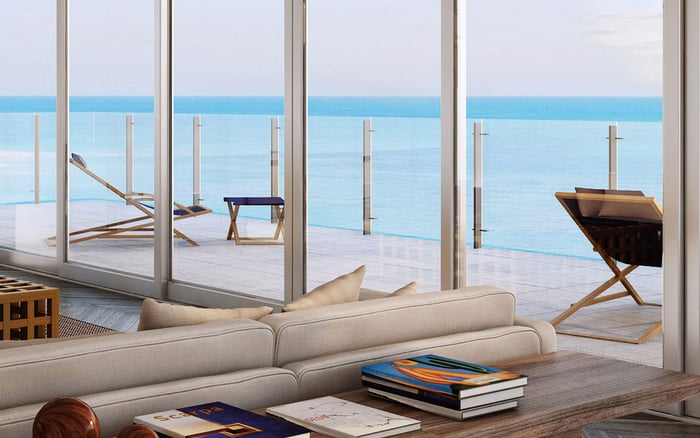
A design-led look at how Key Biscayne buyers can think beyond beauty and evaluate positioning, daily privacy, views, arrival, and long-term residential fit.
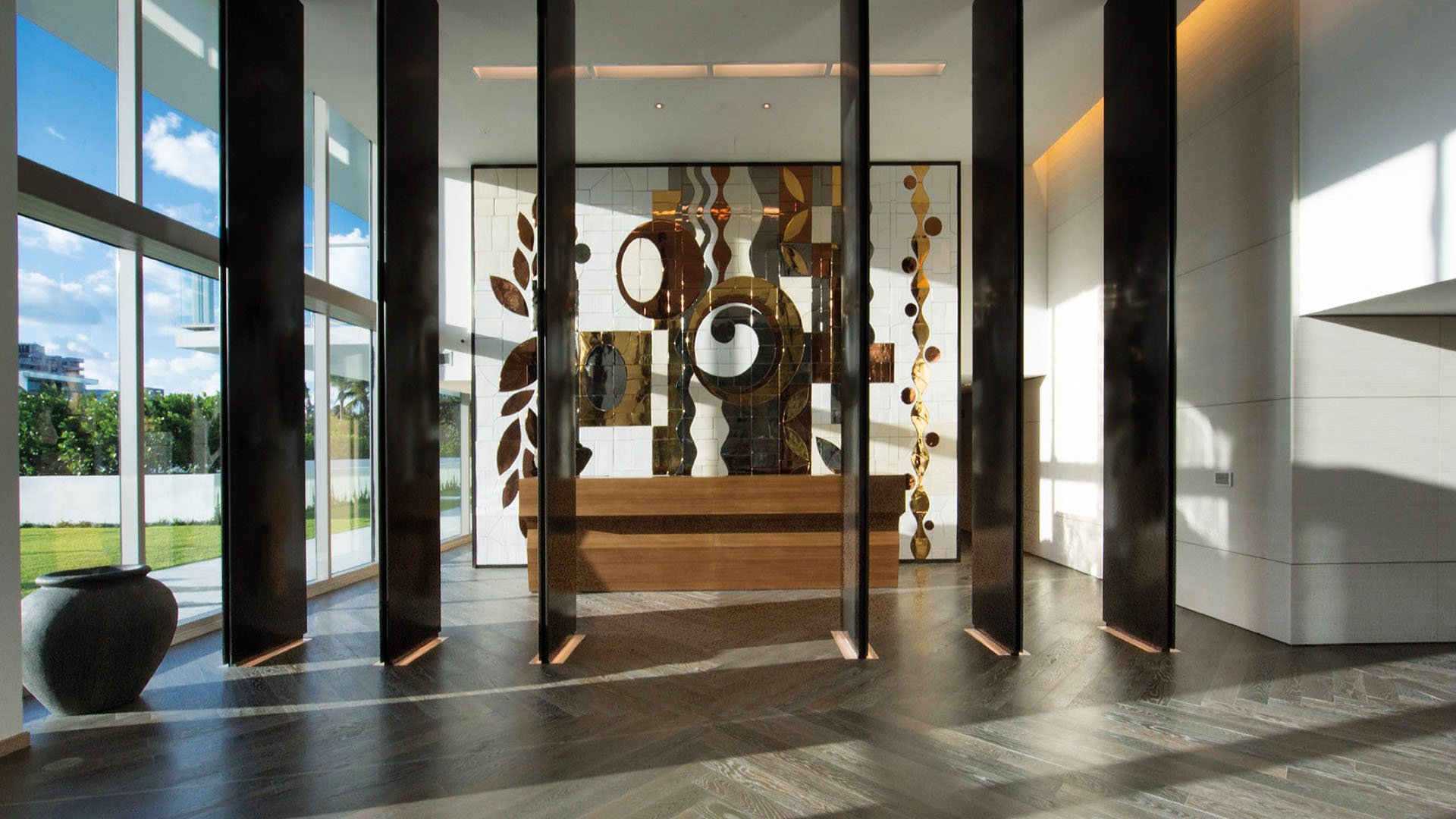
Design Miami is not only a fairground of collectible objects and interiors. For a certain South Florida buyer, it functions as a filter, sharpening the eye for proportion, materiality, light, circulation, and restraint. Those same principles are increasingly useful when evaluating a residence in Key Biscayne, where the difference between a pleasant address and a better-positioned home is often felt before it is explained.
A better-positioned residence is not defined only by price, square footage, or a postcard view. It is defined by how the home receives you, how it manages privacy, how its rooms hold daylight, and how naturally it supports a life that may move between family time, quiet work, entertaining, wellness, and seasonal use. Around Art Basel season, when Miami becomes unusually fluent in design language, buyers tend to see homes with a more disciplined eye. They notice when a lobby feels theatrical but not calming. They notice when a terrace is large but exposed. They notice when a plan looks dramatic online yet feels restless in person.
Key Biscayne rewards that level of attention. The island asks for a softer form of luxury: less spectacle, more sanctuary. The buyer who understands design as positioning will evaluate not just what a residence contains, but what it protects.
In many luxury markets, visibility is confused with status. Key Biscayne complicates that assumption. Here, the stronger position may be the one that reduces friction: easier arrival, quieter exposure, more intuitive indoor-outdoor transitions, and a sense of separation from the broader Miami tempo.
The design world has taught collectors to value negative space as much as the object. In residential terms, that translates into privacy, breathing room, and the absence of visual clutter. A home may offer a wide outlook, but if neighboring sightlines interrupt daily life, the view carries less value. A terrace may be generous, but if it feels performative rather than usable, it becomes decoration instead of living space.
This is where the conversation around Oceana Key Biscayne becomes relevant for buyers studying the island. Its name alone places it within the Key Biscayne discussion, but the larger point is not about a single address. It is about the type of buyer who wants an island residence that feels composed, purposeful, and enduring rather than merely prominent.
Oceanfront ownership carries obvious appeal, but Design Miami reminds us that beauty is never only frontal. The best residential experience is choreographed from multiple angles: the elevator arrival, the first threshold, the main living volume, the bedroom orientation, the morning route to coffee, and the evening route to the terrace. A balcony matters when it is deep enough, private enough, and connected to the rooms where one actually spends time.
For a second-home buyer, these details become even more important. A secondary residence should not require adjustment each time one arrives. It should restore rhythm quickly. Closets, service access, guest separation, shade, sound, and simple circulation can carry more practical value than a single dramatic feature. A well-positioned home feels ready, not staged.
Buyers who compare Key Biscayne with nearby coastal or bayfront neighborhoods often discover that each setting expresses luxury differently. Vita at Grove Isle speaks to a different kind of island and bayfront sensibility, while Four Seasons Residences Coconut Grove may enter the conversation for those drawn to a more established, leafy urban village mood. These comparisons help clarify what Key Biscayne offers: a quieter island identity with a residential cadence that can feel highly personal.
A design-literate showing should be slower than a conventional tour. Begin with arrival. Does the approach feel intuitive, calm, and protected, or does it rely on drama to create importance? Then study light. Not all brightness is desirable. The better residence controls glare, frames outlooks, and allows rooms to shift gracefully from morning to evening.
Next, consider the plan. In luxury real estate, flow is often used casually, but true flow is almost architectural manners. It lets family members and guests move without collision. It allows service functions to recede. It gives entertaining spaces generosity without sacrificing the privacy of bedrooms or study areas. It lets outdoor space feel like an extension of the home rather than an afterthought.
Materials also deserve scrutiny. Design Miami trains the eye to distinguish surface from substance. In a residence, that means looking past finishes as styling and asking whether the material palette supports durability, calm, and daily comfort. A beautiful stone, wood, or metal detail succeeds only if it ages with dignity and belongs to the larger composition.
For buyers who also consider the Miami mainland, The Residences at Mandarin Oriental, Miami can provide a useful contrast in the broader luxury conversation. It represents a different relationship to city, bay, service, and arrival. Key Biscayne buyers should use such comparisons not to dilute their focus, but to sharpen it.
The most compelling homes in South Florida increasingly share a subtle trait: they do not overexplain themselves. They have confidence in proportion, privacy, and sequence. They give the owner room to bring art, furniture, books, family rituals, and personal style without forcing those choices to fight the architecture.
That restraint is particularly important in Key Biscayne because the island already offers a strong environmental mood. A residence that competes too aggressively with its setting can feel dated quickly. A residence that edits itself carefully can remain relevant because it lets the location do part of the work.
This does not mean minimalism for its own sake. It means disciplined luxury. It means storage where clutter would otherwise gather, shade where glare would otherwise fatigue, and rooms that support both solitude and gathering. It means an entry that lowers the pulse. It means water, greenery, or sky framed with intention rather than simply exposed.
A buyer comparing Key Biscayne with Miami Beach residences may also look at The Ritz-Carlton Residences® Miami Beach to understand how design, service, and privacy can be interpreted in another coastal context. Again, the point is not substitution. It is calibration.
Lasting position is partly physical and partly emotional. The physical side includes orientation, privacy, access, building scale, terrace usability, ceiling presence, and the relationship between interior rooms and exterior views. The emotional side is more difficult to quantify, but easier to feel: the home should make life simpler, more elegant, and less performative.
Design Miami reveals that serious buyers are rarely seduced by decoration alone. They are interested in authorship, coherence, and the discipline behind beauty. Applied to Key Biscayne, that means asking whether a residence will still feel right after the first season, after the first round of guests, after the first stormy week, and after the initial novelty of acquisition has faded.
The better-positioned residence is the one that supports identity without demanding attention. It lets the owner participate in Miami when desired, then withdraw to a more private island rhythm. It offers presence without strain. In Key Biscayne, that may be the most refined luxury of all.
What does Design Miami reveal about buying in Key Biscayne? It encourages buyers to evaluate proportion, restraint, privacy, and livability rather than focusing only on visual impact.
Is a better-positioned residence always the one with the biggest view? No. A strong position also depends on privacy, terrace usability, light control, arrival, and the way rooms support daily life.
Why does restraint matter in a Key Biscayne home? The island setting already has a powerful mood, so restrained design can feel more timeless and less dependent on trends.
Should buyers compare Key Biscayne with other Miami neighborhoods? Yes. Selective comparison can clarify whether the buyer values island quiet, urban service, cultural proximity, or a different residential rhythm.
What should a buyer test during a private showing? Arrival, natural light, privacy, indoor-to-outdoor movement, storage, service access, and the feel of the main living spaces.
Does a larger terrace always create more value? Not necessarily. A terrace should be private, shaded when needed, well connected to interior rooms, and comfortable enough for frequent use.
How does art collecting influence residential choice? Collectors often look for controlled light, calm walls, secure circulation, and rooms that allow art to enhance life without overwhelming it.
Is Key Biscayne better for primary living or seasonal use? It can serve either purpose when the residence is planned around privacy, convenience, storage, and an easy return to daily rhythm.
What is the risk of choosing a home only for drama? Dramatic spaces can age quickly if they lack comfort, privacy, and practical support for the way the owner actually lives.
What is the simplest definition of better-positioned? It is the residence that feels calm, private, intuitive, and enduring after the first impression has passed.
To compare the best-fit options with clarity, connect with MILLION.
If branded residences are on your mind — as a home or as an allocation — we would be glad to share what we are seeing, privately.
Begin a quiet conversation