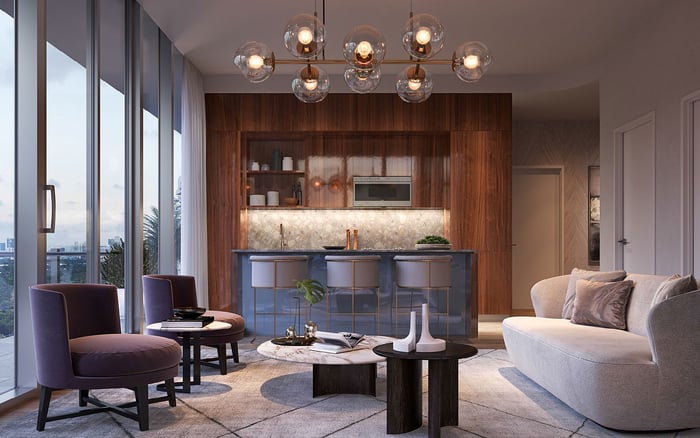
A discreet buyer’s framework for evaluating private entertaining at Opus Coconut Grove, from guest arrival and elevator circulation to valet protocols, outdoor areas, and governing rules.
For buyers who entertain, privacy is not simply a function of square footage. It lies in the choreography of an evening: where a driver pauses, how guests are received, which elevator they use, whether catering staff share the same circulation path, and how voices carry from an outdoor setting after dinner.
At Opus Coconut Grove, the prudent approach is to assess that choreography before treating any residence as an effortless setting for social life. Current condominium documents, house rules, purchase materials, and written management guidance should supersede assumptions. Party policies, staffing procedures, access controls, and amenity reservations can change, while verbal assurances may not reflect the operative standard.
Lifestyle priorities should therefore become practical questions. A buyer who hosts six close friends has a different privacy profile from one planning catered dinners, philanthropic gatherings, or frequent multigenerational celebrations. Define the intended use first, then determine whether the building and selected residence can support it discreetly.
The phrase “party rules” may encompass several distinct controls. Buyers should request provisions governing noise, guest registration, occupancy, deliveries, vendors, musicians, decorations, alcohol service, common-area use, cleanup, security deposits, and event timing. Equally important is whether the rules distinguish ordinary in-residence entertaining from a formal event.
Look beyond what is permitted to how approval works. Is advance notice required? Must vendors submit insurance documentation? Are elevator protection, loading periods, or weekend deliveries restricted? Can management require additional security or housekeeping? If a common room or outdoor amenity is involved, clarify reservation windows, exclusivity, fees, cancellation terms, and restoration obligations.
Enforcement history also matters, though it should be approached carefully. Ask how noise complaints are documented, who responds after hours, and whether the governing framework provides for fines or other remedies. The objective is not a rule-free environment. In an ultra-premium residence, well-administered boundaries can protect a host’s discretion while preserving neighbors’ quiet enjoyment.
The elevator experience often determines whether an arrival feels private or exposed. During a visit, walk the precise route a guest would follow from vehicle drop-off to the residence. Note every point at which a visitor may wait, require authorization, encounter another resident, or rely on staff intervention. Ask how guest credentials are issued and whether access is limited by floor or destination.
Then repeat the exercise from a caterer’s perspective. Determine where food, flowers, rentals, and equipment enter; which elevator is designated; how protective coverings are scheduled; and where carts can stand without obstructing circulation. A beautiful dinner can lose its composure when vendors and guests converge at the same threshold.
Buyers comparing Grove options can apply the same route test at The Lincoln Coconut Grove and Four Seasons Residences Coconut Grove. The purpose is not to presume equivalent procedures, but to compare how each property’s current access protocols align with a particular hosting style.
Valet is both a convenience and an information boundary. Ask where arriving vehicles queue, whether guests must identify the host aloud, how keys are controlled, and how retrieval is requested. For prominent residents, minimizing names, unit references, visible guest lists, and curbside waiting may be as valuable as speed.
A realistic test should include peak conditions. Consider what happens when several residences receive guests simultaneously, when rain compresses the arrival sequence, or when a hired car must wait. Clarify whether private drivers follow a designated protocol and whether oversized vehicles, exotic cars, or vehicles carrying security personnel require advance coordination.
Hosts should also understand departure flow. A staggered close to an evening may be simple; a simultaneous exit can create a conspicuous lobby or driveway. Where allowed, written planning with building staff can help sequence retrieval without promising a service level the rules do not guarantee.
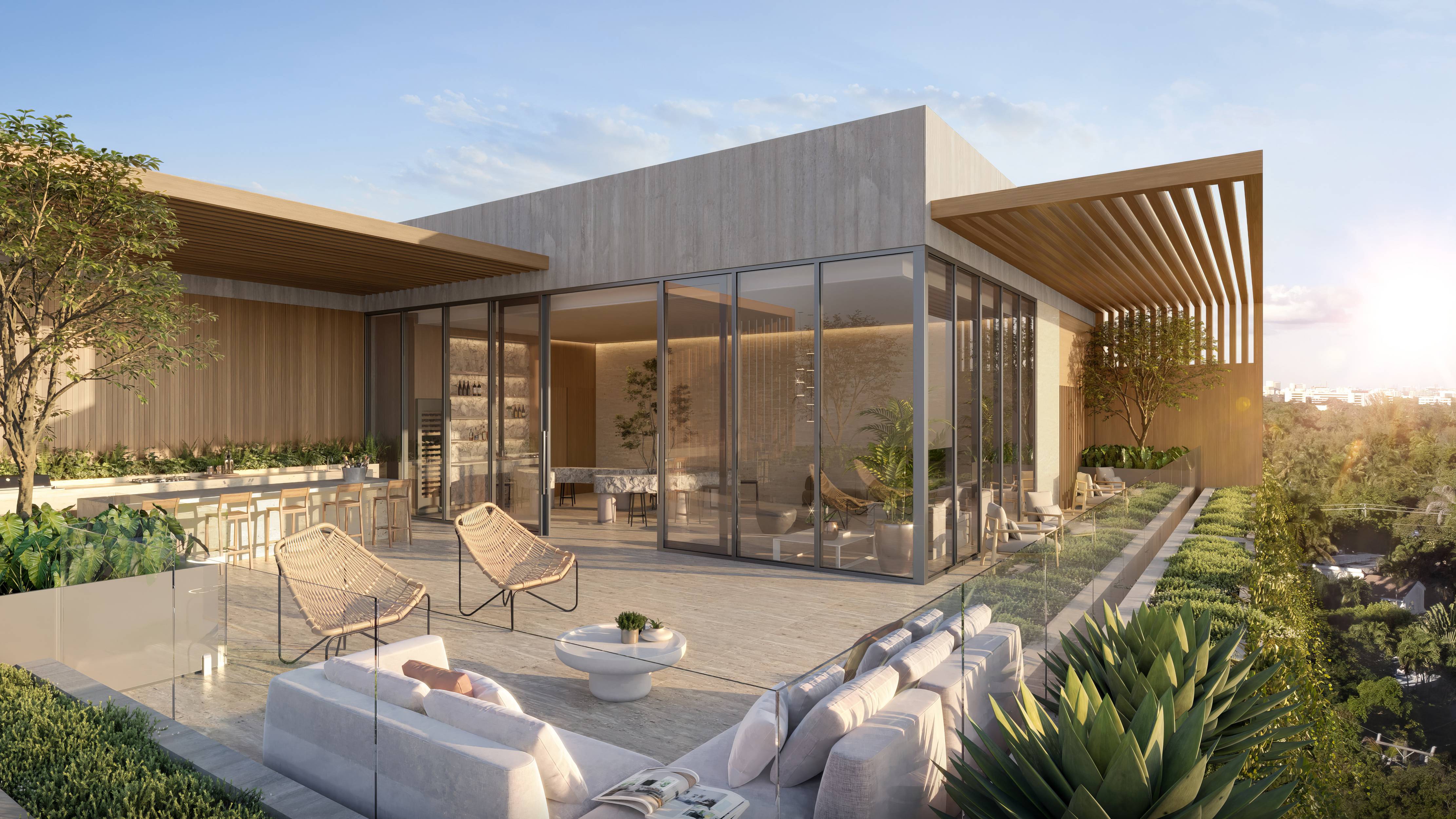
A balcony or terrace should be assessed for more than its view. The essential dimensions are visual privacy, acoustic behavior, weather exposure, and service circulation. Stand at likely seating positions and study sightlines from neighboring residences and shared areas. Then consider where music, conversation, and the sound of tableware may travel.
South Florida conditions make comfort planning integral to discretion. Inspect shade, wind exposure, drainage, lighting, door operation, and the transition between interior flooring and outdoor surfaces. Confirm which furnishings, planters, grills, speakers, umbrellas, or temporary installations are permitted rather than assuming a private outdoor area is unrestricted.
A waterfront atmosphere can heighten the appeal of an evening, but it does not suspend community standards. Ask whether outdoor-use hours differ from indoor quiet hours and whether doors must remain closed during amplified entertainment. At The Well Coconut Grove, as with any alternative under consideration, request property-specific answers rather than importing expectations from another building.
Before contract deadlines expire, assemble a concise file containing the declaration, bylaws, current rules, relevant amendments, budget provisions tied to staffing or common areas, reservation terms, vendor requirements, and written answers to material questions. Counsel should review legal obligations, while the buyer’s advisor can translate the desired hosting pattern into operational inquiries.
Request a residence-specific walkthrough at the hour when entertaining is most likely. Test phone reception at arrival points, observe lighting and waiting areas, measure the practical placement of dining and service stations, and listen with doors open and closed. If privacy depends on a particular elevator procedure, valet accommodation, or amenity reservation, seek written confirmation and determine whether it is a right, a revocable practice, or a courtesy.
The strongest choice is not the building with the loosest rules. It is the residence whose spatial design and current operating framework allow hospitality to feel calm, controlled, and considerate.
Does Opus Coconut Grove allow private parties inside residences? Confirm the current governing documents and management rules, including any distinction between routine entertaining and formal events.
Are guest numbers limited? Verify occupancy, registration, and event limits under the current rules and any applicable safety requirements.
Can caterers use the residential elevator? Ask which elevator vendors must use, when it may be reserved, and whether protection or advance documentation is required.
How should buyers assess elevator privacy? Walk the guest and service routes separately, noting authorization points, waiting areas, floor access, and staff interaction.
Can valet keep a guest arrival discreet? Privacy depends on the property’s current queue, identification, key-control, driver, and retrieval procedures.
May residents entertain on a balcony? Verify outdoor-use hours, noise standards, occupancy provisions, and restrictions on furnishings or equipment.
Are speakers or live musicians permitted on a terrace? Do not assume so. Request the current rules for amplified sound, performers, vendor access, and quiet hours.
Can a common outdoor area be reserved privately? Ask about eligibility, exclusivity, reservation windows, fees, deposits, staffing, cancellation, and cleanup obligations.
What should be confirmed before a catered dinner? Confirm deliveries, insurance, elevator scheduling, loading access, waste removal, security, and permitted service hours.
What is the best privacy test before purchasing? Rehearse arrival, hosting, service, outdoor use, and departure at a realistic hour, then verify material procedures in writing.
To compare the best-fit options with clarity, connect with MILLION.
If branded residences are on your mind — as a home or as an allocation — we would be glad to share what we are seeing, privately.
Begin a quiet conversation