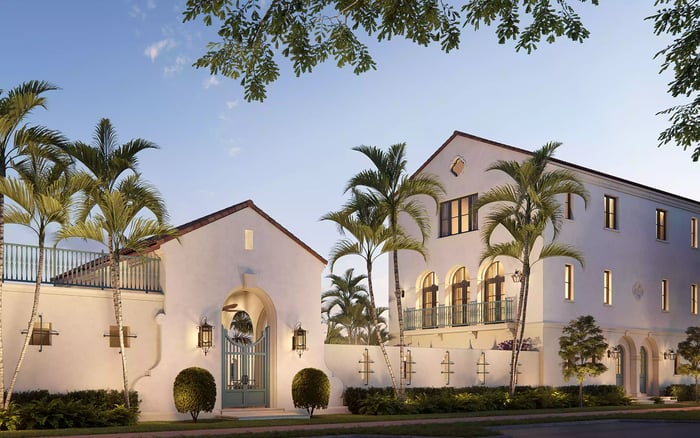
A discreet planning guide for Paris-based luxury buyers preparing for a Coral Gables purchase, with emphasis on ownership structure, homestead intent, privacy, financing, and closing readiness.

For a Paris-based buyer, a Coral Gables closing should feel measured, not improvised. The most elegant purchases in South Florida are often the least dramatic: the ownership plan is settled before the contract is signed, advisers are aligned early, and the buyer arrives with a clear distinction between lifestyle, investment, privacy, and succession objectives.
Coral Gables rewards that discipline. It is a market where architecture, school proximity, club life, cultural access, and long-term neighborhood identity can matter as much as the residence itself. Whether the target is a historic single-family home, a condominium near the city’s commercial core, or new construction with concierge services, the pre-closing structure should reflect how the property will actually be used.
The essential question is not simply, “What should I buy?” It is, “Who should own it, for what purpose, and with which future in mind?” That question belongs in Paris before the flight, not in Miami during the final walk-through.
Entity structure is often framed as a privacy tool, but for international families it can touch far more: estate planning, family governance, financing, insurance, tax residence, reporting, and the eventual sale or transfer of the asset. A personal name, trust, company, or other structure may each carry different consequences. The right answer is rarely universal.
The buyer’s advisers should first map the intended use. Is Coral Gables to become a principal home, a second home, a base for children attending school, a seasonal residence, or a long-term hold? Will relatives use it independently? Will staff coordinate the home while the owner is abroad? Is financing contemplated, or will the purchase be cash? Each answer can influence how counsel frames the structure.
The disciplined approach is to avoid letting privacy alone drive the decision. Privacy may matter, but if the structure conflicts with financing, estate goals, or homestead intent, it may create more complexity than protection. The cleanest closings usually begin with a written decision tree: personal use, family use, liability planning, succession, lending, and exit strategy.
Homestead is not a decorative concept. For a buyer who may divide time between Paris and South Florida, it should be treated as a serious planning topic requiring counsel to review occupancy, documentation, ownership, and timing. The point is not to assume eligibility in advance, but to avoid structuring the acquisition in a way that undermines the buyer’s own residential goals.
If the property is intended as a true Florida home, entity planning and homestead planning should be discussed together. A structure chosen for privacy or estate planning may not automatically align with a homestead objective. Conversely, a purchase in an individual name may feel simple at closing but may not address broader family concerns. The priority is sequence: discuss goals, structure the contract, then finalize title.
This is especially relevant in Coral Gables, where buyers may compare a private estate with a lock-and-leave residence. A condominium such as Cora Merrick Park can appeal to buyers who want proximity to urban amenities with a more managed ownership experience, while a larger residential property may require a deeper operational plan for staffing, vendors, insurance, and maintenance.
The most preventable closing delays often come from logistics rather than desire. A Paris-based buyer should confirm who is authorized to sign, whether original documents are needed, how funds will move, how deposits will be delivered, and how identity and entity documents will be reviewed. These are not glamorous tasks, but they are the architecture of a clean closing.
If financing is involved, the lender’s requirements should be reconciled with the proposed ownership structure before contract deadlines become urgent. If the buyer plans to use a trust or company, the lender, title team, insurance adviser, and counsel should understand that plan early. If the acquisition is all cash, the same discipline applies, particularly around source of funds, authorization, and closing statement review.
The buyer should also plan for time zones. A document that can be corrected in minutes in Miami may take a day when the principal is in Paris and advisers are spread across jurisdictions. The solution is a closing calendar that assigns responsibility for each item, including contract deposits, inspection decisions, entity documentation, insurance binder, title review, walkthrough authority, and final funding.
Coral Gables offers several styles of ownership, and each can suggest a different planning emphasis. A single-family residence may place more weight on property management, renovation review, household staffing, and insurance. A condominium may add association review, rules, reserves, and building operations. New construction may involve staged deposits, completion timing, and a longer horizon between contract and delivery.
For buyers seeking a village-like setting, The Village at Coral Gables places the conversation in a context of design, walkability, and long-term lifestyle planning. A buyer considering Ponce Park Coral Gables may be thinking about refined urban access within the Gables rather than the operating demands of a large estate. The legal structure should follow that lived reality.
A lock-and-leave residence may call for simpler day-to-day governance, but it does not eliminate planning. Association approvals, insurance coordination, and closing mechanics still require attention. A larger home may offer privacy and grounds, but it also asks the buyer to plan for vendors, security, utilities, and maintenance before arrival. The best structure supports the property’s rhythm.
Before leaving Paris, the buyer should have a short, highly practical checklist. First, confirm the intended owner and a backup structure if financing, title, or counsel recommends adjustment. Second, clarify whether homestead is a present objective, a future possibility, or irrelevant to the plan. Third, determine who has authority to sign if the buyer is unavailable.
Fourth, align the funding path. The buyer should know the source account, timing, currency conversion process, and approval chain. Fifth, assign review of insurance and title documents. Sixth, prepare for post-closing operations: keys, access, utilities, association contacts, vendors, and household management.
This is not bureaucracy for its own sake. It is how a high-value acquisition preserves discretion. The buyer who coordinates these items early can spend the Miami visit evaluating light, garden scale, arrival sequence, privacy, and neighborhood feel rather than chasing paperwork across time zones.
Coral Gables is not a speculative impulse for most international buyers. It is often a choice for order, greenery, architecture, schools, dining, privacy, and proximity to Miami without the intensity of the waterfront high-rise corridor. That does not make the purchase simple. It makes the planning more important, because the asset is usually part of a broader family strategy.
The refined buyer treats the closing as one chapter in a longer relationship with South Florida. Entity structure, homestead intent, insurance, banking, reporting, and eventual resale all belong in the same conversation. When those pieces are coordinated before departure, the closing can become what it should be: a precise transfer of ownership, not a negotiation with time.
Should I decide on entity structure before making an offer? Ideally, yes. The buyer’s counsel, tax adviser, lender, and title team should understand the proposed owner before contract obligations become time-sensitive.
Can privacy be the main reason to use an entity? Privacy can be one factor, but it should not be the only factor. Estate planning, financing, homestead intent, insurance, and reporting obligations may be equally important.
Should a Paris-based buyer assume homestead will apply? No. Homestead planning should be reviewed with qualified Florida counsel in light of occupancy, ownership, timing, and the buyer’s broader facts.
Can a buyer close while outside Florida? Many buyers coordinate closings while abroad, but signature authority, document execution, funding, and identification should be organized well in advance.
Is a cash closing simpler than a financed closing? It can be simpler, but it still requires careful coordination of funds, title review, insurance, closing statements, and authority to execute documents.
What should be done before flying from Paris to Miami? Confirm ownership structure, adviser roles, deposit logistics, signing authority, insurance status, title review, and a post-closing access plan.
Does new construction require different planning? It often requires attention to deposit timing, delivery expectations, contract assignments, and the structure that will hold the property at completion.
Is Coral Gables better for a second home or a primary residence? It can support either objective, but the ownership and operating plan should reflect the buyer’s actual use rather than an abstract preference.
When should the insurance conversation begin? Early in the contract process. Insurance requirements can affect closing readiness, lender coordination, and the buyer’s post-closing operating plan.
Who should coordinate the closing team? A lead adviser should keep counsel, tax professionals, lender, title team, insurance adviser, and property representative aligned through the closing calendar.
For a tailored shortlist and next-step guidance, connect with MILLION.
If branded residences are on your mind — as a home or as an allocation — we would be glad to share what we are seeing, privately.
Begin a quiet conversation