A buyer-focused look at how 2000 Ocean Hallandale Beach and Palm Beach Residences reflect the rise of private-gallery living across South Florida’s luxury coastal market.
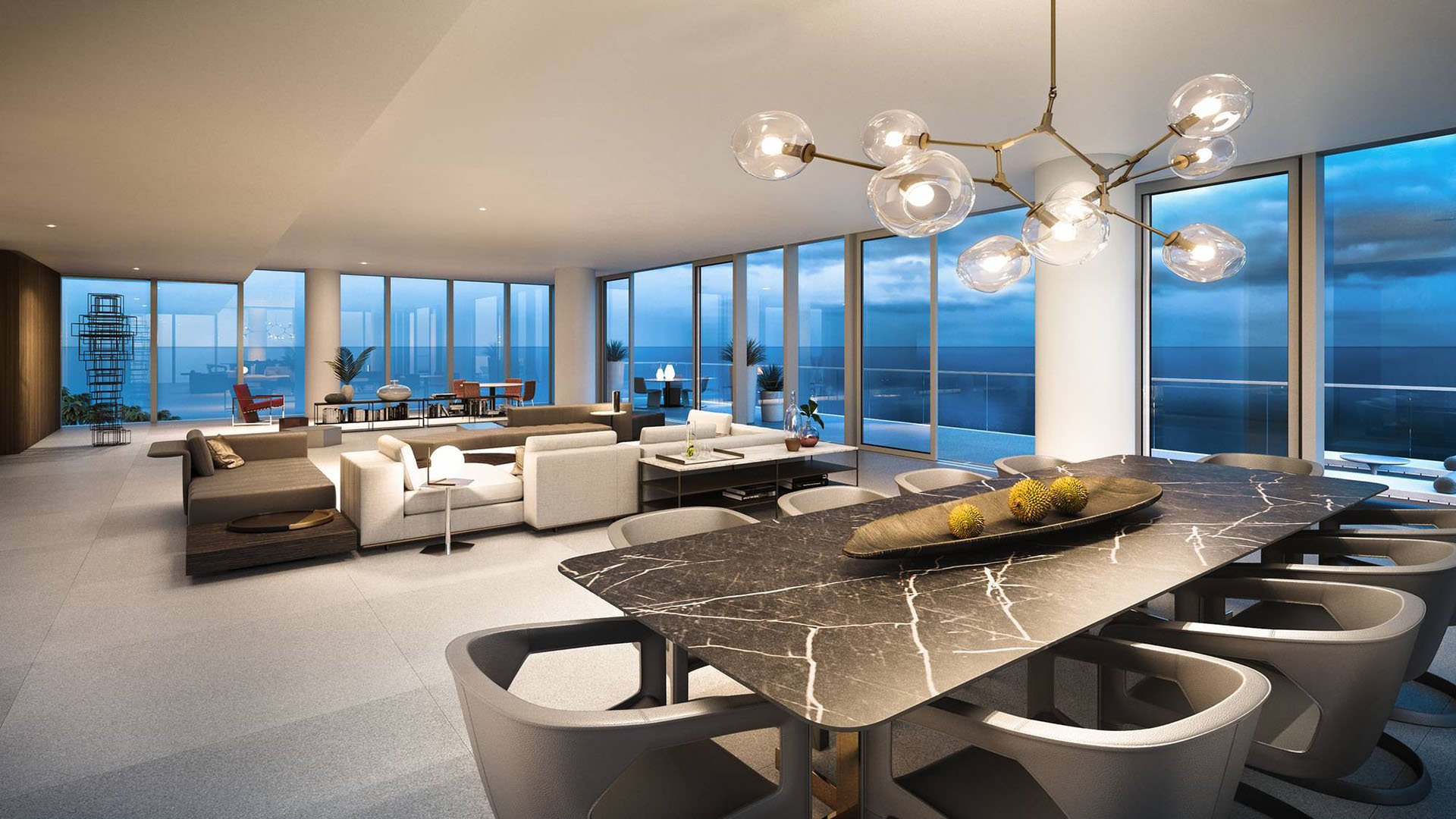
For serious art collectors, the South Florida luxury residence is no longer measured only by address, view, or scale. The more revealing question is whether a home can support a collection as part of daily life. That requires proportion, wall space, disciplined light, privacy, circulation, and the ability to entertain without making the art feel staged for display alone.
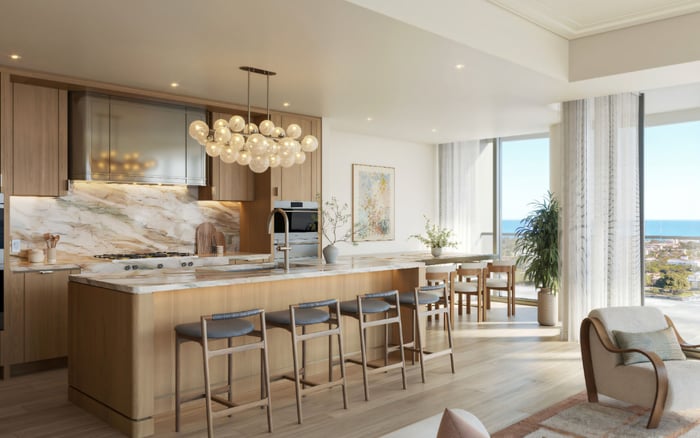
This is where 2000 Ocean Hallandale Beach and Palm Beach Residences become useful reference points. One speaks to Hallandale Beach’s contemporary oceanfront tower identity, shaped by glass, minimalism, and panoramic coastal settings. The other belongs to the Palm Beach tradition of ultra-luxury residential culture, where privacy, refinement, and cultural capital carry equal weight.
Together, they point to a larger shift. Art collector living is not about turning a condominium or estate into a museum. It is about buying an environment where personal taste, social life, collection stewardship, and investment logic can coexist without friction.
Hallandale Beach has become an important lens for understanding the modern collector residence because its luxury language is direct: ocean, glass, openness, and quiet precision. In this context, 2000 Ocean Hallandale Beach is less compelling as a status marker than as a case study in how a coastal home can become a curated environment.
For collectors, the appeal of this model is not simply the view. It is the relationship between view and interior discipline. A residence with broad coastal exposure must allow art to live alongside water, horizon, and changing light. That creates a delicate balance. The strongest rooms do not compete with a collection. They frame it, give it breathing room, and let the eye move from artwork to ocean without visual noise.
This is also why the tower format can be compelling. Vertical living offers a contained private world while still allowing a collector to host, retreat, and maintain separation from the public realm. Nearby luxury conversations, including Shell Bay by Auberge Hallandale, reinforce how Hallandale Beach continues to attract buyers who want privacy and contemporary residential polish in a coastal setting.
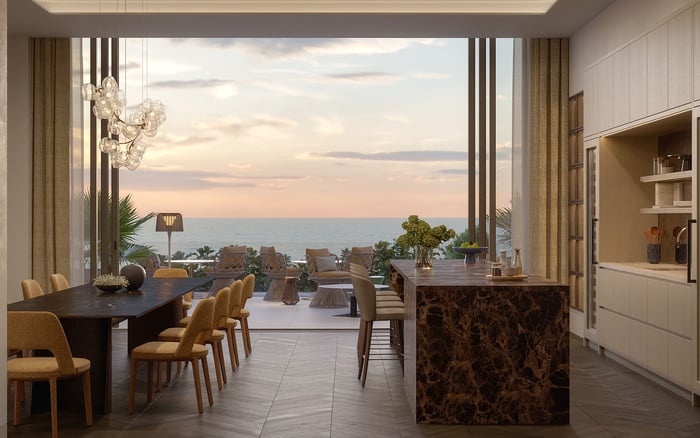
Palm Beach approaches collector living through a different code. Here, the residence often functions as private gallery, salon, and sanctuary at once. The collector’s home is not merely a place to install art. It is a setting where taste is read quietly, through furniture, scale, lighting, texture, and the choreography of arrival.
Palm Beach Residences represents this side of the South Florida market, where residential prestige is tied to privacy as much as visibility. The collector may entertain, but not in the manner of a public spectacle. The home’s value lies in its discretion: who is invited, what is shown, what remains behind closed doors, and how the collection becomes part of a larger life of refinement.
That distinction matters for buyers comparing Palm Beach with more glass-forward coastal markets. In Palm Beach, art-forward living is often less about dramatic exposure and more about controlled atmosphere. A collector considering The Bristol Palm Beach may be weighing the same essential issue: how a residence can support a high-value private life while still feeling personal, composed, and deeply livable.
Design & Architecture now sit at the center of luxury real estate decisions for collectors. The practical questions are precise. Is there enough uninterrupted wall plane for major works? Can furniture placement avoid crowding sculpture or large-format pieces? Does the plan allow art to be encountered gradually, rather than all at once? Can daylight be enjoyed without overwhelming sensitive works?
The most successful collector residences are not over-designed. They are edited. Materials should provide warmth without competing with the collection. Views should expand the emotional register of a room without turning every wall into glass. Entertaining areas should feel generous, but not so open that art becomes background décor.
This is where South Florida’s coastal modernism has matured. Buyers are increasingly seeking museum-like qualities, but in a residential rather than institutional sense. Space, light, and environmental control matter, yet the goal remains intimacy. A home should protect the collection while allowing the owner to live with it naturally.
Oceanfront living adds another layer to the collector’s decision. The water is a powerful visual presence, and in the wrong interior it can dominate everything. In the right residence, it becomes part of the curatorial rhythm.
For a buyer considering 2000 Ocean, the attraction is the possibility of living inside a calm, contemporary framework where ocean views and curated interiors reinforce one another. In Miami Beach, a project such as 57 Ocean Miami Beach speaks to a related desire for coastal living shaped by modern design restraint. The common thread is not sameness of product, but a shared buyer expectation: the residence should feel as intentional as the collection itself.
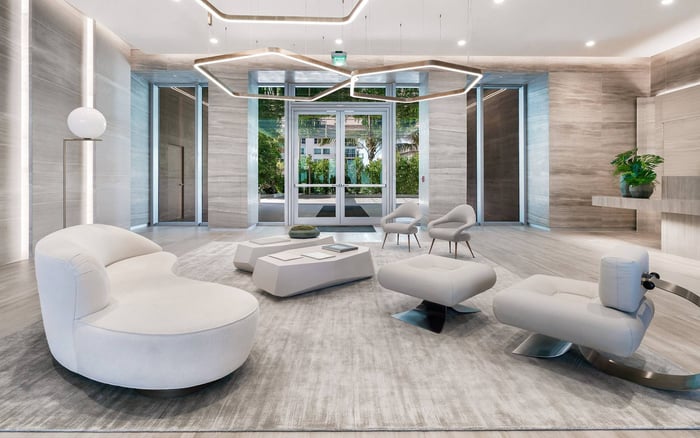
Collectors also think about movement. How guests pass from entry to living space matters. So does whether a primary room can hold both conversation and contemplation. A private gallery home does not need to announce itself. It should reveal itself slowly, with moments of pause.
The deeper message is that South Florida’s high-end market is increasingly aligned with art-world expectations. Buyers relocating capital and collections to the region are not simply seeking lifestyle. They are seeking stewardship. A residence must function as a home, a private salon, a gallery, and a financial asset.
That is why the comparison between Hallandale Beach and Palm Beach is so instructive. Hallandale Beach offers the crisp language of contemporary oceanfront tower living. Palm Beach offers a more established culture of discretion, privacy, and interior refinement. Both can serve the collector, but they serve different temperaments.
The decisive question is not which market is more luxurious. It is which environment best reflects the owner’s relationship to art. Some collectors want horizon, transparency, and architectural minimalism. Others want privacy, layered interiors, and a more residential gallery sensibility. The new luxury is the ability to choose with precision.
Why is 2000 Ocean relevant to art collector living? It reflects a Hallandale Beach model where oceanfront modernism, curated interiors, and panoramic views can support a collector’s residential priorities.
How do Palm Beach Residences differ in this context? Palm Beach Residences represent a privacy-led luxury culture where homes can function as private galleries, salons, and refined living environments.
What should collectors prioritize in a South Florida residence? Collectors should focus on light, wall space, circulation, privacy, and whether the home can protect and present art without feeling institutional.
Is oceanfront living always ideal for art collections? It can be highly compelling, but the interior must balance views with controlled light, calm materials, and thoughtful placement for important works.
Why does Design & Architecture matter so much? Design & Architecture determine how art is encountered, how rooms are furnished, and whether the residence feels curated rather than crowded.
Does Hallandale Beach appeal to contemporary collectors? Yes. Hallandale Beach offers a coastal tower identity associated with glass, minimalism, privacy, and modern ocean-view living.
Why is Palm Beach attractive to collectors? Palm Beach offers discretion, cultural prestige, refined interiors, and a residential atmosphere suited to private-gallery living.
Can a luxury residence also be an investment asset? For many collectors, the residence operates as both a lifestyle platform and an investment asset tied to location, privacy, and long-term desirability.
Should art collectors choose a condo or a single-family home? The better choice depends on privacy needs, collection scale, entertaining style, and whether the owner prefers vertical coastal living or a more private residential setting.
What is the main lesson from these two markets? Collectors are buying environments, not just square footage, and the best South Florida homes support identity, stewardship, and daily enjoyment.
For a tailored shortlist and next-step guidance, connect with MILLION.
If branded residences are on your mind — as a home or as an allocation — we would be glad to share what we are seeing, privately.
Begin a quiet conversation